
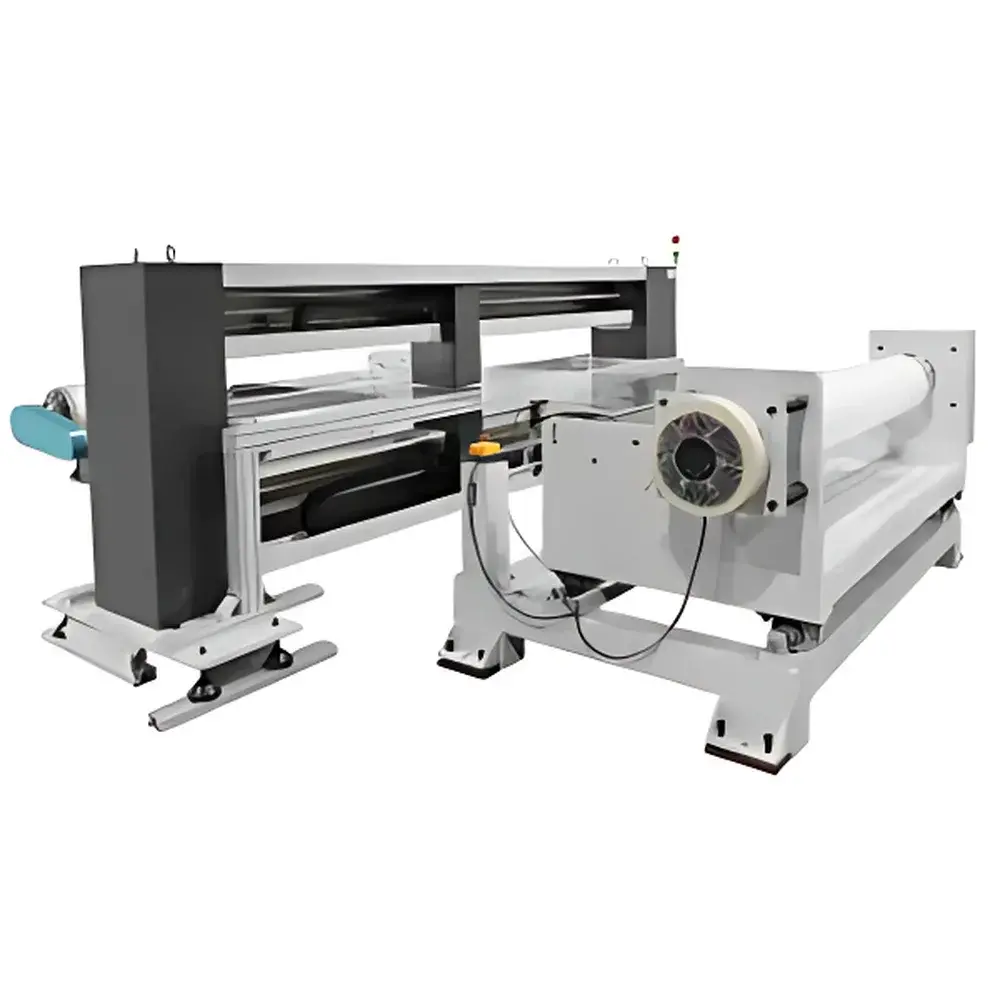
Zhengye CH002 Online X-ray Film Thickness Gauge
| Brand | Zhengye |
|---|---|
| Origin | Guangdong, China |
| Manufacturer Type | Direct Manufacturer |
| Country of Origin | China |
| Model | CH002 |
| Detection Range | 10–300 µm |
| Repeatability Accuracy | ±0.1–0.15 µm |
| X-ray Tube Voltage | 0–10 kV (adjustable) |
| X-ray Tube Current | 0–1000 µA (adjustable) |
| X-ray Spot Size | Φ10 mm (optional: Φ5 mm, Φ8 mm, Φ10 mm) |
| Detector-to-Sample Distance | ≤16 mm |
| Radiation Shielding Compliance | GB 18871–2002 |
| Scanning Speed | 0–200 mm/s (adjustable) |
| Measurable Web Width | 2.5–5.5 m (customizable) |
Overview
The Zhengye CH002 Online X-ray Film Thickness Gauge is a non-contact, real-time metrology system engineered for continuous thickness measurement of polymer films during high-speed extrusion and coating processes. It operates on the principle of energy-dispersive X-ray absorption spectroscopy: a stabilized low-energy X-ray source (0–10 kV) emits a collimated beam that traverses the moving web; attenuation of the beam intensity is quantitatively correlated to areal mass density and, given known material composition and density, converted to physical thickness with traceable calibration. Unlike beta or infrared gauges, this system delivers stable performance across transparent, opaque, multilayer, and metallized films—including CPP, PE, PS, PA, PET, PC, PVC, and EVA—without requiring optical transparency or surface emissivity assumptions. Its design prioritizes long-term stability in industrial environments, with temperature-compensated detectors and hardened mechanical housing suitable for integration into roll-to-roll production lines.
Key Features
- Non-destructive, real-time thickness monitoring at line speeds up to 200 mm/s, synchronized with PLC-controlled manufacturing systems via analog (4–20 mA) and digital (Modbus TCP/RTU, EtherNet/IP) I/O interfaces.
- Adjustable low-energy X-ray source (0–10 kV / 0–1000 µA) optimized for polymer film analysis, minimizing bremsstrahlung background and enabling high signal-to-noise ratio even at sub-10 µm nominal thicknesses.
- Interchangeable collimators supporting spot sizes of Φ5 mm, Φ8 mm, or Φ10 mm—allowing optimization between spatial resolution and measurement statistics for narrow-lane QC or full-width profiling.
- Integrated radiation shielding certified to GB 18871–2002 (China’s national standard for ionizing radiation protection), including lead-lined enclosure, interlocked access doors, and real-time dose monitoring with audible/visual alarms.
- Ruggedized detector assembly with <16 mm source-to-detector standoff distance, enabling compact installation in tight gantry spaces while maintaining geometric consistency and minimizing scatter-induced error.
- Factory-calibrated using NIST-traceable polymer standards; supports user-defined calibration curves for custom materials via embedded calibration manager.
Sample Compatibility & Compliance
The CH002 is validated for single-layer and co-extruded polymer films ranging from 10 µm to 300 µm in nominal thickness. It accommodates variable substrate densities (0.85–1.40 g/cm³) and elemental compositions typical of polyolefins, polyesters, polycarbonates, and vinyl-based systems. For multilayer structures, thickness resolution is constrained by interlayer contrast in X-ray attenuation coefficients; layer separation requires ≥15% difference in effective atomic number (Zeff) or ≥20% density differential. The system complies with GB 18871–2002 for occupational and public radiation safety. While not certified to IEC 61000-6-2/4 or ISO 13849–1 out-of-the-box, it meets EMC immunity requirements for Class A industrial environments when installed per manufacturer grounding and cable segregation guidelines. Optional documentation packages support GLP/GMP-aligned validation protocols (IQ/OQ/PQ) and audit-ready calibration records.
Software & Data Management
Embedded Linux-based control software provides real-time thickness mapping, statistical process control (SPC) dashboards (X̄–R charts, Cp/Cpk trending), and automatic defect flagging based on user-defined tolerance bands. All measurement data—including raw detector counts, corrected thickness values, timestamp, position coordinate, and system health logs—are stored in SQLite databases with configurable retention policies (default: 90 days). Export formats include CSV, PDF reports, and OPC UA-compatible structured data streams. Audit trail functionality records all parameter changes, calibration events, and user logins with timestamps and operator IDs—supporting compliance with FDA 21 CFR Part 11 when deployed with network-authenticated login and electronic signature modules. Remote diagnostics and firmware updates are supported over secure SSH/TLS connections.
Applications
- Real-time feedback control for die lip adjustment in cast film and blown film extrusion lines.
- Coating weight verification in solvent-based or UV-curable adhesive lamination processes.
- Thickness uniformity assessment across 2.5–5.5 m wide webs, including edge-to-edge profiling for slit-width optimization.
- Process qualification and batch release testing in regulated packaging manufacturing (e.g., pharmaceutical blister foils, food-grade barrier laminates).
- Root cause analysis of gauge band formation, bubble-induced thinning, or chill roll temperature drift effects.
FAQ
Is the CH002 suitable for measuring metallized or aluminum-coated films?
Yes—low-kV X-ray penetration enables reliable measurement through thin (<100 nm) vacuum-deposited metal layers, provided the base polymer thickness remains within the 10–300 µm range.
Can the system be integrated with Siemens S7 or Rockwell ControlLogix PLCs?
Yes—native Modbus TCP and EtherNet/IP drivers are included; pre-tested configuration templates are available for common PLC platforms.
What maintenance is required for the X-ray tube?
The sealed X-ray source has a rated lifetime of ≥10,000 operating hours; no periodic filament replacement is needed. Annual verification of beam alignment and detector linearity is recommended.
Does the system provide thickness data at discrete points or continuous profiles?
Both—scanning mode delivers continuous line profiles (up to 100 points/sec); static mode outputs single-point measurements with enhanced averaging for R&D-grade repeatability.
Is third-party radiation safety certification available?
Yes—Zhengye provides test reports from CNAS-accredited laboratories verifying compliance with GB 18871–2002; international equivalents (e.g., IEC 62463) can be arranged upon request.



