
UV Aging Test Chamber – Fluorescent UV Accelerated Weathering Tester
| Brand | Other Brands |
|---|---|
| Origin | Imported |
| Manufacturer Type | General Distributor |
| Price | USD 2,600 (Reference Only) |
| UV Source | Fluorescent UVA-340 / UVB-313 Lamps |
| Temperature Range | 40–75°C (Controlled) |
| Humidity Simulation | Condensation Cycle (50–95% RH) |
| Irradiance Control | Yes (via calibrated sensor) |
| Spray Function | Integrated Water Spray System |
| Compliance | ASTM G154, ISO 4892-3, JIS D0205, SAE J2020 |
Overview
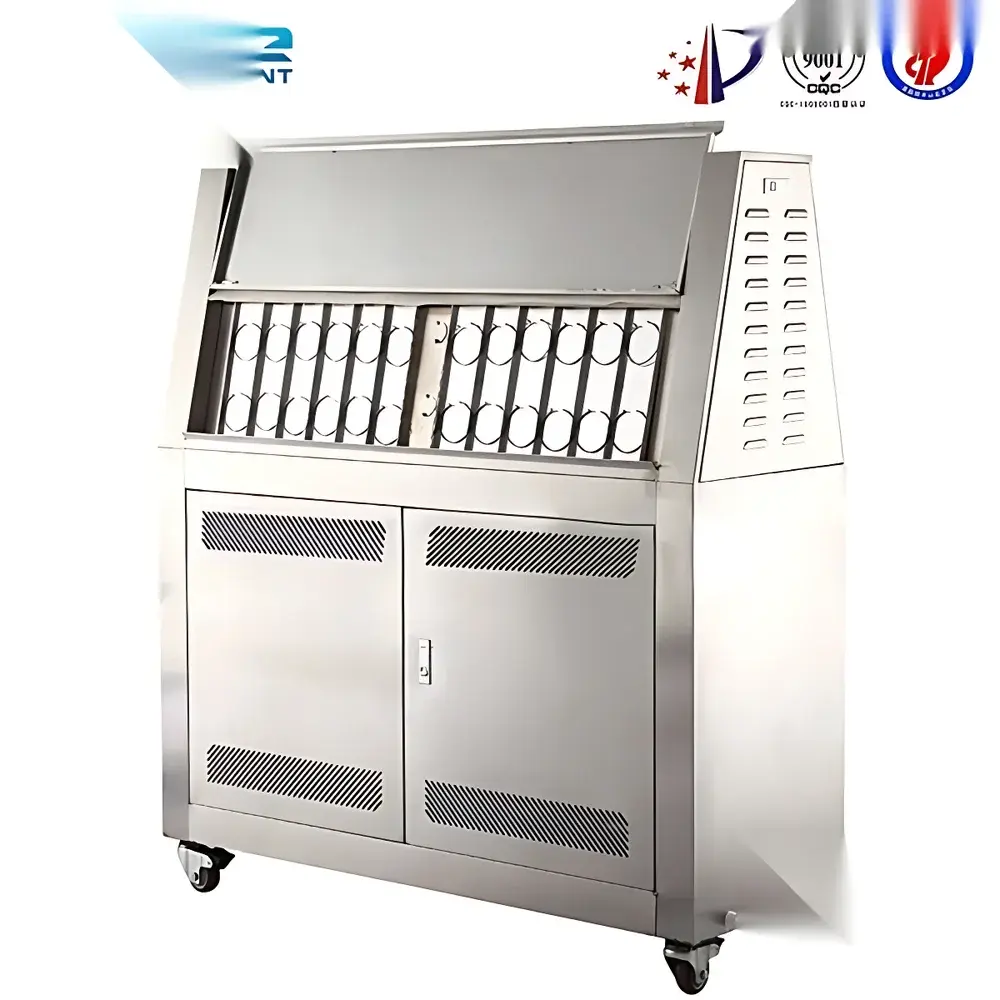
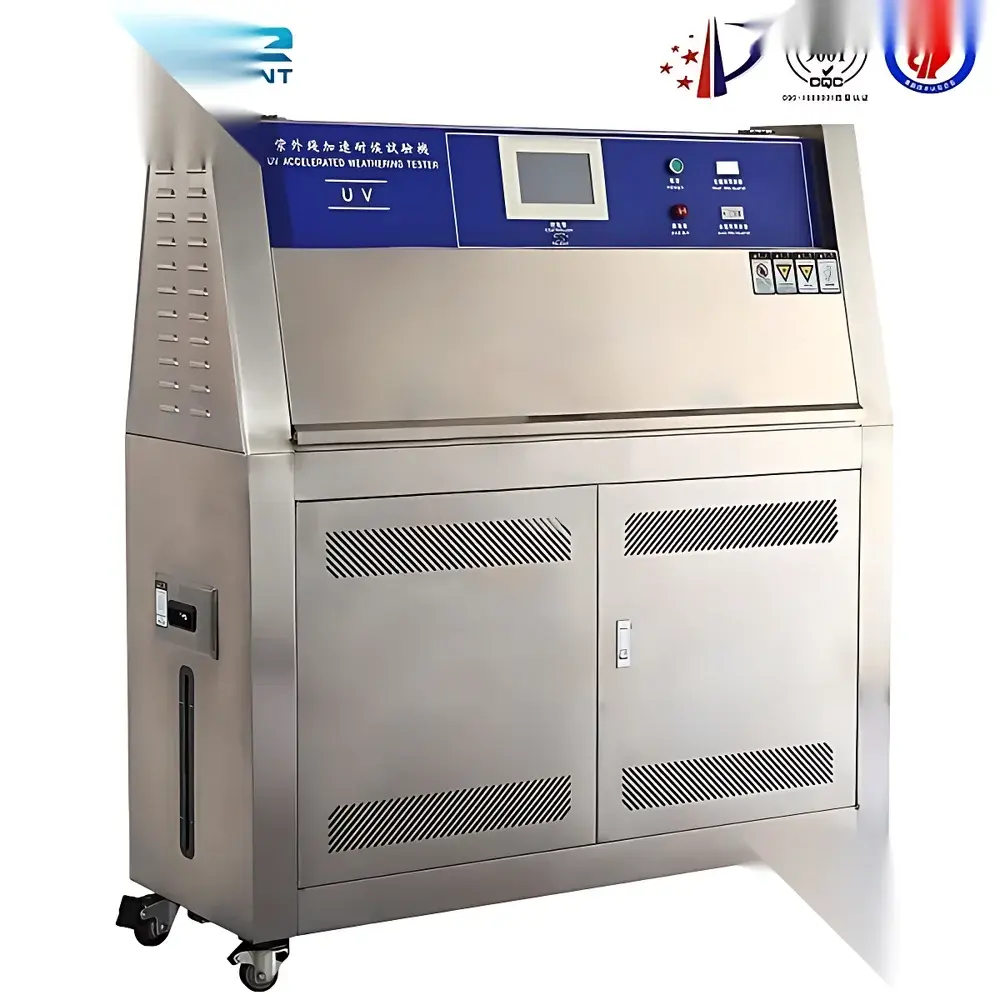
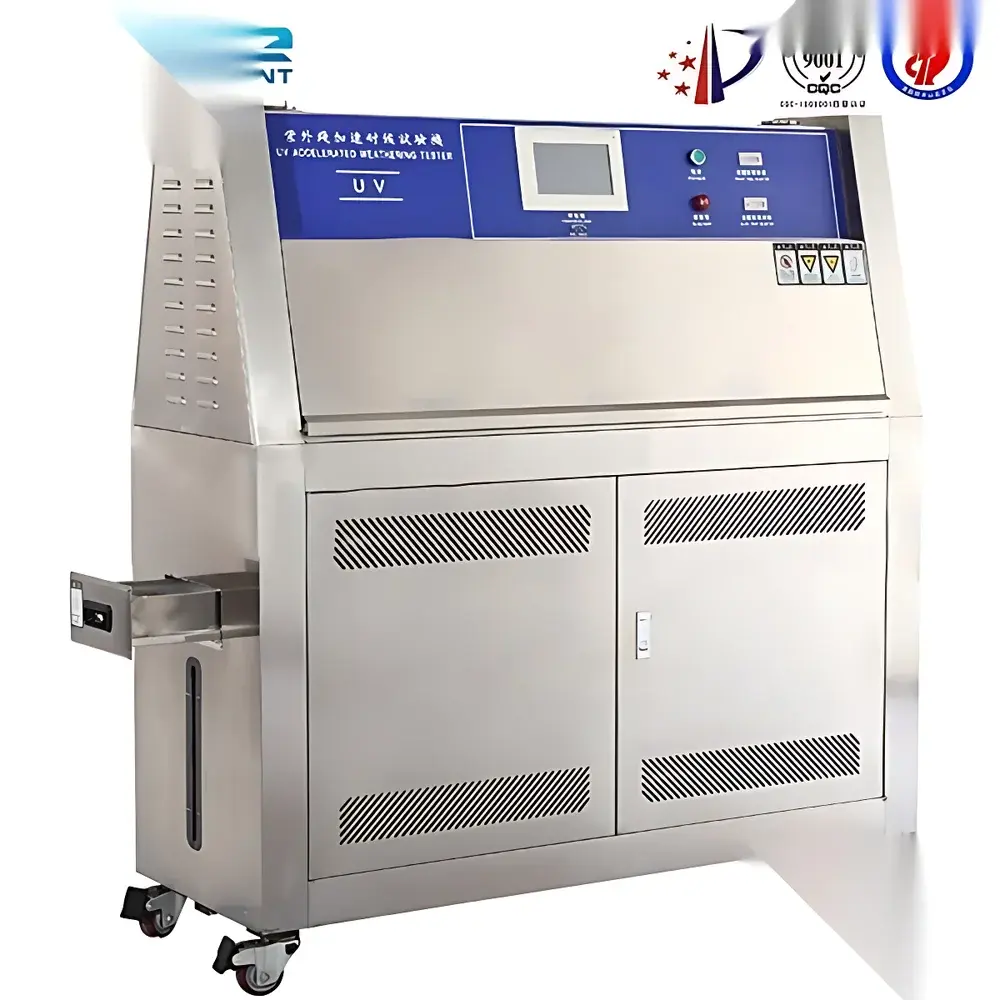
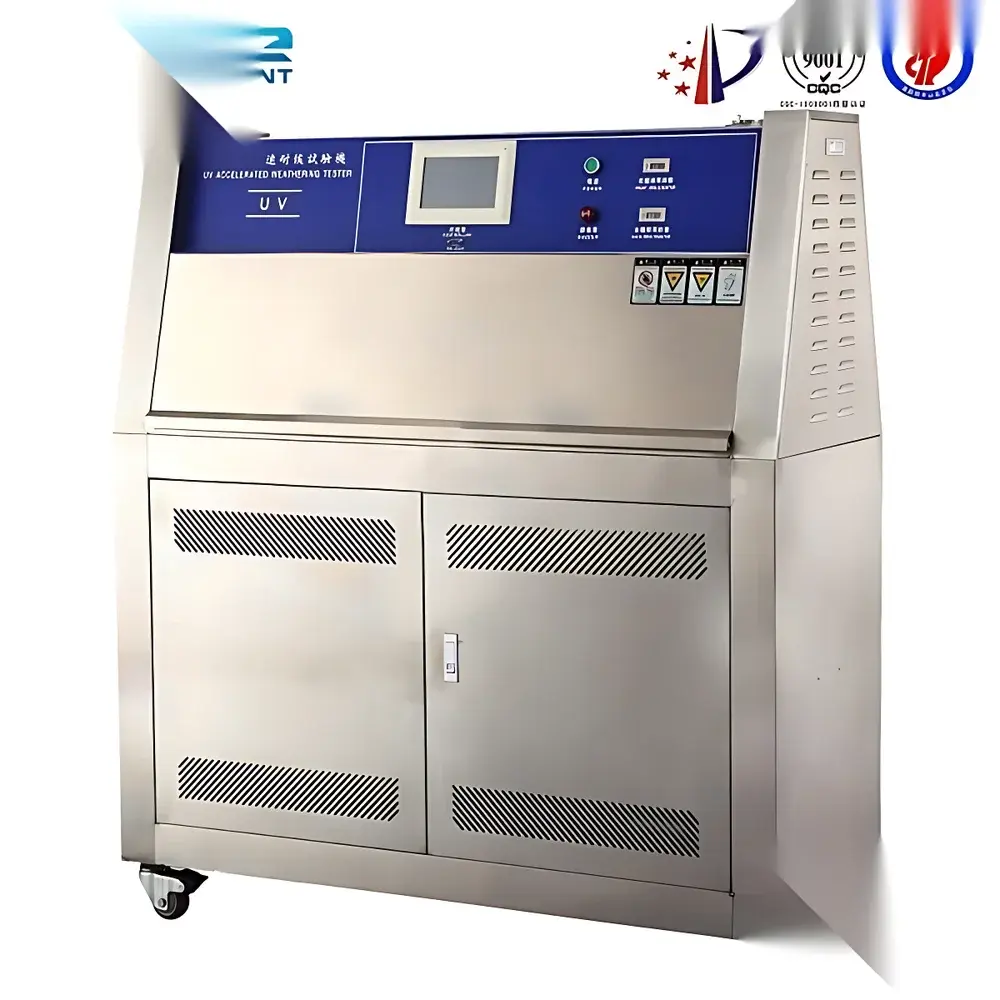
The UV Aging Test Chamber is an engineered accelerated weathering instrument designed to simulate the damaging effects of solar ultraviolet (UV) radiation, moisture condensation, and thermal cycling on polymeric, coating, automotive, and architectural materials. Unlike broad-spectrum xenon arc testers, this chamber employs fluorescent UV lamps—primarily UVA-340 (closely matching terrestrial sunlight down to 295 nm) and UVB-313 (for aggressive, high-intensity degradation)—to deliver reproducible, spectrally controlled UV exposure. Combined with programmable condensation cycles that replicate nocturnal dew formation and optional water spray for thermal shock and surface erosion simulation, the system enables rapid assessment of photochemical degradation mechanisms including chain scission, oxidation, chalking, gloss loss, cracking, and color shift. Typical test durations range from 24 to 1,000 hours, correlating empirically to months or years of outdoor exposure under controlled laboratory conditions.
Key Features
- Fluorescent UV lamp array with selectable spectral output (UVA-340 for realistic sunlight simulation; UVB-313 for accelerated failure testing)
- Precisely regulated black panel temperature control (40–75°C) with PID feedback loop for thermal stability ±0.5°C
- Automated condensation cycle: saturated humid air cools sample surfaces to induce dew formation without direct water contact
- Optional front-panel water spray system (deionized water) for wet/dry cycling, simulating rain-induced thermal stress and surface washing
- Integrated irradiance monitoring via calibrated broadband UV sensor with auto-compensation for lamp aging
- Stainless steel 316L interior chamber with quartz UV-transmissive lamp holders and corrosion-resistant hardware
- Dual-wall insulated construction with forced-air convection for uniform temperature distribution across specimen plane
- Touchscreen HMI with preloaded test protocols compliant with ASTM G154 Class I–IV and ISO 4892-3 Cycle A/B/C
Sample Compatibility & Compliance
The chamber accommodates flat specimens up to 75 mm × 150 mm (standard rack configuration), with optional multi-angle sample holders for coatings, films, composites, and molded parts. It supports rigid and semi-flexible substrates—including thermoplastics, elastomers, paints, adhesives, textiles, and solar module encapsulants—without requiring complex fixturing. All operational parameters adhere to internationally recognized standards for UV exposure testing: ASTM G154 (Standard Practice for Operating Fluorescent Ultraviolet (UV) Lamp Apparatus for Exposure of Non-Metallic Materials), ISO 4892-3 (Plastics — Methods of Exposure to Laboratory Light Sources — Part 3: Fluorescent UV Lamps), and JIS D0205 (Automotive exterior material weathering). Data logging meets GLP requirements for traceability, and system validation documentation supports IQ/OQ protocols per ISO/IEC 17025-accredited laboratories.
Software & Data Management
The embedded controller records real-time UV irradiance (W/m²), black panel temperature, chamber humidity, and cycle phase timestamps at user-defined intervals (1–60 sec resolution). Exportable CSV files include full test logs with metadata (lamp batch ID, calibration date, operator ID, and ambient lab conditions). Optional PC-based software enables remote monitoring, multi-chamber fleet management, statistical trend analysis (e.g., ΔE* color shift vs. UV dose), and automated report generation compliant with FDA 21 CFR Part 11 audit trail requirements—including electronic signatures, change history, and locked archival exports. All firmware updates are digitally signed and validated prior to installation.
Applications
- Automotive OEMs evaluating paint clearcoat durability, headlight lens yellowing, and interior trim UV resistance
- Coatings manufacturers validating ASTM D4587 compliance for architectural and industrial finishes
- Photovoltaic suppliers qualifying EVA encapsulant discoloration and backsheet delamination thresholds
- Medical device polymer developers assessing ISO 10993-12 extractables under UV stress
- Aerospace component suppliers testing composite matrix stability under tropical humidity + UV exposure
- Academic research labs investigating photo-oxidation kinetics in biodegradable polymers
FAQ
What UV lamp types are supported, and how often must they be replaced?
UVA-340 and UVB-313 lamps are standard; replacement is recommended every 1,600–2,000 hours of operation or when irradiance falls below 90% of initial calibration value.
Is the condensation cycle fully automated and independent of ambient humidity?
Yes—the chamber generates condensation internally via controlled cooling of the sample surface against saturated air; no external humidifier or water supply is required beyond the reservoir.
Can the spray function be synchronized with UV exposure or condensation phases?
Yes—spray timing, duration, and frequency are fully programmable within each test cycle, enabling custom wet/dry/UV sequences per ISO 4892-3 Annex B.
Does the system support third-party calibration services?
Yes—NIST-traceable irradiance and temperature calibrations are available through accredited service providers; calibration certificates include uncertainty budgets and measurement traceability statements.
What safety interlocks prevent operator UV exposure during operation?
Dual redundant door switches disable UV lamps and spray solenoids immediately upon door opening; a UV-blocking acrylic viewing window attenuates >99.9% of UVC and UVB radiation.



