
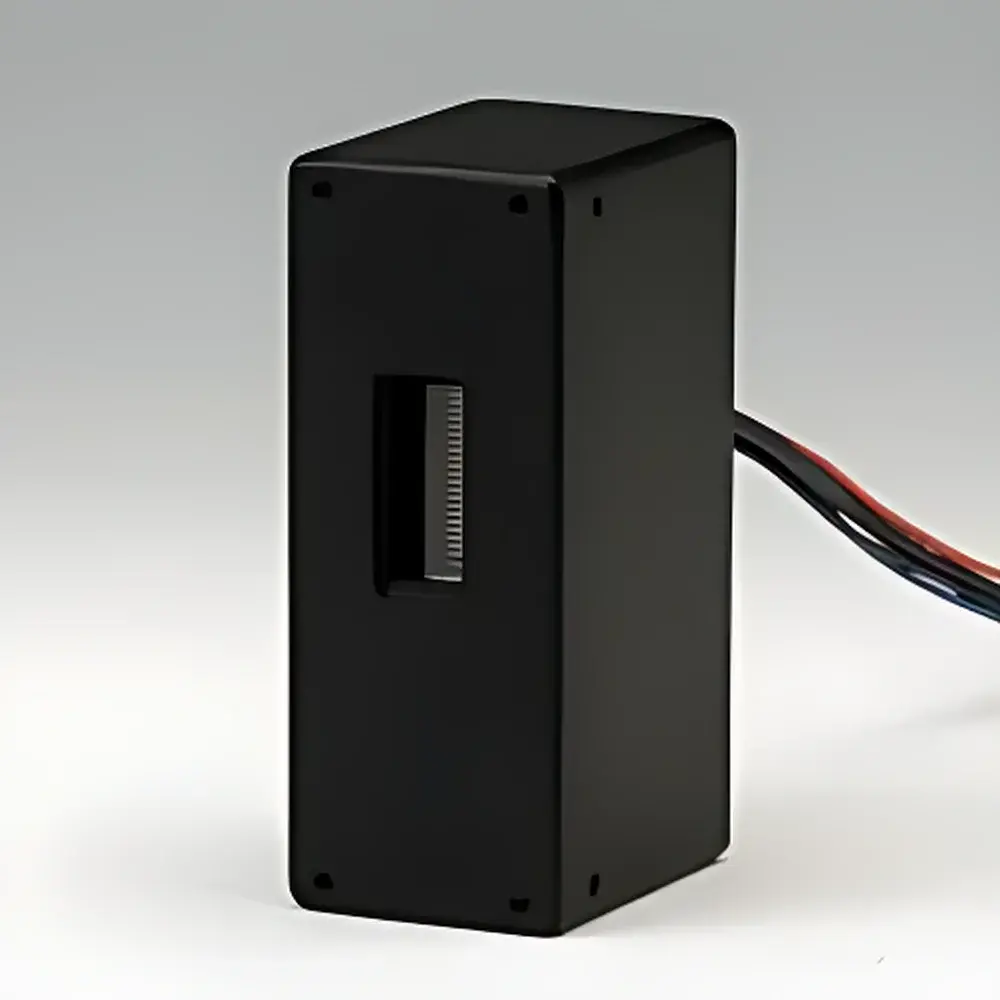
Hamamatsu Photomultiplier Tube (PMT) Module
| Brand | Hamamatsu |
|---|---|
| Origin | Japan |
| Manufacturer Type | Original Equipment Manufacturer (OEM) |
| Product Origin | Imported |
| Model | H |
| Pricing | Available Upon Request |
Overview
The Hamamatsu Photomultiplier Tube (PMT) Module is a fully integrated optoelectronic detection unit engineered for high-sensitivity, low-noise photon counting and analog light intensity measurement in demanding spectroscopic and analytical applications. Built upon Hamamatsu’s proprietary dynode chain architecture and ultra-stable glass-metal sealed PMT technology, the module operates on the principle of secondary electron multiplication under controlled high-voltage bias. Incident photons strike a photocathode—typically fabricated from bialkali (Sb-Rb-Cs) or multialkali (Na-K-Sb-Cs) materials—generating primary photoelectrons via the external photoelectric effect. These electrons are accelerated through a series of discrete dynodes (typically 10–14 stages), each held at progressively higher potential by an internal precision resistor divider network. This cascade amplification yields current gains exceeding 10⁶–10⁷, enabling single-photon detection with sub-nanosecond temporal response and dark current levels as low as 0.1–5 nA (depending on cathode type and cooling configuration). The H-series module integrates the PMT, regulated high-voltage power supply (±0.01% stability over 8 h), and optimized voltage divider circuit into a compact, shielded metal housing—minimizing electromagnetic interference, microphonic noise, and thermal drift.
Key Features
- Fully integrated design: PMT sensor, HV supply, and dynode voltage distribution network co-packaged in a single EMI-shielded enclosure
- Stable high-voltage regulation: Onboard DC-DC converter with temperature-compensated feedback loop ensures ±0.01% output stability over 8 hours and ±0.05% over ambient range (15–35 °C)
- Configurable output interface: Available in three standardized variants—current-output (I-out), voltage-output (V-out), and gated-output (Gated-I/V)—supporting TTL/CMOS-compatible external gating with rise/fall times <5 ns
- Thermal management options: Select models include Peltier-based thermoelectric cooling (TEC) to reduce dark current by up to 90% at –20 °C cathode temperature
- Robust mechanical construction: Aluminum alloy housing with gold-plated SMA or BNC signal connectors; hermetically sealed PMT vacuum envelope rated for >20-year operational lifetime
- Compliance-ready architecture: Designed to meet IEC 61000-6-3 (EMI emission) and IEC 61000-6-2 (immunity) standards; compatible with GLP/GMP environments when paired with audit-trail-capable data acquisition systems
Sample Compatibility & Compliance
The H-series PMT module is compatible with UV–VIS–NIR spectral ranges (115–900 nm), depending on photocathode material selection (e.g., R11707 for solar-blind UV, R6041 for broad VIS-NIR). It interfaces seamlessly with monochromators, spectrographs, fluorometers, scintillation detectors, and time-resolved fluorescence setups. Its modular footprint and standardized pinout enable drop-in replacement in OEM instruments certified to ISO/IEC 17025, ASTM E275 (UV-Vis spectrophotometer performance), and USP <857> (photometric detector validation). All modules undergo individual factory calibration traceable to NIST-certified reference lamps and photodiodes. RoHS 3 and REACH-compliant materials are used throughout; CE marking applies per Directive 2014/30/EU (EMC) and 2014/35/EU (LVD).
Software & Data Management
While the H-module itself is analog-output focused and does not embed firmware, it is fully interoperable with industry-standard data acquisition platforms—including National Instruments DAQmx, Keysight PathWave, and MATLAB Data Acquisition Toolbox—via its low-impedance current or buffered voltage outputs. When integrated into validated laboratory information management systems (LIMS) or chromatography data systems (CDS), the module supports 21 CFR Part 11 compliance through external hardware timestamping, electronic signature linkage, and audit trail logging at the system level. Hamamatsu provides comprehensive SDKs (C/C++, Python, LabVIEW) for custom gating control, gain profiling, and dark current compensation algorithms—enabling automated baseline correction and dynamic range optimization during long-duration measurements.
Applications
- UV-Vis and NIR absorption/reflectance spectroscopy in pharmaceutical QC labs
- Time-correlated single-photon counting (TCSPC) in fluorescence lifetime imaging (FLIM) and FRET assays
- Radiation detection in liquid scintillation counting (LSC) and gamma spectroscopy
- Plasma diagnostics and laser-induced breakdown spectroscopy (LIBS)
- High-speed particle detection in flow cytometry and mass spectrometry ion detection
- Low-light astronomy instrumentation and adaptive optics wavefront sensing
FAQ
What is the typical rise time and pulse width for the current-output version of the H-module?
Rise time is typically ≤2.5 ns (10%–90%), with full-width at half-maximum (FWHM) pulse width of 3–5 ns under standard operating conditions.
Can the module be operated in photon-counting mode without additional external electronics?
No—photon counting requires a dedicated discriminator and counter/timer circuit; however, the low-noise current output enables direct connection to fast digitizers or TCSPC timing electronics.
Is the high-voltage supply adjustable externally?
Yes—most H-series modules support 0–10 V analog voltage control input for continuous HV adjustment (0–100% nominal range), with 16-bit resolution compatibility.
Does Hamamatsu provide calibration certificates with NIST traceability?
Yes—each module ships with a factory calibration report including spectral responsivity curves, dark current vs. temperature, and gain linearity data, all traceable to NIST SRM 2031 and 2032.
Are there versions with fiber-optic input coupling?
Yes—select H-models feature SMA-905 or FC/PC receptacles for direct fiber coupling; custom quartz window options (e.g., MgF₂ for deep-UV) are available under OEM agreements.
Related Products





