
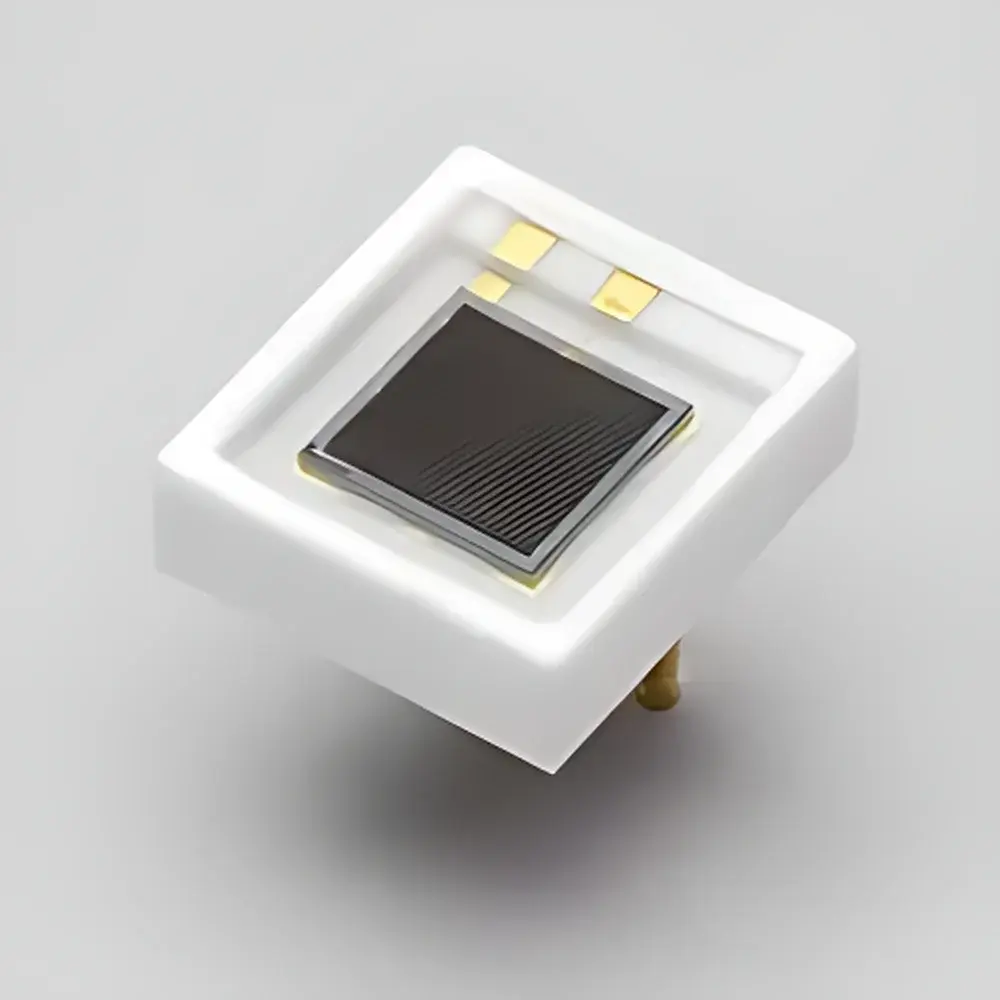
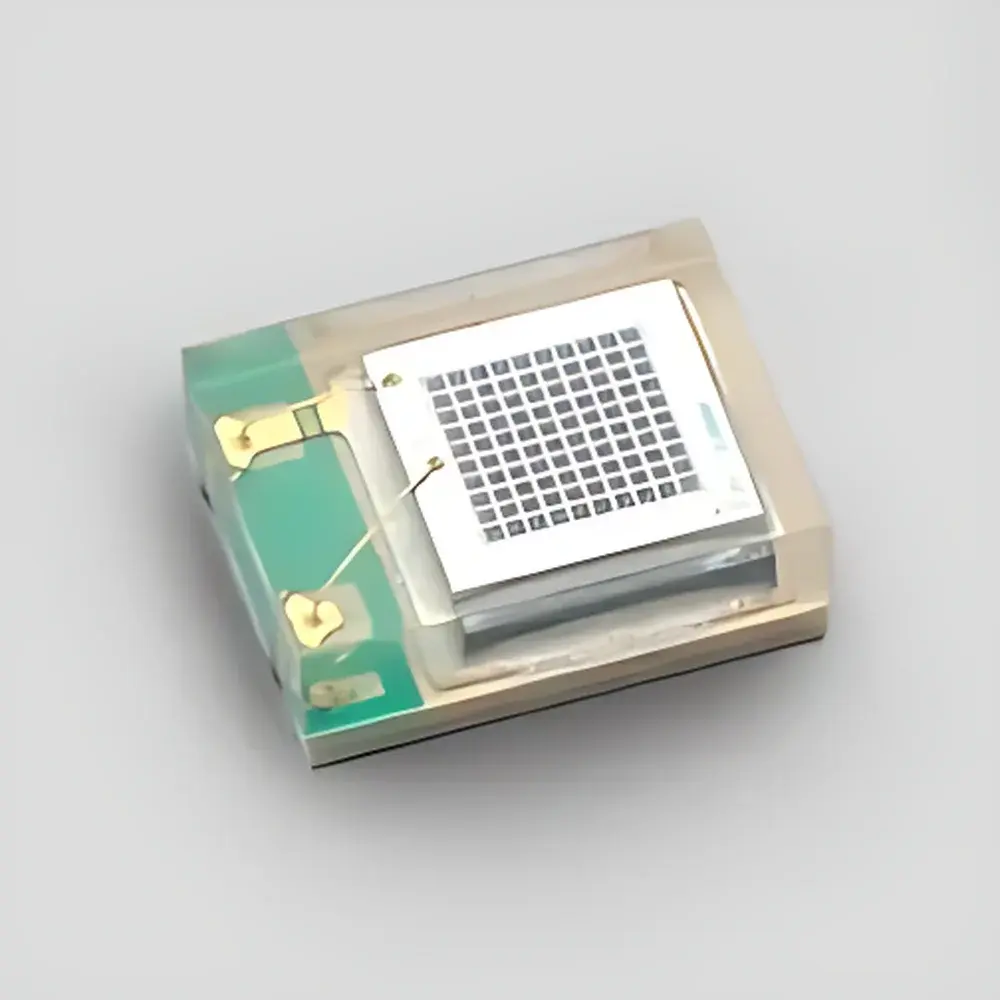
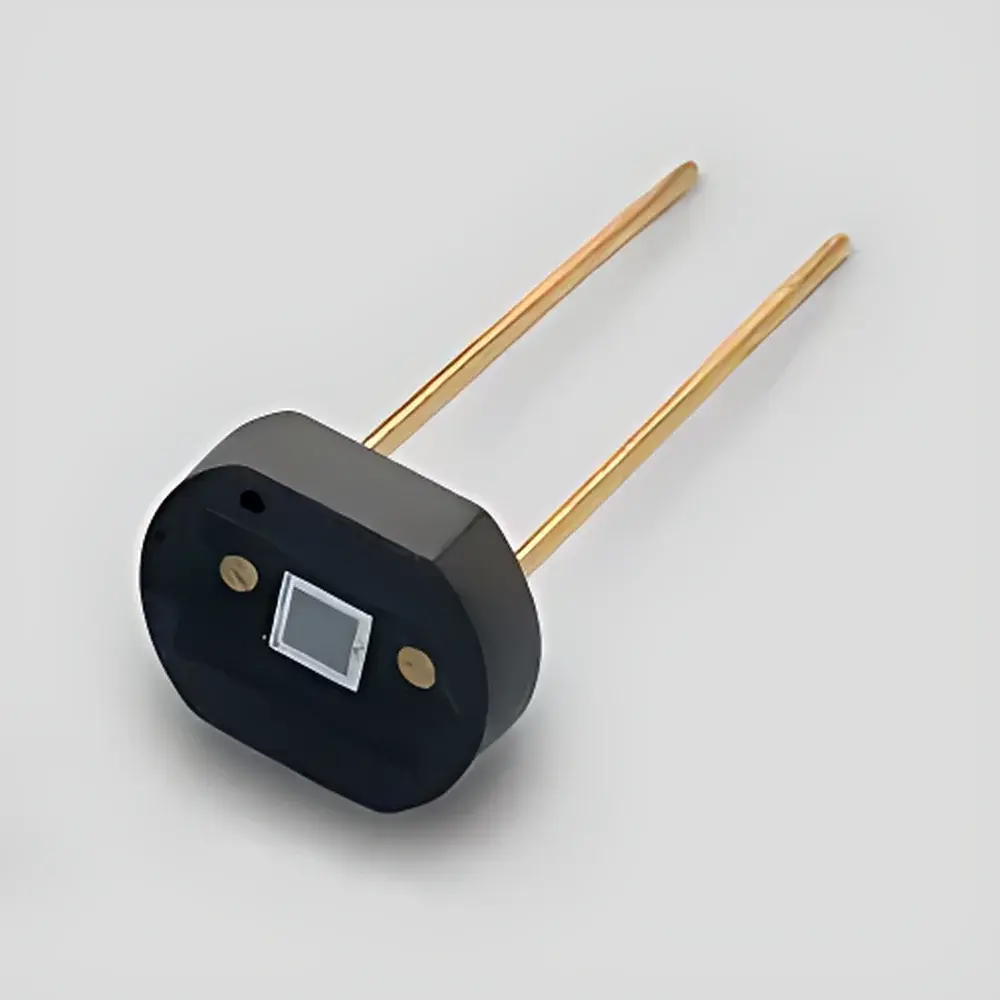
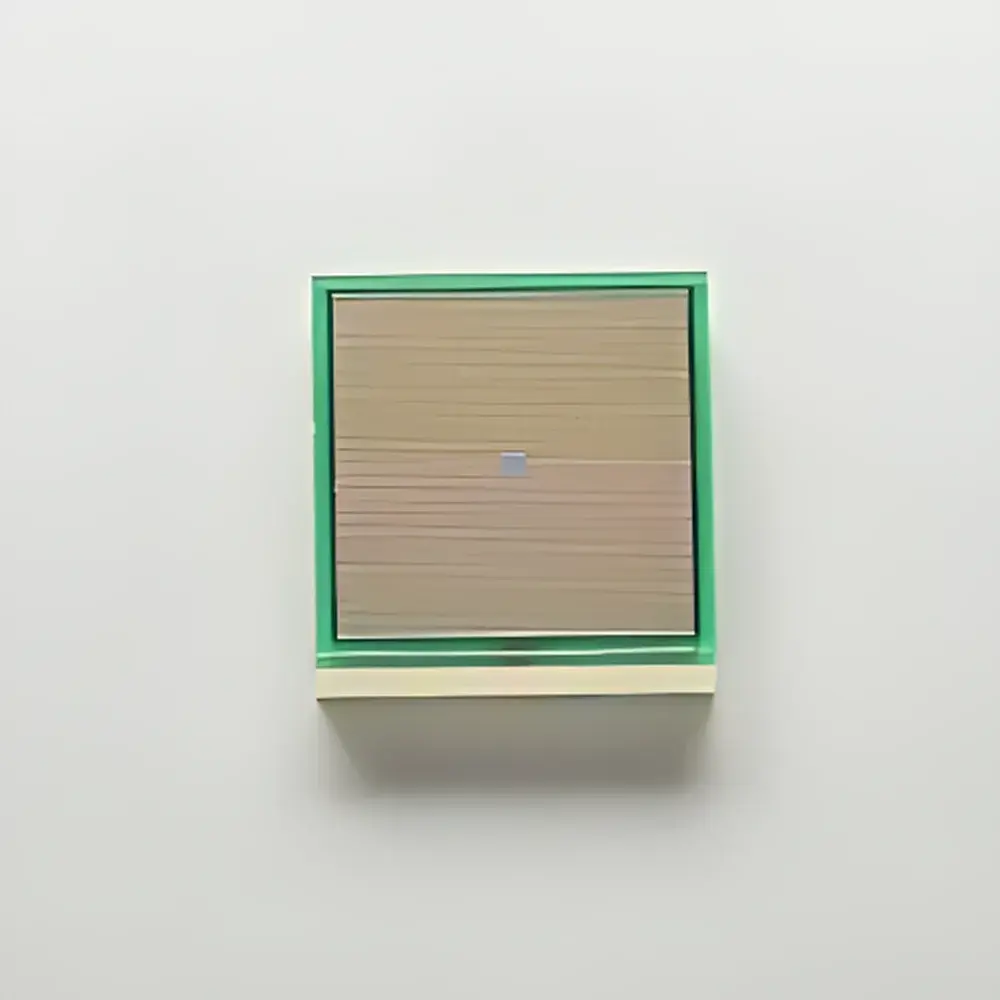
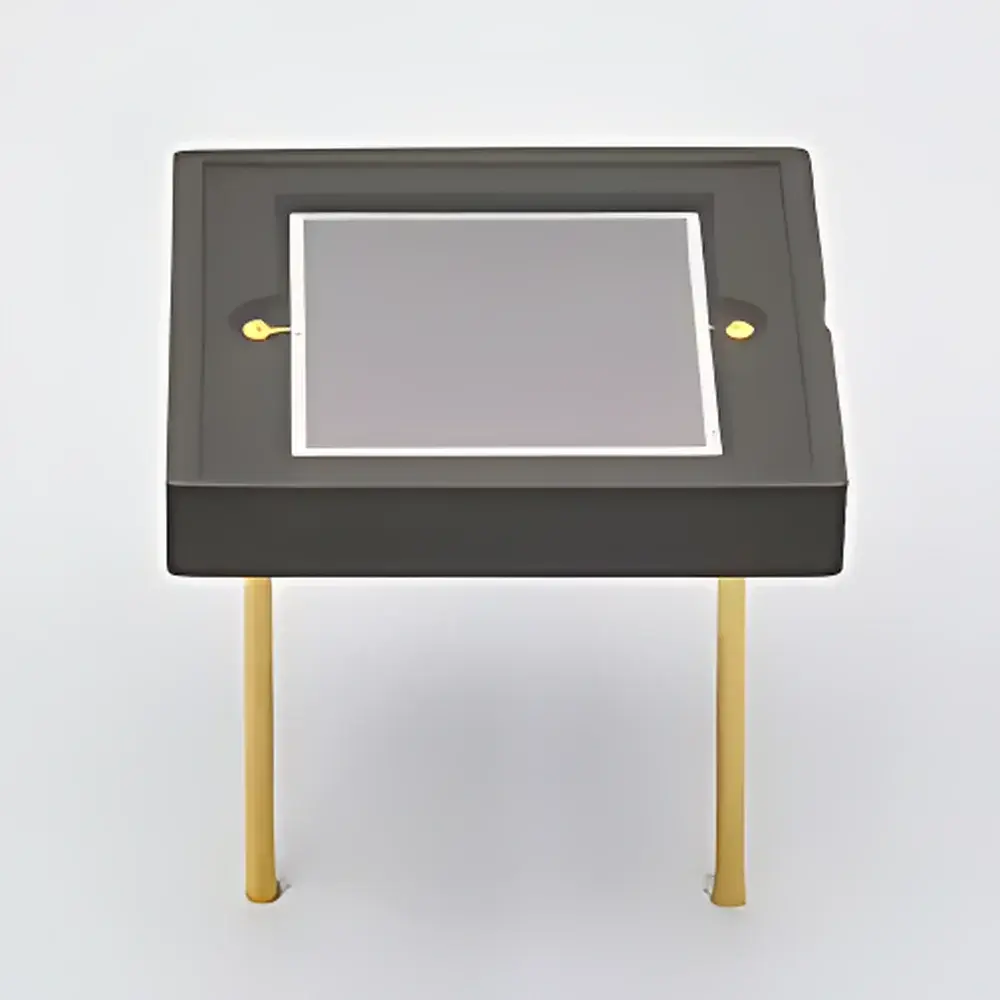
Hamamatsu S13360 Multi-Pixel Photon Counter (MPPC) Silicon Photomultiplier
| Brand | Hamamatsu |
|---|---|
| Origin | Japan |
| Manufacturer Type | Original Equipment Manufacturer (OEM) |
| Import Status | Imported |
| Model | S13360 |
| Component Category | Optical Component |
| Packaging | Surface-Mount (SMD) or Ceramic Dual-In-Line (CDIP), Configurable per Application |
Overview
The Hamamatsu S13360 Multi-Pixel Photon Counter (MPPC) is a solid-state photodetector engineered for single-photon sensitivity and high-gain, low-noise optical signal acquisition. Based on an array of microcells—each a reverse-biased avalanche photodiode (APD) operating in Geiger mode—the S13360 delivers deterministic photon counting capability with sub-nanosecond timing resolution. Unlike traditional photomultiplier tubes (PMTs), the MPPC offers immunity to magnetic fields, compact form factor, low operating voltage (typically 24–70 V), and compatibility with standard printed circuit board (PCB) assembly processes. Its semiconductor architecture enables integration into space-constrained, radiation-tolerant, or high-reliability systems common in nuclear physics instrumentation, time-of-flight positron emission tomography (TOF-PET), LiDAR receivers, fluorescence lifetime imaging (FLIM), and ultra-low-light spectroscopy.
Key Features
- High photon detection efficiency (PDE) optimized across visible to near-infrared spectrum (peak ~420 nm, extended response up to 900 nm)
- Uniform microcell architecture with configurable pixel pitch (e.g., 50 µm, 75 µm, or 100 µm variants available in S13360 series)
- Low dark count rate (DCR) — typically < 100 kHz/mm² at 20 °C, thermally stabilized via integrated or external Peltier cooling
- Fast rise time (< 1 ns) and pulse width (~10–20 ns), enabling precise time-correlated single-photon counting (TCSPC)
- Linear dynamic range spanning 5–6 orders of magnitude through analog summation of microcell outputs
- Robust packaging options: surface-mount ceramic package (SMD) for automated reflow soldering, or hermetically sealed ceramic dual-in-line package (CDIP) for high-vacuum or cryogenic environments
- Compliant with JEDEC J-STD-020 moisture sensitivity level (MSL) standards for industrial PCB assembly
Sample Compatibility & Compliance
The S13360 MPPC is designed for direct coupling with scintillation crystals (e.g., LYSO, BGO, LaBr₃), optical fibers (including multimode and plastic optical fiber), and micro-optical elements such as microlens arrays or diffractive beam splitters. It supports both analog summing output (for intensity-based measurements) and digital photon counting output (via external quenching and discrimination circuits). Device-level compliance includes RoHS Directive 2011/65/EU, REACH Regulation (EC) No. 1907/2006, and ISO 9001-certified manufacturing. For regulated life science or medical device applications, the component meets traceability requirements under ISO 13485 and supports full documentation packages—including lot-specific test reports, burn-in data, and failure mode analysis—for GLP/GMP audit readiness.
Software & Data Management
While the S13360 is a bare die or packaged component (not a turnkey instrument), it is routinely interfaced with industry-standard data acquisition platforms including National Instruments PXIe systems, CAEN DT55xx digitizers, and custom FPGA-based readout electronics. Hamamatsu provides comprehensive technical documentation: SPICE models for circuit simulation, MATLAB-compatible calibration scripts for gain and DCR characterization, and Python APIs for real-time histogramming and coincidence logic implementation. All firmware and configuration tools adhere to IEEE 1588 Precision Time Protocol (PTP) synchronization standards where applicable. Raw output data conforms to HDF5 v1.10+ format for long-term archival and interoperability with SciPy, ROOT, and LabVIEW-based analysis pipelines.
Applications
- Time-of-flight mass spectrometry (TOF-MS) detectors requiring picosecond-level jitter performance
- Scintillation-based radiation monitoring systems compliant with IEC 62327 and ANSI N42.33
- Quantum optics experiments involving Hanbury Brown–Twiss (HBT) interferometry or Bell state measurement
- Biophotonics platforms for diffuse optical tomography (DOT) and single-molecule Förster resonance energy transfer (smFRET)
- Automotive solid-state LiDAR modules meeting ISO 26262 ASIL-B functional safety requirements
- Space-qualified payloads for cosmic ray detection (e.g., CubeSat-based Cherenkov telescopes)
FAQ
What bias voltage range is required for stable operation of the S13360?
The recommended overvoltage range is +2.0 to +5.0 V above breakdown voltage (Vbd), which varies by pixel pitch and temperature; typical Vbd values are 22.5 V (±0.5 V) at 25 °C for the 50 µm variant.
Can the S13360 be operated in gated mode for background suppression?
Yes — its fast recovery time (< 100 ns) supports active gating via external MOSFET switches synchronized to laser pulses or event triggers.
Is thermal management mandatory for quantitative photon counting?
For DCR stability better than ±5% over 8 hours, temperature control within ±0.5 °C of setpoint is recommended; Hamamatsu supplies thermal interface material (TIM) specifications and PCB copper pour guidelines.
Does Hamamatsu provide radiation damage test data for space applications?
Yes — proton and gamma irradiation test reports (up to 100 krad(Si) and 1 × 10¹⁰ p/cm²) are available under NDA for qualified aerospace customers.
How does crosstalk probability scale with microcell density in the S13360 series?
Measured optical crosstalk remains below 15% at nominal overvoltage and decreases with lower operating temperature; electrical crosstalk is suppressed by deep trench isolation in all S13360 generations.




