
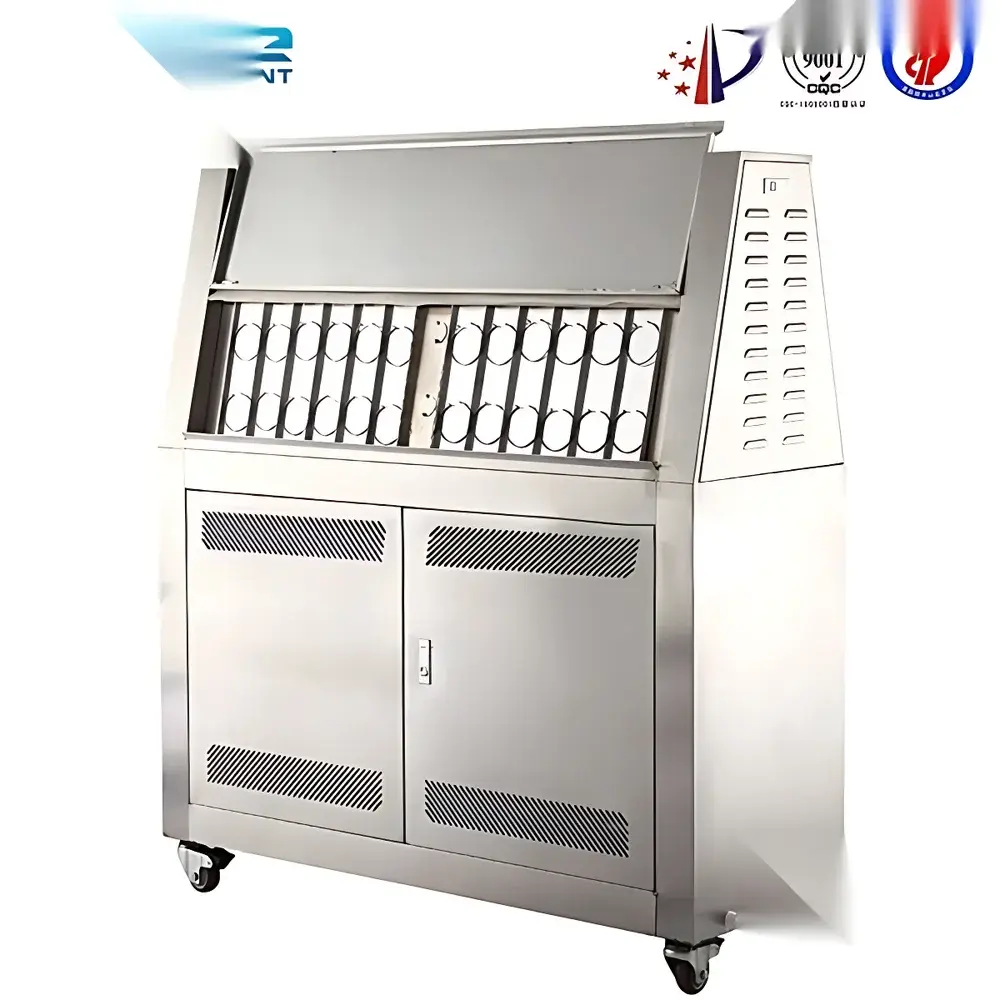
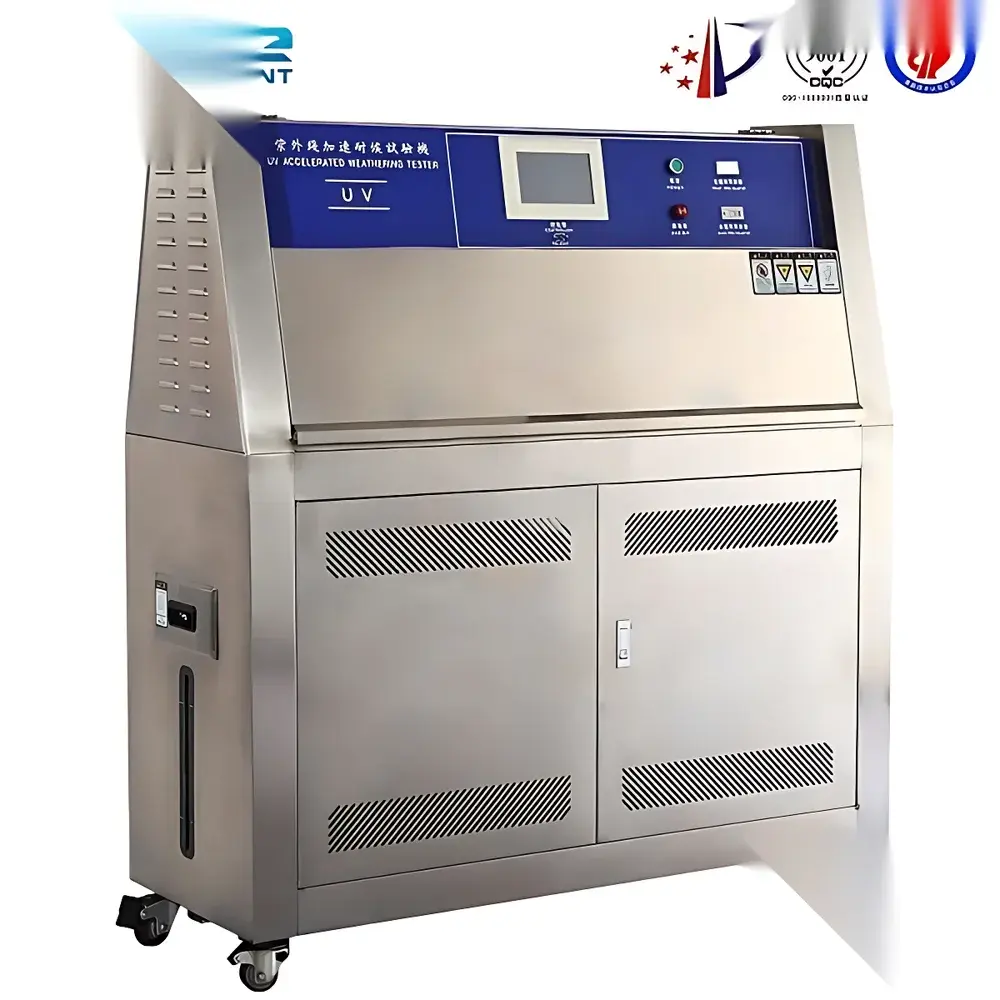
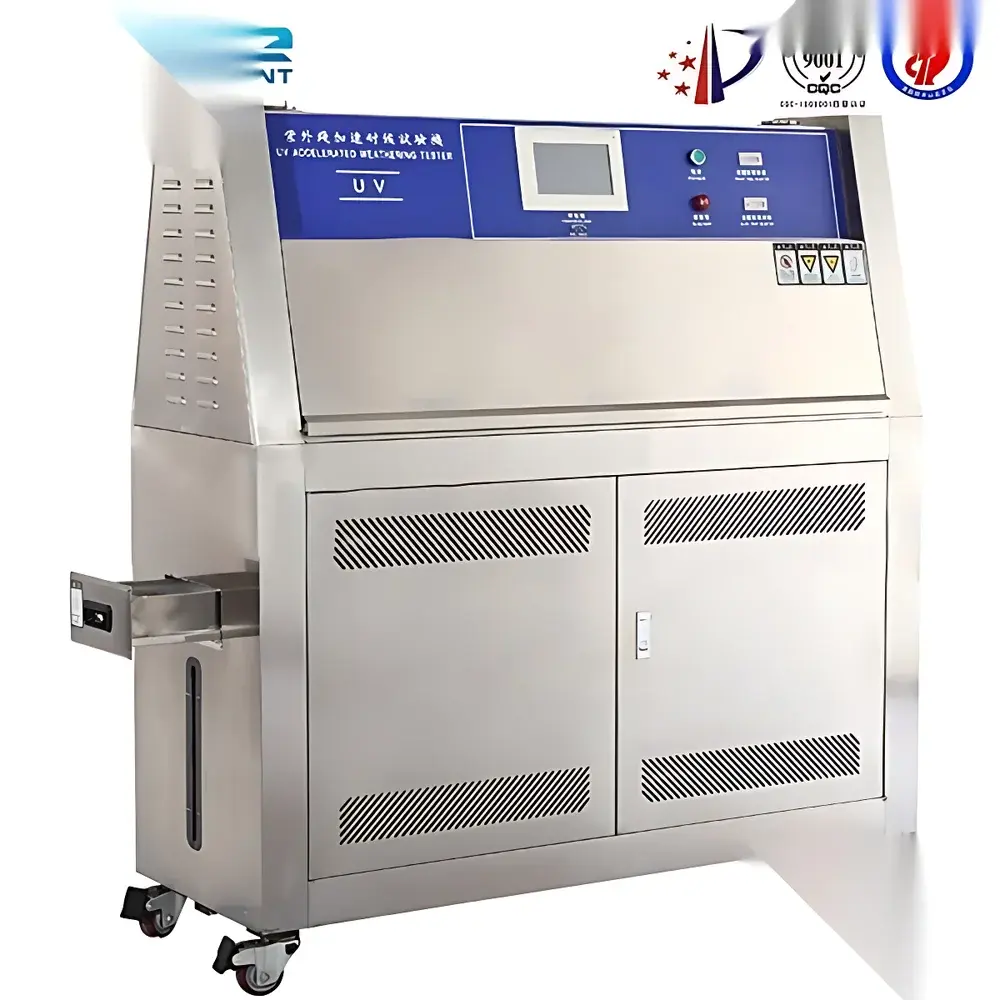
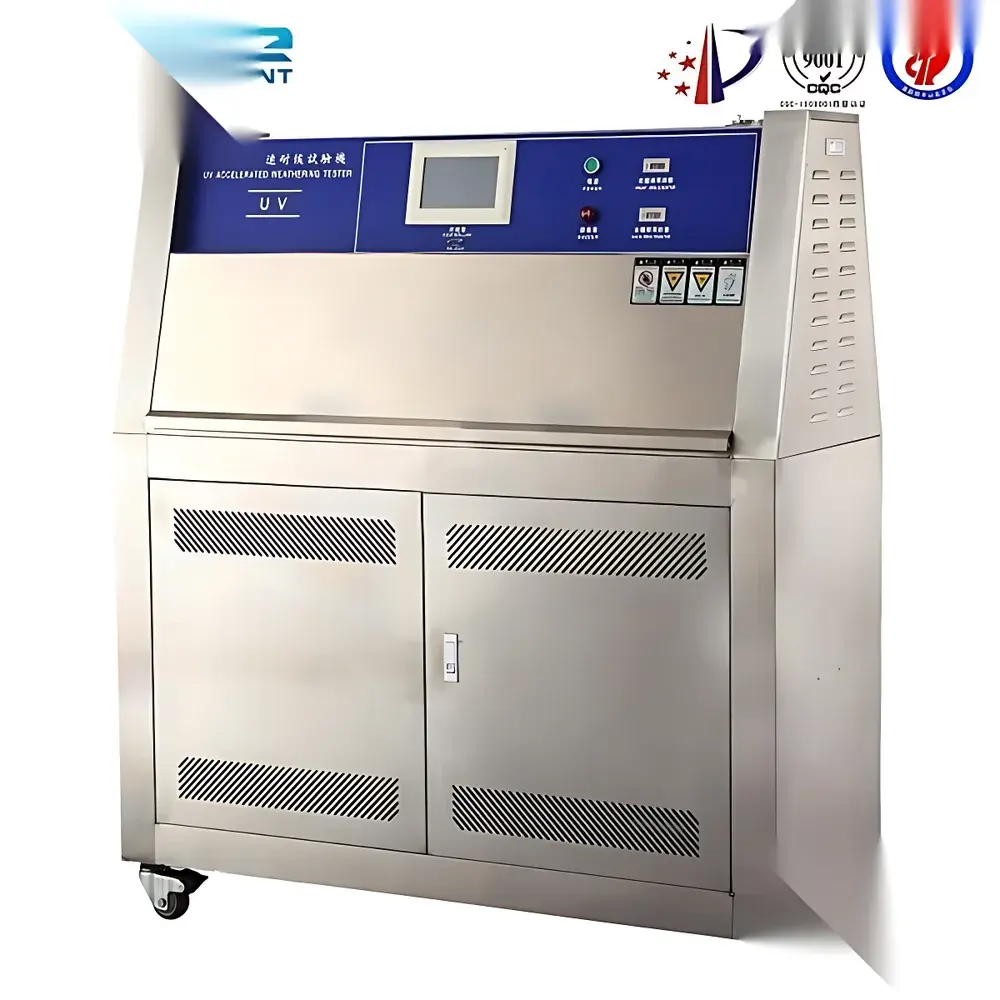
UV Accelerated Weathering Test Chamber
| Brand | Other Brands |
|---|---|
| Origin | Imported |
| Manufacturer Type | General Distributor |
| Price | USD 2,650 (Reference Only) |
Overview
The UV Accelerated Weathering Test Chamber is an engineered environmental test system designed to simulate and accelerate the damaging effects of solar ultraviolet (UV) radiation, moisture condensation, and thermal cycling on polymeric, coating, automotive, aerospace, and architectural materials. Based on ASTM G154, ISO 4892-3, and SAE J2020 standards, it employs fluorescent UV lamps—typically UVA-340 or UVB-313—to replicate the critical short-wavelength UV spectrum (290–400 nm) responsible for photochemical degradation. Simultaneous condensation cycles (via controlled water vapor saturation at elevated temperature) emulate dew formation, while optional spray functionality introduces thermal shock and surface erosion mechanisms. This combination enables rapid assessment of material failure modes—including yellowing, chalking, cracking, gloss loss, embrittlement, and tensile strength reduction—within days or weeks, compressing years of outdoor exposure into a reproducible laboratory protocol.
Key Features
- Fluorescent UV lamp array with selectable spectral output (UVA-340 for daylight simulation; UVB-313 for aggressive, accelerated testing)
- Programmable irradiance control (typically 0.35–1.55 W/m² @ 340 nm) with integrated radiometer feedback
- Condensation cycle generation via heated water reservoir and saturated air chamber (temperature range: 40–60 °C)
- Optional water spray system for thermal shock and surface wetting simulation (adjustable duration/frequency)
- Digital touchscreen controller with multi-step program storage (up to 100 cycles), real-time monitoring, and data logging
- Stainless steel interior chamber with quartz glass UV-transmitting viewing window and safety interlock
- Compliance-ready design: meets CE marking requirements; supports audit trails for GLP/GMP environments when paired with validated software
Sample Compatibility & Compliance
The chamber accommodates flat specimens up to 75 mm thick and 150 mm × 300 mm in planar dimension, secured on non-reflective aluminum sample racks. Compatible substrates include paints, plastics, elastomers, textiles, adhesives, and composite laminates. All operational parameters adhere to internationally recognized test standards: ASTM G154 (Standard Practice for Operating Fluorescent Ultraviolet (UV) Lamp Apparatus for Exposure of Non-Metallic Materials), ISO 4892-3 (Plastics — Methods of Exposure to Laboratory Light Sources — Part 3: Fluorescent UV Lamps), and SAE J2020 (Environmental Degradation of Automotive Exterior Materials). Optional calibration services provide traceable NIST-certified irradiance verification per ASTM E2583.
Software & Data Management
The embedded controller records time-stamped irradiance, chamber temperature, condensation duration, and spray events at user-defined intervals (minimum 1-minute resolution). Exportable CSV files support integration with LIMS or statistical analysis platforms (e.g., JMP, Minitab). For regulated environments, optional PC-based software provides 21 CFR Part 11 compliance features—including electronic signatures, audit trail generation, role-based access control, and secure data archiving. All firmware updates are delivered via encrypted USB interface with version-locking and rollback capability.
Applications
This test chamber serves quality assurance laboratories in automotive OEMs (for exterior trim, headlamp lenses, and sealants), paint & coatings manufacturers (for gloss retention and color stability validation), photovoltaic module producers (encapsulant yellowing and backsheet delamination screening), and building product developers (roofing membranes, window profiles, and facade cladding). It is routinely deployed during formulation development, supplier qualification, and regulatory submission dossiers requiring accelerated aging evidence under IEC 61215 (PV modules) or EN 15804 (construction EPDs).
FAQ
What UV lamp types are supported, and how do they differ?
UVA-340 lamps closely match terrestrial sunlight UV spectrum down to 295 nm and are recommended for realistic weathering simulation. UVB-313 lamps emit shorter wavelengths (down to 280 nm), inducing faster degradation—used primarily for quality control screening.
Is operator UV exposure a safety concern?
Yes. The chamber incorporates Class 3R UV laser safety interlocks, automatic lamp shutoff upon door opening, and requires ANSI Z87.1-compliant UV-blocking eyewear during specimen loading/unloading. Exposure time per operation must remain below 60 seconds.
How often should irradiance sensors be calibrated?
Annual calibration against a NIST-traceable reference sensor is recommended. In-house verification using the built-in reference lamp should be performed before each test campaign.
Can this chamber meet FDA or pharmaceutical packaging validation requirements?
While not specifically designed for USP /, its controlled UV/condensation profile supports extractables and leachables pre-screening for polymer-based primary packaging—when combined with complementary analytical methods (e.g., HPLC-UV, GC-MS).
What maintenance is required between test cycles?
Drain and dry the condensate pan; wipe stainless interior with deionized water; inspect lamp ends for blackening; verify spray nozzle clearance; and clean quartz viewport with lint-free cloth and isopropyl alcohol.



