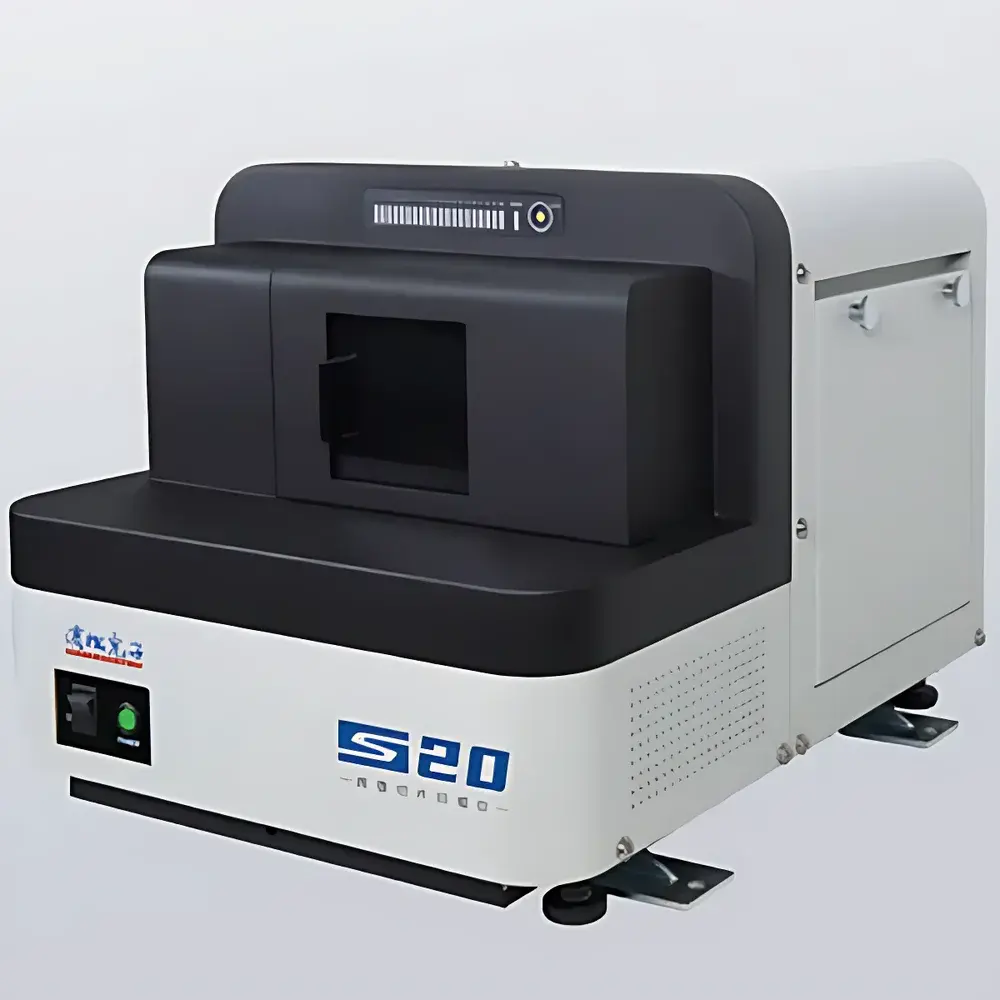
Hamamatsu NanoZoomer S20 Digital Slide Scanner BHP9608
| Brand | Hamamatsu Photonics |
|---|---|
| Origin | China (Hebei) |
| Manufacturer Type | Authorized Distributor |
| Origin Category | Domestic |
| Model | BHP9608 |
| Pricing | Upon Request |
| Application Domain | Research |
| Imaging Modality | Brightfield Scanning |
| Scan Coverage | Whole-Slide Imaging (WSI) |
| Throughput | High-Throughput |
| Operation Mode | Fully Automatic |
| Form Factor | Benchtop |
| Optical Resolution | ≤0.25 µm/pixel (at 40× objective) |
| Slide Capacity | 20-slides per batch |
| Scan Speed | ~30 seconds per slide (40×, brightfield) |
| Loading/Unloading Time | ≤15 minutes for 20 slides (40×) |
| Compatible Stainer | Sakura Tissue-Tek® Prisma® 4768 20-slide stainer |
| Software Platform | NDP.view2 / NDP.scan |
| Compliance | CE-IVD, ISO 13485, FDA-listed (Class II), GLP/GMP-ready audit trail support |
Overview
The Hamamatsu NanoZoomer S20 Digital Slide Scanner BHP9608 is a high-performance, benchtop whole-slide imaging (WSI) system engineered for research-grade digital pathology workflows. Utilizing precision motorized stage control, high-numerical-aperture optics, and sCMOS-based brightfield line-scan imaging technology, the S20 captures histopathological specimens with sub-micron spatial fidelity and photometric consistency across the entire slide surface. Designed for integration into academic laboratories, core pathology facilities, and translational research centers, the system delivers reproducible, quantitative image data compliant with international standards for digital biomarker development, AI training, and multi-institutional study collaboration.
Key Features
- Precision Brightfield WSI Architecture: Employs a high-stability, vibration-damped optical train with 20× and 40× plan-apochromatic objectives and automated focus mapping to ensure uniform resolution (≤0.25 µm/pixel at 40×) and minimal parallax error.
- High-Throughput Automation: Processes up to 20 glass slides per batch without manual intervention; average scan time of ~30 seconds per slide in 40× mode, enabling >500 slides/day in continuous operation under standard lab conditions.
- Integrated Slide Handling: Features a dual-cassette loader compatible with Sakura Tissue-Tek® Prisma® 4768 20-slide staining racks—enabling direct transfer from staining to scanning with no reorientation or barcode re-registration required.
- Robust Image Quality Pipeline: Includes real-time color calibration (CIE LAB space), adaptive pixel stitching with sub-pixel registration, and dynamic background illumination correction to eliminate vignetting and cross-slide intensity drift.
- Benchtop Footprint & Environmental Resilience: Compact chassis (W × D × H: 650 × 580 × 420 mm) meets ISO 15190 biosafety lab spatial requirements; operates reliably at ambient temperatures (15–30°C) and humidity (30–70% RH, non-condensing).
Sample Compatibility & Compliance
The BHP9608 supports standard 1 × 3 inch (25 × 75 mm) glass microscope slides with thicknesses of 0.9–1.2 mm, including charged, APES-coated, and polymer-coated substrates. It accommodates common histological stains (H&E, IHC, Trichrome, PAS) and fluorescence-compatible counterstains when used with optional LED excitation modules. System validation documentation includes IQ/OQ/PQ protocols aligned with ISO/IEC 17025 and ASTM E2925-19 for digital pathology scanner performance verification. All firmware and software versions maintain traceable revision control and support 21 CFR Part 11-compliant electronic signatures and audit trails when deployed with Hamamatsu’s certified NDP.scan v3.x configuration.
Software & Data Management
The scanner operates natively with Hamamatsu’s NDP.scan acquisition software and NDP.view2 viewing platform (v4.0+), both validated for Windows 10/11 (64-bit) and compatible with DICOM-SR structured reporting extensions. Raw image data is stored in lossless NDPI format (JPEG2000 compression, 8/16-bit depth), supporting hierarchical pyramid generation (up to 16 zoom levels) and ROI-based annotation export in XML/JSON. Integration with PACS, LIS, and third-party AI inference engines (e.g., QuPath, HALO, Visiopharm) is achieved via standardized RESTful APIs and OHIF DICOM-Web adapters. Metadata embedding complies with DICOM Supplement 145 and MIAME guidelines for reproducible computational pathology studies.
Applications
- Quantitative morphometric analysis of tumor-infiltrating lymphocytes (TILs) in immuno-oncology research
- Longitudinal tissue archive digitization for biobank curation and FAIR-data compliance
- Training and validation of deep learning models for nuclear segmentation, mitotic count, and grading algorithms
- Multi-center clinical trial support with standardized WSI acquisition protocols (CAP/ASCO/IASLC consensus)
- Remote expert consultation, telepathology, and educational slide library development
FAQ
Does the BHP9608 support fluorescence scanning?
Yes—when equipped with optional LED excitation modules (450 nm, 530 nm, 620 nm) and emission filters, the system enables dual-modality brightfield/fluorescence WSI acquisition.
Is DICOM export included in the base configuration?
Yes—NDP.scan v3.5+ provides native DICOM-SR export with configurable SOP class mapping and modality worklist integration.
Can the scanner be integrated into a LIMS environment?
Yes—via HL7 v2.x or REST API interfaces; Hamamatsu provides documented integration blueprints for major LIMS vendors (e.g., LabVantage, Thermo Fisher SampleManager).
What maintenance schedule is recommended?
Annual preventive maintenance (PM) is advised, including optical alignment verification, stage calibration, and lamp intensity profiling—per ISO 13485 service records.
Is remote diagnostics supported?
Yes—the system includes secure TLS-encrypted remote access capability for Hamamatsu Field Service Engineers under customer-approved consent protocols.