
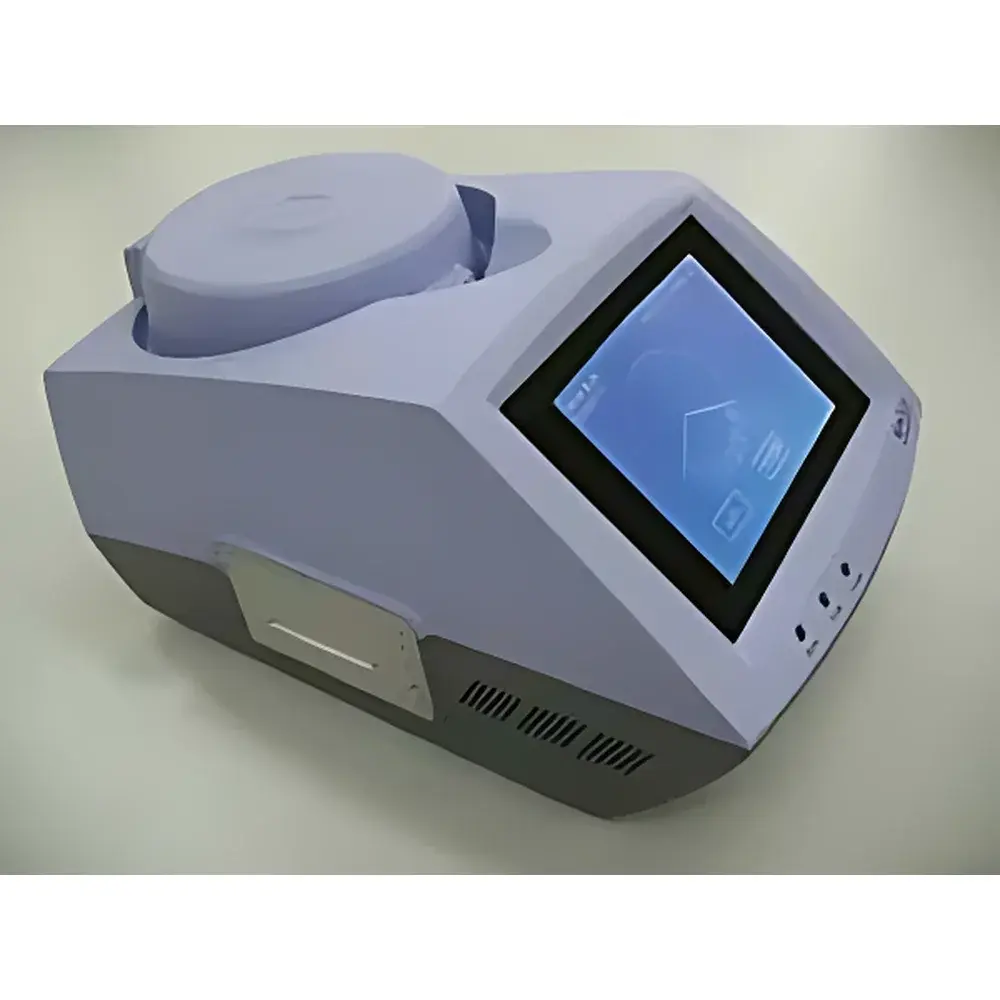
Hamamatsu BHP9514 Rapid Water Toxicity Analyzer (Bioluminescent Bacterial Assay)
| Brand | Hamamatsu Photonics / BHP |
|---|---|
| Origin | Hebei, China |
| Manufacturer Type | Authorized Distributor |
| Regional Classification | Domestic (PRC) |
| Model | BHP9514 |
| Instrument Type | Benchtop Laboratory Analyzer |
| Biological Indicator | *Aliivibrio fischeri* (formerly *Vibrio fischeri*) bioluminescent bacteria |
| Sample Capacity | 18 positions |
| Minimum Assay Time | 5 min |
| Detector | Photomultiplier Tube (PMT) |
| Spectral Response Range | 300–650 nm |
| Display | Integrated LCD touchscreen interface |
| Data Output | Built-in thermal printer |
| Connectivity | USB and RS-232 for PC integration |
| Environmental Operating Range | 5–40 °C, 10–90% RH (non-condensing) |
| Compliance | Designed to support ISO 11348-3 and ASTM D5660-22 protocols |
Overview
The Hamamatsu BHP9514 Rapid Water Toxicity Analyzer is a benchtop laboratory instrument engineered for quantitative assessment of acute aquatic toxicity using the standardized bioluminescence inhibition assay. It employs freeze-dried or rehydrated cultures of *Aliivibrio fischeri*, a marine Gram-negative bacterium that emits stable, ATP-dependent blue-green light (λmax ≈ 490 nm) under optimal physiological conditions. Upon exposure to toxicants—including heavy metals, organic pollutants, pesticides, disinfection by-products, and antimicrobial agents—the bacterial respiratory chain is disrupted, leading to rapid, dose-dependent suppression of bioluminescence. The BHP9514 quantifies this inhibition (%) relative to a non-toxic control, enabling calculation of EC50 values (effective concentration causing 50% luminescence reduction) in accordance with internationally recognized test guidelines. Its design emphasizes operational robustness, analytical reproducibility, and compatibility with routine environmental monitoring workflows in regulatory, industrial, and public health laboratories.
Key Features
- 18-position automated sample carousel for unattended sequential analysis—enabling high-throughput screening of raw water, treated effluent, surface water, and industrial process streams.
- Ultra-rapid assay kinetics: Reliable toxicity readouts achievable within 5 minutes post-exposure, supporting time-critical emergency response and process control applications.
- High-sensitivity photomultiplier tube (PMT) detector with calibrated spectral response from 300 nm to 650 nm—optimized for native *A. fischeri* emission while rejecting ambient stray light via integrated optical shielding.
- Integrated 7-inch capacitive touchscreen display with intuitive GUI—allowing full instrument control, real-time luminescence monitoring, and on-device result visualization without external computing hardware.
- Built-in thermal printer for immediate hardcopy output of sample ID, measurement time, inhibition percentage, pass/fail status, and operator-defined annotations.
- PC connectivity via USB and RS-232 interfaces—supporting bidirectional data exchange, remote instrument control, kinetic curve generation, and batch export in CSV or XML formats.
- Visual status feedback via front-panel LED indicators: green (compliant), amber (borderline), red (toxicity exceeds preset threshold)—facilitating rapid field-decision making.
Sample Compatibility & Compliance
The BHP9514 accepts liquid samples in standard 15 mL polypropylene tubes and accommodates undiluted or pre-diluted aqueous matrices—including drinking water, wastewater influent/effluent, groundwater, river/lake water, sediment pore water extracts, and industrial cooling water. It supports both single-point (screening) and multi-concentration (dose-response) testing configurations. The system is configured to align with the methodological requirements of ISO 11348-3:2022 (Water quality — Determination of the inhibitory effect of water samples on the light emission of *Vibrio fischeri* — Part 3: Method using freeze-dried bacteria) and ASTM D5660-22 (Standard Test Method for Determining Aquatic Toxicity of Chemical Substances Using *Vibrio fischeri*). While not certified as GLP-compliant out-of-the-box, its audit-ready data logging, user-access logs, and timestamped result files facilitate implementation within GLP- or GMP-aligned quality systems when paired with appropriate SOPs and electronic signature controls.
Software & Data Management
The BHP9514 operates with embedded firmware that records all measurement metadata—including date/time stamp, sample ID, incubation duration, raw photon counts, background-subtracted signal, % inhibition, and operator ID. Data can be exported directly to Windows-based PCs running Hamamatsu’s optional BHP-DataLink software, which provides tools for statistical analysis (mean ± SD, CV%), ECx interpolation via logistic regression (Probit or Weibull models), report generation compliant with ISO/IEC 17025 documentation standards, and secure archiving. All data files include checksum validation and are stored in non-proprietary formats to ensure long-term accessibility and interoperability with LIMS platforms.
Applications
- Rapid field and laboratory screening of drinking water sources during contamination events or infrastructure failure scenarios.
- Performance verification of wastewater treatment processes—monitoring toxicity removal across primary, secondary, and tertiary treatment stages.
- Compliance testing of industrial discharge permits where whole-effluent toxicity (WET) is mandated under national regulatory frameworks.
- Assessment of biocide efficacy and residual toxicity in cooling tower water, pharmaceutical manufacturing rinse water, and food processing sanitation cycles.
- Ecotoxicological profiling of petroleum hydrocarbons, PAHs, and surfactants in spill response and remediation validation.
- Antibiotic potency screening in pharmaceutical QC environments using standardized bacterial luminescence endpoints.
- Research applications involving reactive oxygen species (ROS) detection via oxidative stress-induced luminescence quenching in *A. fischeri*.
FAQ
What biological indicator organism does the BHP9514 use?
The instrument utilizes lyophilized *Aliivibrio fischeri* (strain NRRL B-11177 or equivalent), supplied in sealed vials with defined viability and luminescence stability specifications.
Is calibration traceable to national standards?
Photometric calibration is performed using NIST-traceable neutral density filters; biological performance verification is conducted using potassium dichromate reference toxicant per ISO 11348-3 Annex A.
Can the BHP9514 be integrated into an existing LIMS?
Yes—via ASCII-based serial communication or CSV file import/export, supporting structured data ingestion into most modern LIMS architectures.
Does the system meet FDA 21 CFR Part 11 requirements?
Out-of-the-box functionality does not include electronic signatures or audit trail encryption; however, configuration options and procedural controls exist to support Part 11 compliance in validated environments.
What maintenance is required for long-term reliability?
Routine cleaning of the PMT window and sample chamber, quarterly verification of dark current and gain stability, and annual recalibration of the optical path using certified reference standards.
Related Products







