Hamamatsu Infrared Detector Sensors
| Brand | Hamamatsu |
|---|---|
| Origin | Japan |
| Manufacturer Type | Original Equipment Manufacturer (OEM) |
| Import Status | Imported |
| Model | D |
| Component Category | Optical Component |
| Spectral Range | 1–22 µm (depending on material type) |
| Operating Temperature | Room-temperature and cryogenically cooled variants available |
| Detector Types | Thermopile, PbS, PbSe, InSb, InAs, InGaAs, HgCdTe, Photoconductive & Photovoltaic configurations, Dual-band |
Overview
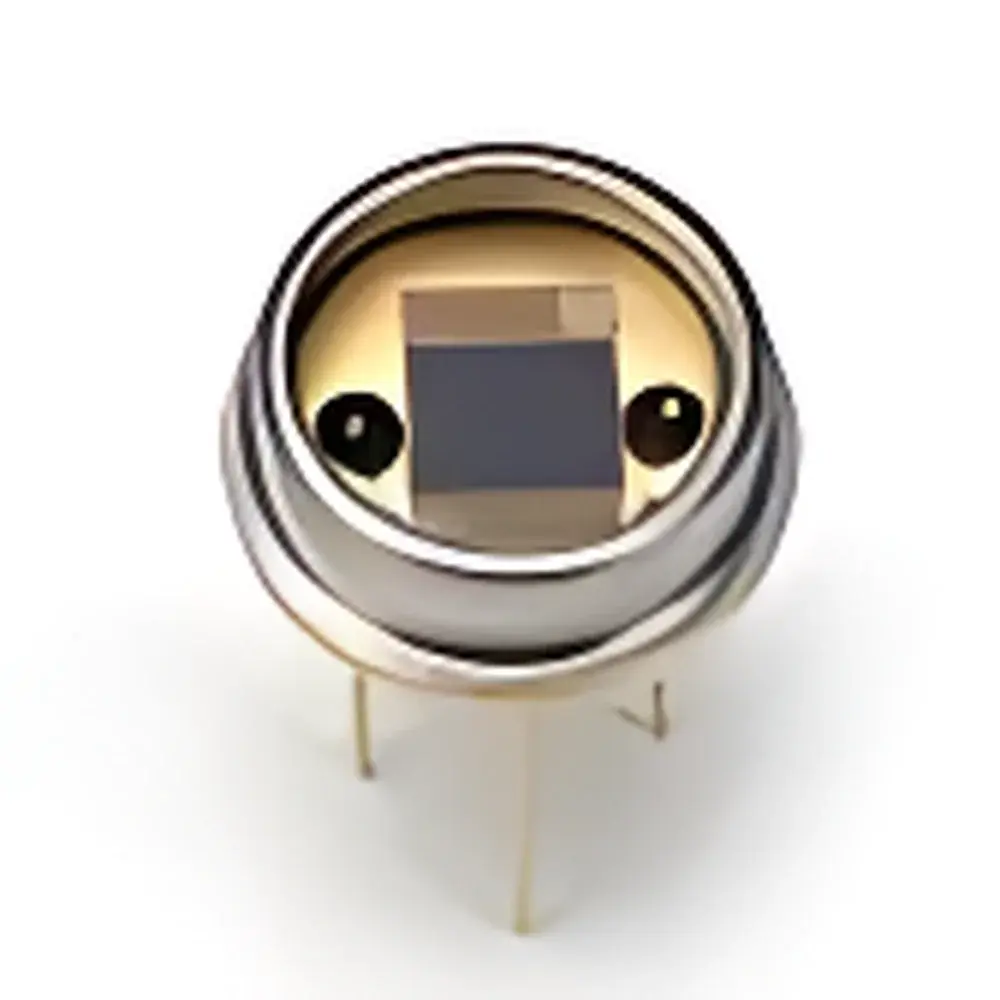
Hamamatsu infrared detector sensors are precision optical components engineered for reliable, high-fidelity detection across the near-infrared (NIR), short-wave infrared (SWIR), mid-wave infrared (MWIR), and long-wave infrared (LWIR) spectral regions. Based on fundamental photodetection principles—including photoconductive, photovoltaic, thermoelectric, and photon-drag mechanisms—these detectors convert incident IR radiation into measurable electrical signals with high linearity and low temporal drift. Designed for integration into analytical instruments, industrial monitoring systems, scientific spectrometers, and defense-grade electro-optical platforms, each detector variant is optimized for specific wavelength bands, response speed, noise floor, and thermal stability requirements. The Hamamatsu D-series represents a modular family of discrete IR sensing elements—not standalone instruments—but critical building blocks for OEMs developing custom optical subsystems compliant with international metrological standards.
Key Features
- Material-specific spectral optimization: PbS (1–3.2 µm), PbSe (1.5–5.2 µm), InAs (up to ~3.5 µm), InGaAs (0.9–2.6 µm), InSb (3–5 µm), HgCdTe (2–22 µm), and Ge:Cu (4–14 µm)
- Multiple operational modes: Uncooled (ambient temperature), thermoelectrically cooled (TEC), liquid nitrogen Dewar-cooled, and Stirling-cycle refrigerated variants
- Dual-band (bichromatic) configurations enabling simultaneous detection in two non-overlapping IR windows—e.g., 3–5 µm and 8–12 µm—via coaxial stacked sensor architecture
- High responsivity and detectivity (D*) values maintained across batch production, supporting reproducible calibration traceable to NIST or PTB reference standards
- Robust hermetic packaging options including TO-can, ceramic dual-in-line (DIP), and windowed metal housings with AR-coated ZnSe, Ge, or Si substrates
- Fast rise times (sub-microsecond for InSb and HgCdTe PV types) and low 1/f noise characteristics suitable for lock-in, pulsed-laser, and Fourier-transform spectroscopy applications
Sample Compatibility & Compliance
These detectors are compatible with standard optical breadboards, collimated beam paths, fiber-coupled interfaces (with appropriate IR-transmissive fibers), and vacuum-compatible mounting fixtures. All Hamamatsu D-series components conform to RoHS Directive 2011/65/EU and REACH Regulation (EC) No. 1907/2006. Cryogenic variants meet IEC 61000-4-2 (ESD immunity) and MIL-STD-810G environmental stress screening criteria. For regulated instrumentation development (e.g., medical IR thermography devices or EPA-certified emissions analyzers), documentation packages include full material declarations, aging test reports, and ISO 9001:2015 manufacturing process certification. Traceable calibration data—when requested—can be provided per ISO/IEC 17025:2017 accredited procedures.
Software & Data Management
As discrete sensor components, Hamamatsu D-series detectors do not include embedded firmware or proprietary drivers. However, they are fully interoperable with industry-standard signal acquisition platforms—including National Instruments DAQmx, Keysight U2300A series, and Thorlabs K-Cube controllers—via analog voltage/current output or transimpedance amplifier interfaces. Hamamatsu provides comprehensive technical documentation: spectral responsivity curves (normalized to 1 A/W at peak λ), NEP (Noise-Equivalent Power) plots, impedance vs. frequency charts, and recommended biasing schematics. For GxP-compliant system integrators, Hamamatsu supports audit-ready records including lot-specific test reports, burn-in logs, and shelf-life validation summaries aligned with FDA 21 CFR Part 11 electronic record retention guidelines.
Applications
- Gas analysis: CO₂, CH₄, NOₓ, and SF₆ detection using absorption spectroscopy in 2–5 µm and 7–14 µm atmospheric windows
- Industrial process control: Flame monitoring in combustion chambers, hot-steel surface temperature mapping, and semiconductor wafer emissivity measurement
- Scientific instrumentation: FTIR spectrometer focal-plane arrays, laser power meters for CO₂ (10.6 µm) and quantum cascade lasers, and astronomical photometry in ground-based observatories
- Defense & security: Passive IR imaging front-ends, missile warning systems, and laser countermeasure receivers
- Medical diagnostics: Non-contact tympanic thermometry, breath analysis sensors, and optical coherence tomography (OCT) extensions into SWIR
- Environmental monitoring: Remote sensing of land surface temperature, forest fire detection, and volcanic gas plume tracking via airborne multispectral payloads
FAQ
Are Hamamatsu D-series detectors supplied with calibration certificates?
Yes—certificates of conformance are included with every shipment. NIST-traceable calibration reports are available upon request for select models, subject to additional lead time and fee.
What is the typical delivery time for cryogenically cooled variants?
Standard TEC-cooled units ship within 4–6 weeks; liquid nitrogen Dewar and Stirling-cooled versions require 10–14 weeks due to custom assembly and thermal validation testing.
Can these detectors be integrated into vacuum environments?
Yes—most metal-housed variants (e.g., TO-8, TO-66) are vacuum-rated to 1×10⁻⁶ mbar; consult Hamamatsu’s mechanical drawings for outgassing rate specifications per ASTM E595.
Do you provide evaluation boards or driver circuits?
Hamamatsu offers optional evaluation kits (e.g., C12702 series) with matched preamplifiers, bias supplies, and USB interface modules for rapid prototyping and noise characterization.
Is there compatibility with third-party optical design software?
Yes—Zemax OpticStudio, CODE V, and FRED support import of Hamamatsu’s published spectral QE and angular response data via ASCII .txt or .csv formats.