
Jingfei FLA7200 Rapid Photometric, Colorimetric & Electrical Analysis System for LED and General Lamps
| Brand | Jingfei |
|---|---|
| Model | FLA7200 |
| Optical Architecture | Miniature Fiber-Optic Spectrometer + Integrating Sphere |
| Wavelength Range | 380–800 nm (customizable) |
| Wavelength Accuracy | ±2 nm |
| Wavelength Repeatability | ±0.4 nm |
| Chromaticity Coordinate Accuracy | ±0.0003 (under CIE Standard Illuminant A) |
| Correlated Color Temperature (CCT) Range | 1500 K – 25,000 K |
| Color Rendering Index (CRI) Range | 0.0 – 100.0 |
| Photometric Linearity | ±0.3% |
| Luminous Flux Range | 0.01 lm – 1.9999 × 10⁵ lm (dependent on sphere size and configuration) |
| Origin | Zhejiang, China |
| Manufacturer Type | OEM/ODM Producer |
Overview
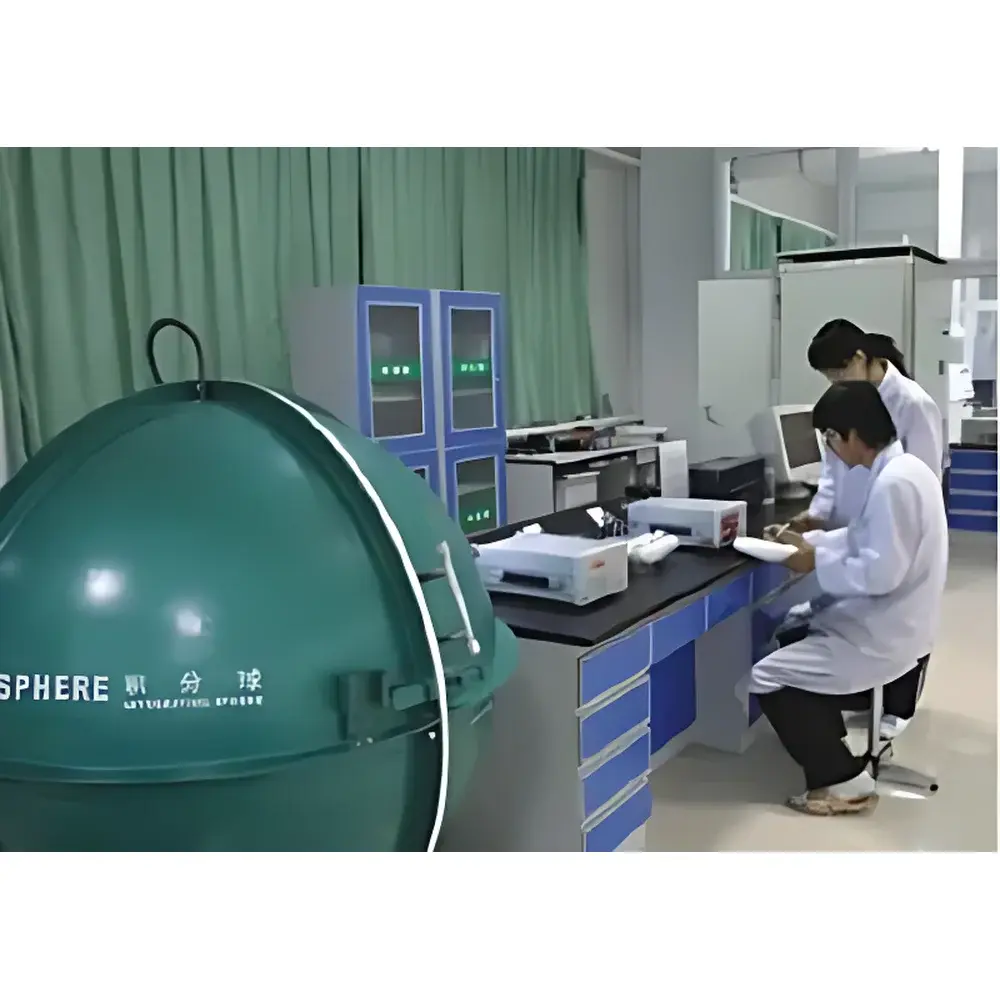
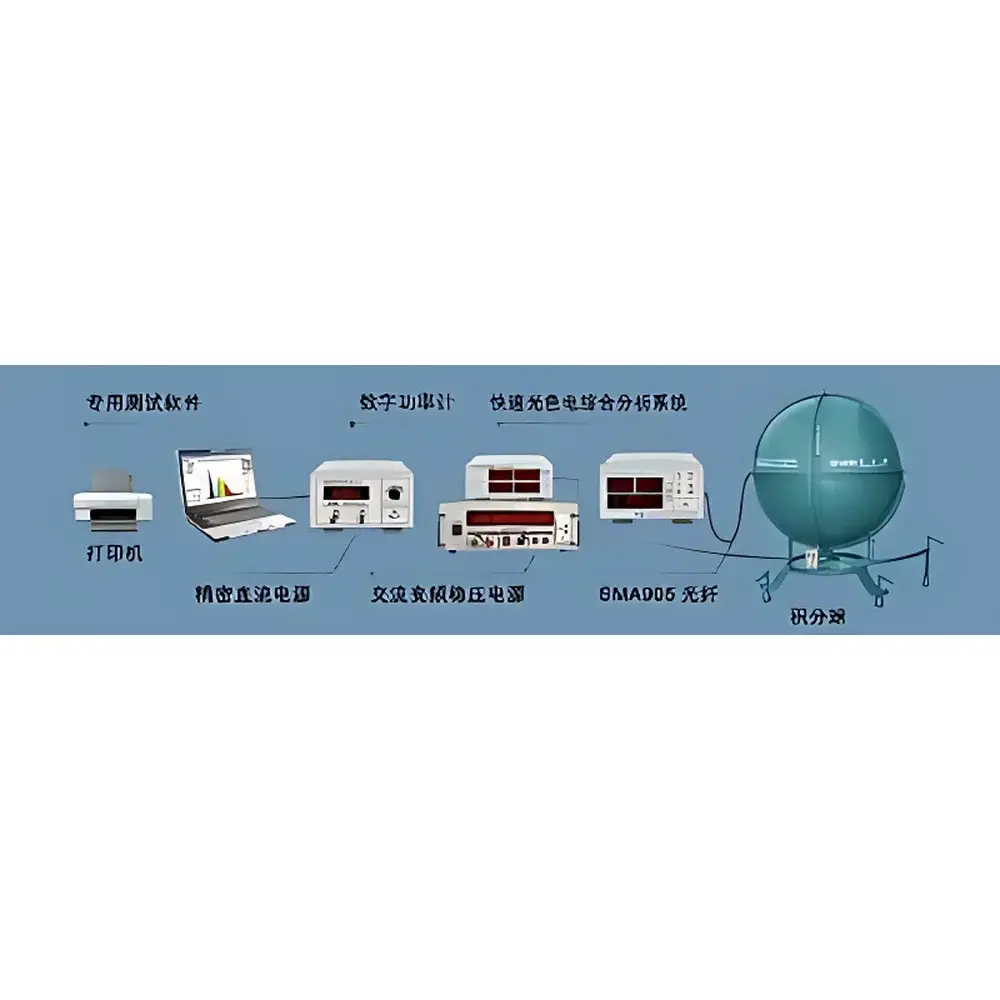
The Jingfei FLA7200 Rapid Photometric, Colorimetric & Electrical Analysis System is a fully integrated benchtop instrument engineered for high-throughput, traceable optical characterization of solid-state lighting (SSL) and conventional electric light sources. It operates on the principle of spectral radiance measurement via a calibrated miniature fiber-optic spectrometer, coupled with a thermally stabilized integrating sphere and synchronized digital power metering. The system conforms to fundamental photometric and colorimetric principles defined by the CIE (Commission Internationale de l’Éclairage), including CIE 127:2007 (measurement of LEDs), CIE 13.3:1995 (color rendering), and CIE S 025/E:2015 (LED lamp testing). Designed for laboratory, QC, and R&D environments, it delivers simultaneous acquisition of photometric (luminous flux, luminous efficacy), colorimetric (CCT, Duv, CRI, TM-30 metrics, chromaticity coordinates, dominant wavelength, peak wavelength, spectral purity, full-width half-maximum), and electrical parameters (Vf, If, power, power factor, harmonic distortion) — all under controlled thermal and temporal conditions.
Key Features
- Modular integrating sphere architecture supporting interchangeable sphere sizes (e.g., 0.3 m, 0.6 m, 1.0 m) to optimize signal-to-noise ratio across luminous flux ranges from 0.01 lm to >1.99 × 10⁵ lm
- High-stability CIE-standard tungsten-halogen reference lamp with NIST-traceable calibration certificate for spectral responsivity and photometric scale transfer
- Real-time synchronization between spectrometer acquisition, electrical parameter sampling, and thermal stabilization feedback loops to minimize drift-induced uncertainty
- Automated dark-current and stray-light correction routines compliant with CIE TR 211:2021 guidelines for spectral instrument validation
- Rugged aluminum alloy chassis with EMI-shielded enclosure and passive thermal management, enabling stable operation in non-climate-controlled lab settings
- Embedded firmware with dual-mode operation: manual single-measurement mode and automated batch protocol execution with pass/fail threshold logic
Sample Compatibility & Compliance
The FLA7200 supports standardized geometries and mounting configurations for lamps and modules per IEC 60901, IEC 62504, and ANSI C78.377. Tested sample types include: omnidirectional and directional LED lamps (A19, PAR30, GU10), LED modules (COB, SMD arrays), low-pressure sodium and compact fluorescent lamps (CFL), induction lamps, and OLED panels. All measurements adhere to metrological traceability chains aligned with ISO/IEC 17025:2017 requirements for testing laboratories. Optional factory calibration packages include CIE 1931 xy chromaticity verification, luminous flux calibration against a primary standard sphere (NIM or PTB traceable), and spectral irradiance validation per ISO/CIE 19476:2014.
Software & Data Management
The system ships with Jingfei LightLab v4.x — a Windows-based application built on .NET Framework with native support for ASTM E308-22 conversion tables, CIE 15:2018 color space transforms, and TM-30-20 Annex B computation. Software features include: GLP-compliant audit trail (user login, method version, calibration timestamp, raw spectrum export), CSV/PDF report generation with embedded metadata (CIE illuminant tag, observer angle, integration time), batch data trending with statistical process control (SPC) charts, and API-enabled integration with MES/LIMS platforms via OPC UA or RESTful endpoints. Data files are stored in vendor-neutral HDF5 format, preserving raw spectral counts, integration settings, and environmental sensor logs (ambient temperature/humidity).
Applications
- LED manufacturing line end-of-line (EOL) photometric binning and color consistency screening
- QC verification of CCT shift and lumen depreciation during accelerated life testing (per IES LM-80 / TM-21)
- Independent lab accreditation for ENERGY STAR®, DLC, CE, and CCC certification pre-testing
- Research into phosphor degradation mechanisms via time-resolved spectral analysis at fixed drive currents
- Validation of optical design simulations (e.g., LightTools, TracePro) using empirical spectral power distribution (SPD) datasets
- Comparative evaluation of circadian-effective irradiance (Ep) and melanopic daylight efficacy ratio (DLER) per CIE S 026/E:2018
FAQ
Does the FLA7200 comply with FDA 21 CFR Part 11 for electronic records and signatures?
Yes — when deployed with optional LightLab v4.x GxP Edition, the system provides role-based access control, electronic signature workflows, and immutable audit trails meeting ALCOA+ principles.
Can the wavelength range be extended beyond 800 nm for IR-emitting devices?
Yes — custom configurations with InGaAs-detector spectrometers covering 350–1100 nm or 200–1100 nm are available upon request, subject to recalibration and sphere coating validation.
Is third-party calibration service supported post-warranty?
Yes — Jingfei maintains ISO/IEC 17025-accredited calibration laboratories in Hangzhou and Shanghai; international customers may arrange local NMI traceable recalibration via authorized service partners.
How is thermal management handled during high-power LED testing?
The system integrates a programmable DC power supply with pulse-width modulation (PWM) mode and active heatsink monitoring; optional external thermal chuck interfaces enable junction temperature control per JEDEC JESD51-1.
What spectral resolution is achieved at 380 nm and 780 nm?
Typical FWHM resolution is ≤2.5 nm across the 380–800 nm range, verified per CIE 127:2007 Annex D using mercury-argon emission lines.




