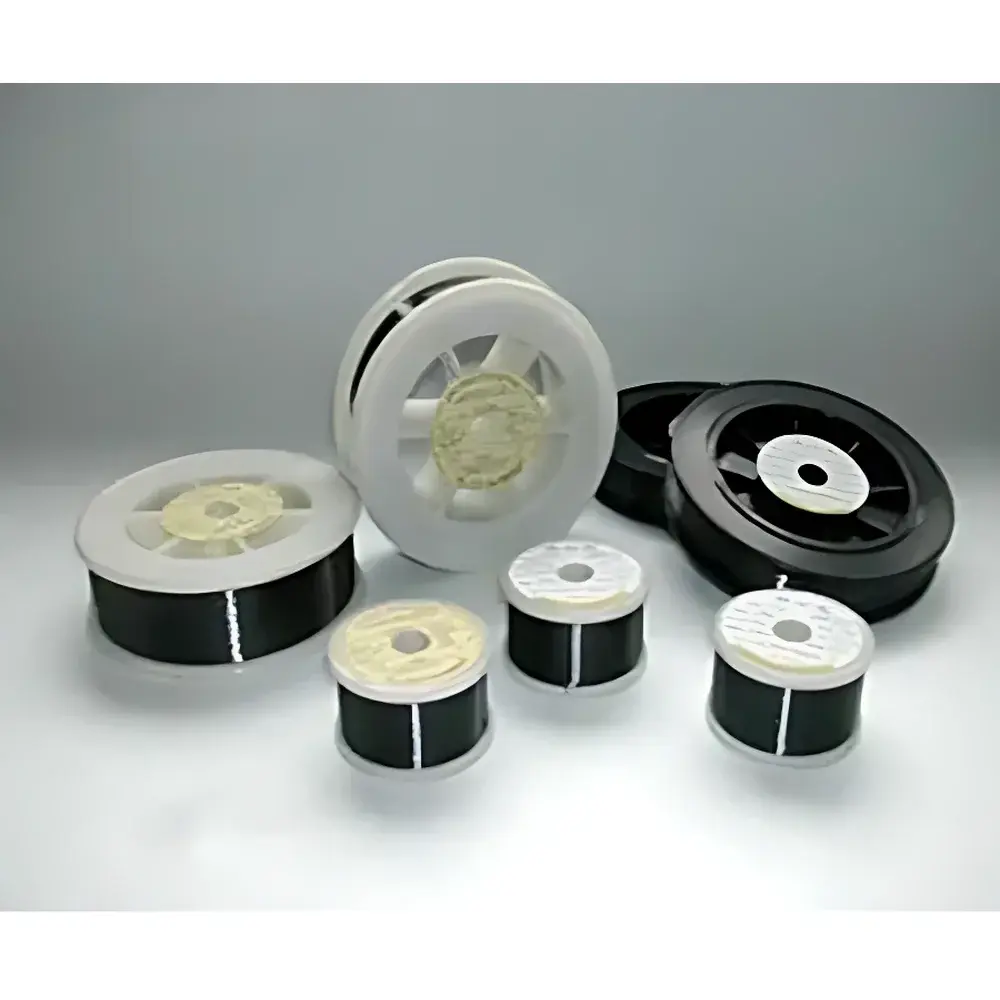
Molybdenum Wire (Mo Wire) – Hefei Kejing High-Purity Instrument Component
| Brand | Hefei Kejing |
|---|---|
| Origin | Anhui, China |
| Manufacturer Type | Authorized Distributor |
| Country of Origin | China |
| Model | Mo Wire |
| Diameter Range | 0.01–2 mm |
| Purity | 99.99% (4N) |
| Packaging | Class 1000 Cleanroom Environment, Sealed in Class 100 Clean Bags with Aluminum Foil Wrap |
Overview
Molybdenum wire (Mo wire) is a high-performance refractory metal component widely employed in vacuum and high-temperature instrumentation systems, including furnace heating elements, electron beam evaporation sources, thermocouple sheaths, and sputtering targets. Engineered for exceptional thermal stability, low vapor pressure, and high tensile strength at elevated temperatures (up to 1,900 °C in inert or vacuum environments), this Mo wire complies with ASTM B386-22 specifications for molybdenum rod and wire. Its inherent resistance to creep deformation and minimal thermal expansion coefficient (4.8 × 10⁻⁶ K−1) make it indispensable in precision scientific instruments requiring dimensional stability under thermal cycling.
Key Features
- Purity grade certified at 99.99% (4N), verified via GDMS (Glow Discharge Mass Spectrometry) and traceable to NIST-traceable reference materials
- Diameter tolerance maintained within ±0.5 µm for wires ≤0.1 mm and ±1% for diameters >0.1 mm, ensuring consistent electrical resistivity and mechanical handling performance
- Surface finish meets SEMI F57-0202 standard for semiconductor-grade metallic components—free from visible oxides, pits, or die-drawing marks
- Heat-treated in ultra-high-purity hydrogen atmosphere (H2 purity ≥99.9999%) to eliminate interstitial oxygen and carbon contamination
- Supplied in continuous spools or straight lengths with controlled residual stress profile to prevent coil memory or kinking during instrument integration
Sample Compatibility & Compliance
This molybdenum wire is compatible with ultrahigh-vacuum (UHV) systems (base pressure <1×10⁻⁹ mbar), high-temperature ceramic tube furnaces (e.g., OTF-1200X series), and thin-film deposition platforms (eVAP, sputter coaters). It exhibits negligible outgassing rates (<1×10⁻¹² Pa·m3/s·cm2) after 24-hr bakeout at 400 °C, meeting ISO 14644-1 Class 5 cleanroom particulate requirements. All batches undergo full material certification (CoC) per ISO/IEC 17025-accredited testing protocols, including tensile strength (≥350 MPa), elongation (>15%), and resistivity (5.65 µΩ·cm at 20 °C).
Software & Data Management
As a passive instrumentation component, Mo wire does not incorporate embedded firmware or digital interfaces. However, its material properties are fully integrated into Hefei Kejing’s instrument configuration databases used in LabVIEW-based control systems (e.g., KEJING-TCM v4.2) and MATLAB-driven thermal modeling workflows. Traceability data—including lot number, heat treatment log, GDMS report ID, and cleanroom packaging verification timestamp—is stored in a secure, audit-ready format compliant with GLP and FDA 21 CFR Part 11 requirements for electronic records and signatures.
Applications
- Heating filaments and support structures in high-temperature tube and box furnaces (1200–1800 °C operating range)
- Source material for thermal evaporation of MoO3, MoS2, and alloyed molybdenum thin films in R&D and pilot-scale PVD systems
- Electrode wire in high-sensitivity Hall effect measurement setups and cryogenic magnetoresistance characterization cells
- Substrate heater leads and feedthrough conductors in UHV surface science chambers (e.g., LEED, XPS, AES)
- Reinforcement element in composite thermocouple assemblies (Type K, N, or C) for aerospace-grade temperature monitoring
FAQ
What is the maximum recommended operating temperature for this Mo wire in air?
Molybdenum oxidizes rapidly above 500 °C in ambient air; therefore, continuous use in oxidizing atmospheres is not advised. For air applications, protective ceramic coatings or short-term intermittent exposure up to 600 °C may be considered with prior validation.
Can this wire be welded or brazed using standard techniques?
Yes—electron beam welding, TIG welding with thoriated tungsten electrodes, and active-metal brazing (e.g., CuAgTi) are all viable. Pre-brazing surface activation via RF sputter cleaning in argon is strongly recommended to ensure joint integrity.
Is lot-specific GDMS data available upon request?
Yes. Full elemental impurity profiles (including Al, Fe, Ni, Si, O, C, N, and rare earth contaminants) are provided with each shipment under a unique CoC, archived for 10 years per ISO 9001:2015 clause 8.5.2.
Do you offer custom diameters or annealing conditions beyond standard specifications?
Custom diameters (0.005–5.0 mm), recrystallized or stress-relieved tempers, and hydrogen-annealed variants (with O-content <10 ppm) are available under OEM agreement with minimum order quantities.
How is dimensional stability verified across thermal cycles?
Each production lot undergoes cyclic thermal shock testing (−196 °C ↔ 1600 °C, 5 cycles) followed by optical interferometry to confirm axial growth <0.02% and no detectable grain boundary sliding.