
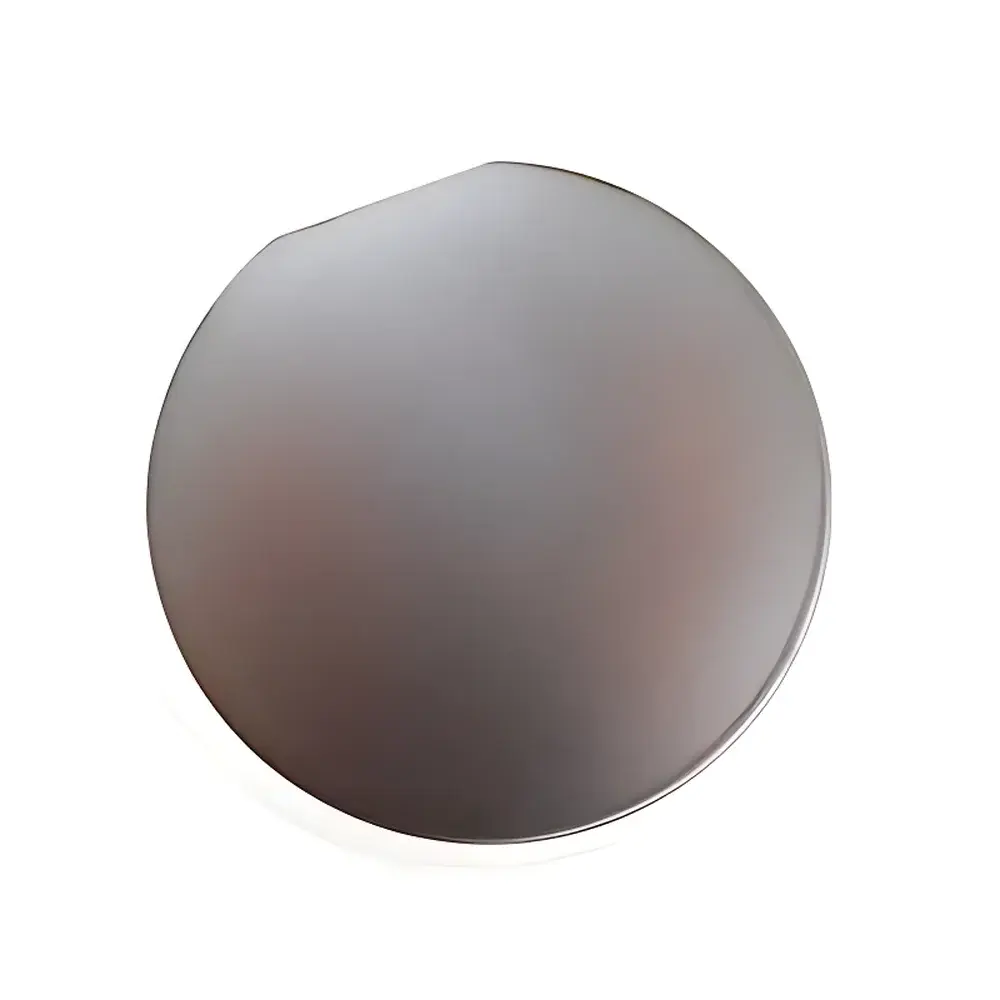
KJ Scientific A-Z Series Thin Film Library for QCM Applications
| Brand | KJ Scientific |
|---|---|
| Origin | Anhui, China |
| Manufacturer Type | Authorized Distributor |
| Regional Category | Domestic (China) |
| Model | A–Z Series |
| Pricing | Available Upon Request |
Overview
The KJ Scientific A-Z Series Thin Film Library is a comprehensive reference collection of physically vapor-deposited (PVD) and chemically derived thin-film structures engineered for integration with Quartz Crystal Microbalance (QCM) systems. Designed to support fundamental research and applied development in surface science, interfacial electrochemistry, biosensor calibration, and thin-film property benchmarking, this library enables systematic evaluation of mass-loading effects, viscoelastic response, and acoustic impedance matching under controlled environmental conditions. Each film variant is fabricated on standardized quartz resonator substrates (typically 5–10 MHz AT-cut crystals), with precise thickness control validated via ellipsometry or X-ray reflectivity (XRR) where applicable. The series leverages both domestic and internationally sourced precursor materials—including high-purity sputtering targets and evaporation sources—to ensure reproducible stoichiometry and crystallinity across batches.
Key Features
- Modular architecture: Individual films are supplied on discrete QCM blanks or pre-mounted sensor chips compatible with standard QCM-D, QCM-I, and electrochemical QCM (EQCM) platforms.
- Material diversity: Covers 30+ distinct film compositions—including oxides (Al2O3, CeO2, TiO2, ZnO), nitrides (AlN, Si3N4, GaN), carbides (SiC), metals (Pt, Au, Ni, Cu, Ta), and complex heterostructures (e.g., Si/SiO2/Ti/Pt, Al2O3/GaN, Ba1−xSrxTiO3).
- Substrate flexibility: Films deposited on Si wafers, SOI, MgO, LaAlO3, GGG, Corning 7980 fused silica, sodium-calcium glass, polyimide (HN Kapton), PEN, and diamond substrates—enabling cross-platform correlation studies.
- Controlled orientation & doping: Includes epitaxial films (e.g., 4H-SiC/4H-SiC, YBCO/MgO) and doped variants (e.g., N-type Si-doped GaN, P-type Al2O3/GaN, La1−xSrxMnO3) for structure–property relationship analysis.
- Traceable fabrication: All imported materials comply with ISO 9001-certified supplier documentation; domestic depositions follow internal process validation protocols aligned with GLP principles.
Sample Compatibility & Compliance
The A–Z Series supports compatibility with commercial QCM instruments from companies including Q-Sense (Biolin), SRS (Stanford Research Systems), and Maxtek. Films are characterized for surface roughness (20 MPa shear stress per ASTM D4541), and thermal stability (tested up to 400 °C in inert atmosphere). Selected variants—including ITO-on-PEN, graphene-on-Si, and YBCO-on-MgO—are referenced against ISO/IEC 17025-accredited metrology reports for thickness uniformity and compositional homogeneity. For regulated environments, deposition records include batch traceability, material certificates of analysis (CoA), and optional audit-ready documentation per FDA 21 CFR Part 11 requirements when integrated with compliant QCM data acquisition software.
Software & Data Management
While the film library itself is hardware-based, KJ Scientific provides structured metadata templates (CSV/Excel) containing layer stack composition, nominal thickness, deposition method (RF sputtering, e-beam evaporation, PLD), substrate orientation, and post-deposition annealing conditions. These files integrate seamlessly with QCM analysis suites such as Q-Tools (Biolin), QCM Analyst (SRS), and custom MATLAB/Python scripts using open APIs. Raw frequency shift (Δf) and dissipation (ΔD) datasets generated during film characterization can be annotated with corresponding film identifiers (e.g., “A-Z_Si_SiO2_Ti_Pt_111_IMP”) to maintain experimental lineage. Optional cloud-based repository hosting is available for collaborative projects requiring version-controlled film performance archives.
Applications
- Calibration of QCM sensitivity factors for non-rigid film modeling (Sauerbrey vs. Voigt vs. Kanazawa–Gordon corrections).
- Interfacial studies of protein adsorption, polymer brush swelling, and lipid bilayer formation on functionalized surfaces (e.g., Pt, Au, TiO2, Al2O3).
- Development of solid-state electrolyte interfaces for Li-ion and solid-oxide fuel cells using ion-conductive films (e.g., CeO2, Ba1−xSrxTiO3, La2Zr2O7).
- High-temperature QCM sensor design using thermally stable coatings (SiC, Al2O3, diamond) on fused silica or sapphire resonators.
- Validation of EQCM charge/mass coupling coefficients in aqueous and non-aqueous redox systems (e.g., using Ni, Cu, or Pt-coated electrodes).
FAQ
Are film thicknesses standardized across the A–Z Series?
Thickness varies by application intent: most metallic and dielectric layers range from 5–200 nm; heterostructures may exceed 500 nm. Exact values are provided per batch certificate.
Can custom film stacks be fabricated upon request?
Yes—KJ Scientific offers limited-run custom deposition services with lead times of 6–10 weeks, subject to target availability and process qualification.
Do you provide AFM or XRD data for each film variant?
Baseline structural data (XRD θ–2θ scans, AFM topography) is available for core variants (e.g., YBCO, BiFeO3, 4H-SiC); supplementary characterization can be commissioned separately.
Is vacuum compatibility guaranteed for all films?
All films undergo outgassing testing per ASTM E595; total mass loss (TML) <0.5% and collected volatile condensable materials (CVCM) 95% of entries.
How is lot-to-lot reproducibility ensured?
Each production run includes in-line quartz crystal monitoring, post-deposition ellipsometry verification, and statistical process control (SPC) tracking of sputter rate and plasma parameters.





