Mg Thin Foil Sheet – Hefei Kejing Standard Grade
| Brand | Hefei Kejing |
|---|---|
| Origin | Anhui, China |
| Manufacturer Type | Authorized Distributor |
| Country of Origin | PRC |
| Model | Mg Thin Foil Sheet |
| Pricing | Request Quotation |
Overview
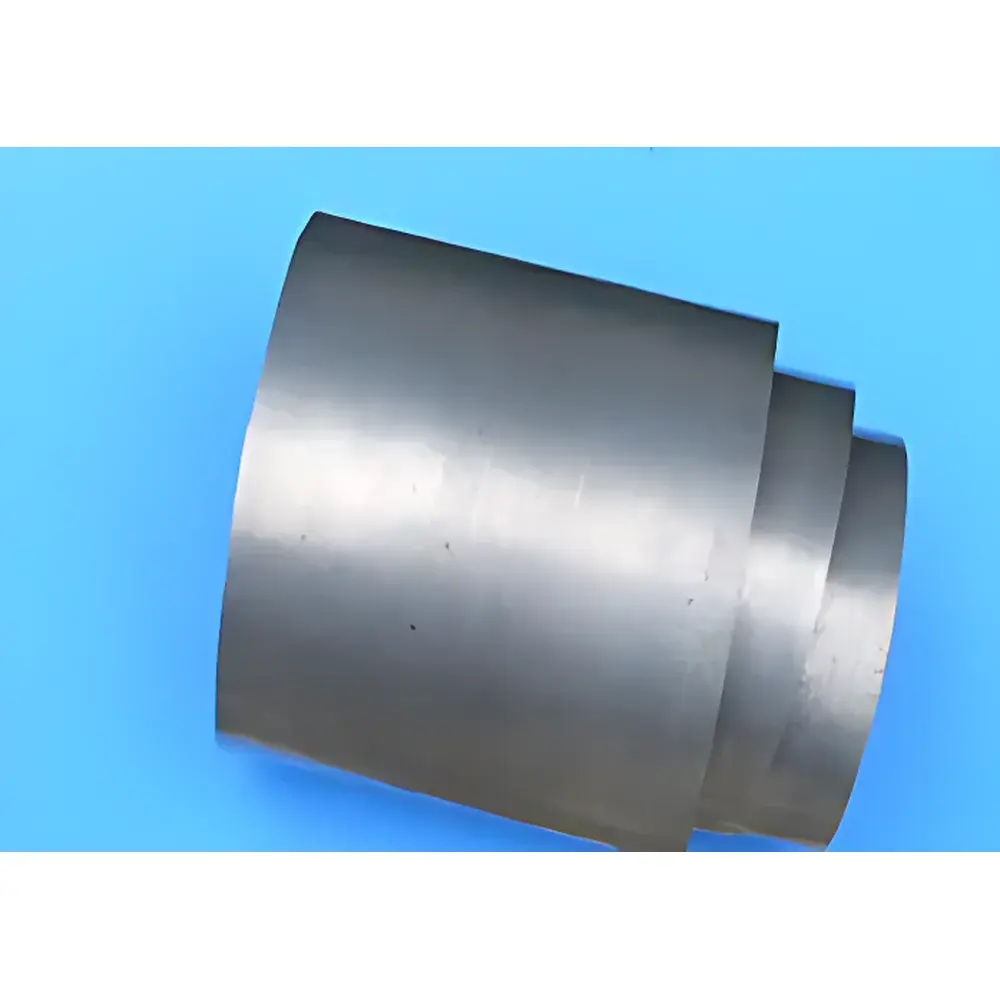
Mg thin foil sheets are high-purity metallic substrates engineered for precision applications in physical vapor deposition (PVD), thermal evaporation, thin-film research, and fundamental materials science studies. Composed of elemental magnesium with typical purity ≥99.95% (as verified by ICP-MS trace analysis), these foils serve as both source material for vacuum deposition and as freestanding substrates for interfacial reaction studies, oxide layer growth characterization, and electrochemical cell assembly. The material exhibits a hexagonal close-packed (HCP) crystal structure, low density (1.74 g/cm³), and high specific surface area—properties critical for controlled reactivity in inert or reducing atmospheres. Unlike bulk Mg ingots or powders, the ultra-thin geometry enables rapid thermal equilibration, uniform evaporation flux, and minimal residual stress during substrate transfer.
Key Features
- Standard dimensions: 100 mm × 1000 mm × 0.1 mm (thickness tolerance: ±5 µm, verified by calibrated micrometer and profilometry)
- Surface roughness: Ra ≤ 0.2 µm (measured per ISO 4287, as-received condition)
- Packaging: Double-wrapped in acid-washed tin foil, sealed under vacuum (≤10⁻² mbar), and housed in Class 1000 cleanroom-certified polyethylene bags compliant with ISO 14644-1
- Handling protocol: Supplied with nitrogen-purged desiccator compatibility; recommended storage at <30% RH and ambient temperature to minimize native oxide formation
- Trace impurity profile: Certified documentation available upon request (including Fe, Ni, Cu, Pb, and Al content per ASTM E1479)
Sample Compatibility & Compliance
This Mg foil is compatible with standard thermal evaporation sources (e.g., tungsten boats, Mo filaments), sputtering targets (as backing layers), and glovebox-integrated transfer systems (O₂/H₂O < 0.1 ppm). It meets baseline requirements for ASTM F2623–18 (Standard Specification for Magnesium Metal for Use in Medical Devices) regarding elemental composition, though not certified for implantable use without additional processing. All batches undergo visual inspection per MIL-STD-105E Level II sampling and are accompanied by a Certificate of Conformance (CoC) indicating lot-specific purity, dimensional verification, and packaging integrity. The product is manufactured and distributed under ISO 9001:2015–certified quality management systems.
Software & Data Management
As a passive instrumentation component, the Mg thin foil sheet does not incorporate embedded electronics, firmware, or software interfaces. However, it is fully interoperable with industry-standard thin-film process control platforms—including those from Kurt J. Lesker, Angstrom Engineering, and Denton Vacuum—via manual integration into recipe-driven deposition workflows. Traceability data (lot number, production date, purity certificate ID) is encoded in the physical label and digitally archived for 10 years per GLP-compliant record retention policy. For audit readiness, full documentation packages—including CoC, packaging validation reports, and cleanroom environmental logs—are accessible through the distributor’s secure portal upon authorized request.
Applications
- Thermal evaporation source material for Mg-based thin films in OLED charge transport layers and MgB₂ superconductor precursor stacks
- Substrate for in-situ XRD and XPS studies of Mg oxidation kinetics under controlled O₂ partial pressures (10⁻⁶–10⁻¹ mbar)
- Anode material in prototype Mg-ion battery half-cells using non-aqueous electrolytes (e.g., Mg(TFSI)₂ in diglyme)
- Calibration reference for secondary ion mass spectrometry (SIMS) depth profiling due to homogeneous elemental distribution and low sputter yield variability
- Base layer in multilayer optical coatings requiring low refractive index contrast and high UV transparency below 200 nm
FAQ
What is the maximum recommended operating temperature for this Mg foil in vacuum?
Continuous exposure above 250°C is not advised; short-term heating up to 300°C is permissible under high-vacuum conditions (<10⁻⁵ mbar) with inert backfilling.
Can custom thicknesses or alloy compositions be supplied?
Yes—custom orders for thicknesses between 25 µm and 500 µm, as well as Mg–Al (1–10 wt%) and Mg–Y binary foils, are available under NRE-supported development agreements.
Is the foil pre-annealed?
No—this grade is delivered in the cold-rolled, strain-hardened condition. Annealing must be performed in-situ or in dedicated furnaces under argon or forming gas to avoid combustion risk.
How is surface oxide thickness characterized prior to shipment?
Each lot undergoes non-destructive XPS survey scans (Al Kα source, pass energy 20 eV) to confirm native oxide layer thickness ≤3.5 nm, consistent with ASTM E1598–20 guidelines for reactive metal foils.
Related Products