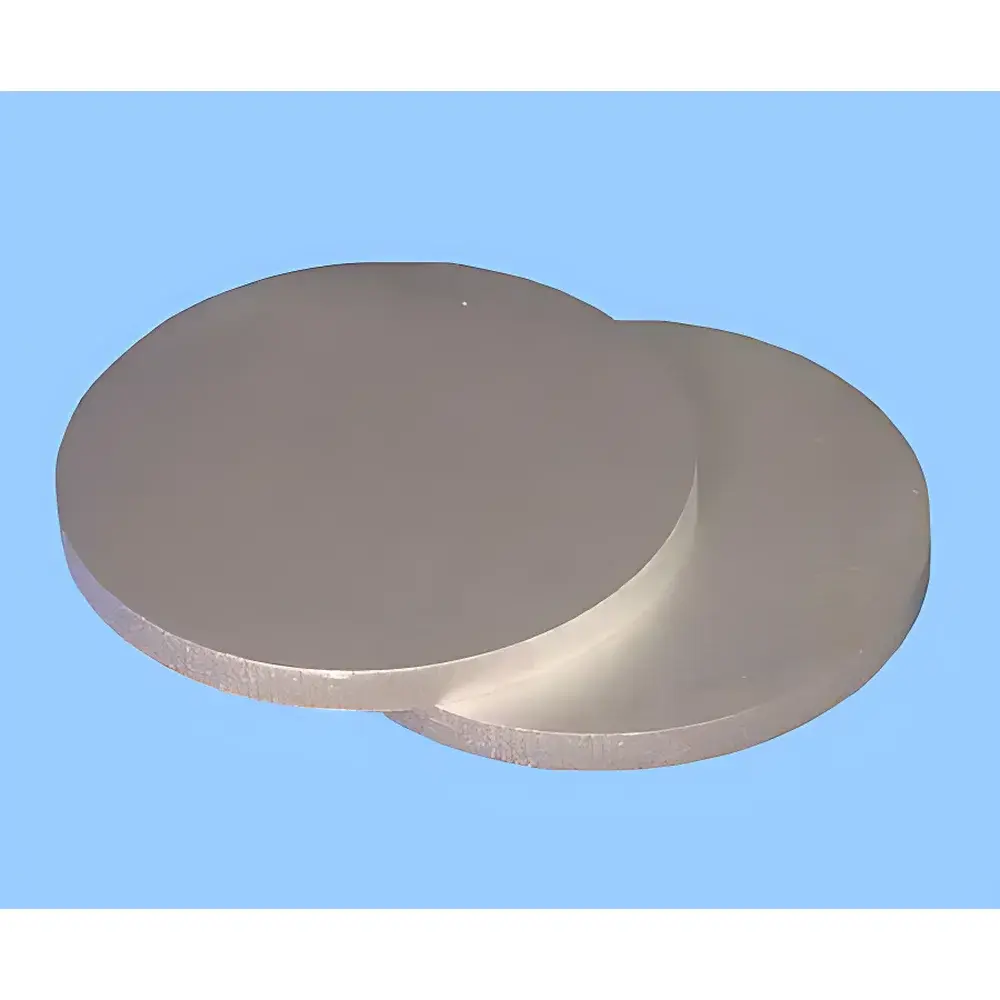
Alloy Sputtering Targets
| Brand | Hefei Kejing |
|---|---|
| Origin | Anhui, China |
| Manufacturer Type | Distributor |
| Domestic Origin | Yes |
| Model | Alloy Sputtering Targets |
| Pricing | Upon Request |
Overview
Alloy sputtering targets are critical consumable components in physical vapor deposition (PVD) processes—particularly magnetron sputtering—used to fabricate thin-film coatings with precisely controlled composition, stoichiometry, and microstructure. Engineered for high reproducibility and process stability, these targets serve as the source material from which atoms are ejected under plasma bombardment and subsequently deposited onto substrates. Their performance directly influences film uniformity, adhesion, stress, electrical resistivity, and long-term reliability—key parameters in optical interference filters, semiconductor interconnects, magnetic recording layers, transparent conductive oxides (TCOs), and wear-resistant hard coatings.
Key Features
- High Purity & Controlled Stoichiometry: Manufactured from 3N to 5N (99.9%–99.999%) grade raw metals; alloy compositions are verified via ICP-MS and GD-OES to ensure elemental homogeneity within ±0.5 at.% tolerance.
- Full-Density Microstructure: Achieved through hot isostatic pressing (HIP) or advanced powder metallurgy routes, delivering >99.9% theoretical density to minimize arcing, particle generation, and non-uniform erosion during sputtering.
- Phase-Purity Assurance: XRD and SEM-EDS analysis confirm single-phase dominance (e.g., solid-solution α-phase in Al–Cu, L10 ordering in Co–Pt) with minimal secondary intermetallics or oxide inclusions.
- Precision Geometry & Surface Finish: Standard diameters of 2-inch and 3-inch (50.8 mm and 76.2 mm); thickness tolerance ±0.1 mm; surface roughness Ra < 0.4 µm on bonding face; chamfered edges to prevent cracking under thermal cycling.
- Backplate Compatibility: Designed for standard Cu or Mo backing plates with indium or eutectic solder bonding; thermal expansion coefficients matched to minimize delamination risk during high-power DC/RF sputtering.
Sample Compatibility & Compliance
These alloy targets are compatible with DC, RF, and pulsed DC magnetron sputtering systems operating in Ar, Ar/O2, or Ar/N2 atmospheres. They conform to industry-standard dimensional tolerances per SEMI F28 and ISO 13320 (for particle-free handling). Batch traceability includes full material certification (CoC) with lot-specific purity data, density measurements, and microstructural characterization reports. While not certified to ISO 9001 by default, production follows documented quality control protocols aligned with GLP principles for R&D applications.
Software & Data Management
As passive consumables, sputtering targets do not incorporate embedded electronics or firmware. However, comprehensive technical documentation—including target composition certificates, XRD phase maps, SEM cross-sections, and sputter yield estimates (calculated using SRIM simulations)—is provided digitally upon order fulfillment. Data formats include PDF (certificates), TIFF (micrographs), and CSV (elemental assay results), supporting integration into laboratory information management systems (LIMS) and materials data repositories compliant with ASTM E2074 and ISO/IEC 17025 requirements.
Applications
- Optical Coatings: Al–Ti and Ni–Cr targets for broadband anti-reflective and high-reflective stacks in laser optics and photolithography masks.
- Semiconductor Fabrication: Co–Ni–Cr and Co–Fe alloys for seed layers and ferromagnetic tunnel junctions in MRAM devices; Ni–Ti for shape-memory MEMS actuators.
- Magnetic Data Storage: Co–Cr–Pt targets for perpendicular magnetic recording media; Co–Ni–Cr for soft underlayers in HDD and tape heads.
- Architectural & Automotive Glass: Ni–Cr and Ni–Al targets for low-emissivity (low-E) and solar-control coatings on float glass.
- Tool & Die Coating: Al–Cu and Co–Cr–Pt variants for nanocomposite hard coatings on cutting tools and injection molds, enhancing hardness (>25 GPa) and oxidation resistance up to 600 °C.
FAQ
What purity grades are available for custom alloy targets?
Standard offerings range from 3N (99.9%) to 5N (99.999%) purity; higher grades (5N5) are available upon request with extended lead time and analytical validation.
Can you supply targets with non-standard dimensions or custom alloy ratios?
Yes—custom geometries (e.g., rectangular, racetrack, or segmented targets) and proprietary compositions (within thermodynamic feasibility limits) are supported under NDA; minimum order quantity applies.
Do you provide bonding services or backplate assembly?
Target-to-backplate diffusion bonding or soldering is offered as an optional value-added service; bonding integrity is verified via ultrasonic scanning per MIL-STD-202G Method 204.
How is target erosion profile monitored during use?
Erosion depth and racetrack width can be quantified post-use via profilometry or confocal microscopy; we recommend routine monitoring every 50–100 kWh of accumulated sputter energy for predictive maintenance.
Are RoHS and REACH compliance documents available?
Yes—full substance declarations and SVHC screening reports are included in the CoC package for all standard alloy formulations.