A~Z Single-Crystal Evaporation Materials
| Brand | Hefei Kejing |
|---|---|
| Origin | Anhui, China |
| Manufacturer Type | Authorized Distributor |
| Origin Classification | Domestic |
| Model | A~Z |
| Pricing | Available Upon Request |
Overview
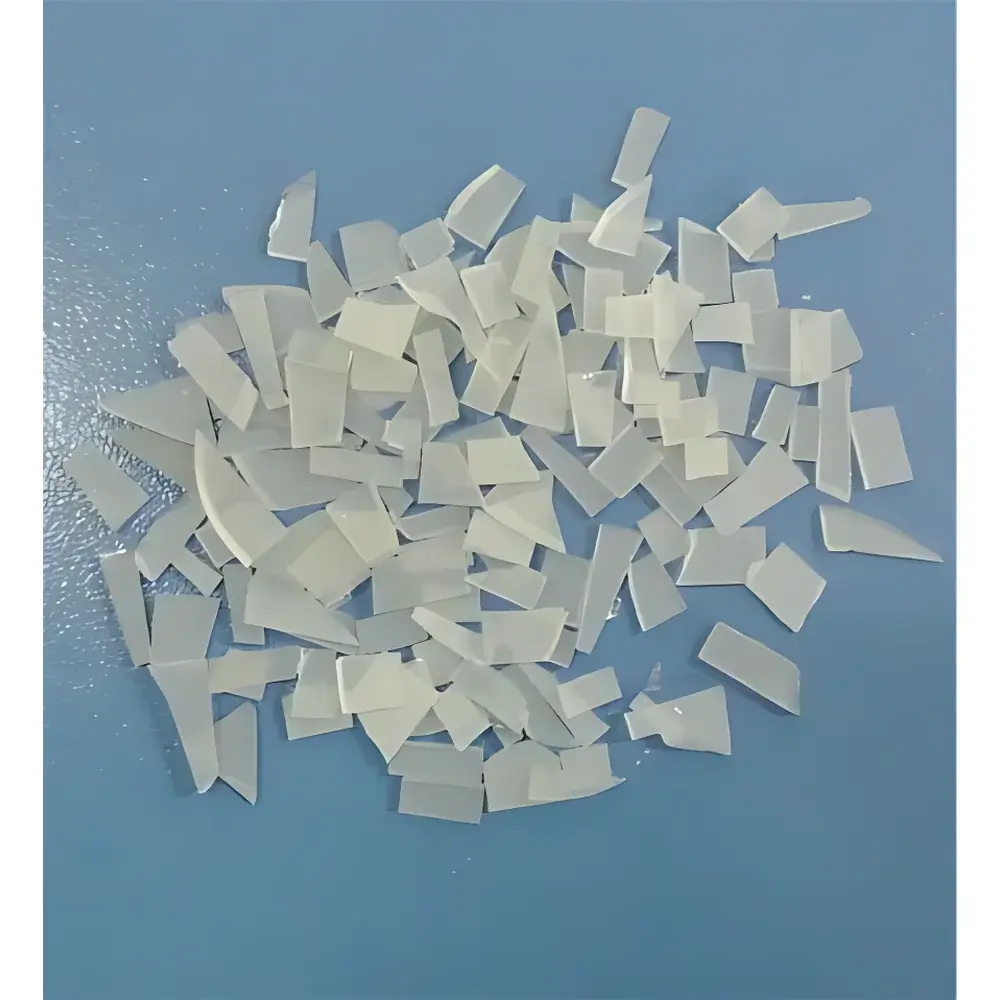
A~Z Single-Crystal Evaporation Materials are high-purity, structurally defined crystalline source materials engineered for physical vapor deposition (PVD) processes—including thermal evaporation, electron-beam evaporation, and resistive heating deposition—in ultra-high vacuum (UHV) environments. These materials serve as precursors for the controlled growth of epitaxial thin films in research and production settings involving oxide electronics, quantum heterostructures, superconducting devices, and optical coatings. Each crystal is cut from boules grown via Czochralski, floating-zone, or flux methods, ensuring single-phase stoichiometry, low defect density (<10⁴ cm⁻² dislocation density typical), and minimal interstitial impurities (metallic impurities <1 ppm by ICP-MS). The crystalline orientation—commonly (001), (110), or (111)—is verified via X-ray Laue diffraction and surface termination confirmed by in-situ LEED or ex-situ AFM.
Key Features
- Material portfolio spanning 18 benchmark single-crystal compounds—including Al₂O₃ (sapphire), YSZ (yttria-stabilized zirconia), CdWO₄, Nd:CaAlO₄, GGG (gadolinium gallium garnet), LSA (LaSrAlO₄), LaAlO₃, SrTiO₃, MgAl₂O₄ (spinel), TiO₂ (rutile/anatase), and MgO—with documented lattice parameters and thermal expansion coefficients traceable to NIST SRMs.
- Dimensional flexibility: standard stock sizes include 3 × 3 × 3 mm³ and 5 × 5 × 5 mm³ cubes; custom geometries (rods, discs, irregular polyhedra) available with ±5 µm tolerance on critical dimensions.
- Surface finish options: as-cut (Ra < 0.8 µm), mechanically polished (Ra < 0.1 µm), or atomically flat chemomechanically polished (CMP) surfaces with monolayer-level step-terrace uniformity.
- Contamination-controlled packaging: double-bagged in Class 100 cleanroom-certified polyethylene bags within Class 1000 laminar flow enclosures; each bag includes humidity indicator, particulate count report (<10 particles ≥0.5 µm per cubic foot), and lot-specific certificate of analysis (CoA).
- Traceability: full batch documentation including growth method, annealing history, XRD phase purity report, and residual gas analysis (RGA) data from pre-evaporation outgassing tests.
Sample Compatibility & Compliance
These crystals are compatible with standard effusion cells, crucibles (W, Ta, Nb, graphite), and e-beam hearths used in UHV deposition systems (base pressure ≤5 × 10⁻⁹ mbar). All materials meet ASTM F1529–22 specifications for semiconductor-grade substrates and conform to ISO 14644-1 Class 5 (Class 100) cleanroom handling protocols. For regulated applications—including medical device coating R&D or aerospace sensor development—the packaging and CoA support GLP-compliant record retention and FDA 21 CFR Part 11–aligned audit trails when integrated with validated lab information management systems (LIMS).
Software & Data Management
While the evaporation materials themselves are passive components, their integration into automated deposition workflows is supported through vendor-agnostic metadata tagging. Each lot is assigned a unique QR-coded identifier linking to a secure cloud-hosted material dossier containing crystallographic orientation maps, thermal desorption spectra (TDS), and evaporation onset temperature profiles (measured via differential thermal analysis under 10⁻⁶ mbar). This dataset enables predictive modeling of film stoichiometry drift and supports closed-loop process control when interfaced with deposition monitoring tools such as quartz crystal microbalances (QCM) or in-situ ellipsometers.
Applications
- Growth of complex oxide heterostructures (e.g., LaAlO₃/SrTiO₃ interfaces for 2D electron gases)
- Epitaxial buffer layers for high-temperature superconductor tapes (e.g., YBCO on IBAD-MgO templates)
- Scintillator thin-film fabrication (e.g., CdWO₄ for radiation detection)
- Dielectric gate stacks in ferroelectric field-effect transistors (FeFETs)
- Reference standards for X-ray reflectivity (XRR) and grazing-incidence XRD calibration
- Substrates for van der Waals heterostructure assembly via dry transfer
FAQ
Are these crystals suitable for molecular beam epitaxy (MBE)?
Yes—provided appropriate effusion cell design and substrate temperature ramping protocols are employed to maintain stoichiometric transfer; recommended for oxides with vapor pressure >10⁻⁷ mbar above 1200 °C.
Can I request orientation-specific off-cut angles (e.g., 0.5° toward [100])?
Yes—off-axis cuts from 0.1° to 4.0° are available with prior specification of azimuthal alignment; additional lead time applies.
Do you provide post-annealing services for oxygen vacancy control?
Yes—controlled-atmosphere annealing (O₂, Ar/O₂ mixtures, or vacuum) at temperatures up to 1400 °C is offered with documented TGA/DTA validation.
Is Lot-to-lot reproducibility documented for optical absorption edge measurements?
Yes—UV-Vis-NIR transmission spectra (190–2500 nm) with <0.3 nm wavelength accuracy are included in the CoA for optically active materials (e.g., Nd:CaAlO₄, TiO₂).
What is the maximum recommended evaporation rate for SrTiO₃ without decomposition?
Empirical testing indicates stable stoichiometric evaporation at ≤0.2 Å/s under optimized e-beam conditions (10 kV, 50 mA, 10⁻⁸ mbar O₂ partial pressure); higher rates require real-time RHEED feedback.