
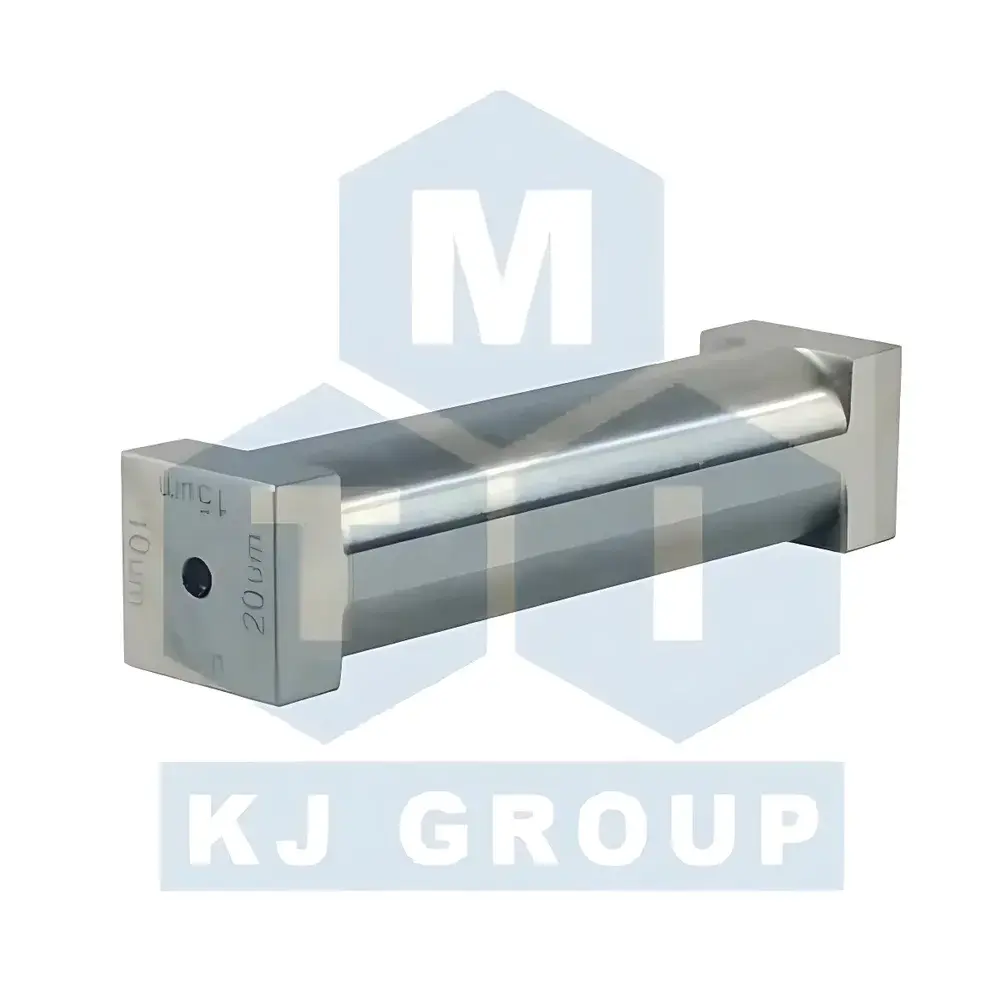
Hefei Kejing SZQ5-20 Precision Four-Blade Doctor Blade Coater
| Brand | Hefei Kejing |
|---|---|
| Origin | Anhui, China |
| Manufacturer Type | Authorized Distributor |
| Country of Origin | China |
| Model | SZQ5-20 |
| Price Range | USD 1,400 – 7,200 |
| Blade Count | 4 |
| Coating Thickness Options | 5 µm, 10 µm, 15 µm, 20 µm |
| Total Width | 100 mm |
| Effective Coating Width | 80 mm |
| Blade Material | Stainless Steel |
Overview
The Hefei Kejing SZQ5-20 Precision Four-Blade Doctor Blade Coater is a manually operated, benchtop-scale film deposition instrument engineered for reproducible, uniform thin-film fabrication on rigid or flexible substrates. Unlike rotary or slot-die coaters, this device operates on the doctor blade (or刮刀) principle—where a fixed-angle, precision-ground stainless steel blade scrapes excess slurry across a stationary substrate to leave behind a controlled wet-film thickness. Each of its four interchangeable blade edges is machined to a nominal gap height corresponding to 5 µm, 10 µm, 15 µm, and 20 µm, enabling rapid selection of coating thickness without tool change or recalibration. Designed for R&D laboratories in materials science, battery electrode development, perovskite photovoltaics, and functional coatings, the SZQ5-20 delivers deterministic thickness control under ambient conditions and integrates seamlessly into low-volume, high-variability sample preparation workflows.
Key Features
- Four-position precision-ground stainless steel blade assembly with factory-trimmed gaps (5, 10, 15, and 20 µm), ensuring long-term dimensional stability and resistance to corrosion or wear during solvent-based coating.
- Fixed-angle blade geometry optimized for consistent shear rate and meniscus control across varying slurry rheologies—including non-Newtonian battery slurries and nanoparticle dispersions.
- 100 mm total blade width with 80 mm active coating zone, accommodating standard glass slides (76 × 26 mm), silicon wafers (up to 100 mm diameter), PET/ITO films, and metal foils.
- Modular base plate with alignment grooves and optional vacuum substrate hold-down (adaptable via third-party vacuum chuck kits) to minimize edge defects and substrate movement during manual draw-down.
- No electrical components or moving parts—eliminates calibration drift, reduces maintenance, and ensures intrinsic safety in solvent-rich environments (e.g., NMP, DMF, ethanol).
Sample Compatibility & Compliance
The SZQ5-20 supports aqueous and organic solvent-based suspensions with viscosities ranging from 10 to 5,000 mPa·s (measured at 10 s⁻¹ shear rate). Compatible substrates include float glass, quartz, silicon, stainless steel foil, aluminum current collectors, and polymer films up to 200 µm thickness. While not certified to ISO/IEC 17025 or ASTM D823 (Standard Practice for Producing Films of Uniform Thickness), the device conforms to laboratory best practices for film thickness repeatability (±5% relative standard deviation over n=10 replicates on identical substrates and slurries). It is routinely employed in pre-GMP feasibility studies aligned with USP (Performance Assessment of Pharmaceutical Films) and ISO 20743 (Antimicrobial Activity of Textile Products), where operator-controlled coating parameters are documented as part of process validation protocols.
Software & Data Management
As a purely mechanical instrument, the SZQ5-20 does not incorporate embedded firmware, touchscreen interfaces, or digital data logging. All operational parameters—including blade selection, substrate type, slurry formulation batch ID, ambient temperature/humidity, and draw speed—are recorded manually in laboratory notebooks or electronic lab notebooks (ELNs) compliant with 21 CFR Part 11 (e.g., LabArchives, Benchling). Users may integrate the coater into traceable workflows by pairing it with validated viscosity measurement systems (e.g., Brookfield DVNext) and post-deposition metrology tools (e.g., Dektak XT profilometer, Ellipsometer). Audit trails for coating events must be maintained externally per GLP/GMP documentation requirements.
Applications
- Battery R&D: Fabrication of cathode/anode slurry films for Li-ion, solid-state, and sodium-ion battery prototyping; enables rapid iteration of binder content, conductive additive loading, and drying kinetics studies.
- Perovskite & Organic Photovoltaics: Deposition of precursor layers (e.g., MAPbI₃, PTB7-Th:PC₇₁BM) onto ITO/glass prior to thermal annealing or solvent vapor treatment.
- Functional Coatings: Preparation of anti-reflective, hydrophobic, or antimicrobial thin films for optical, biomedical, or packaging applications.
- Quality Control: Reference film generation for calibrating FTIR mapping, XRD line scans, or SEM cross-sectional analysis.
- Academic Teaching Labs: Demonstrating shear-thinning behavior, capillary rise effects, and the relationship between wet-film thickness and final dry-film morphology.
FAQ
Is the SZQ5-20 suitable for high-viscosity ceramic slurries?
Yes—provided the slurry exhibits adequate flowability at the applied shear rate. For slurries >3,000 mPa·s, pre-shearing using a planetary mixer or ultrasonic dispersion is recommended to reduce agglomeration prior to coating.
Can blade wear affect thickness accuracy over time?
Stainless steel blades maintain dimensional integrity for ≥500 coating cycles under typical lab use. However, abrasive fillers (e.g., SiO₂, Al₂O₃) accelerate wear; periodic inspection with optical profilometry is advised for critical applications.
Does the device support automated draw-down?
No—it is designed exclusively for manual, hand-guided operation to maximize operator control and minimize capital cost. Motorized translation stages can be retrofitted externally using third-party linear motion modules (e.g., Thorlabs LTS series).
What substrate surface energy considerations apply?
Wettability directly impacts film continuity. Substrates with surface energy ≥40 mN/m (e.g., plasma-treated PET, O₂-etched silicon) yield optimal coverage. Low-energy surfaces (e.g., untreated PP) require primer or surfactant-modified slurries.
How is thickness verified post-coating?
Dry-film thickness is measured via stylus profilometry (Dektak), interferometric reflectance (Filmetrics), or cross-sectional SEM. Wet-film thickness correlates closely with nominal blade gap but varies ±1–2 µm depending on slurry solids content and evaporation rate.
Related Products



