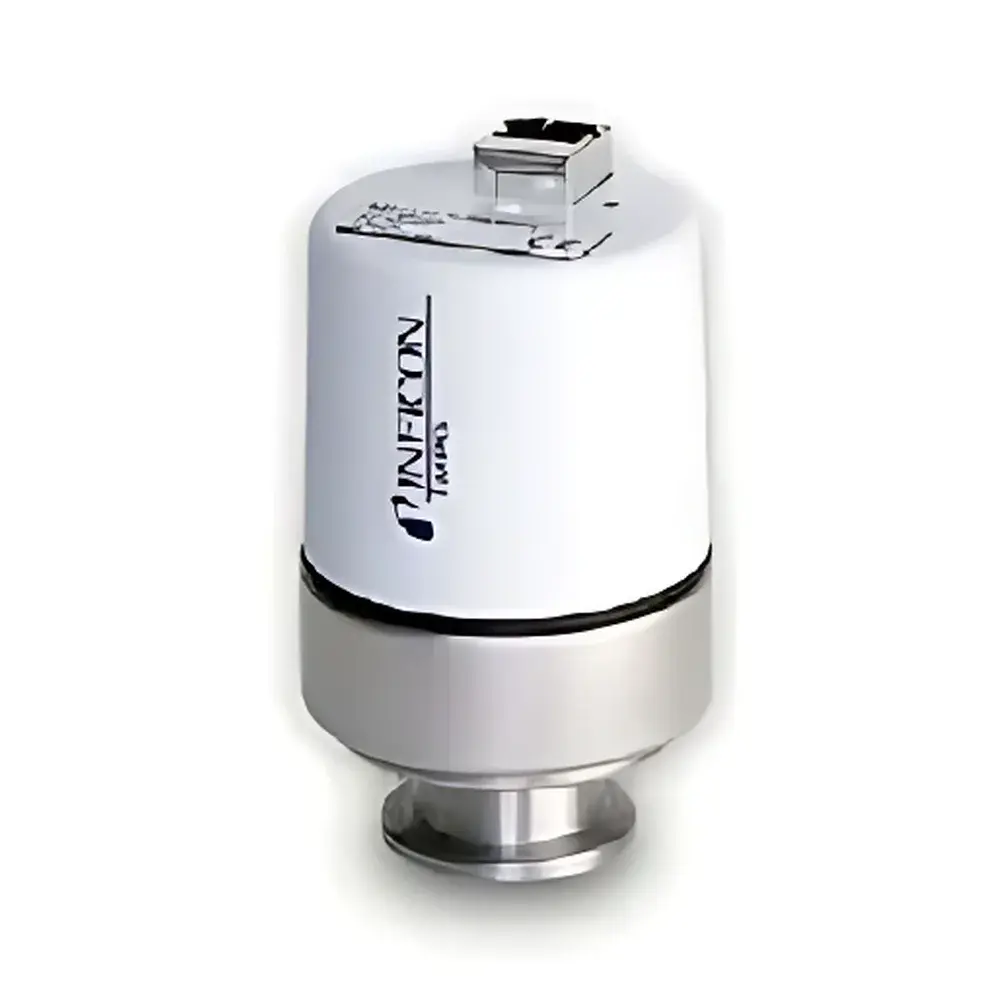
INFICON MPG400 & MPG401 Combined Cold Cathode and Pirani Vacuum Gauge
| Origin | Sweden |
|---|---|
| Manufacturer Type | Authorized Distributor |
| Origin Category | Imported |
| Model | MPG400, MPG401 |
| Pricing | Available Upon Request |
Overview
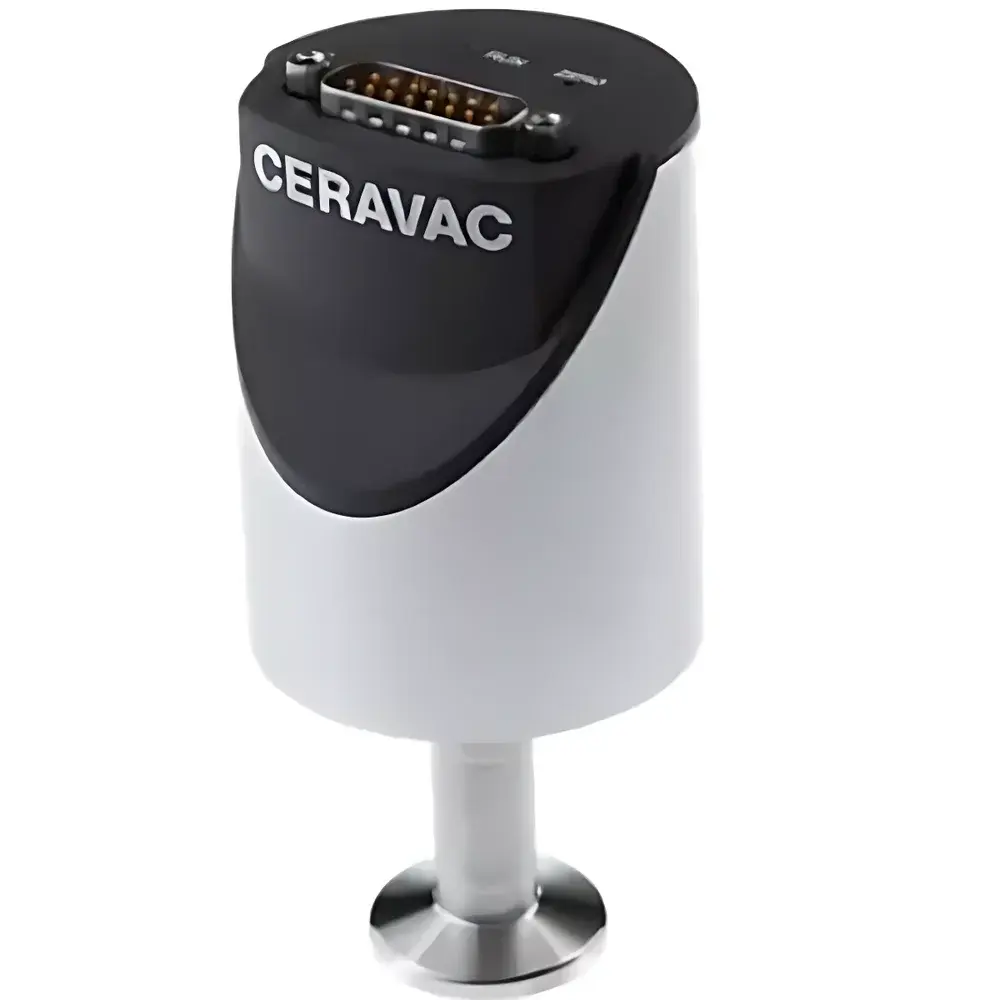
The INFICON MPG400 and MPG401 are compact, dual-sensor vacuum gauges integrating cold cathode (Penning-type) and Pirani measurement principles into a single, robust housing. Engineered for continuous, reliable operation across an exceptionally wide pressure range—from 5 × 10⁻⁹ mbar (3.8 × 10⁻⁹ Torr) up to atmospheric pressure (1013 mbar)—these gauges eliminate the need for multiple discrete sensors in vacuum systems requiring both high/ultra-high vacuum (UHV) and roughing-range monitoring. The cold cathode sensor operates without thermally emissive filaments, ensuring immunity to burnout during accidental atmospheric exposure or process overpressure events. The integrated Pirani element provides stable, temperature-compensated thermal conductivity measurements in the low-to-medium vacuum range (10−3 to 103 mbar), while the cold cathode section delivers high-sensitivity ion current detection below 10−3 mbar. This hybrid architecture enables seamless, gap-free pressure coverage with inherent redundancy and cross-validated signal integrity.
Key Features
- Dual-sensor architecture combining cold cathode ionization and Pirani thermal conductivity measurement in one mechanical package
- Continuous pressure measurement range: 5 × 10⁻⁹ mbar to 1013 mbar (3.8 × 10⁻⁹ Torr to 760 Torr)
- Filament-free cold cathode operation—no risk of filament burnout during venting or pressure excursions
- Fast, reliable ignition down to ≤1 × 10⁻⁷ mbar; stable discharge maintenance under dynamic vacuum conditions
- Hermetically sealed sensor head with FPM (fluoroelastomer) or all-metal (CF or ISO-KF compatible) feedthrough options for UHV and corrosive environments
- Integrated status LED indicating high-voltage activation—provides immediate visual confirmation of gauge readiness
- Standard logarithmic analog output (0–10 V or 4–20 mA) proportional to log10(p), enabling direct interface with PLCs, DCS, and vacuum controllers without external signal conditioning
- Compact, low-mass design minimizes thermal conduction errors and facilitates installation in space-constrained chambers and load locks
Sample Compatibility & Compliance
The MPG400/MPG401 is compatible with inert, reactive, and mildly corrosive process gases—including N2, Ar, O2, H2, and common sputtering/evaporation precursors—when used with appropriate sealing materials (FPM for general use; metal seals for UHV or aggressive chemistries). It meets the mechanical and electrical requirements of ISO 3567 (vacuum gauges — terminology and definitions) and conforms to CE marking directives for electromagnetic compatibility (2014/30/EU) and low voltage (2014/35/EU). While not certified to specific FDA or GLP standards as a standalone device, its analog output stability, traceable calibration documentation (NIST-traceable certificate available upon request), and audit-ready signal behavior support integration into GMP-compliant vacuum processes where pressure monitoring is part of critical process parameter control (e.g., thin-film deposition, freeze drying, or semiconductor etch chamber qualification).
Software & Data Management
The MPG400/MPG401 operates as a stand-alone analog transducer and requires no embedded firmware or host software for basic functionality. Its logarithmic output enables direct acquisition via standard data loggers, SCADA systems, or vacuum controller ADC inputs. For advanced system integration, INFICON’s VGC series controllers (e.g., VGC303, VGC401) provide native support—including automatic range switching, zero suppression, and real-time pressure unit conversion (mbar, Torr, Pa, psi). All analog signals maintain ±5% full-scale accuracy across the specified range, with long-term drift <0.5% per year under controlled ambient conditions. No internal memory or audit trail is implemented; however, when connected to compliant controllers supporting 21 CFR Part 11, full electronic record retention—including timestamped pressure logs, alarm events, and configuration changes—is achievable at the system level.
Applications
- Real-time pressure monitoring in electron-beam evaporation, magnetron sputtering, and ion plating systems
- Process chamber qualification and leak-check support in semiconductor front-end and MEMS fabrication tools
- Roughing-to-UHV transition monitoring in analytical instrumentation (e.g., surface analysis chambers, residual gas analyzers)
- Pressure control feedback in industrial vacuum furnaces and coating lines
- Research-grade vacuum diagnostics in physics laboratories requiring extended dynamic range without sensor swapping
- Backup or redundant sensing in mission-critical vacuum systems where filament failure must be avoided
FAQ
Does the MPG400/MPG401 require periodic recalibration?
Calibration is recommended annually for metrological traceability in quality-critical applications; however, the gauge exhibits excellent long-term stability due to its solid-state cold cathode design and absence of consumable filaments.
Can it measure reactive gases such as chlorine or ammonia?
Yes—with metal-sealed versions and appropriate electrode material selection (e.g., stainless steel anode); consult INFICON’s chemical compatibility guide before deployment in highly aggressive media.
Is the analog output linear or logarithmic?
It is strictly logarithmic (0–10 V = log10(p) over the full 5 × 10⁻⁹–1013 mbar range), ensuring uniform resolution across decades of pressure.
What is the typical warm-up time to stable reading?
Less than 30 seconds for Pirani mode; cold cathode stabilization requires ≤2 minutes after HV enable, depending on initial pressure and chamber outgassing rate.
How is cleaning performed if the sensor becomes contaminated?
The gauge head may be cleaned in situ using oxygen plasma or solvent rinsing (isopropanol), provided FPM seals remain intact; metal-sealed units support ultrasonic cleaning and bake-out up to 150 °C.