
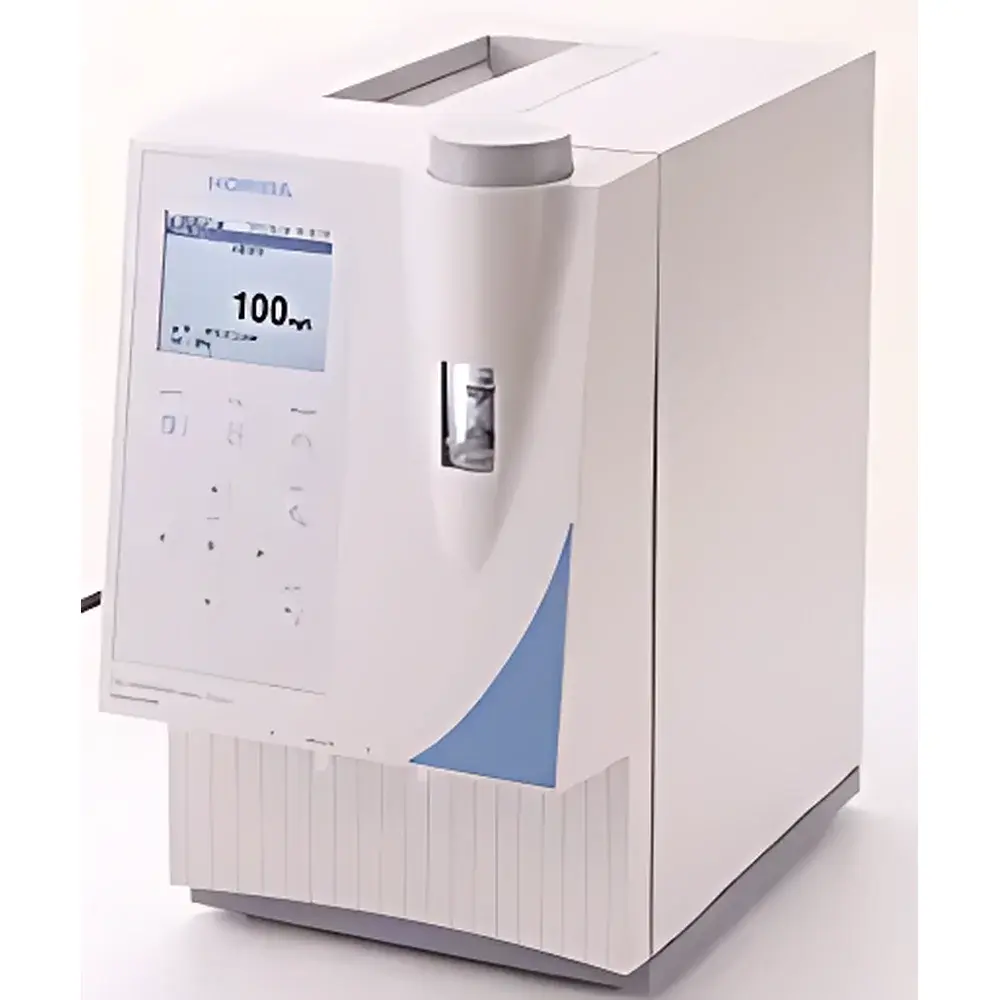
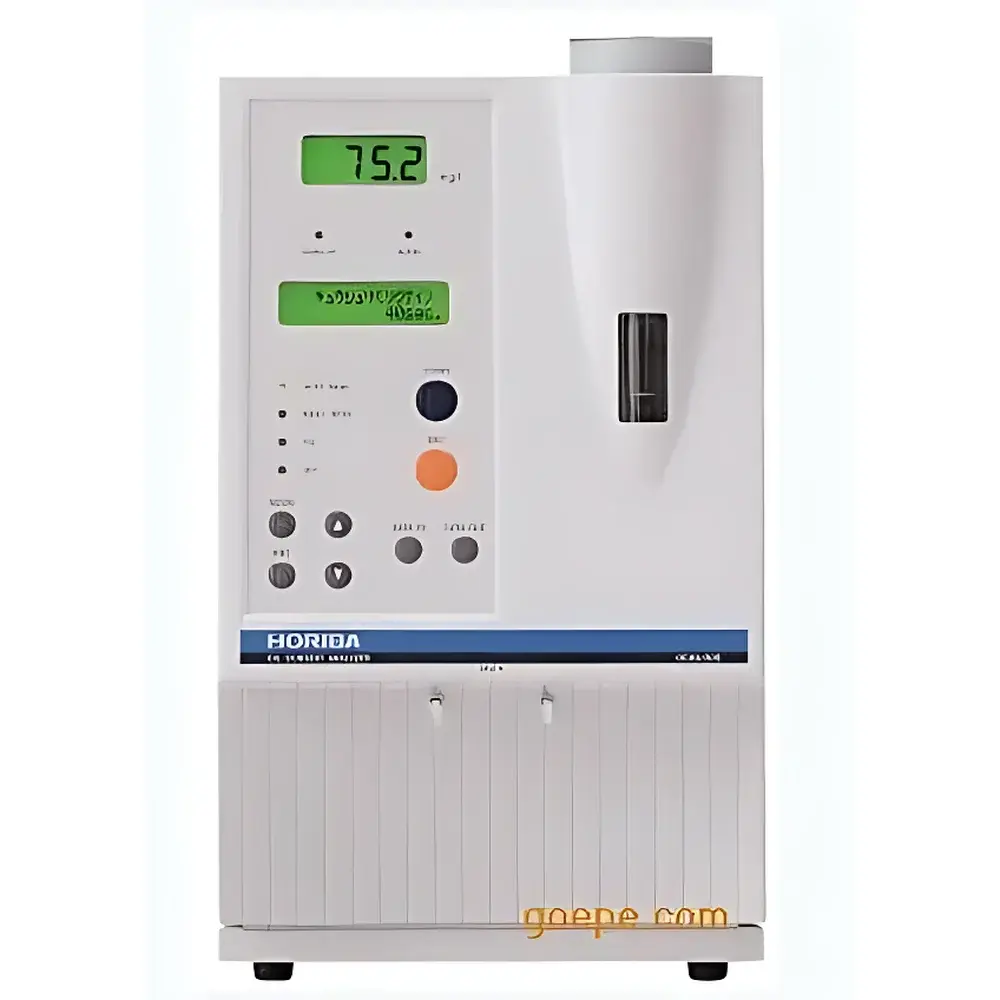
HORIBA OCMA-500 Portable Oil-in-Water Analyzer
| Brand | HORIBA |
|---|---|
| Origin | Japan |
| Model | OCMA-500 |
| Instrument Type | Portable |
| Measurement Principle | Non-Dispersive Infrared (NDIR) Absorption after Solvent Extraction |
| Measurement Range | 0–200 mg/L |
| Accuracy | ±0.2 mg/L (0–10 mg/L), ±2 mg/L (10–100 mg/L), ±4 mg/L (100–200 mg/L) |
| Resolution | 0.1 mg/L |
| Extractant | S-316 (trichloroethylene-free chlorinated solvent) |
| Compliance | ASTM D7066, ISO 9377-2 (aligned), EPA Method 1664B (extraction protocol compatible) |
Overview
The HORIBA OCMA-500 is a fully integrated, portable oil-in-water analyzer engineered for rapid, field-deployable quantification of hydrocarbon contaminants in aqueous matrices—including freshwater, seawater, industrial process water, and wastewater effluents. Unlike conventional benchtop infrared spectrometers requiring manual extraction and transfer, the OCMA-500 incorporates an on-board, precision syringe-driven solvent extraction module that automates sample preparation, phase separation, and measurement in a single operational sequence. Its core analytical method is non-dispersive infrared (NDIR) absorption, optimized at the characteristic C–H stretching band near 2940 cm⁻¹, following quantitative liquid–liquid extraction using HORIBA’s proprietary S-316 solvent—a high-purity, low-toxicity alternative to traditional carbon tetrachloride or freon-based reagents. The instrument features a fixed optical pathlength cell and thermally stabilized detector, delivering robust performance across its full 0–200 mg/L dynamic range without manual range switching—enabling seamless transition from trace-level monitoring (e.g., regulatory compliance at <1 mg/L) to high-concentration discharge verification (e.g., refinery outfalls or bilge water).
Key Features
- Fully automated solvent extraction and NDIR analysis in one compact unit—no external fume hood or manual pipetting required
- Integrated dual-syringe fluid handling system ensuring precise, repeatable delivery of both sample and S-316 extractant (±1% volumetric accuracy)
- Self-contained waste management with segregated solvent and aqueous phase collection chambers
- Real-time digital display with English-language UI, error diagnostics, and status logging (e.g., “Extraction Complete”, “Cell Cleaning Active”, “Solvent Low”)
- Thermal stabilization of optical components for minimal drift during extended field operation (operating ambient: 5–40°C)
- Battery-powered operation (optional rechargeable Li-ion pack) supporting ≥8 hours of continuous use per charge
- Calibration verification via built-in reference standard check (user-accessible NIST-traceable calibration verification kit available as accessory)
Sample Compatibility & Compliance
The OCMA-500 is validated for direct analysis of raw, unfiltered water samples containing free oil, dispersed hydrocarbons, and emulsified fractions—provided suspended solids do not exceed 100 mg/L (pre-filtration recommended above this threshold). It accommodates seawater matrices without salinity correction due to spectral deconvolution algorithms that suppress chloride interference. Regulatory alignment includes conformance with the procedural framework of EPA Method 1664B (for extraction efficiency and recovery validation), ASTM D7066 (standard test method for oil and grease in water by infrared spectroscopy), and ISO 9377-2 (water quality — determination of hydrocarbon oil — part 2: infrared spectrometric method). All data outputs comply with GLP documentation requirements, including timestamped measurement records, operator ID input, and audit trail-capable internal memory (≥1,000 results stored with metadata).
Software & Data Management
Data export is supported via USB 2.0 interface to standard CSV format, compatible with LIMS integration and statistical process control platforms. The embedded firmware supports user-defined calibration curves (up to 5-point polynomial fit) and allows storage of up to three independent calibration sets for different matrix types (e.g., freshwater, brackish, saline). Firmware version 2.3+ enables optional 21 CFR Part 11 compliance mode—activating electronic signatures, role-based access control (admin/operator modes), and immutable audit logs for regulated environments. No proprietary software installation is required; raw absorbance values, calculated concentrations, and extraction cycle diagnostics are accessible directly from the device display or exported file.
Applications
- Regulatory compliance monitoring at wastewater treatment plant outfalls and industrial discharge points
- Routine surveillance of cooling water systems, boiler feedwater, and condensate return lines
- Marine environmental assessment—oil spill response, port authority monitoring, and ballast water verification
- Process water quality control in petrochemical, pharmaceutical, and food & beverage manufacturing
- Field validation of membrane filtration or activated carbon treatment efficacy
- Research-grade hydrocarbon partitioning studies in aquatic toxicology and biodegradation kinetics
FAQ
What solvent does the OCMA-500 use, and is it compliant with current environmental regulations?
The instrument uses HORIBA S-316, a non-ozone-depleting, low-volatility chlorinated solvent formulated specifically for infrared oil analysis. It meets EU REACH Annex XIV exemption criteria and carries no TSCA or IARC classification for carcinogenicity.
Can the OCMA-500 measure emulsified oil, or only free-phase hydrocarbons?
It quantifies total extractable petroleum hydrocarbons (TEPH), including dissolved, dispersed, and emulsified fractions, provided they are soluble in S-316 and exhibit C–H vibrational absorption—consistent with EPA 1664B scope.
Is the SR-305 solvent regeneration unit necessary for routine operation?
SR-305 is optional but recommended for high-throughput applications (>20 samples/day); it extends S-316 service life by >80% and reduces solvent disposal frequency and cost.
Does the instrument require annual factory recalibration?
No. Field calibration verification using the OCMA-500 Calibration Check Kit (P/N CK-OCMA) is sufficient per ISO/IEC 17025; full recalibration is recommended every 24 months or after major component replacement.
How is measurement reproducibility verified across the full 0–200 mg/L range?
Reproducibility is specified per ISO 5725-2: repeatability standard deviation is ≤0.2 mg/L (0–10 mg/L), ≤2 mg/L (10–100 mg/L), and ≤4 mg/L (100–200 mg/L), all reported at 95% confidence (n=6, same operator, same instrument, same day).
Related Products







