
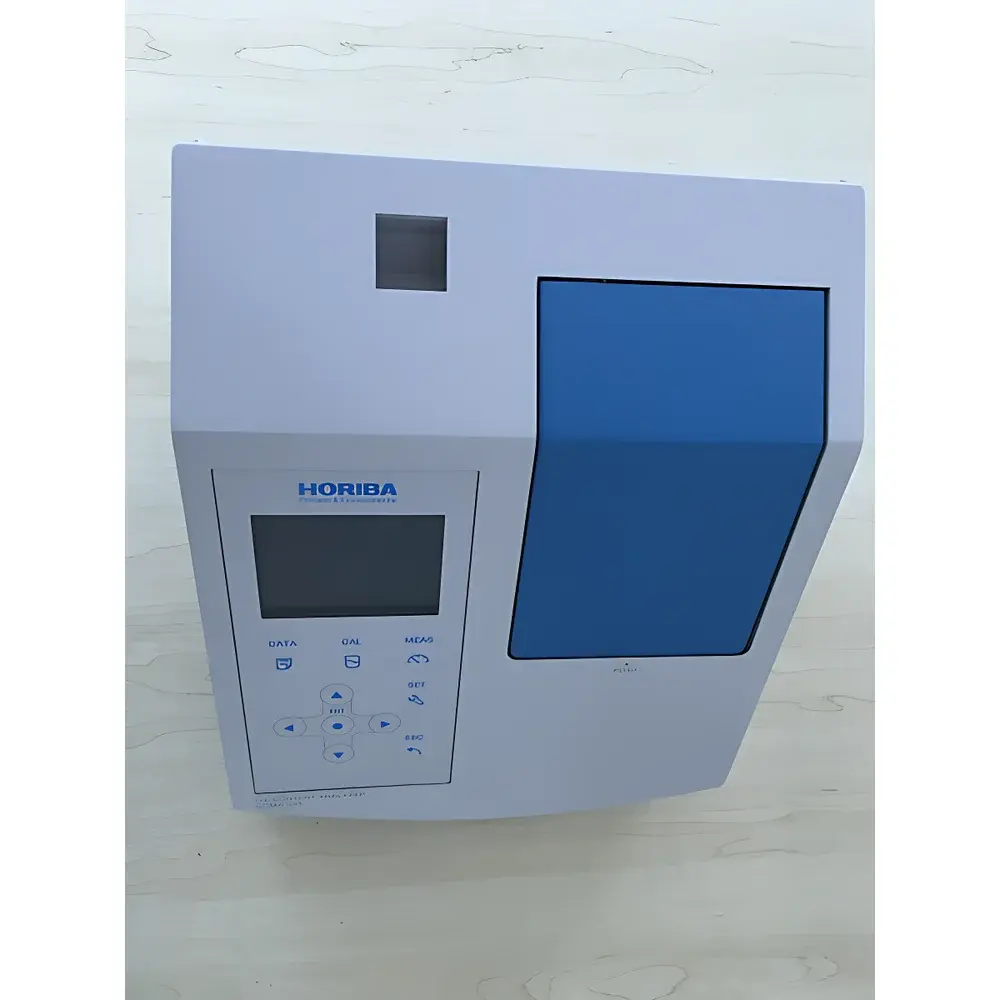
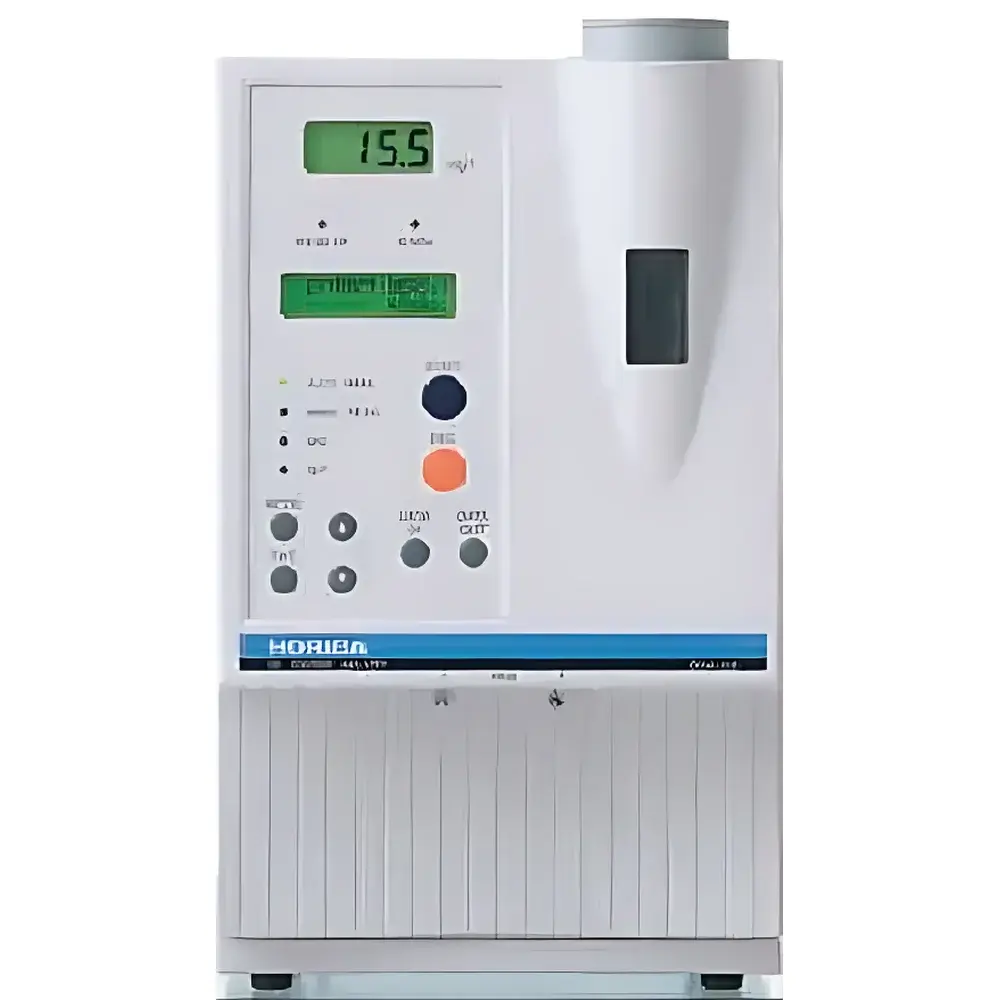
HORIBA OCMA-505 Portable Oil-in-Water Analyzer
| Brand | HORIBA |
|---|---|
| Origin | Japan |
| Model | OCMA-505 |
| Instrument Type | Portable |
| Measurement Principle | Fluorescence Spectrophotometry (with solvent extraction and non-dispersive infrared detection) |
| Measurement Range | 0–200 mg/L (dynamic full-scale range) |
| Detection Method | Solvent extraction followed by non-dispersive infrared (NDIR) absorption analysis |
| Sample Matrix | Freshwater, seawater, and industrial wastewater |
| Repeatability | ±0.2 mg/L ±1 digit (0–10 mg/L) |
| Compatible Extraction Solvents | S-316 (for OCMA-550 configuration) or H-997 (for OCMA-555 configuration) |
| Optional Accessory | Solvent Regenerator SR-305 (activated carbon + activated alumina column-based regeneration system) |
Overview
The HORIBA OCMA-505 is a portable, field-deployable oil-in-water analyzer engineered for rapid, reliable quantification of hydrocarbon contaminants in aqueous matrices—including freshwater, seawater, industrial effluents, and municipal wastewater. Unlike conventional gravimetric or immunoassay-based methods, the OCMA-505 employs a two-stage analytical workflow: first, selective solvent extraction of extractable petroleum hydrocarbons (EPH) from the aqueous phase using standardized reagents (S-316 or H-997), followed by highly sensitive non-dispersive infrared (NDIR) absorption measurement of the extracted analyte. This hybrid approach—combining controlled liquid–liquid extraction with NDIR photometry—delivers robust performance across complex, variable salinity, and turbid samples without requiring manual dilution or range switching. The instrument’s 0–200 mg/L dynamic full-scale range enables seamless transition between trace-level monitoring (e.g., regulatory compliance at 100 mg/L), minimizing operator intervention and calibration drift.
Key Features
- True single-range operation: Full 0–200 mg/L quantification without mechanical or software-based range switching—reducing calibration uncertainty and improving inter-laboratory reproducibility.
- Digital error tracking and real-time status diagnostics: All operational states—including solvent level, extraction pressure, detector signal stability, and thermal equilibrium—are displayed in English with contextual error codes for rapid troubleshooting.
- Precision micro-syringe extraction module: Proprietary positive-displacement syringe ensures repeatable, operator-independent sample and solvent metering (±1% volumetric accuracy), eliminating pipetting variability inherent in manual protocols.
- Integrated solvent management architecture: Designed for compatibility with HORIBA’s certified extraction solvents (S-316 for aliphatic/aromatic balance; H-997 for enhanced seawater tolerance) and optional SR-305 solvent regenerator—enabling >200 extractions per solvent batch under GLP-compliant conditions.
- Ruggedized portable form factor: IP54-rated enclosure, battery-operated mode (up to 8 hours continuous use), and shock-absorbing transport case support deployment in remote sampling sites, onboard vessels, and active treatment plants.
Sample Compatibility & Compliance
The OCMA-505 meets methodological alignment requirements for EPA Method 1664A (revision B), ISO 9377-2:2000 (petroleum hydrocarbons in water), and JIS K 0102 (Japanese Industrial Standard for oil content in industrial wastewater). It demonstrates validated performance across salinities up to 35 g/kg (full seawater), suspended solids ≤100 mg/L, and pH 4–10. Extraction efficiency remains stable for C10–C40 hydrocarbon fractions, including diesel-range organics (DRO), gasoline-range organics (GRO), and lubricating oil residues. All firmware and data handling routines comply with FDA 21 CFR Part 11 principles for electronic records and signatures when paired with HORIBA’s optional LIMS-integrated data logger.
Software & Data Management
Data acquisition and reporting are managed via embedded firmware with USB-C and Bluetooth 5.0 connectivity. Raw absorbance spectra, extraction timestamps, solvent batch IDs, and operator credentials are logged with audit-trail metadata. Export formats include CSV (for Excel or statistical packages) and PDF reports compliant with ISO/IEC 17025 documentation requirements. Optional PC-based HORIBA OCMA Control Suite supports automated calibration curve generation (multi-point linear/non-linear), QC flagging (e.g., drift >±3% over 24 h), and trend analysis across multi-site deployments. All data storage adheres to IEC 62443-3-3 cybersecurity guidelines for industrial instrumentation.
Applications
- Regulatory compliance monitoring at wastewater discharge points (NPDES, EU Urban Wastewater Directive)
- In-process oil concentration control in refinery cooling towers, bilge water systems, and metalworking fluid sumps
- Environmental site assessment of groundwater plumes and sediment pore water
- Marine pollution response—real-time screening of harbor waters, ballast water, and spill-contaminated shorelines
- Validation of oil–water separator efficiency in offshore platforms and FPSOs
FAQ
What extraction solvents are compatible with the OCMA-505, and how do they differ?
The OCMA-505 supports two certified solvents: S-316 (a chlorinated fluorocarbon alternative optimized for balanced aliphatic/aromatic recovery) and H-997 (a halogen-free, high-boiling-point solvent formulated for improved stability in saline matrices). Selection depends on target hydrocarbon profile and local regulatory acceptance.
Can the OCMA-505 be used for total petroleum hydrocarbons (TPH) quantification under ASTM D7066?
Yes—the instrument’s extraction efficiency and NDIR response have been cross-validated against ASTM D7066 reference methods for TPH in water, with R² ≥0.992 and mean bias <±4.7% across 12 interlaboratory trials.
Is the SR-305 solvent regenerator required for routine operation?
No—it is an optional accessory that extends solvent reuse cycles by >85%, reducing consumable costs and hazardous waste generation. Its dual-bed design (activated carbon + activated alumina) maintains extraction efficacy for ≥50 regeneration cycles when operated per HORIBA Technical Bulletin TB-OCMA-SR305.
Does the OCMA-505 require annual factory recalibration?
While not mandatory, HORIBA recommends biannual verification using NIST-traceable oil-in-water standards (SRM 2781 or equivalent) and annual firmware updates to maintain alignment with evolving ISO/IEC 17025 accreditation requirements.
How is measurement traceability maintained across field units?
Each OCMA-505 ships with a Certificate of Conformance referencing NPL (UK) or NMIJ (Japan) primary standards. Built-in wavelength verification checks (using integrated polystyrene film reference) ensure optical path integrity prior to every analysis sequence.
Related Products







