
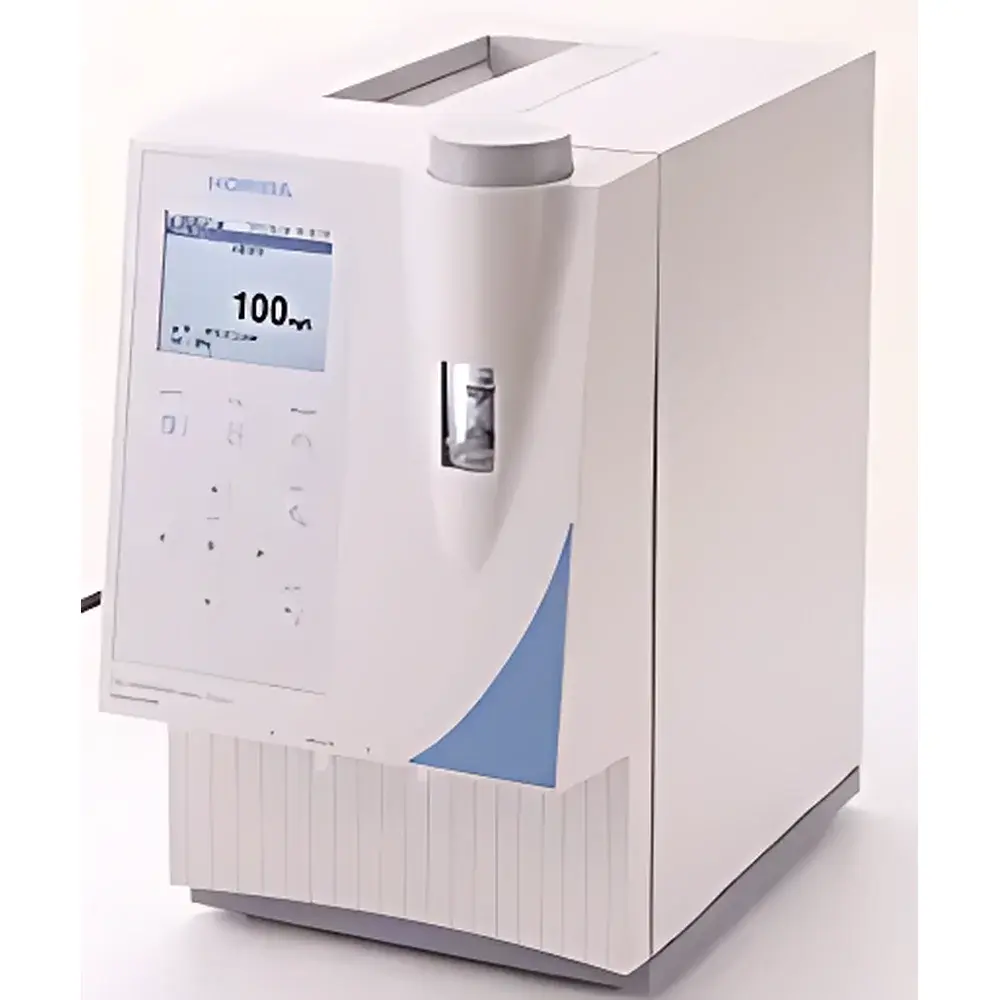
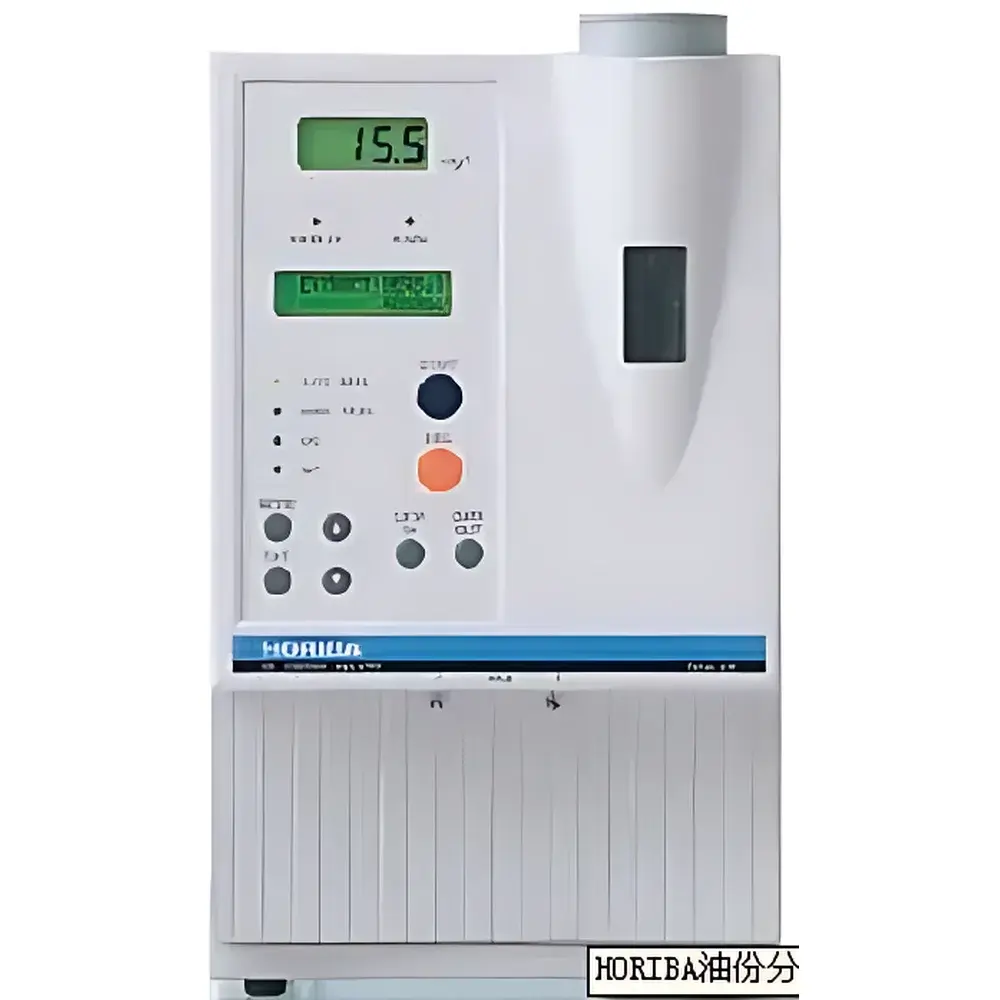
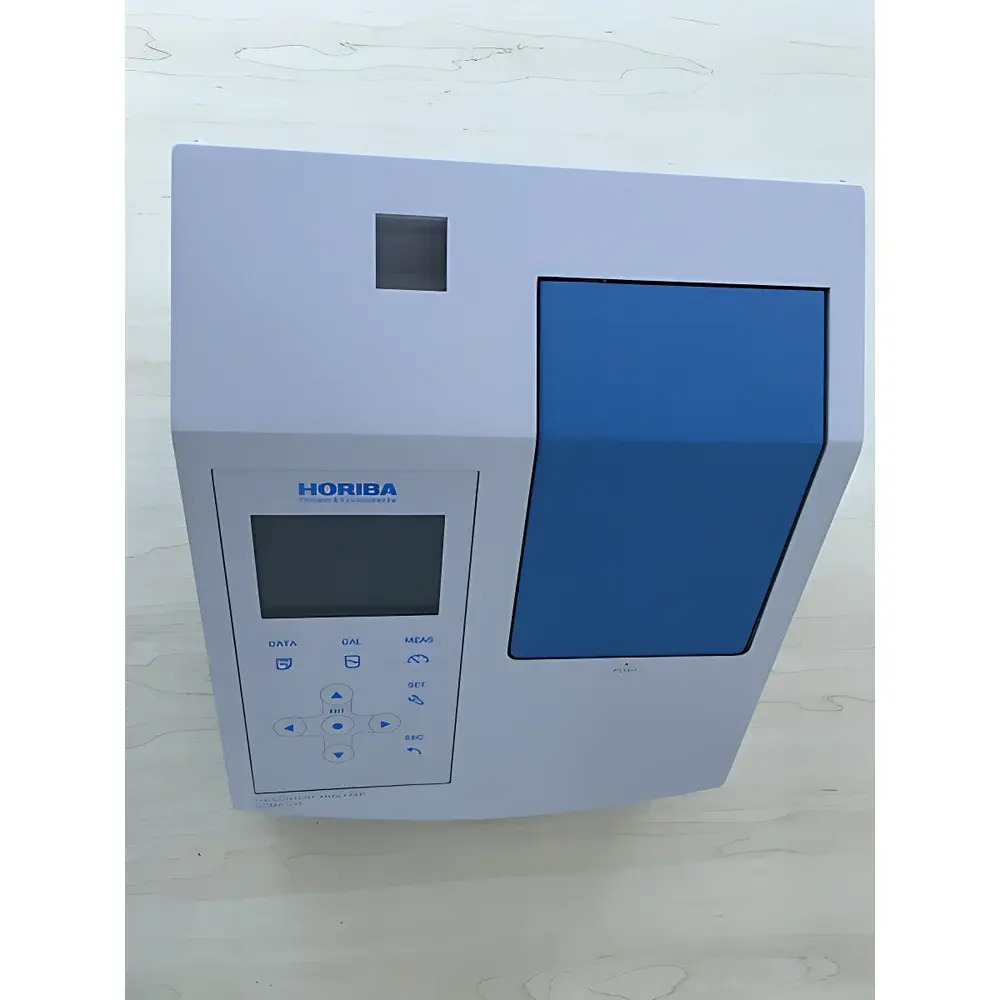
HORIBA OCMA-500 Portable Oil-in-Water Analyzer
| Brand | HORIBA |
|---|---|
| Origin | Japan |
| Model | OCMA-500 / OCMA-550 |
| Instrument Type | Portable |
| Measurement Principle | Fluorometric Detection (S-316 solvent extraction followed by non-dispersive infrared absorption) |
| Measurement Range | 0–200 mg/L |
| Accuracy | ±0.2 mg/L (0–10 mg/L), ±2 mg/L (10–100 mg/L), ±4 mg/L (100–200 mg/L) |
| Resolution | 0.1 mg/L |
| Compliance | Designed for ASTM D7066, ISO 9377-2, and EPA Method 1664B-aligned workflows |
| Optional Accessory | Solvent Regenerator SR-305 |
Overview
The HORIBA OCMA-500 is a portable, field-deployable oil-in-water analyzer engineered for rapid, reliable quantification of hydrocarbon contaminants in aqueous matrices—including freshwater, seawater, wastewater effluents, and industrial process water. It operates on a two-stage analytical principle: first, selective extraction of non-polar hydrocarbons from the aqueous sample into the proprietary chlorinated solvent S-316 using a precision-calibrated syringe-based fluid handling system; second, quantitative detection via non-dispersive infrared (NDIR) absorption at characteristic C–H stretching wavelengths (~2960 cm⁻¹). Unlike conventional gravimetric or UV-based methods, this solvent-extraction/NDIR approach delivers high specificity for total petroleum hydrocarbons (TPH) while minimizing interferences from humic substances, detergents, or suspended solids. The instrument’s fixed 0–200 mg/L dynamic range eliminates manual range switching—enabling seamless transition between trace-level monitoring (e.g., discharge compliance at <1 mg/L) and high-concentration screening (e.g., bilge water or refinery influent)—without recalibration or dilution errors.
Key Features
- Single-range 0–200 mg/L quantification with 0.1 mg/L digital resolution and real-time display of measurement uncertainty (±digit + absolute error bands per concentration tier)
- Integrated, factory-calibrated syringe module ensuring repeatable 10 mL sample and 10 mL S-316 solvent delivery—critical for stoichiometric extraction efficiency and method reproducibility
- Self-diagnostic firmware with multilingual (English-default) status reporting, including fault codes for solvent depletion, optical path obstruction, or temperature drift outside operational limits (10–40 °C)
- Ruggedized IP65-rated enclosure with shock-absorbing housing, enabling deployment in harsh environments such as coastal monitoring stations, offshore platforms, and municipal wastewater pump stations
- Battery-operated mode (up to 8 hours continuous operation) and AC adapter compatibility for lab-to-field continuity
Sample Compatibility & Compliance
The OCMA-500 is validated for direct analysis of unfiltered, unpreserved grab samples of surface water, seawater, activated sludge supernatant, cooling tower water, and oily wastewater—with no pretreatment required beyond homogenization. Its extraction efficiency meets the performance criteria specified in ISO 9377-2 (petroleum hydrocarbons in water) and aligns with the procedural rigor of EPA Method 1664B (n-hexane extractable material). While not a GLP-certified system, its audit-ready data logs—including timestamped measurements, operator ID entry, solvent batch tracking, and error event history—support regulatory documentation under ISO/IEC 17025-accredited laboratories. For long-term monitoring programs, the optional SR-305 Solvent Regenerator extends S-316 usability by >85% through dual-stage adsorption (activated carbon + activated alumina), reducing solvent consumption and hazardous waste generation in accordance with ISO 14001 environmental management principles.
Software & Data Management
Data output is via USB-C interface to PC or mobile device running HORIBA’s OCMA Control Suite (v3.2+), which supports CSV export, customizable report templates (PDF/XLSX), and automated QA/QC flagging based on user-defined control limits. All raw absorbance spectra, extraction cycle parameters, and environmental sensor readings (ambient temperature, internal detector temperature) are embedded in each data record. The software enforces ALCOA+ principles—ensuring data is Attributable, Legible, Contemporaneous, Original, Accurate, and Complete—with full electronic signature capability compliant with FDA 21 CFR Part 11 Annex 11 requirements when deployed in regulated pharmaceutical or food processing facilities.
Applications
- Regulatory compliance monitoring at wastewater treatment plant outfalls per national discharge permits (e.g., EU Urban Wastewater Directive, US Clean Water Act NPDES)
- Marine pollution response: rapid assessment of oil spills, bilge water violations, and harbor sediment pore water contamination
- Industrial hygiene: routine checks of coolant emulsions, transformer oil leakage in substation drainage, and lubricant carryover in metalworking rinse streams
- Environmental site assessment: screening of groundwater plumes at legacy petroleum storage sites using handheld portability and minimal consumables
- Research applications: kinetic studies of oil biodegradation in microcosms, where repeated low-volume sampling preserves experimental integrity
FAQ
What solvent is required for OCMA-500 operation, and why is S-316 specified?
S-316 (1,1,2-trichloro-1,2,2-trifluoroethane) is selected for its high selectivity toward aliphatic and aromatic hydrocarbons, negligible water solubility (<0.001 g/L), and strong, non-overlapping IR absorption at 2960 cm⁻¹. Substitution with alternative solvents compromises accuracy and violates method validation protocols.
Can the OCMA-500 measure dissolved vs. dispersed oil fractions separately?
No—it reports total extractable petroleum hydrocarbons (EPH) as defined by standard methods. Fractionation requires complementary techniques such as GC-FID or LC-MS.
Is calibration verification required before each analysis?
A single-point verification using certified 10 mg/L mineral oil standard (HORIBA CRM-OCMA-10) is recommended per 20 samples or daily, per ISO/IEC 17025 clause 7.7.1.
Does the SR-305 solvent regenerator restore S-316 to original purity?
SR-305 achieves >95% recovery of active solvent mass and restores spectral transmittance within ±0.5% of virgin S-316—validated via FTIR baseline stability testing per HORIBA Technical Bulletin TB-OCMA-SR305-2023.
How does temperature affect measurement stability?
The NDIR detector incorporates Peltier-controlled thermal stabilization; measurements remain within specification across 10–40 °C ambient, but sample temperature should be recorded as a metadata field for QA review.
Related Products







