
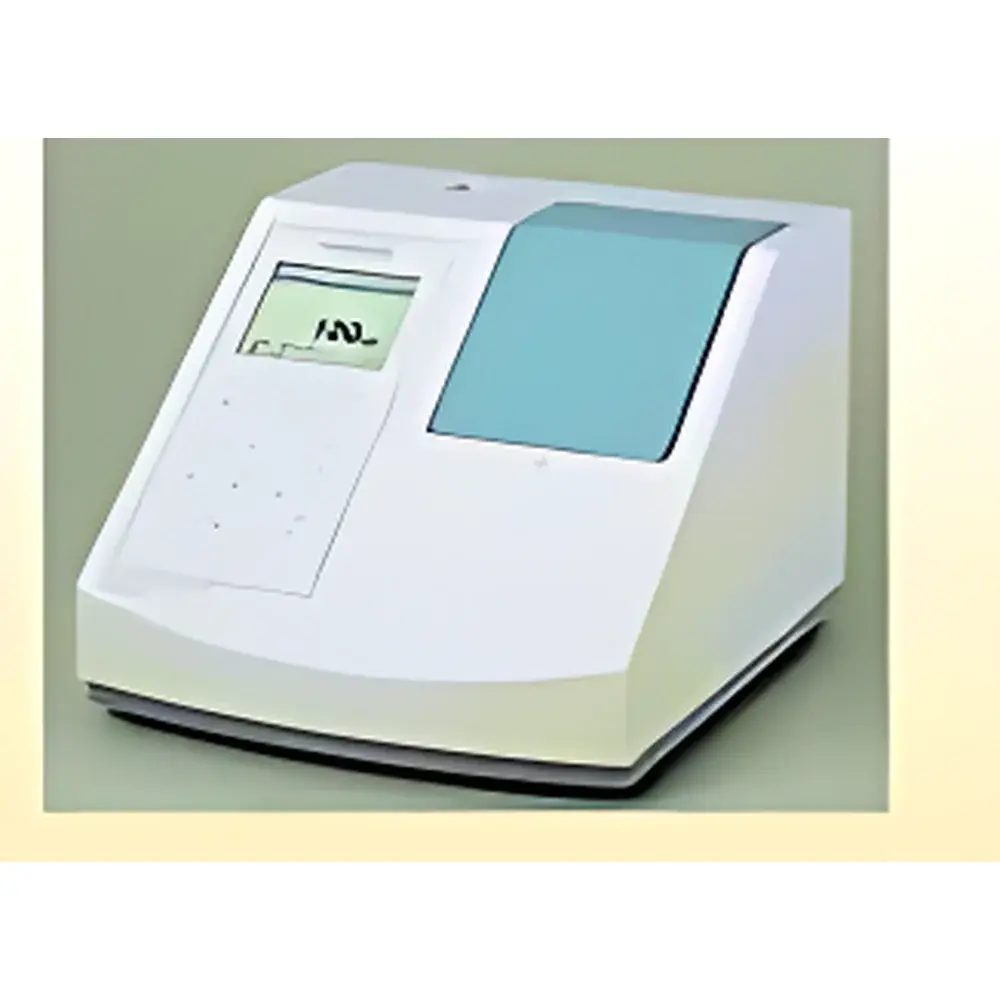
Horiba OCMA-550 Portable Infrared Oil-in-Water Analyzer
| Brand | HORIBA |
|---|---|
| Origin | Japan |
| Model | OCMA-550 |
| Instrument Type | Portable |
| Measurement Principle | Non-Dispersive Infrared (NDIR) Absorption Spectrophotometry |
| Measurement Range | 0–200 mg/L (oil in water), 0–1000 mg/kg (oil in soil), 0–1 Abs |
| Detection Limit | 0.1 mg/L |
| Accuracy | ±1% of full scale |
| Resolution | 0.1 mg/L (or 0.1 mg/kg / 0.01 Abs) |
| Measurement Frequency | 1 test per 2 minutes (0.5 tests/min) |
| Solvent | S-316 (trichloroethylene-free, IR-transparent at ~3.4 µm) |
| Dimensions | 250 × 200 × 285 mm |
| Power Supply | 230 V AC, 50 Hz |
| Detector Type | Thermopile Sensor |
| Display | Backlit LCD with timestamping |
| Data Interface | RS-232C serial port & parallel printer port |
Overview
The Horiba OCMA-550 is a portable, field-deployable infrared oil content analyzer engineered for precise quantification of hydrocarbon contaminants in aqueous and solid-phase environmental matrices. It operates on the principle of non-dispersive infrared (NDIR) absorption spectrophotometry—specifically targeting the asymmetric C–H stretching vibration band near 2940 cm⁻¹ (≈3.4 µm), where aliphatic hydrocarbons exhibit strong, characteristic absorbance. Unlike dispersive IR systems, the OCMA-550 employs fixed-wavelength optical filtering and a thermopile detector to deliver high signal stability and long-term reproducibility without moving parts or spectral calibration drift. The instrument is designed exclusively for post-extraction analysis: samples are first treated with S-316 solvent (a non-toxic, low-boiling, IR-transparent chlorinated hydrocarbon substitute), which selectively dissolves hydrophobic oils and greases from water, soil, or solid surfaces. The resulting extract is introduced into a standardized 20-mm-pathlength quartz cuvette, and the instrument performs single-button measurement—automatically compensating for baseline offset and performing zero-point verification prior to each analysis. Its core application domain includes regulatory compliance monitoring under EPA Method 1664 (revision B), ISO 9377-2, and ASTM D7066, particularly where rapid, on-site decision-making is required for wastewater discharge, remediation site assessment, or industrial process control.
Key Features
- Triple-unit display capability: switch seamlessly between concentration units—mg/L (for water extracts), mg/kg (for soil/sediment extracts), and absorbance (Abs) for method validation and calibration traceability.
- Integrated timestamping and data logging: all measurements are automatically stamped with date/time; results are viewable on the backlit LCD or exportable via RS-232C to LIMS or spreadsheet software.
- Thermopile-based IR detection: ensures stable, drift-free performance across ambient temperature fluctuations (10–40 °C operating range) without requiring periodic lamp replacement or spectral recalibration.
- Pre-configured solvent compatibility: optimized for S-316 (CAS 75-71-8), which exhibits negligible absorbance at 3.4 µm—enabling selective quantification of hydrocarbon mass without solvent interference.
- Automatic zero-reference compensation: built-in reference channel corrects for cuvette imperfections, solvent batch variation, and minor optical path deviations before each measurement cycle.
- Compact, ruggedized chassis: IP20-rated enclosure with shock-absorbing rubber feet; meets IEC 61010-1 safety standards for laboratory and field use.
Sample Compatibility & Compliance
The OCMA-550 accepts extracts prepared from diverse sample types—including surface water, groundwater, industrial effluent, soil cores, swabbed metal parts, and textile substrates—provided they are processed using standardized liquid–liquid extraction (LLE) with S-316. It supports compliance with multiple international protocols: EPA 1664B (for total recoverable hydrocarbons), ISO 9377-2 (water quality — determination of hydrocarbon oil index), and JIS K 0102 (Japanese Industrial Standard for oil content in wastewater). While not intrinsically compliant with 21 CFR Part 11, its RS-232 output enables integration into validated data acquisition systems that support electronic signatures and audit trails when deployed in GLP or GMP environments. All measurements adhere to documented standard operating procedures (SOPs) referencing certified reference materials such as NIST SRM 2781 (diesel in water) and Horiba’s included B-grade heavy oil standard.
Software & Data Management
The OCMA-550 operates as a standalone analytical endpoint with no embedded operating system or firmware-upgradable software. Data management relies entirely on its hardware-level communication interfaces: a bi-directional RS-232C port (configured at 9600 baud, 8N1) transmits ASCII-formatted measurement records—including sample ID, unit mode, absorbance value, concentration, timestamp, and instrument status flags—to external PCs or data loggers. A parallel printer port (Centronics-compatible) allows direct hardcopy output for field reports. For laboratory integration, Horiba provides generic terminal emulation guidance (e.g., Tera Term, PuTTY) and ASCII parsing templates compatible with Excel, LabArchives, and Empower. No proprietary drivers or cloud services are required. Audit-ready documentation is maintained manually via printed logs or exported CSV files, supporting traceability under ISO/IEC 17025 clause 7.7.
Applications
- On-site wastewater compliance screening at municipal treatment plants and industrial outfalls.
- Rapid assessment of hydrocarbon contamination during brownfield site investigations and soil vapor intrusion studies.
- Validation of cleaning efficacy in precision manufacturing—e.g., residual cutting oil on semiconductor wafers, bearing components, or aerospace alloys.
- Monitoring oil carryover in closed-loop cooling systems, electroplating rinse baths, and metalworking fluid sumps.
- Quantitative analysis of emulsified oil in textile dyeing effluents and food processing drainage streams.
- Supporting Tier 1/2 risk-based corrective action (RBCA) decisions under ASTM E1739 and E2081 frameworks.
FAQ
What extraction solvent is required—and why is S-316 specified?
S-316 (1,1,2-trichloro-1,2,2-trifluoroethane) is mandated because it exhibits near-zero infrared absorbance at the 3.4 µm hydrocarbon detection band, ensuring only the extracted oil contributes to the measured signal. Its low volatility and thermal stability also minimize evaporation loss during transfer and cuvette handling.
Can the OCMA-550 measure dissolved hydrocarbons—or only extractable oil?
It measures only extractable petroleum hydrocarbons (EPH) as defined by EPA 1664B—not dissolved-phase monoaromatics (e.g., benzene) or polar compounds. True dissolved fractions require GC-MS or HPLC analysis.
Is calibration traceable to national standards?
Yes: the included B-grade heavy oil standard is traceable to Horiba’s internal reference material library, which is periodically verified against NIST SRM 2781 and ISO-certified secondary standards.
Does the instrument support multi-point calibration?
No—it uses a single-point, user-initiated zero-and-span verification routine based on the supplied standard; linearity across 0–200 mg/L is factory-validated per ISO 8466-1.
What maintenance is required beyond solvent replacement?
Annual verification of optical path integrity and detector responsivity is recommended; no consumable lamps or filters are used—only routine cleaning of the cuvette holder and quartz cell with lint-free wipes and reagent-grade acetone.







