
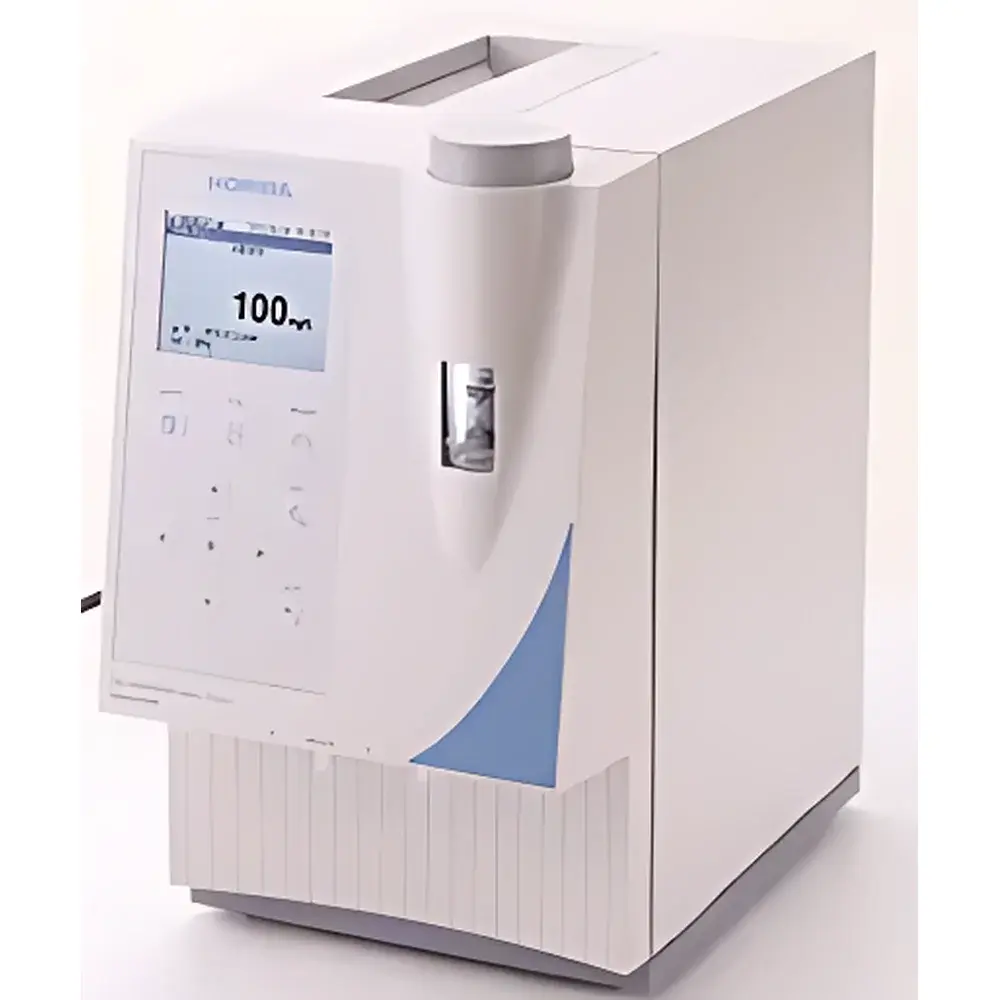
HORIBA OCMA-505 Portable Oil-in-Water Analyzer
| Brand | HORIBA |
|---|---|
| Origin | Japan |
| Model | OCMA-505 |
| Instrument Type | Portable |
| Measurement Principle | Solvent Extraction Followed by Non-Dispersive Infrared (NDIR) Absorption |
| Measurement Range | 0–200 mg/L |
| Detection Limit | 0.1 mg/L |
| Accuracy | ±1% of reading or ±0.1 mg/L (whichever is greater) |
| Resolution | 0.1 mg/L (0–99.9 mg/L) |
| Repeatability | ±0.2 mg/L ±1 digit (0–10 mg/L) |
| Extractant | HORIBA H-997 Solvent |
| Optional Accessory | SR-305 Solvent Regenerator |
Overview
The HORIBA OCMA-505 is a fully integrated, portable oil-in-water analyzer engineered for rapid, field-deployable quantification of hydrocarbon contaminants in aqueous matrices—including freshwater, seawater, industrial process water, and wastewater effluents. Unlike conventional benchtop analyzers requiring off-site laboratory processing, the OCMA-505 performs on-board solvent extraction and non-dispersive infrared (NDIR) photometric detection in a single automated workflow. Its core methodology adheres to the principles of EPA Method 1664 (revision B) and ISO 9377-2, leveraging selective infrared absorption at ~2960 cm⁻¹ (C–H stretch) following quantitative liquid–liquid extraction with HORIBA’s proprietary H-997 solvent—a chlorinated hydrocarbon mixture optimized for broad-spectrum aliphatic and aromatic oil recovery. The instrument’s fixed 0–200 mg/L dynamic range eliminates manual range switching, ensuring consistent calibration traceability and minimizing operator-induced variability across low- and high-concentration samples.
Key Features
- Integrated solvent extraction and NDIR detection in one compact, battery-operable unit—no external pumps, gas cylinders, or lab infrastructure required.
- Automated sample handling via precision-engineered syringe pump system; delivers reproducible 10 mL sample volume and 10 mL H-997 solvent volume per analysis.
- Real-time digital display with English-language interface showing measurement status, error codes (e.g., “LOW SOLVENT”, “EXTRACT ERROR”, “CALIBRATION EXPIRED”), and live concentration readout in mg/L.
- Self-contained waste management: segregated solvent and aqueous phase disposal paths prevent cross-contamination between runs.
- On-device calibration verification using certified reference standards (e.g., n-hexadecane in H-997); supports user-defined calibration curves compliant with ISO/IEC 17025 documentation requirements.
- Optional SR-305 Solvent Regenerator enables on-site reclamation of spent H-997 solvent via dual-layer adsorption (activated carbon + activated alumina), reducing consumable costs and hazardous waste generation by up to 85%.
Sample Compatibility & Compliance
The OCMA-505 is validated for use with turbid, saline, and moderately suspended samples—including seawater (up to 35 ppt salinity), municipal wastewater, cooling tower water, and bilge water. It meets the performance criteria specified in ASTM D7066-22 (Standard Test Method for Determination of Oil and Grease in Water by Infrared Spectrophotometry) and aligns with regulatory frameworks governing discharge monitoring under the U.S. Clean Water Act (NPDES permits) and EU Water Framework Directive (WFD) Annex V parameters. All firmware and data logs conform to ALCOA+ principles (Attributable, Legible, Contemporaneous, Original, Accurate, Complete, Consistent, Enduring, Available) and support audit-ready export for GLP/GMP environments. While not FDA 21 CFR Part 11–certified out-of-the-box, its secure user authentication, electronic signature capability, and immutable audit trail (timestamped start/end time, operator ID, calibration history, raw absorbance values) provide a foundation for validation in regulated pharmaceutical or food-processing water monitoring applications.
Software & Data Management
Data are stored internally (≥500 test records) with automatic timestamping, operator ID tagging, and QC flagging (e.g., “out-of-calibration”, “solvent saturation warning”). USB-C interface enables direct export of CSV-formatted reports containing full spectral metadata (baseline-corrected absorbance at 2960 cm⁻¹, pathlength, integration time), instrumental diagnostics, and environmental conditions (ambient temperature, battery voltage). Optional HORIBA OCMA Link software (Windows-compatible) provides trend analysis, statistical process control (SPC) charting (X-bar/R charts), and automated report generation aligned with ISO 14001 environmental management system documentation. All exported files include embedded digital signatures and SHA-256 hash verification to ensure data integrity during regulatory submission.
Applications
- Real-time compliance monitoring at wastewater treatment plant outfalls and industrial pretreatment facilities.
- Routine surveillance of harbor and coastal waters for petroleum hydrocarbon spills or chronic leakage.
- Preventive maintenance testing of transformer oil-cooled systems and hydraulic fluid reservoirs where water ingress must be quantified.
- Field verification of oil–water separator efficiency in offshore platforms and marine vessels (IMO MARPOL Annex I compliance).
- Environmental impact assessments (EIAs) requiring rapid screening of surface water bodies near refineries, petrochemical terminals, or pipeline right-of-ways.
- Research applications involving emulsified oil stability studies, bioremediation kinetics, and sorbent material evaluation.
FAQ
What solvent is required for the OCMA-505, and is it included with the instrument?
The OCMA-505 requires HORIBA H-997 solvent, supplied separately in certified 500 mL bottles. Each bottle supports approximately 50 analyses under standard operating conditions.
Can the OCMA-505 measure dissolved vs. emulsified vs. free-phase oil separately?
No—the instrument reports total extractable petroleum hydrocarbons (TPH) as defined by EPA Method 1664. It does not differentiate molecular speciation or physical state without prior fractionation.
Is method validation support available from HORIBA?
Yes—HORIBA provides application notes, certified reference material (CRM) compatibility guides, and IQ/OQ/PQ protocol templates aligned with ISO/IEC 17025 and USP Analytical Instrument Qualification.
How often must the optical cell be cleaned, and what cleaning procedure is recommended?
The NDIR flow cell should be rinsed with fresh H-997 solvent after every 10 analyses or when baseline drift exceeds ±0.02 absorbance units; HORIBA recommends ultrasonic cleaning in acetone for ≥15 minutes quarterly.
Does the SR-305 Solvent Regenerator restore H-997 to original specification?
SR-305 regenerates solvent to ≥98% of initial extraction efficiency per ASTM D7066 repeatability criteria, verified using n-hexadecane recovery tests; full regeneration capacity is 2 L per cartridge.







