
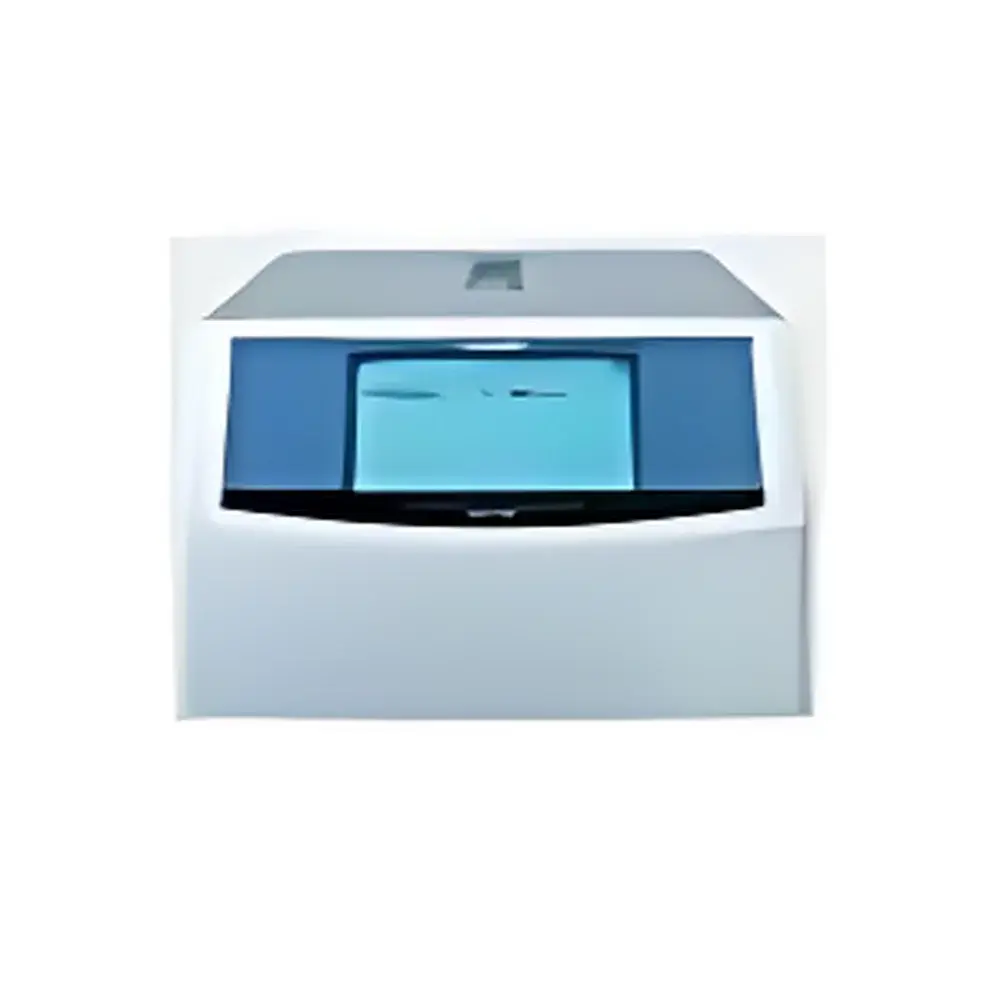
HORIBA FV-250 Portable Total Volatile Organic Compounds (TVOC) Analyzer with Flame Ionization Detection
| Brand | HORIBA |
|---|---|
| Origin | Japan |
| Model | FV-250 |
| Detection Principle | Flame Ionization Detection (FID) |
| Instrument Type | Portable |
| Detection Range | 0–10 / 20 / 50 / 100 / 200 / 500 / 1,000 / 2,000 / 5,000 / 10,000 ppmC |
| Resolution | ±1.0% FS |
| Accuracy | ±1.0% FS |
| Response Time (T90) | < 2.0 seconds |
| Drift | ±1.0% FS / 8 h |
| Linearity | ±1.0% FS |
| Sampling Flow Rate | ~600 mL/min |
| Warm-up Time | ~1 h |
| Operating Temperature | 5–35 °C |
| Operating Humidity | < 85% RH |
| Output Signals | DC 0–1 V, RS-232C |
| Power Supply | AC 100 V, 50/60 Hz |
| Power Consumption | 50 VA |
| Dimensions | 260(W) × 260(H) × 510(D) mm |
| Data Storage | CompactFlash (CF) card |
| Safety Feature | Automatic H₂ shutoff and alarm upon flameout |
Overview
The HORIBA FV-250 is a field-deployable, high-performance portable analyzer engineered for real-time quantification of total volatile organic compounds (TVOC) in ambient air, industrial workspaces, indoor environments, and remediation sites. Unlike photoionization detector (PID)-based instruments referenced in some marketing materials, the FV-250 employs a robust hydrogen flame ionization detection (FID) system — a reference-grade analytical method standardized in EPA Method 25A, ASTM D6348, and ISO 11890-2. FID provides exceptional sensitivity across a broad hydrocarbon spectrum (C₁–C₁₂), excellent linearity over seven decades of concentration, and immunity to humidity interference — critical advantages for regulatory-compliant environmental monitoring and occupational health assessments. Its compact benchtop-portable form factor (260 × 260 × 510 mm) integrates a precision micro-FID burner, thermally stabilized detector chamber, and embedded flow control — all calibrated to deliver trace-level repeatability (< ±1.0% full scale) and rapid T90 response (< 2.0 s) without sacrificing ruggedness or operational integrity.
Key Features
- True flame ionization detection (FID) architecture — not PID — ensuring compliance with EPA, ISO, and ASTM protocols for total hydrocarbon and TVOC measurement.
- Auto-ranging capability across ten programmable full-scale spans (0–10 ppmC to 0–10,000 ppmC), eliminating manual range switching during dynamic exposure events.
- Integrated safety-critical flame supervision: real-time flame status monitoring, audible/visual alarm on flameout, and automatic solenoid cutoff of hydrogen supply within milliseconds.
- Touchscreen-driven user interface with intuitive menu navigation, real-time trend graphing (time-series concentration plots), and on-device data review — supporting GLP-aligned field documentation.
- Low-power design (50 VA nominal) enabling extended operation via external AC sources or compatible power banks; warm-up time optimized to ~60 minutes for stable baseline and calibration readiness.
- Dual-output architecture: analog DC 0–1 V signal for PLC/SCADA integration and RS-232C serial interface for bidirectional communication with laboratory PCs or data loggers.
Sample Compatibility & Compliance
The FV-250 is validated for direct analysis of undiluted ambient and stack-sampled air matrices. It exhibits minimal quenching effects across common VOCs including alkanes, alkenes, aromatics (e.g., benzene, toluene), ketones, and esters — all reported as ppmC (parts-per-million carbon-equivalent), consistent with regulatory reporting conventions. The instrument meets IEC 61000-6-2 (immunity) and IEC 61000-6-3 (emissions) standards. Its measurement performance aligns with requirements for workplace exposure monitoring per OSHA 29 CFR 1910.1200 (HCS) and EU Directive 2004/37/EC (CARC). While not intrinsically rated for Zone 0/1 hazardous areas, it may be deployed in non-classified zones with appropriate site risk assessment and ventilation verification.
Software & Data Management
Data acquisition and visualization are supported through HORIBA’s proprietary PC-based software suite (compatible with Windows 10/11), which enables configuration, real-time telemetry display, automated report generation (PDF/CSV), and audit-trail-enabled calibration logging. All measurements — including timestamped concentration values, range selections, flame status flags, and diagnostic codes — are stored onboard via removable CompactFlash (CF) cards with FAT32 formatting. The system supports time-synchronized multi-channel recording when interfaced with external meteorological or auxiliary gas sensors. Data export complies with 21 CFR Part 11 requirements when operated under validated SOPs, including electronic signature capture and immutable audit logs.
Applications
- Indoor air quality (IAQ) surveys in offices, schools, and healthcare facilities per ASHRAE Standard 62.1 and WHO guidelines.
- Leak detection and repair (LDAR) programs in petrochemical, pharmaceutical, and semiconductor manufacturing facilities.
- Soil vapor intrusion (SVI) assessment at brownfield sites prior to redevelopment.
- Occupational hygiene monitoring for compliance with TLV®–TWA and STEL limits set by ACGIH® and national OELs.
- Emergency response screening following chemical spills or fire incidents involving organic solvents.
- Validation of abatement system efficiency (e.g., activated carbon beds, thermal oxidizers) via inlet/outlet differential measurements.
FAQ
Does the FV-250 require zero/span calibration before each use?
No — the instrument features automatic baseline stabilization and optional scheduled auto-calibration using integrated reference gas valves (when configured with optional calibration module). However, daily verification with certified span gas is recommended for regulatory audits.
Can the FV-250 distinguish individual VOCs, or does it only report total VOC?
It reports total VOC as ppmC using FID response factors normalized to propane. Compound-specific identification requires coupling with GC separation (e.g., GC-FID), which the FV-250 does not perform natively.
Is hydrogen gas supplied internally or externally?
Hydrogen is supplied externally via a regulated cylinder or generator (e.g., 99.999% purity, 30–50 mL/min flow); no internal H₂ storage is included for safety compliance.
What maintenance intervals are recommended for sustained accuracy?
FID nozzle cleaning every 200 operating hours; ceramic igniter inspection every 6 months; annual full-system performance verification against NIST-traceable standards.
Does the FV-250 support remote data transmission via Ethernet or Wi-Fi?
No — native connectivity is limited to RS-232C and analog 0–1 V output. Third-party serial-to-Ethernet converters may be used, though such configurations fall outside HORIBA’s factory validation scope.







