
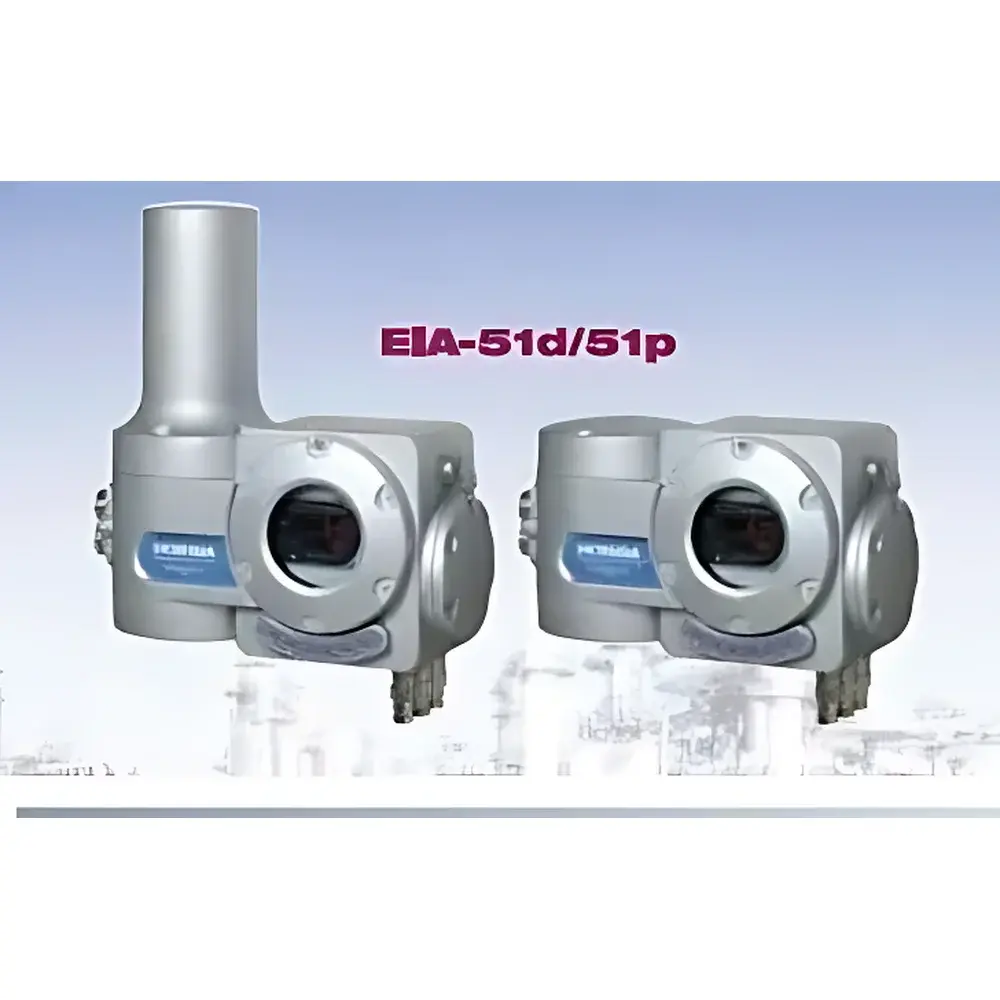
HORIBA MPA-51d / MPA-51p Magnetic Pressure Oxygen Analyzer
| Brand | HORIBA |
|---|---|
| Origin | Japan |
| Model | MPA-51d / MPA-51p |
| Explosion Protection | Ex d IIB+H2 T4 (MPA-51d) / Ex px d IIC T4X (MPA-51p) |
| Measurement Principle | Magnetic pressure (oxygen-specific paramagnetic detection) |
| Target Gas | O₂ |
| Range Options | 0–5 vol% to 0–100 vol% O₂ |
| Accuracy (Std. Range) | ±0.1 vol% O₂ (zero & span) |
| Repeatability | ±0.1 vol% O₂ |
| Zero Drift | ±0.05 vol% O₂/week |
| Span Drift | ±0.05 vol% O₂/week |
| Response Time (T90) | ≤20 s |
| Sample Flow Rate | 300 mL/min (MPA-51p), 500 mL/min (MPA-51d) |
| Sample Pressure | ≥1.98 kPa (MPA-51d), ≥14.7 kPa (MPA-51p) |
| Wetted Materials | SUS304, SUS316, FKM, fused silica, gold, platinum |
| Compliance | IEC 60079-0, IEC 60079-1 (Ex d), IEC 60079-2 (Ex p), ATEX 2014/34/EU |
Overview
The HORIBA MPA-51d and MPA-51p are intrinsically robust, certified explosion-proof oxygen analyzers engineered for continuous, high-stability measurement in hazardous areas classified under IEC 60079 and ATEX directives. Unlike electrochemical or zirconia-based sensors, these analyzers employ the magnetic pressure principle—a physical, non-consumptive method leveraging the strong paramagnetism of molecular oxygen. In a non-uniform magnetic field, oxygen molecules experience a force proportional to the field gradient and their magnetic susceptibility, inducing a measurable differential pressure across a sealed reference chamber filled with diamagnetic nitrogen. This pressure differential is detected by a high-sensitivity diaphragm sensor and converted into a linear electrical output directly proportional to O₂ concentration—eliminating zero drift and enabling long-term calibration stability without consumables or catalytic surfaces. The MPA-51d utilizes flameproof (Ex d) enclosure design compliant with IEC 60079-1 for Group IIB+H₂ environments (e.g., petrochemical process streams containing hydrogen), while the MPA-51p integrates a combined pressurized (Ex p) and flameproof (Ex d) architecture (Ex px d) for Group IIC applications—capable of safe operation in the presence of acetylene, hydrogen, or other highly flammable gases. Both models operate within a maximum surface temperature class of T4 (≤135 °C), ensuring compatibility with Zone 1 and Zone 2 classified locations per IEC 60079-0.
Key Features
- Paramagnetic oxygen detection with inherent linearity and zero-drift immunity—no baseline correction required over extended operational periods
- Dual-certified explosion protection: MPA-51d meets Ex d IIB+H₂ T4; MPA-51p satisfies Ex px d IIC T4X, including special conditions for sensor compartment integrity
- High-precision analog output (4–20 mA) with optional digital communication (RS-485 Modbus RTU) for integration into DCS/SCADA systems
- Wide selectable measurement ranges: 0–5 vol% to 0–100 vol% O₂, configurable via front-panel interface or remote command
- Stainless steel (SUS304/SUS316) wetted parts, fused silica flow cells, and gold- or platinum-coated components ensure chemical inertness against aggressive process matrices
- Response time ≤20 seconds (T90) from sample inlet under standard flow and pressure conditions
- Operating ambient temperature range: −10 °C to +50 °C; storage: −20 °C to +60 °C
Sample Compatibility & Compliance
The MPA-51d and MPA-51p are designed for dry, particle-free gas streams with O₂ concentrations up to 100 vol%. Sample gas must be free of condensable vapors, aerosols, and corrosive contaminants such as HCl, Cl₂, or SO₂ unless pre-conditioned via external filtration and drying. For MPA-51d, inlet pressure must remain ≥1.98 kPa (absolute); for MPA-51p, minimum inlet pressure is 14.7 kPa (absolute) to maintain positive internal pressurization. Both models comply with IEC 61508 (SIL2 capable when integrated into safety instrumented systems) and support traceability under GLP and GMP frameworks through optional audit-trail-enabled firmware. Conformance to IEC 60079-26 (equipment with equipment protection level Ga/Gb) and EN 61326-1 (EMC for industrial environments) is documented in the Type Examination Certificate issued by a Notified Body.
Software & Data Management
Configuration, diagnostics, and real-time monitoring are managed via a dedicated local operator interface with membrane keypad and LCD display. All calibration events—including zero and span adjustments—are timestamped and stored internally with user ID tagging. Optional firmware supports data logging (up to 30 days at 1-min intervals) and export via USB or RS-232. When deployed in regulated environments, the analyzer supports 21 CFR Part 11-compliant electronic records when paired with HORIBA’s certified data acquisition software—enabling electronic signatures, role-based access control, and immutable audit trails for QA/QC documentation.
Applications
These analyzers serve critical safety and process control functions across multiple industries: continuous O₂ monitoring in inerted reactor headspaces (pharmaceutical synthesis), purge gas verification in hydrogenation units (refining), blanketing gas quality assurance in food packaging lines, off-gas analysis in waste incineration facilities, and combustion air optimization in fired heaters. Their intrinsic stability and absence of consumables make them suitable for unattended operation in remote pipeline compressor stations or offshore platforms where maintenance access is constrained.
FAQ
What distinguishes magnetic pressure detection from other oxygen measurement methods?
Magnetic pressure relies on oxygen’s paramagnetic property—requiring no chemical reaction, electrolyte, or solid-state sensor degradation. It delivers superior long-term stability and eliminates cross-sensitivity to CO₂, CO, or hydrocarbons.
Can the MPA-51p be installed in Zone 0 areas?
No. The MPA-51p is certified for Zone 1 (Ex px d IIC T4X) and Zone 2 only. Zone 0 requires intrinsically safe (Ex ia) or encapsulated (Ex ma) protection, which this model does not provide.
Is routine calibration required?
Yes—though infrequent. Annual zero and span verification using certified N₂ and air standards is recommended; drift remains below ±0.05 vol% O₂/week under stable operating conditions.
Does the analyzer support HART communication?
No. Communication is limited to 4–20 mA analog output and optional RS-485 Modbus RTU. HART protocol is not implemented.
What sample conditioning is necessary for reliable operation?
Particulate filtration (≤1 µm), coalescing moisture removal (<−20 °C dew point), and pressure regulation are mandatory. Chemical scrubbers may be needed if acidic or oxidizing impurities exceed material compatibility limits.







