
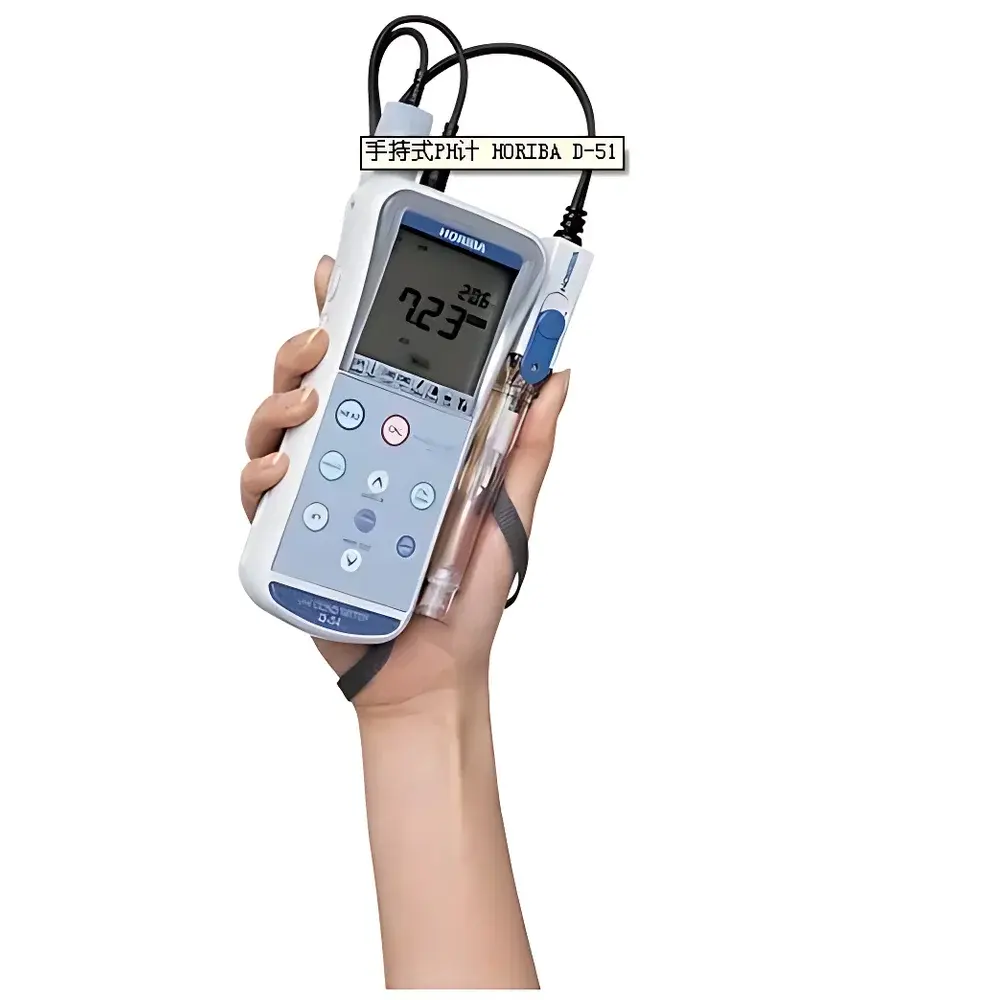
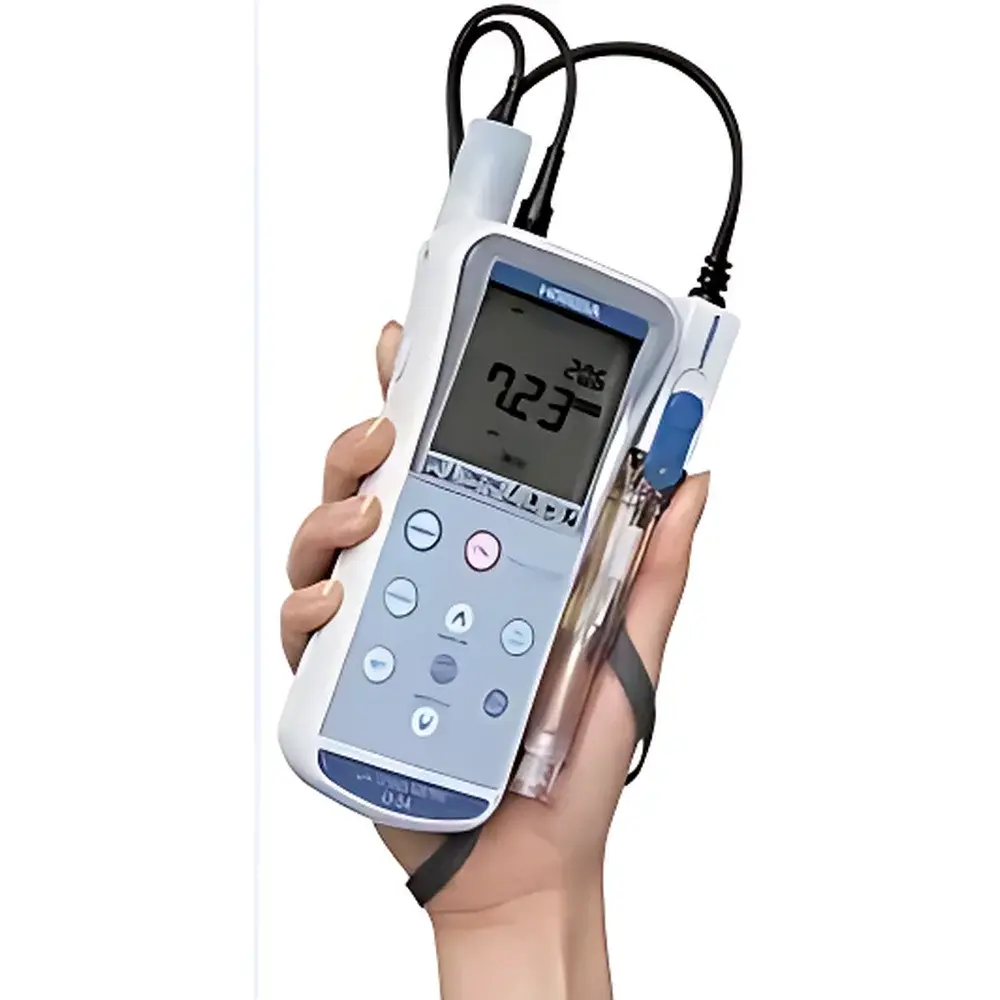
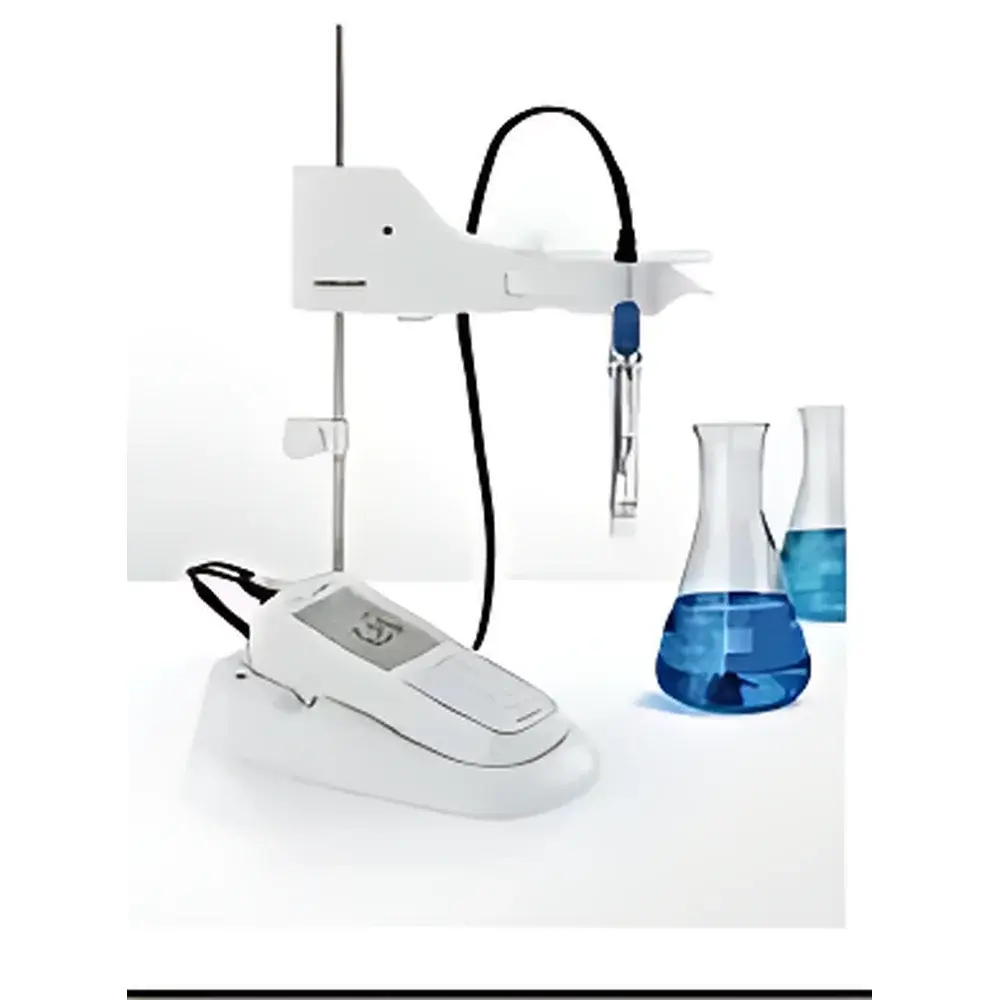
HORIBA LAQUAact D-70 Series Portable Multi-Parameter Water Quality Analyzer
| Brand | HORIBA |
|---|---|
| Origin | Japan |
| Model | D-70 Series |
| Type | Portable / Handheld Water Quality Analyzer |
| Measured Parameters | pH, mV (ORP), Ion Concentration, Conductivity, Resistivity, Salinity, Total Dissolved Solids (TDS), Dissolved Oxygen (DO) |
| Display | Backlit LCD with capacitive touchscreen |
| Protection Rating | IP67 (instrument and electrode) |
| Data Storage | 1,000 measurement records |
| Power Supply | AAA alkaline batteries, Ni-MH rechargeable batteries, or AC adapter |
| Calibration | Auto-calibration support |
| Compliance | JIS Z 8401 (pH), JIS K 0101 (conductivity), ISO 7888 (conductivity), ASTM D1125 (conductivity), USP <645> (water conductivity for pharmaceutical use) |
Overview
The HORIBA LAQUAact D-70 Series is a field-deployable, multi-parameter water quality analyzer engineered for high-reliability environmental monitoring, regulatory compliance sampling, and routine laboratory verification. Built upon HORIBA’s decades of electrochemical sensor expertise, the D-70 platform employs potentiometric (pH, ORP, ion-selective), conductometric (conductivity, resistivity, TDS, salinity), and amperometric (dissolved oxygen) measurement principles—each optimized for robustness under variable ambient conditions. Its dual-channel architecture enables simultaneous acquisition and real-time display of two independent parameters (e.g., pH + DO or conductivity + salinity), eliminating sequential measurement delays and reducing operator-induced variability. Designed to meet the operational demands of EPA-certified field technicians, municipal water operators, and academic researchers, the D-70 Series conforms to internationally recognized metrological standards—including JIS Z 8401 for pH accuracy, JIS K 0101 and ISO 7888 for conductivity traceability, and ASTM D1125 for conductivity-based water purity assessment. The instrument’s compact, impact-resistant housing and IP67-rated sealing ensure uninterrupted functionality in rain, dust, or splashed chemical environments—making it suitable for wastewater outfalls, riverbank surveys, aquaculture sites, and cleanroom utility water checks.
Key Features
- Dual-channel concurrent measurement and synchronized display of up to two parameters (e.g., pH/mV, conductivity/TDS, DO/saturation %)
- Capacitive touchscreen interface with chemically resistant tempered glass and intuitive navigation menus guided by on-screen prompts
- IP67-rated main unit and matching electrodes—fully submersible to 1 m for 30 minutes; resistant to ethanol, chlorinated disinfectants, and common field solvents
- Integrated self-diagnostic system providing real-time electrode health status, slope/offset validation, and post-calibration verification
- Automated calibration workflows with configurable reminders, 5-point pH calibration support, and compatibility with both NIST-traceable and USA-standard buffer solutions
- Automatic range switching and temperature compensation across all measured parameters (including pressure and salinity correction for DO)
- Onboard data logging capacity of 1,000 timestamped records with user-assigned sample IDs, clock-synchronized timestamps, and auto-power-off to conserve battery life
Sample Compatibility & Compliance
The D-70 Series accommodates aqueous samples across diverse matrices: surface water, groundwater, drinking water, wastewater effluent, seawater, brackish estuaries, and ultrapure water used in pharmaceutical manufacturing (meeting USP conductivity requirements). Electrode configurations are modular—users select application-specific probes (e.g., ruggedized DO sensors for turbid streams, double-junction pH electrodes for high-sulfide wastewater, or toroidal conductivity cells for high-TDS industrial cooling water). All measurements adhere to documented procedures aligned with GLP principles: audit trails are preserved via timestamped calibration logs and measurement histories. While the instrument itself does not require FDA 21 CFR Part 11 certification (as it lacks electronic signature capability), its data export format (CSV via USB) supports integration into validated LIMS environments where electronic records are governed by Part 11 controls.
Software & Data Management
Data transfer occurs via micro-USB to Windows-based PCs running HORIBA’s LAQUA Connect software (v3.0+), which enables batch export, trend visualization, report generation (PDF/Excel), and comparative analysis against regulatory thresholds (e.g., WHO drinking water guidelines, EU Bathing Water Directive limits). The software maintains full traceability: each exported file retains embedded metadata including calibration dates, electrode serial numbers, operator ID (manually entered), ambient temperature, and atmospheric pressure (for DO correction). No cloud connectivity or remote firmware updates are implemented—ensuring data sovereignty and minimizing cybersecurity exposure in critical infrastructure applications.
Applications
- Field verification of drinking water compliance (pH 6.5–8.5, conductivity ≤ 2,500 µS/cm per WHO)
- Wastewater treatment plant influent/effluent monitoring (DO profiling, ORP redox control, salinity tracking in coastal discharges)
- Aquaculture pond management (real-time DO saturation % and pH stability assessment)
- Environmental impact assessments (stream health indices using conductivity–TDS–salinity correlations)
- Pharmaceutical water system qualification (USP conductivity mapping at 25 °C)
- Educational laboratory exercises in environmental chemistry and analytical instrumentation
FAQ
Is the D-70 Series compliant with ISO/IEC 17025 requirements for accredited testing laboratories?
While the D-70 itself is not a certified reference standard, its metrological performance—when used with traceable calibration standards and documented SOPs—supports ISO/IEC 17025 method validation for routine water testing.
Can the instrument store calibration data separately for multiple electrodes?
Yes—each electrode is registered by serial number; calibration coefficients, date/time stamps, and slope/offset values are stored per probe and recalled automatically upon connection.
Does the dissolved oxygen measurement include barometric pressure compensation?
Yes—integrated barometric sensor (±1 hPa accuracy) and manual pressure entry options enable precise DO concentration and saturation % calculation per ISO 5814.
What battery life can be expected during continuous field use?
Approximately 200 hours with AAA alkaline batteries under typical intermittent measurement conditions (10 sec/sample, backlight enabled); 150 hours with continuous display and logging.
Are calibration certificates provided with the instrument?
No—calibration certificates are issued only for optional factory calibration services performed on individual electrodes prior to shipment; instrument-level certification is not applicable per JIS standards.
Related Products







