
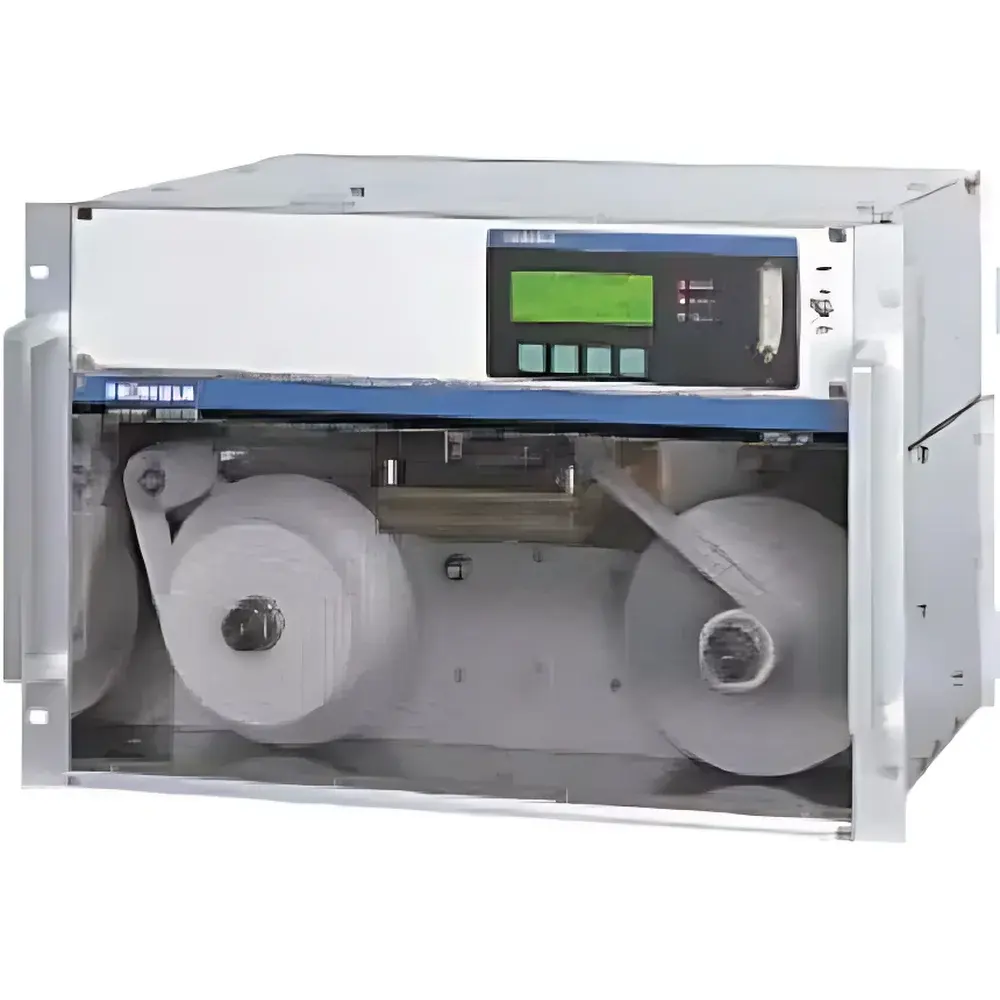
HORIBA APDA-375A Ambient Particulate Matter Monitor (PM10/PM2.5)
| Brand | HORIBA |
|---|---|
| Origin | Japan |
| Model | APDA-375A |
| Measurement Principle | Beta-ray Absorption |
| Safety Classification | Non-explosion-proof |
| Measurement Range | Standard: 0–1000 / 0–5000 µg/m³ |
| Resolution | ±1.0 µg/m³ (instantaneous) |
| Accuracy | ±2.0 µg/m³ (24-h average) or ±1% of reading (for concentrations >80 µg/m³) |
| Detection Limit | <1.0 µg/m³ (24-h average), <4.8 µg/m³ (1-h average) |
| Sampling Flow Rate | 16.7 L/min |
| Cut-point Options | VSCC (Vortex Separation Cyclone Classifier) for PM10 |
| Operating Temperature | −30 to +60 °C, ≤90% RH (non-condensing) |
| Power Supply | AC 220 V, 50/60 Hz |
| Power Consumption | ~200 VA (up to ~320 VA with optional dehumidification & heater) |
| Dimensions (Analyzer Unit) | 430 W × 400 D × 266 H mm |
| Weight (Analyzer Unit) | ~19 kg |
| Weight (Pump Unit) | ~5 kg |
| Analog Output | 4–20 mA or 0–1 V |
| Digital Interfaces | Optional RS-232C, Ethernet (TCP/IP) |
| Environmental Compliance | Designed for continuous ambient air quality monitoring per ISO 12103-1, EN 12341, and US EPA EQOA-PM-01 reference method equivalency criteria |
Overview
The HORIBA APDA-375A is a high-stability, regulatory-grade ambient particulate matter monitor engineered for continuous, unattended measurement of PM10 and PM2.5 mass concentrations in outdoor air. It employs beta-ray absorption (β-ray attenuation) as its primary measurement principle — a gravimetrically traceable technique in which airborne particles are collected on a filter tape, and the attenuation of a 14C beta radiation source is quantified before and after sampling. The differential attenuation is linearly correlated to particle mass loading, enabling direct mass concentration calculation without reliance on optical proxies or calibration transfer functions. This method meets the performance requirements for reference-equivalent monitoring under major international frameworks including ISO 12103-1 (test dust standards), EN 12341 (ambient PM10 and PM2.5 measurement), and U.S. EPA’s EQOA-PM-01 protocol for equivalent monitoring methods. The instrument supports dual-channel operation via interchangeable cutting heads — either the Vortex Separation Cyclone Classifier (VSCC) for PM10 or the Wide-range Inertial Impactor with Nylon Screen (WINS) for PM2.5 — ensuring compliance with size-selective sampling definitions.
Key Features
- Beta-ray absorption technology with real-time, non-destructive mass quantification and built-in drift compensation via zero-air background measurement.
- Modular multi-range capability: user-selectable full-scale ranges from 0–200 µg/m³ up to 0–10,000 µg/m³ (five options, freely combinable across PM10/PM2.5 channels).
- Low detection limit of <1.0 µg/m³ (24-hour average), validated per ISO 12103-1 A2 test dust and EN 12341 Annex B protocols.
- Integrated environmental conditioning: thermoelectric dehumidification and heater module (optional) maintains stable filter loading conditions under high humidity or sub-zero ambient conditions.
- Robust mechanical architecture: stainless-steel housing, sealed optical path, and vibration-damped filter transport mechanism ensure long-term operational stability in unattended field deployments.
- Comprehensive diagnostics: automated alerts for tape exhaustion, flow deviation (>±5%), pressure drop anomalies, and sensor calibration status — all logged with timestamps for audit readiness.
Sample Compatibility & Compliance
The APDA-375A is designed exclusively for ambient air sampling in fixed-site monitoring networks, urban background stations, industrial fence-line locations, and regional air quality assessment programs. It accepts standard 40-mm wide polytetrafluoroethylene (PTFE)-coated glass fiber filter tapes compliant with ISO 9096 and EN 12341 Annex C. The VSCC and WINS cut-points have been independently verified against wind tunnel calibrations per ISO/TR 11805 and undergo annual intercomparison per EU Directive 2008/50/EC QA/QC requirements. Instrument design conforms to IEC 61326-1 (EMC for laboratory and industrial use) and IEC 60529 IP54 ingress protection rating for outdoor enclosure integrity. Data output formats support integration into national air quality information systems compliant with EU Air Quality Directive reporting templates and U.S. AIRNow data submission standards.
Software & Data Management
Data acquisition and instrument control are managed via embedded firmware supporting local display (date/time, µg/m³, flow rate, tape position, diagnostic flags) and remote configuration through optional Ethernet (TCP/IP) or RS-232C interfaces. All raw beta-count values, mass loadings, flow-corrected concentrations, and system health parameters are timestamped with millisecond precision and stored internally for ≥30 days. Export formats include ASCII CSV and XML structured logs compatible with EPA AQS, EEA ETC/ACC, and national AQMS platforms. Audit trails record all parameter changes, calibration events, and maintenance interventions — satisfying GLP-aligned data integrity requirements and facilitating 21 CFR Part 11-compliant validation when deployed in regulated environmental laboratories.
Applications
- Regulatory ambient air quality monitoring networks requiring reference-equivalent PM10/PM2.5 data for compliance with WHO Air Quality Guidelines and national limit values (e.g., China GB 3095-2012, EU Directive 2008/50/EC, U.S. NAAQS).
- Source apportionment studies where high temporal resolution (<30 min) and low detection limits enable detection of transient emissions from construction, road dust resuspension, or biomass burning.
- Long-term trend analysis in background monitoring sites — supported by 10-year mean time between failures (MTBF) and field-proven stability of beta-source decay correction algorithms.
- Calibration verification of optical scattering-based sensors (e.g., nephelometers, laser particle counters) through co-located reference measurements.
- Environmental impact assessments (EIAs) for infrastructure projects, where continuous, auditable PM data is required for baseline characterization and post-construction monitoring.
FAQ
What is the minimum detectable concentration for 24-hour averaged PM2.5 measurements?
The APDA-375A achieves a detection limit of <1.0 µg/m³ for 24-hour integrated PM2.5 mass concentration, verified using certified reference aerosols and traceable to NIST SRM 2783.
Can the instrument operate reliably in sub-zero temperatures?
Yes — with the optional dehumidification and heating module, the analyzer maintains stable internal temperature and relative humidity control across −30 °C to +60 °C ambient conditions.
Is the beta radiation source replaceable in the field?
No — the 14C source is hermetically sealed within the detector assembly and certified for a 10-year service life; replacement requires return to an authorized HORIBA service center and regulatory re-certification.
Does the system meet U.S. EPA Federal Reference Method (FRM) equivalency criteria?
While not designated as a FRM device, the APDA-375A satisfies the performance specifications outlined in EPA EQOA-PM-01 for Equivalent Monitoring Methods when operated with WINS and VSCC cut-points and validated per 40 CFR Part 53 Appendix L protocols.
How is data integrity ensured during power interruptions?
The unit includes non-volatile memory with battery-backed real-time clock and automatic resume functionality; all unsaved data prior to outage is retained, and sampling resumes at the next scheduled interval without data loss.
Related Products







