
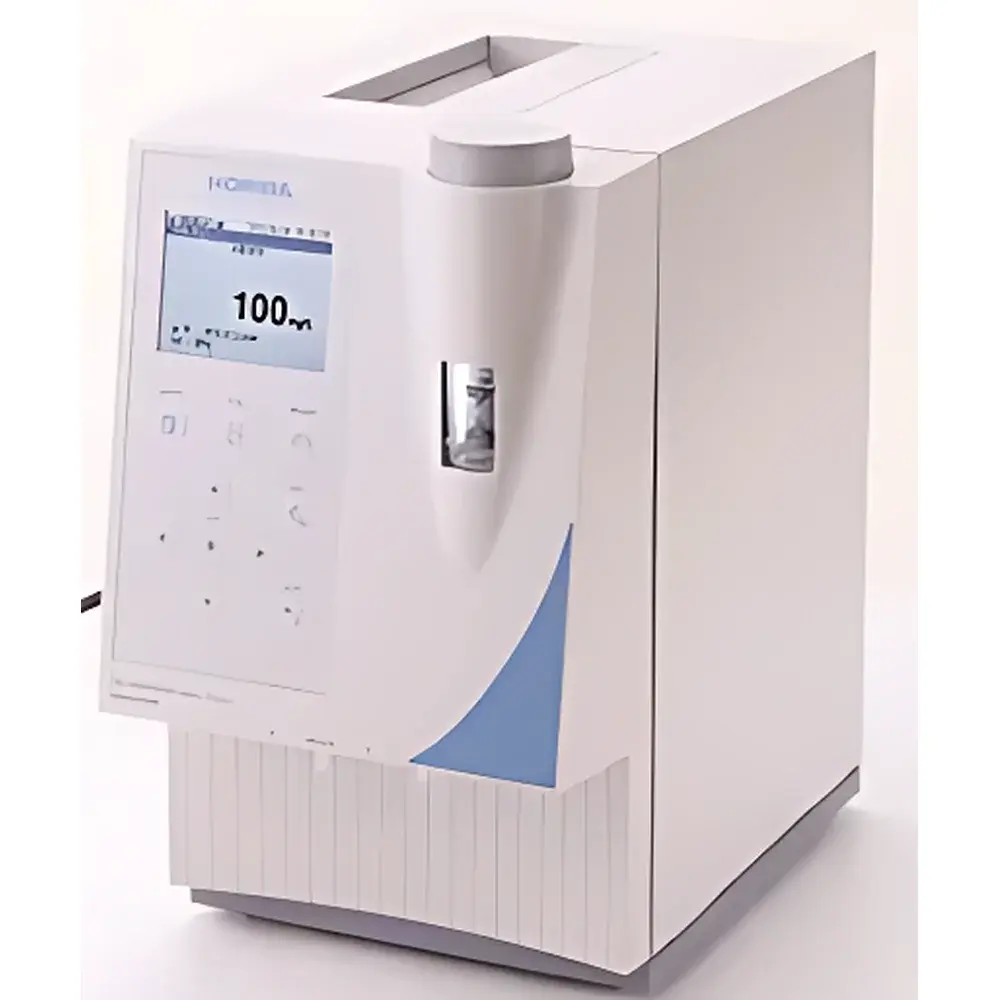
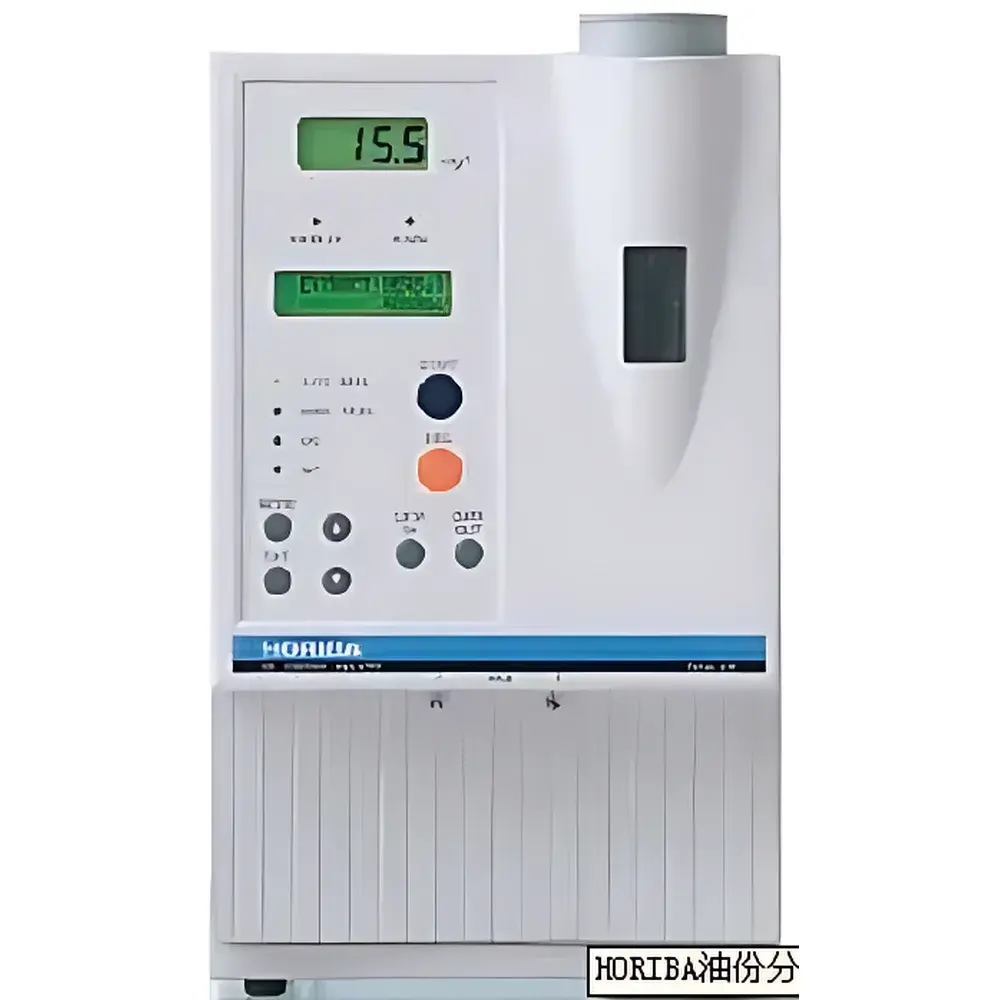
HORIBA OCMA-505 Portable Oil-in-Water Analyzer
| Brand | HORIBA |
|---|---|
| Origin | Japan |
| Model | OCMA-505 |
| Instrument Type | Portable |
| Measurement Principle | Non-Dispersive Infrared (NDIR) Spectrophotometry |
| Measurement Range | 0–200 mg/L (dynamic full-scale) |
| Resolution | 0.1 mg/L |
| Detection Method | Solvent Extraction Followed by NDIR Absorption Analysis |
| Extractant for OCMA-505 | H-997 |
| Repeatability | ±0.2 mg/L ±1 digit (0–10 mg/L), ±2 mg/L ±1 digit (10–100 mg/L), ±4 mg/L ±1 digit (100–200 mg/L) |
| Optional Accessory | Solvent Regenerator SR-305 |
Overview
The HORIBA OCMA-505 is a portable, field-deployable oil-in-water analyzer engineered for rapid, reliable quantification of hydrocarbon contaminants in aqueous matrices—including freshwater, seawater, industrial process water, and wastewater effluents. It operates on the principle of non-dispersive infrared (NDIR) spectrophotometry following solvent extraction, leveraging the characteristic C–H stretching absorption band near 2960 cm⁻¹ (3.39 µm) to quantify total petroleum hydrocarbons (TPH) or mineral oil equivalents. Unlike conventional gravimetric or fluorescence-based methods, the OCMA-505 eliminates spectral interference from suspended solids and colored organics through selective extraction into H-997 solvent—a proprietary, high-purity halogenated hydrocarbon optimized for infrared transparency and hydrophobic affinity. Its fully dynamic 0–200 mg/L measurement range enables single-range operation across regulatory thresholds (e.g., EPA Method 1664B, ISO 9377-2), eliminating manual range switching and reducing operator-induced variability.
Key Features
- True single-range operation: 0–200 mg/L full-scale dynamic quantification with 0.1 mg/L digital resolution ensures trace-level sensitivity and high-concentration linearity without recalibration or range selection.
- Integrated precision fluid handling: Patented syringe-based extraction system delivers exact, repeatable volumes of sample water and H-997 solvent—minimizing volumetric error and enhancing inter-laboratory reproducibility.
- Real-time diagnostics and multilingual interface: English-language status display provides immediate visibility into instrument readiness, calibration status, error codes (e.g., “Solvent Low”, “Optical Path Blocked”), and operational warnings—supporting compliance with GLP documentation requirements.
- Rugged portable architecture: Compact footprint (W × D × H ≈ 320 × 220 × 180 mm), battery-operable design (optional), and IP54-rated enclosure enable deployment in mobile labs, wastewater treatment plants, coastal monitoring stations, and emergency response scenarios.
- Traceable metrology: Built-in optical path verification and zero-point validation routines support routine performance checks aligned with ISO/IEC 17025 internal quality control protocols.
Sample Compatibility & Compliance
The OCMA-505 is validated for use with raw surface water, treated effluent, seawater (salinity up to 35 g/kg), and cooling tower water containing turbidity ≤ 100 NTU and total suspended solids (TSS) ≤ 50 mg/L. Sample pretreatment is limited to coarse filtration (≤ 5 µm) when particulate load exceeds specification; no centrifugation or acidification is required. The method conforms to the technical basis of ASTM D7066-22 (Standard Test Method for Determination of Oil and Grease and Selected Petroleum Hydrocarbons in Water by Infrared Spectrophotometry), and supports data integrity requirements under FDA 21 CFR Part 11 when paired with HORIBA’s optional audit-trail-enabled software module. Extraction efficiency meets or exceeds 95% recovery for aliphatic and aromatic hydrocarbons (C₆–C₄₀), as verified per EPA SW-846 Method 3510C.
Software & Data Management
Data output is delivered via RS-232 or USB interface to compatible LIMS or spreadsheet environments. The instrument stores up to 500 measurement records onboard—including date/time stamp, sample ID, measured concentration, operator ID (user-defined), and pass/fail flag against user-set action limits. When connected to HORIBA’s OCMA Manager PC software (v3.2+), users gain access to automated calibration curve generation, statistical trend analysis (e.g., moving average, standard deviation over time), electronic signature capability, and export-ready reports compliant with ISO 14001 environmental management documentation. All stored data include immutable metadata fields required for GLP/GMP audit readiness.
Applications
- Regulatory compliance monitoring at wastewater discharge points per national standards (e.g., China’s GB 8978-1996, EU Directive 2000/60/EC).
- Leak detection and source tracking in petrochemical facilities, offshore platforms, and pipeline right-of-ways.
- Environmental impact assessment of dredging operations, harbor maintenance, and aquaculture zone surveillance.
- In-process control of oil-water separators and dissolved air flotation (DAF) units in municipal and industrial treatment plants.
- Field verification of remediation effectiveness during soil and groundwater cleanup projects involving hydrocarbon plumes.
FAQ
What solvent is required for the OCMA-505, and why is H-997 specified?
H-997 is a high-purity, low-absorbance halogenated solvent developed by HORIBA specifically for infrared oil analysis. Its narrow spectral window around 2960 cm⁻¹ minimizes baseline drift and ensures optimal signal-to-noise ratio—critical for achieving ±0.1 mg/L resolution.
Can the OCMA-505 measure emulsified oil or PAHs separately?
No. The OCMA-505 quantifies total extractable petroleum hydrocarbons (TPH) as a group. Emulsified oil requires phase separation prior to analysis; polycyclic aromatic hydrocarbons (PAHs) require GC-MS or HPLC for speciation.
Is the SR-305 Solvent Regenerator compatible with other HORIBA models?
The SR-305 is designed exclusively for use with OCMA-500 and OCMA-505 systems. Its dual-layer activated carbon/activated alumina column is calibrated for H-997 and S-316 solvent regeneration kinetics and lifetime.
How often must the optical cell be cleaned, and what cleaning protocol is recommended?
Under normal use (≤10 samples/day), the quartz IR cell requires cleaning every 50–100 analyses using certified H-997 solvent and lint-free optical wipes. HORIBA recommends performing a blank scan after each cleaning cycle to confirm baseline stability.
Does the OCMA-505 support remote calibration or firmware updates?
Yes—via USB-connected PC and HORIBA’s authorized service software. Remote calibration is not permitted; all calibrations must be performed using NIST-traceable mineral oil standards (e.g., AccuStandard OIL-1000) and documented per ISO/IEC 17025 Clause 7.7.
Related Products







