
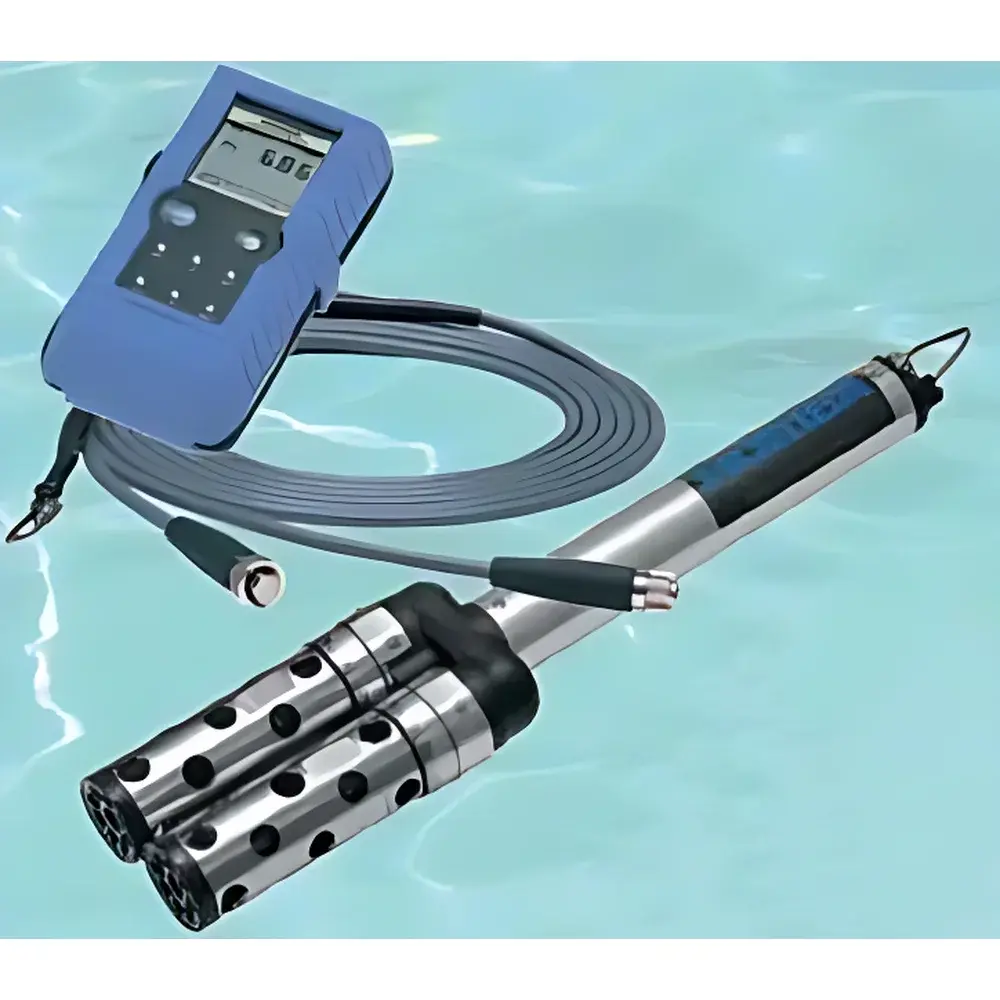
HORIBA W-20XD Series Multi-Parameter Water Quality Monitoring System
| Brand | HORIBA |
|---|---|
| Origin | Japan |
| Model | W-20XD Series |
| Instrument Type | Portable/Handheld Water Quality Analyzer |
| Operating Depth | Up to 100 m |
| Data Logging Duration | 30 days (2880 records, 15-min interval) |
| IP Rating | IP67 (Control Unit) |
| Simultaneous Parameters | Up to 13 (pH, DO, EC, Salinity, TDS, Seawater Specific Gravity, Turbidity, Depth, Temperature, ORP, and Optional Ion Sensors) |
| Measurement Principles | Glass Electrode (pH), Membrane-Based Galvanic Cell (DO), AC 4-Electrode Conductivity (EC), Nephelometric/Transmittance (Turbidity), Pressure Transducer (Depth), Thermistor (Temperature), Platinum Electrode (ORP), Ion-Selective Electrodes (NO₃⁻, Cl⁻, Ca²⁺, F⁻, K⁺, NH₃) |
Overview
The HORIBA W-20XD Series is a rugged, submersible multi-parameter water quality monitoring system engineered for long-term, unattended field deployment in diverse aquatic environments—from coastal seawater and deep reservoirs to groundwater wells, municipal wastewater outfalls, and agricultural runoff channels. Designed around a modular architecture, the system integrates high-stability electrochemical, optical, and physical sensors into a single pressure-rated probe assembly capable of continuous operation at depths up to 100 meters. Its core measurement methodology relies on standardized, internationally recognized principles: glass electrode potentiometry for pH; membrane-covered galvanic cell detection for dissolved oxygen (DO); AC four-electrode conductivity for precise electrical conductivity (EC) and derived parameters (salinity, TDS, seawater specific gravity); dual-beam nephelometric/transmittance optics for turbidity; piezoresistive pressure transduction for depth; and thermistor-based temperature compensation across all parameters. The system operates autonomously for 30 days without user intervention—recording data at configurable 15-minute intervals—and stores up to 2880 complete measurement sets internally. All sensor signals undergo real-time temperature compensation and automatic calibration validation per ISO 5667-22 and ASTM D3370 guidelines.
Key Features
- Submersible probe rated for continuous operation at 100 m depth (1 MPa hydrostatic pressure), featuring corrosion-resistant titanium housing and reinforced polymer cable glands.
- Integrated data logger with non-volatile memory—no external power or communication cables required during deployment; fully autonomous operation for 30 days.
- IP67-rated control unit for dust-tight and temporary immersion resistance during handling, transport, and field setup.
- Simultaneous measurement of up to 13 parameters—including pH, dissolved oxygen (mg/L), electrical conductivity (S/m), salinity (ppt), total dissolved solids (g/L), seawater specific gravity (δt), turbidity (NTU), depth (m), temperature (°C), redox potential (mV), and optional ion-selective measurements (NO₃⁻, Cl⁻, Ca²⁺, F⁻, K⁺, NH₃).
- Real-time auto-compensation: temperature compensation applied to pH, DO, EC, turbidity, and ORP readings using integrated thermistor feedback.
- Onboard two-point pH calibration verification and automatic zero/span checks for DO and conductivity modules—traceable to NIST-traceable standards.
- Modular probe design allows field-swappable sensor cartridges, minimizing downtime and enabling configuration-specific deployments (e.g., freshwater vs. marine sensor sets).
Sample Compatibility & Compliance
The W-20XD Series is validated for use across freshwater, brackish, and full-strength seawater matrices (0–40 ppt salinity). Its sensor suite complies with key regulatory and methodological frameworks including ISO 7888 (conductivity), ISO 5814 (dissolved oxygen), ISO 7027 (turbidity), and US EPA Method 180.1 (pH). The system supports GLP-compliant data integrity through timestamped, tamper-evident logging and optional encrypted SD card export. While not FDA 21 CFR Part 11 certified out-of-the-box, audit trail functionality—including operator ID tagging, calibration history, and event logs—can be configured to meet GMP-aligned QA/QC requirements for environmental monitoring programs under ISO/IEC 17025-accredited laboratories.
Software & Data Management
Data retrieval is performed via USB-C interface or optional Bluetooth 5.0 wireless module (W-23XD variant). HORIBA’s proprietary AquaLink™ Desktop Software provides raw data visualization, statistical summary (min/max/avg/stdev), parameter correlation analysis, and automated report generation in PDF or CSV format. All logged records include metadata: GPS coordinates (when paired with external GNSS module), barometric pressure, battery voltage, and sensor diagnostic flags. The software enforces ISO/IEC 17025-aligned data traceability—each exported file carries embedded digital signatures and checksums. For integration into centralized SCADA or LIMS platforms, ASCII-based serial output (RS-232/RS-485) and Modbus RTU protocol support are available as factory-installed options.
Applications
- Long-term limnological and oceanographic monitoring of stratified lakes, estuaries, and continental shelf sites.
- Regulatory compliance tracking for NPDES permits, EU Water Framework Directive (WFD) status assessment, and WHO drinking water guideline verification.
- Industrial effluent monitoring at discharge points—especially where intermittent access, biofouling risk, or high turbidity challenge traditional sensor platforms.
- Aquaculture site management: real-time DO, pH, and ammonia profiling to prevent hypoxic events and optimize feeding cycles.
- Groundwater vulnerability studies—tracking seasonal variations in EC, Cl⁻, NO₃⁻, and redox potential in confined aquifers.
- Post-disaster water safety assessment: rapid-deployment logging in flood-affected rivers or compromised well fields.
FAQ
What is the maximum operational depth, and how is pressure tolerance verified?
The probe is rated for continuous operation at 100 m (1 MPa), validated per IEC 60529 and JIS C 0920 pressure chamber testing protocols.
Can the system perform remote data transmission without physical retrieval?
Yes—optional GSM/GPRS or LoRaWAN telemetry modules enable scheduled wireless upload of compressed datasets to secure cloud servers.
Is calibration traceable to international standards?
All factory calibrations reference NIST-traceable buffers and gases; calibration certificates include uncertainty budgets per ISO/IEC 17025 Annex A.3.
How is biofouling mitigated during extended deployments?
The probe features a self-cleaning wiper mechanism (optional on W-23XD) and anti-fouling sensor coatings compliant with ISO 11737-1 biocompatibility testing.
Which ion sensors are supported, and what are their detection limits?
Six ISE options are available: NO₃⁻ (0.62–62,000 mg/L), Cl⁻ (0.4–35,000 mg/L), Ca²⁺ (0.4–40,080 mg/L), F⁻ (0.02–19,000 mg/L), K⁺ (0.04–39,000 mg/L), NH₃ (0.1–1,000 mg/L), all requiring pH-controlled sample conditions as specified in ISO 10304-1.







