
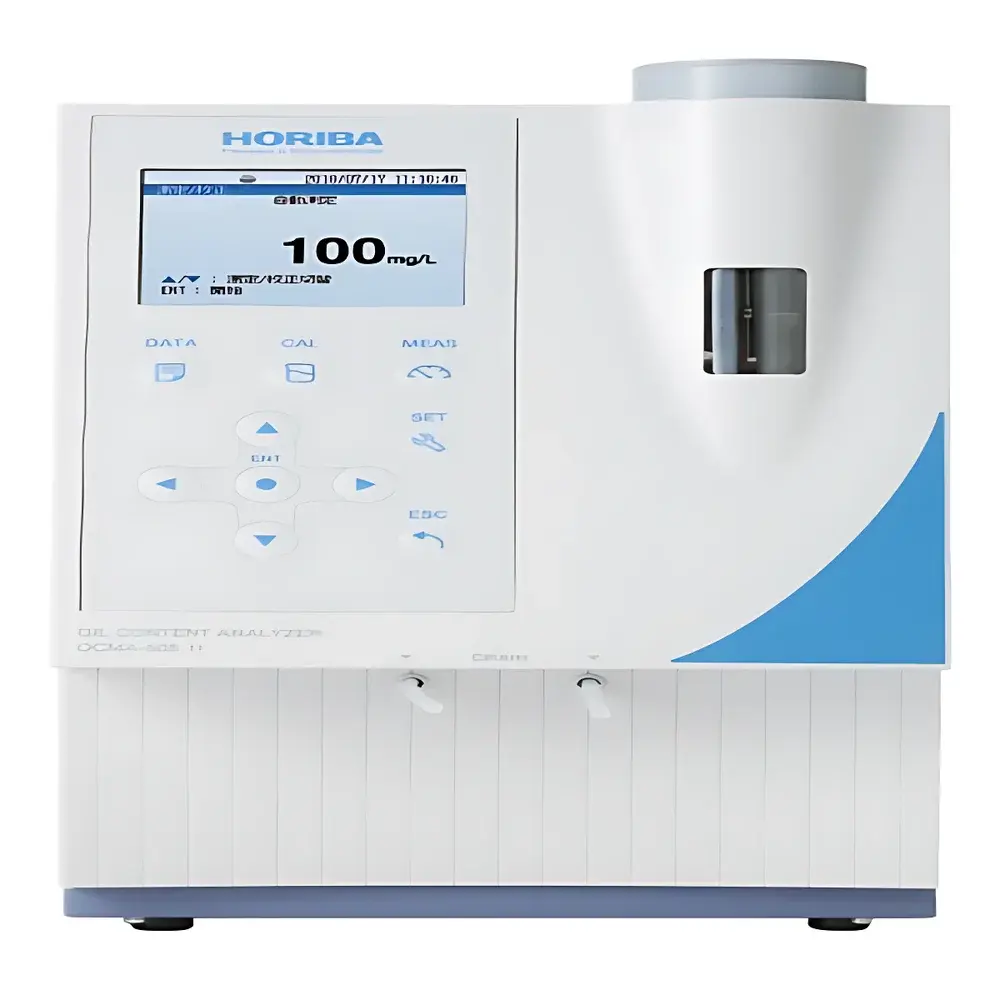
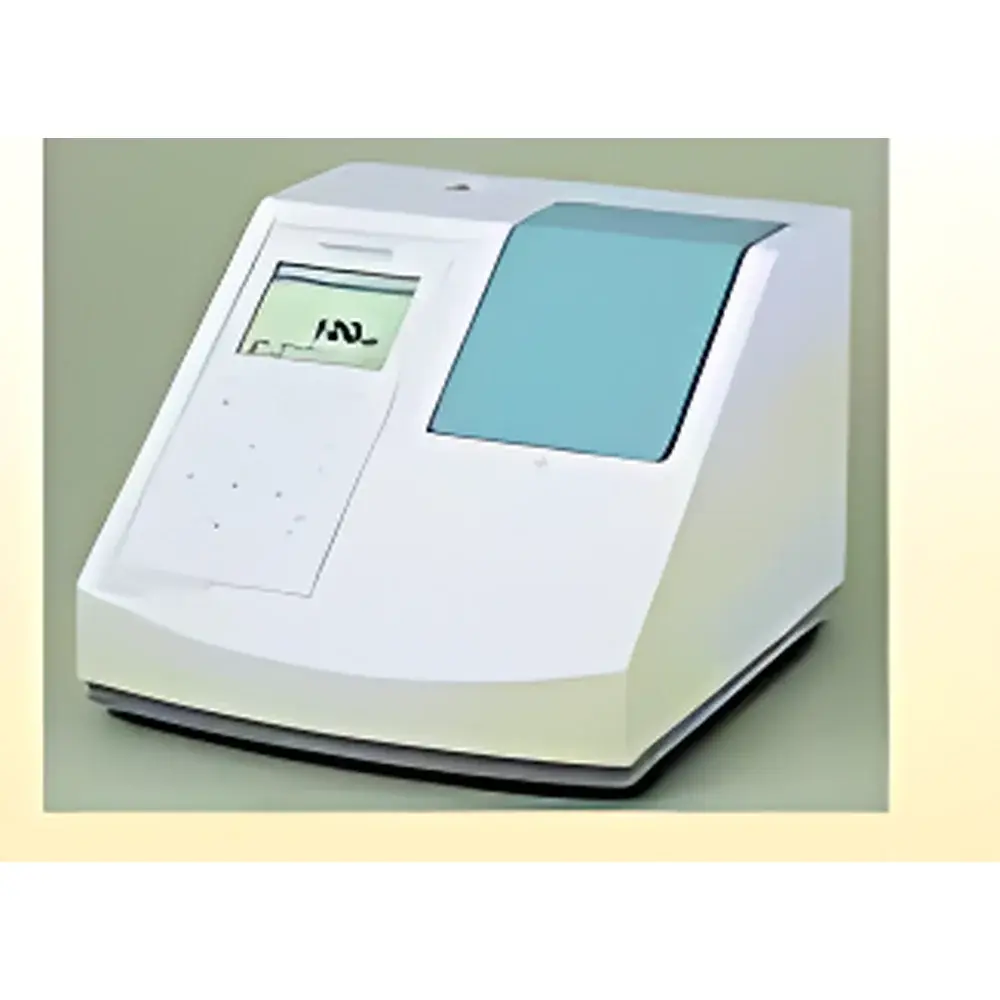
HORIBA OCMA-550 Portable Oil Content Analyzer
| Brand | HORIBA |
|---|---|
| Origin | Japan |
| Model | OCMA-550 |
| Instrument Type | Portable |
| Measurement Principle | Non-Dispersive Infrared (NDIR) Absorption Spectrophotometry |
| Measurement Range | 0–200 mg/L, 0–1000 mg/kg, 0–1 Abs |
| Accuracy | ±1% of reading (mg/L) |
| Resolution | 0.1 mg/L (for 0–99.9 mg/L range) |
| Detector | Thermoelectric Sensor |
| Optical Path | 20 mm Quartz Cuvette |
| Power Supply | 230 V AC, 50 Hz |
| Dimensions | 250 × 200 × 285 mm (W × H × D) |
| Display | Backlit LCD with Timestamp Logging |
| Interface | RS-232C port & Parallel Printer Port |
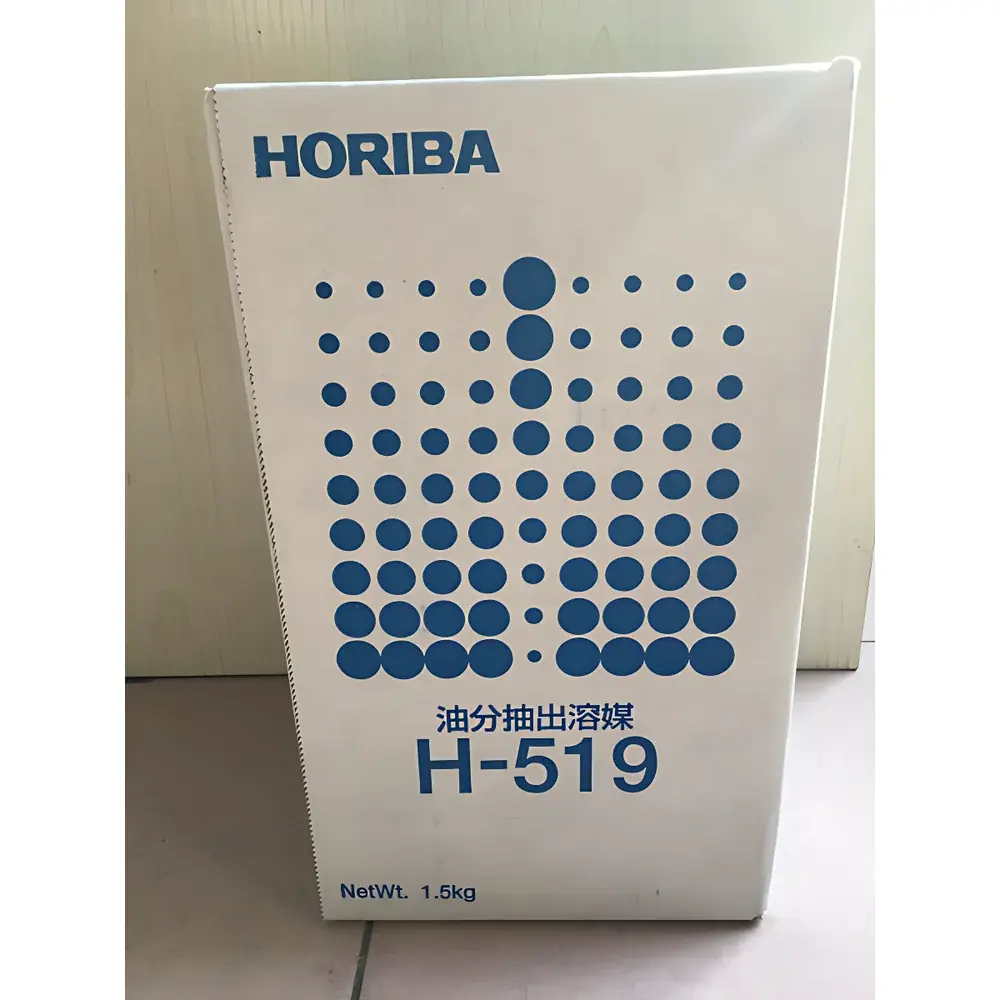
| Solvent Compatibility | S-316 (non-absorbing at ~3.4 µm) |
Overview
The HORIBA OCMA-550 is a portable, field-deployable oil content analyzer engineered for precise quantification of hydrocarbon contaminants in aqueous and solid-phase environmental samples. It operates on the principle of non-dispersive infrared (NDIR) absorption spectrophotometry, targeting the characteristic C–H stretching vibration band near 3.4 µm — a spectral region where petroleum-based oils exhibit strong, selective absorbance while the extraction solvent S-316 remains optically transparent. This spectral specificity eliminates interference from solvent matrix effects, enabling direct, reagent-free measurement of total extractable petroleum hydrocarbons (EPH) without spectral deconvolution or calibration curve interpolation. Designed for compliance with standard methods including ASTM D7066 and ISO 9377-2 (petroleum hydrocarbons in water and soil), the OCMA-550 delivers trace-level sensitivity down to 0.1 mg/L with high reproducibility across heterogeneous sample types — from industrial wastewater effluents to soil extracts and surface residue swabs.
Key Features
- Triple-unit display mode: switch seamlessly between concentration units — mg/L (for water), mg/kg (for soil/solid matrices), and absorbance (Abs) — directly on the instrument interface without recalibration.
- Integrated timestamp logging: all measurements are automatically stamped with date and time, supporting GLP-compliant data integrity and audit-ready recordkeeping.
- Thermoelectric detector architecture: ensures thermal stability and long-term signal consistency without active cooling, minimizing drift during extended field operation.
- Backlit LCD interface: high-contrast, sunlight-readable display optimized for outdoor and low-light environments typical of hazardous waste site assessments or plant perimeter monitoring.
- Single-button measurement workflow: after solvent extraction (using S-316), sample introduction into the 20 mm pathlength quartz cuvette initiates automatic zeroing, baseline correction, and quantitative analysis in under 15 seconds.
- RS-232C and parallel printer ports: enable real-time data export to laboratory information management systems (LIMS), PCs, or dedicated thermal printers for hard-copy reporting in regulated environments.
Sample Compatibility & Compliance
The OCMA-550 is validated for use with S-316 (1,1,2-trichloro-1,2,2-trifluoroethane) as the primary extraction solvent, which exhibits negligible IR absorption at the target 3.4 µm band and meets EPA Method 1664 compatibility requirements for hydrocarbon recovery. It accommodates both liquid-phase samples (e.g., wastewater, leachate, coolant emulsions) and solid-phase extractions (soil, sediment, metal parts, textiles) following standardized Soxhlet or ultrasonic-assisted protocols. The instrument’s optical design conforms to ISO/IEC 17025 technical requirements for measurement uncertainty estimation, and its data output structure supports 21 CFR Part 11-compliant electronic records when paired with validated software. Routine verification using NIST-traceable mineral oil standards (e.g., B-grade heavy oil supplied with unit) satisfies internal QA/QC and external accreditation audits per ISO 17025 Clause 7.7.
Software & Data Management
While the OCMA-550 operates autonomously via embedded firmware, its RS-232C interface supports bidirectional communication with HORIBA’s optional OCMA Data Manager software (v3.x). This application enables batch report generation, trend analysis across sampling campaigns, statistical summary (mean, SD, CV%), and export to CSV or PDF formats compatible with regulatory submissions. All instrument-generated data include metadata fields: operator ID, sample ID, extraction lot number, solvent batch code, and environmental ambient temperature — ensuring full traceability. Audit trails are maintained locally on connected PCs, with configurable retention policies aligned with GMP/GLP documentation retention mandates.
Applications
- On-site assessment of oil contamination in groundwater, surface water, and industrial discharge streams prior to treatment or release.
- Quantitative evaluation of residual lubricants and cutting fluids on machined metal components in automotive and aerospace manufacturing QC labs.
- Verification of cleaning efficacy in semiconductor wafer rinse processes and precision mechanical part degreasing lines.
- Regulatory monitoring of oily sludge and contaminated soils at brownfield remediation sites under RCRA or EU Soil Framework Directive protocols.
- Routine screening of textile mill effluents and metalworking fluid sumps for hydrocarbon carryover and emulsion breakdown.
FAQ
What extraction solvent is required for the OCMA-550?
S-316 (1,1,2-trichloro-1,2,2-trifluoroethane) is the specified solvent. Its non-absorbing property at 3.4 µm ensures accurate oil-specific detection without solvent blank correction.
Can the OCMA-550 measure diesel, gasoline, or synthetic oils?
Yes — it measures total petroleum hydrocarbons (TPH) based on C–H bond density. Calibration with representative reference oils (e.g., No. 2 fuel oil, motor oil) is recommended for matrix-specific accuracy.
Is the instrument suitable for USEPA Method 1664 compliance?
The OCMA-550 is not a standalone Method 1664 instrument but serves as the approved analytical detector post-extraction per Method 1664-A/B. Full compliance requires validated S-316 extraction and gravimetric confirmation per EPA guidelines.
How often must the instrument be calibrated?
Factory calibration is stable for 12 months under normal use. Field verification with certified standard oil solutions is recommended before each sampling shift or daily in high-throughput applications.
Does the OCMA-550 support multi-point calibration?
No — it uses a single-point, auto-zeroing algorithm referenced to solvent blank. Linearity across the 0–200 mg/L range is verified per ISO 8466-1 and documented in the Certificate of Conformance supplied with each unit.







