
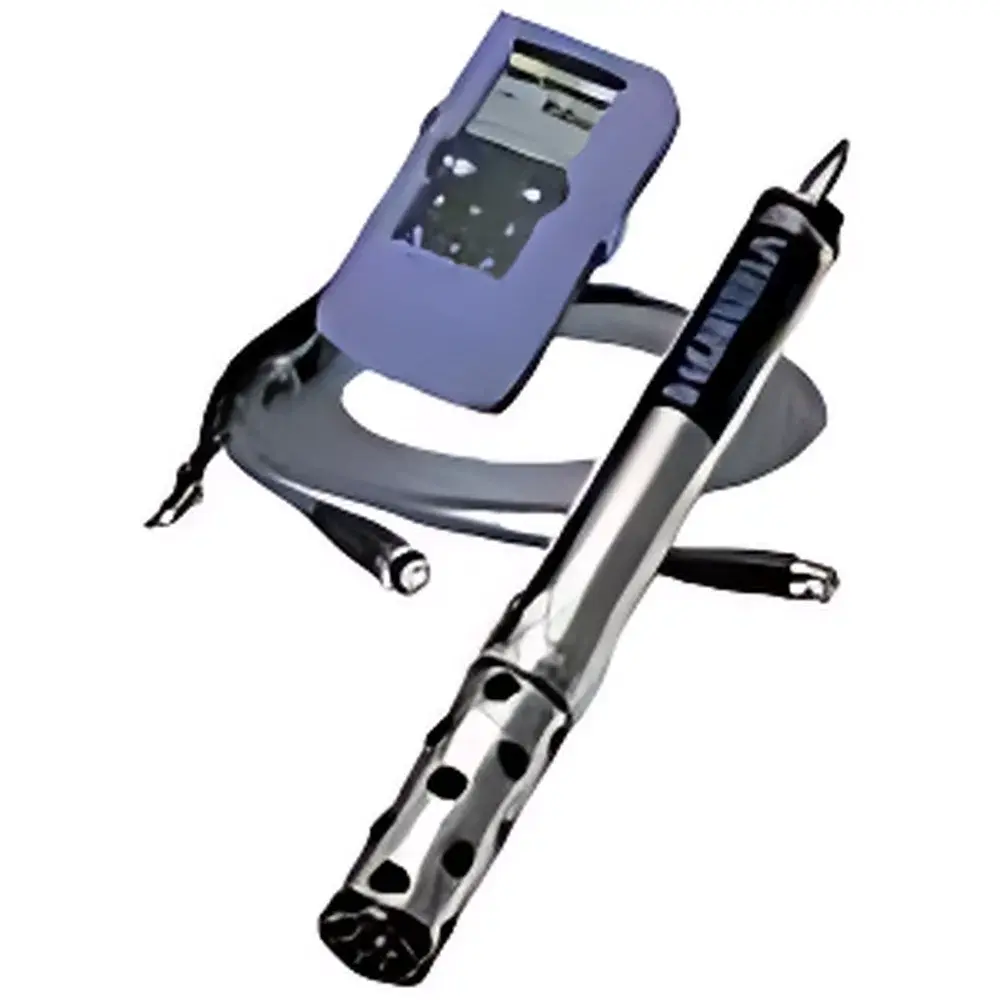
HORIBA U-20XD / W-20XD Series Multiparameter Water Quality Monitoring System
| Brand | HORIBA |
|---|---|
| Origin | Japan |
| Model | U-20XD Series / W-20XD Series |
| Instrument Type | In-situ, Long-Term Submersible Water Quality Analyzer |
| Waterproof Rating (Control Unit) | IP67 |
| Operating Depth | Up to 100 m |
| Continuous Deployment Duration | 30 days |
| Data Logging Interval | Configurable down to 15 min |
| Total Data Capacity | 2880 records |
| Temperature Range | 0–55 °C (operation), −5–60 °C (storage) |
| Sensor Principle | Glass electrode (pH), Membrane-covered galvanic cell (DO), AC 4-electrode conductivity, Thermistor (temperature), Optical transmission/scattering (turbidity), Piezoresistive pressure (depth), Platinum redox electrode (ORP), Ion-selective electrodes (NO₃⁻, Cl⁻, Ca²⁺, F⁻, K⁺, NH₃) |
| Measured Parameters | pH, Dissolved Oxygen (DO), Conductivity, Salinity, TDS, Seawater Specific Gravity (δt, δ₀, δ₁₅), Turbidity (NTU), Depth (m), Temperature (°C), ORP (mV), and up to 6 optional ion species |
| pH Accuracy | ±0.1, Resolution: 0.01 |
| DO Accuracy | ±0.2 mg/L, Resolution: 0.01 mg/L |
| Conductivity Accuracy | ±3% FS, Resolution: 0.1% FS |
| Turbidity Accuracy | ±5% FS, Resolution: 0.1 NTU |
| Depth Accuracy | ±5% FS, Resolution: 0.1 m |
| ORP Accuracy | ±15 mV, Resolution: 1 mV |
Overview
The HORIBA U-20XD and W-20XD Series are submersible, autonomous multiparameter water quality monitoring systems engineered for long-term, unattended deployment in diverse aquatic environments—from coastal seawater and deep reservoirs to groundwater wells, municipal wastewater outfalls, and aquaculture ponds. Built on HORIBA’s legacy of electrochemical and optical sensor engineering, these instruments employ validated physical measurement principles: glass electrode potentiometry for pH, membrane-sealed galvanic cell detection for dissolved oxygen, AC four-electrode conductivity with automatic temperature compensation to 25 °C, thermistor-based temperature sensing, dual-optical (transmission + scattering) turbidity detection, piezoresistive pressure transduction for depth, platinum-based redox potential measurement, and solid-state ion-selective electrodes for targeted anion/cation quantification. The system is designed for high reproducibility under variable hydrostatic pressure (rated to 100 m), mechanical shock resistance, and stable operation across wide salinity gradients (0–40 ppt) and temperature ranges (0–55 °C). Its integrated data logger stores up to 2880 timestamped records—equivalent to 30 days at 15-minute intervals—without external power or communication infrastructure.
Key Features
- Autonomous 30-day deployment: Fully self-contained operation with internal lithium battery and non-volatile memory; no real-time cabling required.
- IP67-rated control unit: Dust-tight and protected against immersion up to 1 m for 30 minutes—suitable for field transport and temporary surface exposure.
- 100-meter depth rating: Pressure-compensated sensor housing and newly developed electrodes enable reliable in-situ measurements at full operational depth.
- Simultaneous 10–13 parameter acquisition: Base configuration measures pH, DO, conductivity, salinity, TDS, specific gravity (δt/δ₀/δ₁₅), turbidity, depth, and temperature; W-23XD supports up to six additional ion-selective channels (NO₃⁻, Cl⁻, Ca²⁺, F⁻, K⁺, NH₃).
- Automatic calibration support: Onboard two-point pH calibration routine with temperature compensation; conductivity and DO auto-compensation algorithms aligned with ISO 7888 and ASTM D888 standards.
- Modular probe architecture: Field-swappable sensor cartridges allow maintenance without system replacement; optional accessories include anti-fouling caps and biofilm-resistant optical windows.
Sample Compatibility & Compliance
The U-20XD/W-20XD series is validated for use in freshwater, brackish water, and full-strength seawater (up to 40 ppt salinity). Its robust mechanical design meets IEC 60529 (IP67), while sensor electrochemistry complies with internationally recognized test methods: pH per ISO 10523, dissolved oxygen per ISO 5814 and ASTM D888, conductivity per ISO 7888, turbidity per ISO 7027-1, and redox potential per ASTM D3693. Data integrity protocols—including timestamping, checksum validation, and write-once memory architecture—support GLP-compliant environmental monitoring workflows. Though not pre-certified for FDA 21 CFR Part 11, the system’s audit-trail-capable data export format (CSV/ASCII with metadata headers) facilitates integration into validated laboratory information management systems (LIMS) used in regulatory reporting contexts.
Software & Data Management
Data retrieval is performed via USB-C interface using HORIBA’s proprietary WinCT software (Windows OS), which provides visualization, statistical summary (min/max/mean/stdev), time-series interpolation, and export to CSV, Excel, or XML. Raw logs include sensor status flags (e.g., “electrode dry”, “membrane saturated”, “signal noise threshold exceeded”) to support diagnostic traceability. Remote telemetry options (via optional GSM or LoRaWAN modules) enable scheduled data push to secure cloud endpoints—compatible with MQTT and RESTful API architectures. All exported datasets embed ISO 8601 timestamps, sensor serial numbers, calibration history identifiers, and environmental context tags (e.g., deployment ID, GPS anchor coordinates), ensuring chain-of-custody integrity for regulatory submissions.
Applications
- Long-term limnological and oceanographic surveys:定点 monitoring of stratification dynamics, hypolimnetic oxygen depletion, and coastal eutrophication indicators.
- Municipal and industrial effluent compliance tracking: Continuous verification of discharge parameters against local NPDES or EU WFD thresholds.
- Aquaculture health management: Real-time correlation of DO, NH₃, and pH to feeding cycles and stock density metrics.
- Groundwater quality assessment: Detection of saline intrusion, nitrate leaching from agricultural zones, or chloride contamination from road de-icing.
- Infrastructure resilience monitoring: Early warning of sediment resuspension (via turbidity spikes) or structural leakage (via anomalous conductivity shifts) in dams and intake tunnels.
FAQ
What is the maximum recommended deployment duration without battery replacement?
The system is rated for continuous operation up to 30 days at 15-minute logging intervals. Battery life scales inversely with sampling frequency and active sensor count.
Can the instrument perform in-situ two-point pH calibration underwater?
No—pH calibration must be conducted ex-situ using certified buffer solutions prior to deployment. The device supports storage and application of two-point calibration coefficients.
Is pressure compensation applied to conductivity and DO measurements at depth?
Yes—conductivity values are automatically corrected to 25 °C using built-in thermistor data; DO is compensated for both temperature and hydrostatic pressure using the Benson–Krause algorithm.
How are ion-selective electrode measurements validated for accuracy in variable matrices?
Each ISE channel includes configurable ionic strength adjustment and matrix-matched calibration routines. HORIBA recommends bracketing calibrations with site-specific reference waters when measuring in high-ionic-strength or pH-extreme environments.
Does the system meet requirements for EPA Method 160.1 or ISO 5667-3 compliance?
While the hardware enables measurements aligned with these standards’ performance criteria, formal method compliance requires documented SOPs, operator training, and third-party validation per project-specific QA/QC plans.







