
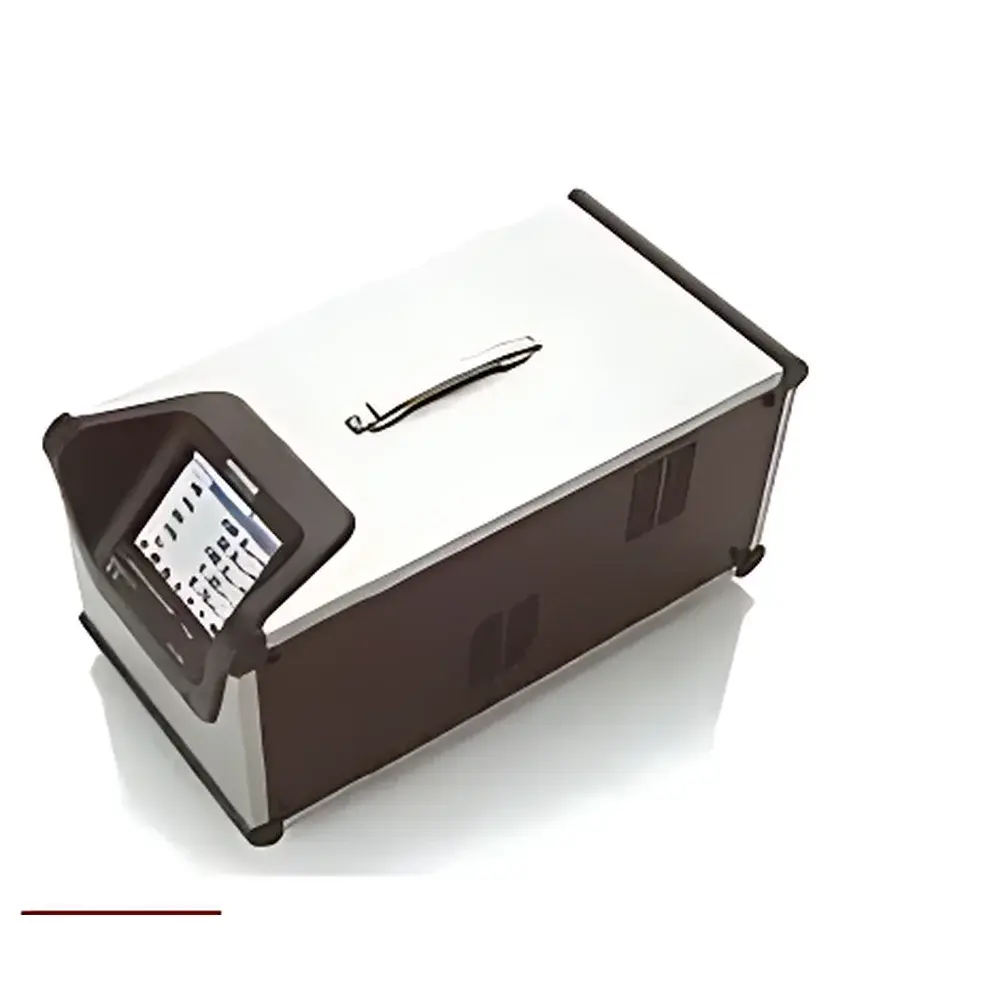
HORIBA PG-350 Portable Multi-Gas Analyzer
| Brand | HORIBA |
|---|---|
| Origin | Japan |
| Model | PG-350 |
| Instrument Type | Portable |
| Measured Gases | NOₓ, SO₂, CO, CO₂, O₂ |
| Range Options | 0–5 / 0–10 / 0–25 vol% (CO₂, O₂) |
| Repeatability | ±1.0% F.S. |
| Drift | ±1.0% F.S./day (SO₂: ±2.0% F.S./day) |
| Linearity | ±2.0% F.S. |
| Response Time (T₉₀) | ≤45 s (all gases except SO₂) |
| Sample Flow Rate | ~0.5 L/min |
| Power Supply | 100–120 VAC / 200–240 VAC, 50/60 Hz |
| Operating Temperature | 5–40 °C |
| Relative Humidity | ≤85% RH |
| Dimensions | 226 × 265 × 510 mm (W × H × D) |
| Weight | ~14 kg |
| Compliance | UK MCERTS, EU TÜV, US EPA ETV, China CMA, KR KOLAS, JP JIS/JCSS |
Overview
The HORIBA PG-350 is a field-deployable, laboratory-grade portable multi-gas analyzer engineered for high-fidelity, real-time quantification of up to five critical combustion and environmental gases—NOₓ, SO₂, CO, CO₂, and O₂—in stack emissions, flue gas, and process streams. Its measurement architecture integrates multiple certified physical principles: alternating-flow modulated chemiluminescence detection (AFM-CLD) for NOₓ; alternating-flow modulated non-dispersive infrared (AFM-NDIR) for SO₂, CO, and CH₄; conventional non-dispersive infrared (NDIR) for CO₂; and galvanic electrochemical sensing for O₂. This hybrid optical–electrochemical platform ensures metrological traceability, minimizes cross-sensitivity, and delivers analytical performance aligned with international reference methods—including ISO 12039, EN 15267, and US EPA Methods 6C, 7E, 10, and 3A. Designed for regulatory-grade compliance monitoring and R&D validation, the PG-350 operates without external calibration gases during routine use, leveraging built-in zero/span verification routines and temperature/pressure-compensated signal processing.
Key Features
- Integrated alternating-flow modulation technology eliminates baseline drift in NDIR and CLD channels, enhancing long-term stability and reducing maintenance frequency.
- Full-color capacitive touchscreen interface with on-screen operational guidance, real-time trend curves, and intuitive menu navigation—designed for glove-compatible operation in industrial environments.
- Ruggedized mechanical architecture: shock- and vibration-resistant housing (IEC 60068-2 compliant), IP54-rated enclosure, and internal electronic condensate management with auto/manual drainage and anti-freeze heating.
- Onboard SD card logging with user-configurable sampling intervals (1 s to 24 h), timestamped with UTC synchronization, supporting audit-ready data retention for GLP/GMP and ISO 17025 workflows.
- Dual-output connectivity: isolated 4–20 mA analog outputs (per gas channel) and Ethernet (TCP/IP) with Modbus TCP and HTTP API support for integration into SCADA, DCS, or cloud-based EMS platforms.
- Reduced preheat time of ≤30 minutes to achieve ±2.0% F.S. accuracy—critical for rapid deployment in emergency response, commissioning, or intermittent site surveys.
Sample Compatibility & Compliance
The PG-350 accepts hot, wet, and filtered sample gas streams with particulate loading <10 mg/m³ and dew point ≤40 °C. An integrated heated sample line (optional) and Peltier-cooled condensate trap ensure representative gas-phase analysis under variable ambient conditions. The analyzer meets stringent regulatory certification requirements across major markets: UK MCERTS (QAL1 certified), EU TÜV Rheinland (EN 15267-3), US EPA ETV verification (for NOₓ, SO₂, CO, CO₂, O₂), China CMA accreditation (JJG 968–2021), Korea KOLAS ILAC-MRA, and Japan JIS B 7981. All firmware and calibration records comply with FDA 21 CFR Part 11 requirements for electronic records and signatures, including full audit trail, user-level access control, and immutable event logging.
Software & Data Management
Data acquisition and configuration are managed via HORIBA’s proprietary PG-Link software (Windows-based), which supports remote diagnostics, firmware updates, and batch calibration report generation. Raw sensor outputs, diagnostic flags (e.g., flow fault, pressure drop, cell saturation), and calibration history are stored in CSV/SQLite format on the SD card. Ethernet-enabled units support secure TLS 1.2 communication for encrypted data transfer to centralized servers. Optional cloud gateway modules enable MQTT-based telemetry for predictive maintenance alerts and fleet-wide instrument health monitoring—fully compatible with ISO 50001 energy management systems and EU Industrial Emissions Directive (IED) reporting frameworks.
Applications
- CEMS backup and validation: Independent verification of continuous emission monitoring systems per EN 14181 QA/QC protocols.
- Combustion optimization: Real-time O₂–CO–CO₂ balance analysis for boiler, kiln, and incinerator tuning.
- Catalyst and aftertreatment testing: Dynamic NOₓ/SO₂ conversion efficiency assessment in diesel exhaust fluid (DEF) and SCR systems.
- Fuel cell and hydrogen infrastructure: Trace CO and CO₂ impurity monitoring in reformate and PEM feed gas streams.
- Ambient air quality surveys: Mobile source emissions profiling (e.g., traffic corridors, port operations) using vehicle-mounted configurations.
- Academic and metrology labs: Reference-grade method development, inter-laboratory comparison studies, and sensor validation against gravimetric or CRDS standards.
FAQ
What gases does the PG-350 measure by default, and can CH₄ be added?
The standard PG-350 measures NOₓ, SO₂, CO, CO₂, and O₂ simultaneously. CH₄ detection is available as a factory-configured option using the AFM-NDIR channel, requiring no hardware modification.
Is the PG-350 suitable for unattended long-term monitoring?
Yes—when deployed with external power, environmental enclosure, and scheduled SD card retrieval, it supports 30-day autonomous operation with automated zero/span checks every 24 hours.
How is calibration traceability maintained?
Each unit ships with NIST-traceable calibration certificates. Field recalibration uses certified span gases (ISO 6141) and zero air (ISO 8573-1 Class 1), with all events logged and exportable for regulatory submission.
Does the analyzer require sample conditioning beyond the built-in system?
For most flue gas applications, the integrated heated line, filter, and condensate trap suffice. High-dust or corrosive streams (e.g., biomass boiler exhaust) may require upstream ceramic filtration or alkali scrubbing per EN 15267-3 recommendations.
Can the PG-350 output data directly to a PLC or cloud platform?
Yes—via native Modbus TCP over Ethernet or configurable 4–20 mA loops with HART-enabled transmitters. Third-party middleware (e.g., Node-RED, Ignition) can bridge to AWS IoT Core or Azure IoT Hub using standard RESTful endpoints.







