
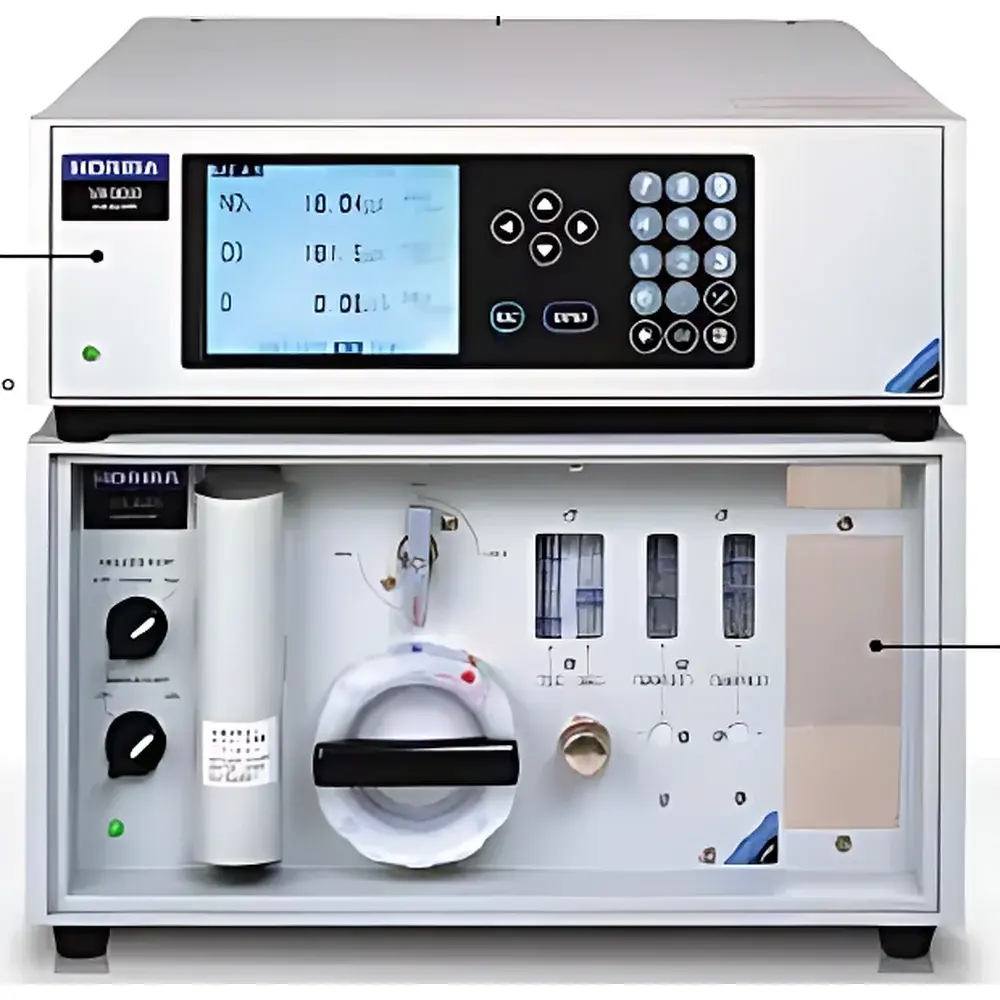
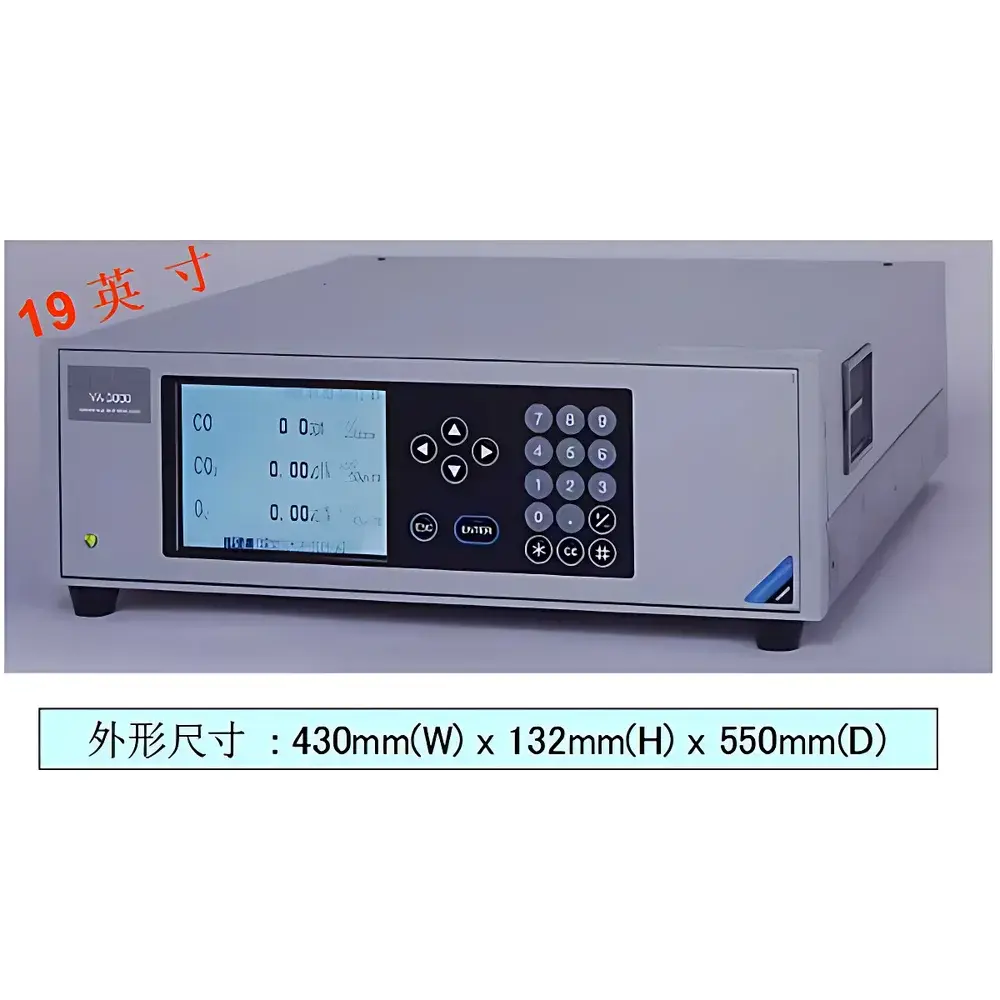
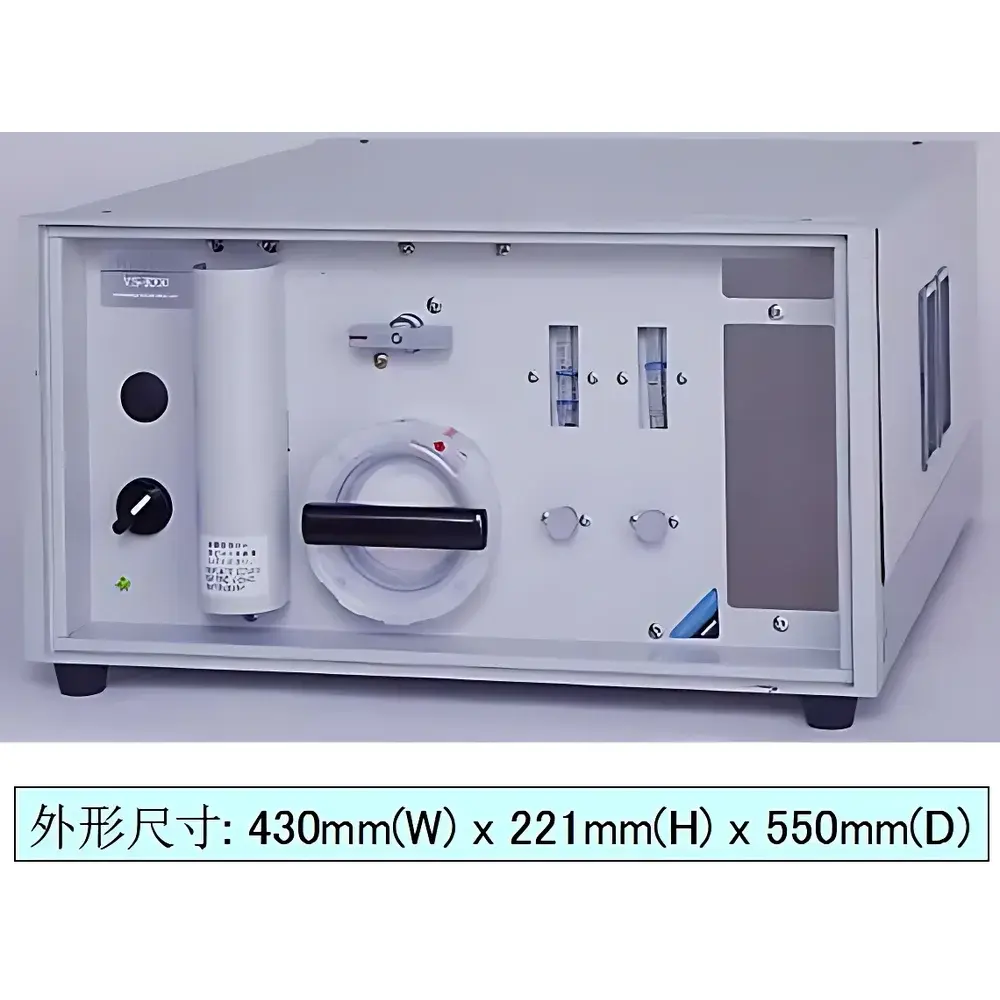
HORIBA VA-3000 Series Multi-Component Gas Analyzer with VS-3000 Preconditioning Unit
| Brand | HORIBA |
|---|---|
| Origin | Japan |
| Model | VA-3000, VS-3000 |
| Instrument Type | Portable & Rack-Mountable |
| Detection Targets | CO, CO₂, N₂O, CH₄, SO₂, NOₓ, O₂ (MPA/Galvanic/Zirconia), H₂ (MPA) |
| Minimum Range | 1–20 ppm |
| Repeatability | ±0.5% F.S. |
| Resolution | 0.1 ppm |
| Response Time (T90) | ≤30 sec |
| Zero Drift | ±2.0% F.S./week (excluding galvanic cells) |
| Span Drift | ±2.0% F.S./week (excluding galvanic cells) |
| Linearity Error | ±1.0% F.S. |
| Sampling Flow Rate | 0.5 L/min (analyzer), 1.5–5.0 L/min (preconditioning unit) |
| Warm-up Time | ~20 min (NDIR, galvanic), ~40 min (zirconia), ~60 min (CLA, MPA) |
| Power Supply | 100–240 VAC, 50/60 Hz |
| Power Consumption | 100–450 VA |
| Display | 320 × 240 pixel LCD (111.2 mm × 89.38 mm) |
| Enclosure | 19-inch rack-mount chassis |
| Dimensions (VA-3000) | 430 mm (W) × 132 mm (H) × 500 mm (D) |
| (VS-3000) | 430 mm (W) × 221 mm (H) × 550 mm (D) |
| Weight | ~14–20 kg |
| Operating Environment | 0–40 °C, ≤90% RH |
| Sample Gas Requirements | Particulates ≤0.1 mg/m³, Dew Point ≤60 °C, Pressure Variation ±980 Pa |
| Wetted Materials | SUS, PP, PVC, PVDF, PTFE, FKM, CR, Glass |
Overview
The HORIBA VA-3000 Series is a high-integrity, multi-parameter gas analyzer engineered for continuous, real-time measurement of up to four gaseous components simultaneously—such as CO, CO₂, N₂O, CH₄, SO₂, NOₓ, O₂, and H₂—within industrial emissions, combustion process control, environmental monitoring, and laboratory research applications. Its modular architecture integrates seamlessly with the VS-3000 series preconditioning units, enabling robust sampling under challenging field conditions—including humid, particulate-laden, or corrosive gas streams. Measurement principles are application-optimized: Non-Dispersive Infrared (NDIR) for CO, CO₂, CH₄, and SO₂; Chemiluminescence Analysis (CLA) for NOₓ; Magnetic Paramagnetic Analysis (MPA) and electrochemical (galvanic) or zirconia-based sensors for O₂; and optional thermal conductivity detection where applicable. Each detection module adheres to fundamental physical laws—Beer-Lambert absorption for NDIR, photon emission kinetics for CLA, magnetic susceptibility for MPA—and is factory-calibrated traceable to NIST-certified reference gases. The system supports both portable deployment and permanent rack-mounted installation in 19-inch enclosures, complying with IEC 61000-6-2 (EMC immunity) and IEC 61000-6-4 (EMC emission) standards.
Key Features
- Multi-technology platform supporting NDIR, CLA, MPA, galvanic, and zirconia sensing in a single analyzer chassis
- Configurable range switching: up to 4 ranges per channel (8 for CLA), enabling wide dynamic coverage—from sub-ppm to 100 vol%—without manual hardware change
- High-resolution digital signal processing with 0.1 ppm resolution and ±0.5% F.S. repeatability across all NDIR channels
- Fast T90 response time ≤30 seconds for critical process feedback loops and regulatory compliance reporting
- Integrated sample conditioning via VS-3000 series: thermoelectric cooling to 5 °C dew point suppression, particle filtration (<0.1 mg/m³), and pressure stabilization (±980 Pa)
- Comprehensive drift management: zero and span drift controlled at ±2.0% F.S./week (excluding galvanic cells), validated per ISO 12039 and EPA Method 6C protocols
- Dual analog outputs (0–1 V DC and 4–20 mA) plus RS-232C serial interface for SCADA integration and remote diagnostics
Sample Compatibility & Compliance
The VA-3000/VS-3000 system accepts sample gas streams meeting strict physicochemical criteria: particulate loading ≤0.1 mg/m³, water vapor dew point ≤60 °C, and pressure fluctuations within ±980 Pa. All wetted materials—including SUS316L, PVDF, PTFE, FKM, and borosilicate glass—are selected for chemical resistance against acidic, oxidizing, and hydrocarbon-rich matrices. The VS-3000 preconditioning units employ refrigerated condensation, heated sample lines (optional), and multi-stage filtration to ensure analyte integrity prior to detection. Regulatory alignment includes conformance with EN 15267-3 (QAL1 certification readiness), ISO 14064-3 (GHG quantification), and US EPA Performance Specification 2 (PS-2) for SO₂ and NOₓ analyzers. For pharmaceutical or food-grade environments, the system supports GLP-compliant audit trails when paired with HORIBA’s optional data logging software.
Software & Data Management
The VA-3000 operates with HORIBA’s proprietary GasAnalyzer Control Software (GACS), providing real-time concentration visualization, automatic calibration scheduling, and event-triggered data capture. GACS supports 21 CFR Part 11-compliant user access control, electronic signatures, and immutable audit logs—including operator actions, calibration events, alarm states, and firmware updates. Raw sensor outputs, temperature/pressure compensation parameters, and diagnostic flags are timestamped and exportable in CSV or XML formats compatible with LIMS and enterprise MES platforms. Optional cloud-enabled telemetry allows secure remote monitoring via TLS-encrypted MQTT or Modbus TCP over Ethernet or cellular gateways—fully auditable and compliant with ISO/IEC 27001 information security frameworks.
Applications
- Continuous Emission Monitoring Systems (CEMS) for thermal power plants, cement kilns, and waste incinerators
- Combustion efficiency optimization in boilers, furnaces, and gas turbines via O₂, CO, and CO₂ co-monitoring
- Greenhouse gas (GHG) flux studies and landfill biogas composition analysis (CH₄, CO₂, N₂O)
- Industrial hygiene and workplace safety compliance (CO, SO₂, NOₓ exposure limits per OSHA PELs and ACGIH TLVs)
- Research-grade atmospheric chemistry measurements requiring sub-ppm sensitivity and multi-species correlation
- Calibration verification and transfer standards laboratories supporting ISO/IEC 17025 accreditation
FAQ
What detection technologies are supported by the VA-3000 platform?
The VA-3000 accommodates NDIR (for CO, CO₂, CH₄, SO₂), CLA (for NOₓ), MPA (for O₂), galvanic cells (for O₂), and zirconia sensors (for O₂/H₂)—each selectable based on required sensitivity, cross-sensitivity profile, and lifetime expectations.
Can the VA-3000 operate without the VS-3000 preconditioning unit?
Yes—but only for clean, dry, low-particulate sample streams meeting strict inlet specifications. For ambient air, flue gas, or biogas applications, the VS-3000 is mandatory to ensure measurement stability and sensor longevity.
Is the system compliant with EPA or EU emissions reporting requirements?
While not pre-certified, the VA-3000/VS-3000 meets technical prerequisites for EPA PS-2, EN 14181 (QAL3), and ISO 12039—enabling successful QAL1 certification when installed and maintained per HORIBA’s site-specific validation protocol.
How is calibration performed and documented?
Calibration uses certified span and zero gases traceable to NIST or PTB. GACS enforces scheduled calibrations, records gas lot numbers, operator IDs, and deviation metrics, generating PDF reports compliant with ISO 17025 clause 7.7.
What is the expected service life of key sensors?
NDIR sources last >10 years; CLA ozone generators >2 years; zirconia cells >3 years; galvanic O₂ sensors 12–18 months—dependent on operating temperature, gas matrix, and maintenance frequency.







