
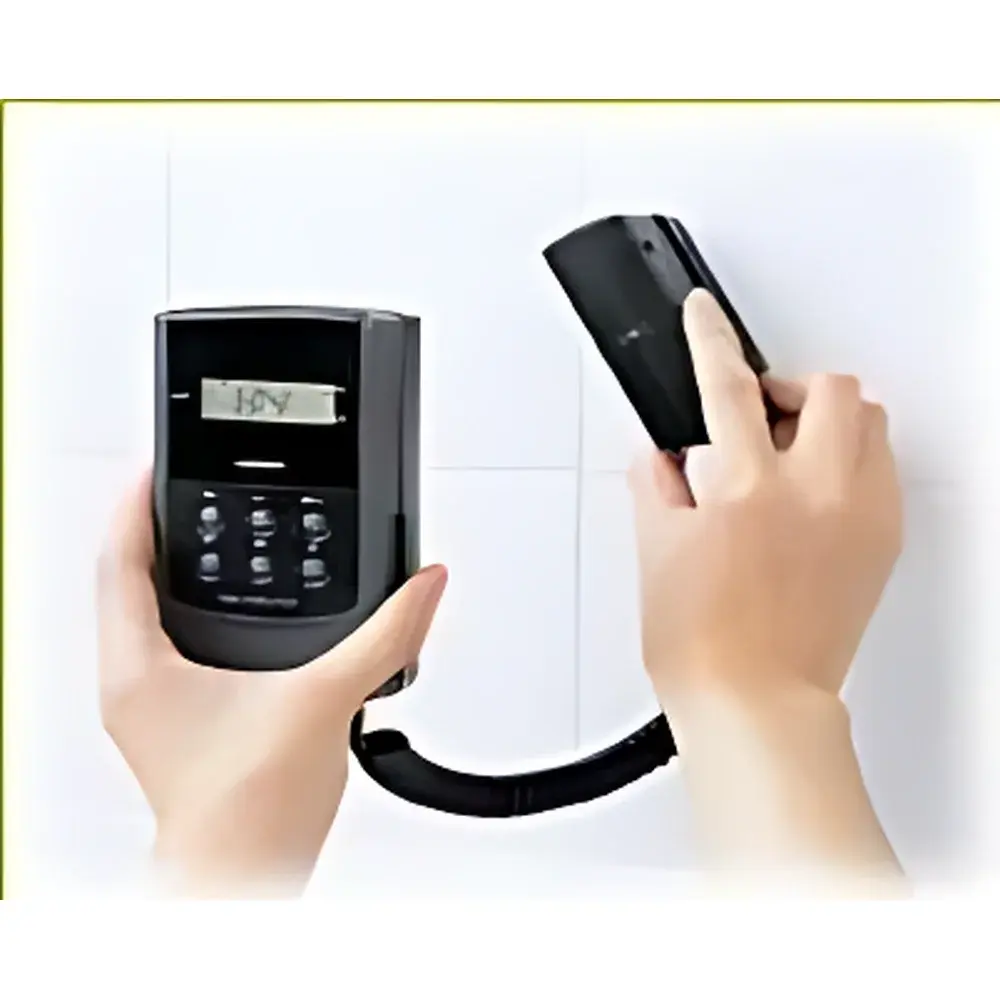
HORIBA IG-331 60° Gloss Meter
| Brand | HORIBA |
|---|---|
| Origin | Japan |
| Model | IG-331 |
| Measurement Angle | 60° |
| Measurement Range | 0–100 GU |
| Resolution | 1 GU |
| Accuracy | ±5% F.S. ±1 digit |
| Spot Size | 16 mm × 12 mm |
| Display | LED numeric |
| Power Supply | 9 V DC battery (1 pc) |
| Dimensions (W×H×D) | 78 × 189 × 58 mm |
| Calibration | Auto-recognition calibration system |
| Data Memory | Up to 99 measurement points with statistical functions (mean, mean deviation) |
Overview
The HORIBA IG-331 is a portable, single-angle gloss meter engineered for rapid, repeatable quantification of specular reflectance at 60°—the internationally standardized geometry for medium-gloss surfaces per ISO 2813, ASTM D523, ASTM C584, DIN 67530, and GB/T 9754. Based on the principle of measuring the ratio of reflected luminous flux to incident luminous flux under controlled collimated illumination, the IG-331 delivers objective, unitless Gloss Units (GU) that eliminate subjective visual assessment bias. Its optical architecture conforms to CIE illuminant D65 and 10° standard observer conditions, ensuring metrological traceability and inter-laboratory comparability. Designed for frontline quality assurance in manufacturing, maintenance, and R&D environments, the instrument requires no warm-up time and operates independently of external power sources—making it suitable for in-line production checks, field inspections of architectural façades, and on-site verification of coated substrates.
Key Features
- True 60° geometry compliant with ISO 2813 and ASTM D523 for medium-gloss evaluation of paints, coatings, plastics, ceramics, stone, and laminates
- Integrated auto-recognition calibration system: eliminates manual zero/standard adjustment; sensor automatically identifies reference tile status upon contact
- Modular sensor–body separation: enables flexible positioning in confined or curved geometries (e.g., automotive body panels, molded plastic housings)
- High-contrast LED numeric display with real-time GU readout and intuitive status indicators
- Built-in statistical memory: stores up to 99 individual measurements and computes arithmetic mean, mean deviation, and max/min values—essential for SPC-based process monitoring
- Robust mechanical design: IP54-rated enclosure resists dust ingress and incidental moisture exposure during industrial use
- Single 9 V alkaline battery operation: provides >10,000 measurements per cell; low-power circuitry extends service intervals
Sample Compatibility & Compliance
The IG-331 is validated for non-destructive surface gloss assessment across flat, slightly curved, or textured substrates with reflectance characteristics typical of industrial finishes. It supports routine verification against certified ceramic or black glass reference standards traceable to NIST or JCSS. The device meets essential requirements of ISO/IEC 17025 for calibration validity and supports GLP-compliant documentation when used with external logging systems. While not inherently 21 CFR Part 11 compliant (as it lacks electronic audit trail functionality), its deterministic measurement output and stable calibration behavior make it suitable for GMP-aligned visual quality control workflows where paper-based records are maintained.
Software & Data Management
The IG-331 operates as a standalone instrument with no embedded firmware update capability or USB/Bluetooth connectivity. All data management occurs via manual transcription from the LED display or optional third-party infrared/serial adapters (not supplied). Statistical outputs—including mean gloss value and mean deviation—are computed internally and displayed sequentially. For integration into digital quality management systems (QMS), users may employ calibrated image-based capture tools or connect via analog voltage output modules (available as accessory kits) to programmable logic controllers or SCADA interfaces.
Applications
- Automotive OEM and Tier-1 suppliers: final finish inspection of painted body panels, trim components, and interior plastics
- Architectural materials testing: gloss uniformity assessment of marble cladding, glazed ceramic tiles, and anodized aluminum façades per EN 14411 and ASTM C1027
- Printing and packaging: verification of varnish gloss consistency on corrugated board, label stock, and flexible films
- Coatings R&D labs: comparative evaluation of formulation variables (e.g., pigment loading, resin type, flattening agent concentration) on drawdown panels
- Facility maintenance: periodic monitoring of floor polish degradation, elevator panel reflectivity, and cleanroom wall coating integrity
FAQ
What standard reference materials are required for calibration?
The IG-331 is designed for use with HORIBA-certified 60° gloss reference tiles (e.g., 10 GU, 60 GU, and 90 GU ceramic standards), which are traceable to national metrology institutes. Daily verification using the included 60 GU tile is recommended before critical measurements.
Can the IG-331 measure low-gloss or high-gloss surfaces outside 0–100 GU?
No. The IG-331 is optimized exclusively for the medium-gloss range (0–100 GU at 60°). Surfaces below 10 GU or above 90 GU should be evaluated using dedicated 20° or 85° instruments (e.g., HORIBA IG-320 or IG-340) to maintain angular sensitivity and signal-to-noise ratio.
Is the sensor head interchangeable between IG-331 and other IG-series models?
No. The IG-331 sensor module is mechanically and optically tuned to its specific body electronics and cannot be substituted with IG-320 or IG-340 sensors without recalibration and potential metrological nonconformance.
Does the instrument support temperature compensation?
The IG-331 does not incorporate active temperature compensation. However, its solid-state photodiode detector and stabilized LED source minimize thermal drift across the operational range of 10–40 °C, as specified in the user manual.
How often should factory recalibration be performed?
HORIBA recommends annual recalibration by an authorized service center or accredited metrology laboratory, particularly when used in regulated environments or after physical shock or environmental exposure beyond specification limits.




