
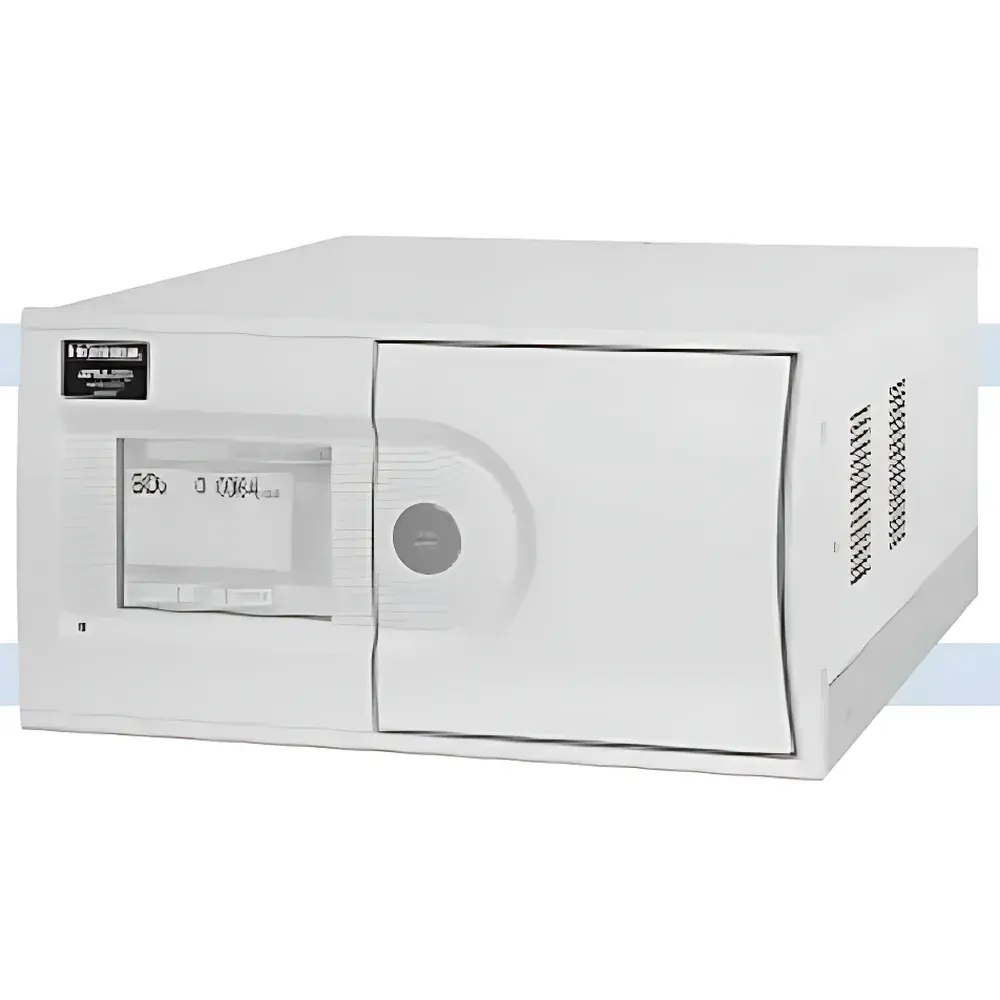
HORIBA APSA-370 Sulfur Dioxide (SO₂) Ambient Air Quality Monitor
| Brand | HORIBA |
|---|---|
| Origin | Japan |
| Model | APSA-370 |
| Detection Principle | Ultraviolet Fluorescence (UVF) |
| Measurement Range | 0–100 ppb to 0–10 ppm (field-selectable) |
| Detection Limit | <50 ppt (3σ, 1-minute average) |
| Accuracy | ±1% of full scale |
| Response Time (T90) | <60 seconds |
| Sample Flow Rate | 0.5–1.0 L/min |
| Operating Temperature | 0–40 °C |
| Humidity Tolerance | 0–90% RH (non-condensing) |
| Power Supply | 100–240 VAC, 50/60 Hz |
| Compliance | EPA EQOA-01, ISO 7935:1990, JIS K 0301 |
Overview
The HORIBA APSA-370 is a high-performance, laboratory-grade sulfur dioxide (SO₂) ambient air quality monitor engineered for continuous, regulatory-compliant measurement in fixed-site monitoring networks, industrial fence-line applications, and research-grade environmental observatories. It employs the ultraviolet fluorescence (UVF) detection principle—recognized by the U.S. Environmental Protection Agency (EPA) as an Equivalent Method (EQOA-01) and standardized under ISO 7935:1990 and JIS K 0301. In this method, SO₂ molecules are excited by pulsed 214 nm ultraviolet light within a reaction cell; subsequent fluorescence emission at ~310–350 nm is quantified by a low-noise photomultiplier tube (PMT). The APSA-370’s optical architecture integrates a stabilized deuterium UV lamp, precision bandpass filters, and a thermally controlled fluorescence cell—enabling sub-part-per-trillion (ppt) detection limits and exceptional long-term baseline stability.
Key Features
- Innovative UVF detector with ultra-low background noise design, achieving a 3σ detection limit of <50 ppt (1-minute averaging) and superior signal-to-noise ratio across the full dynamic range.
- Patented hydrophobic fluorescence cell geometry minimizes quenching effects from ambient moisture, reducing H₂O interference to negligible levels without requiring catalytic dryers or Nafion® membrane dryers that compromise response time or introduce memory effects.
- Integrated aromatic hydrocarbon (e.g., benzene, toluene) selective barrier filter—constructed with a proprietary semi-permeable membrane—rejects common VOC interferences while maintaining consistent sample flow impedance and eliminating flow-dependent calibration drift.
- Fundamentally aligned with the Fluorescence Detection Principle (FDP) methodology: delivers inherently linear analog output (0–10 V or 4–20 mA), requires no zero/span gases for routine operation, and exhibits high molecular specificity for SO₂ without cross-sensitivity to NO₂, O₃, or particulate sulfate aerosols.
- Real-time UV source intensity compensation via internal reference photodiode ensures measurement stability over lamp aging, temperature fluctuations, and extended deployment cycles—critical for unattended operation exceeding 30 days between maintenance intervals.
- Teflon®-lined sample inlet with sintered PTFE particulate filter (2.5 µm cutoff) prevents particulate fouling of the optical path and flow control orifices, supporting compliance with PM₂.₅ co-location requirements per EU Directive 2008/50/EC Annex III.
Sample Compatibility & Compliance
The APSA-370 is validated for direct analysis of ambient air, stack effluent dilutions, and indoor air samples within specified humidity and temperature envelopes. Its gas handling system meets ISO 17025 traceability requirements when operated with NIST-traceable SO₂ permeation tubes for calibration verification. The instrument supports full audit trails for GLP/GMP-aligned data integrity, including event logging of lamp hours, filter replacement timestamps, calibration history, and alarm conditions. It satisfies data reporting requirements under U.S. 40 CFR Part 58 (National Ambient Air Quality Standards monitoring), EU Directive 2008/50/EC (Ambient Air Quality Directive), and China’s HJ 654-2013 standard for SO₂ analyzers.
Software & Data Management
The APSA-370 interfaces natively with HORIBA’s WinASPECT™ software suite (Windows-based), enabling remote configuration, real-time spectral diagnostics, automated zero/span validation, and EPA-compliant data validation reports (e.g., MDL verification, precision checks). All raw fluorescence counts, lamp reference signals, and temperature-compensated concentration outputs are timestamped and stored internally (SD card, 16 GB) with configurable 1–60 second logging intervals. Data export formats include CSV, XML, and EPA-compatible .dat files. Optional integration with SCADA systems via Modbus TCP or RS-485 ensures compatibility with central air quality management platforms (e.g., AQS-Net, EQuIS, or custom GIS dashboards).
Applications
- Regulatory ambient air monitoring networks (NAAQS, EU AQD, national reference stations)
- Industrial emissions monitoring at coal-fired power plants, smelters, and petrochemical facilities
- Urban and roadside air quality assessment with high temporal resolution
- Long-term trend analysis in background and rural sites requiring ultra-low detection capability
- Method validation and intercomparison studies in metrology laboratories
- Mobile monitoring platforms where vibration resistance and thermal stability are critical
FAQ
What is the recommended calibration frequency for the APSA-370 under EPA-equivalent operational protocols?
For primary ambient monitoring, EPA recommends daily zero checks and weekly multipoint calibrations using NIST-traceable SO₂ standards; the APSA-370 supports automated zero/span sequences with programmable scheduling.
Does the APSA-370 require external scrubbers or conditioning systems?
No—its integrated hydrophobic fluorescence cell and aromatic barrier filter eliminate the need for external chemical scrubbers, catalytic converters, or membrane dryers, simplifying site installation and reducing maintenance overhead.
Can the APSA-370 be deployed in high-humidity tropical environments?
Yes—the instrument operates reliably up to 90% RH non-condensing; its optical design and thermal management prevent dew formation inside the fluorescence cell, ensuring stable performance without desiccant regeneration cycles.
Is the APSA-370 compliant with FDA 21 CFR Part 11 for electronic records?
While not a pharmaceutical device, WinASPECT™ software offers optional 21 CFR Part 11-compliant user access controls, electronic signatures, and immutable audit trails—configurable for regulated environmental QA/QC workflows.
What maintenance intervals are specified for the Teflon® inlet filter and aromatic barrier?
The inlet filter should be inspected monthly and replaced every 3 months under typical urban conditions; the aromatic barrier has a nominal service life of 12 months, extendable to 18 months in low-VOC environments—both tracked automatically in the system log.







