
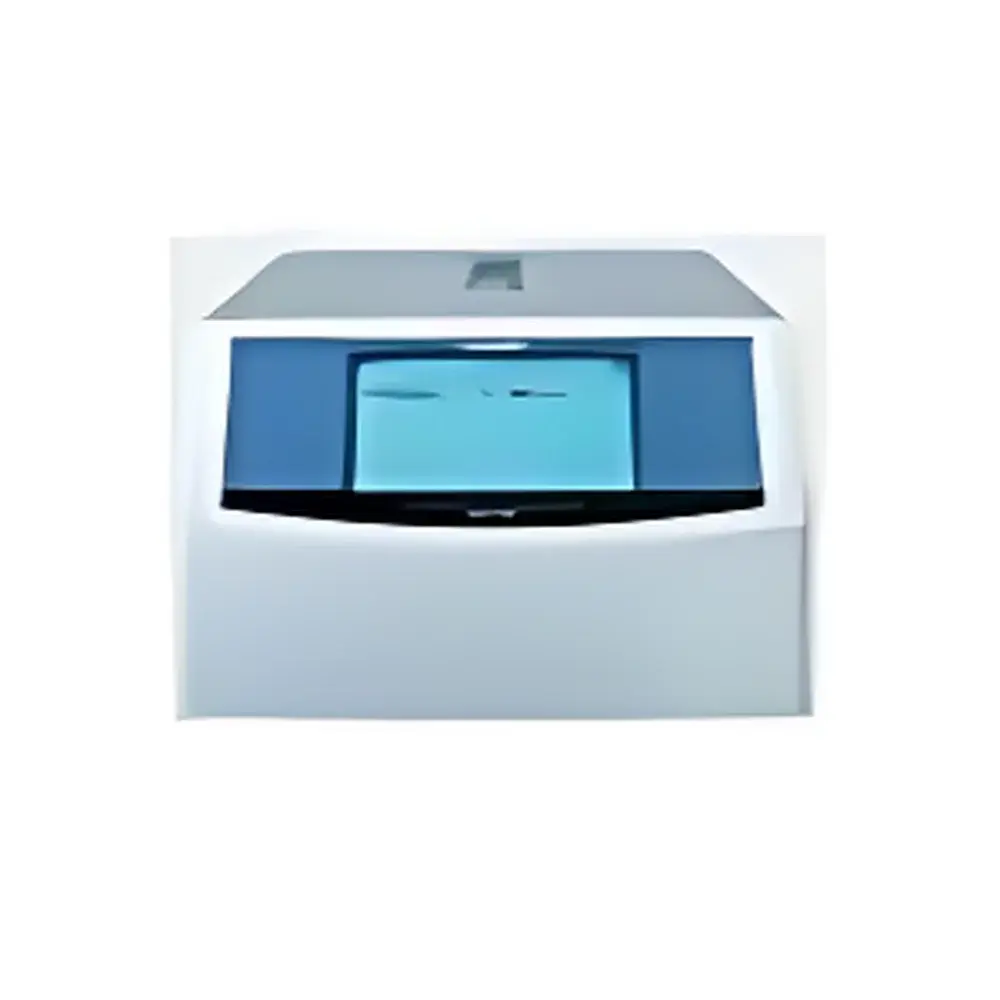
HORIBA FV-250 Portable Total Volatile Organic Compounds Analyzer
| Brand | HORIBA |
|---|---|
| Origin | Japan |
| Model | FV-250 |
| Instrument Type | Portable |
| Detection Principle | Flame Ionization Detection (FID) |
| Measurement Range | 0–10 / 20 / 50 / 100 / 200 / 500 / 1,000 / 2,000 / 5,000 / 10,000 ppmC |
| Resolution | ±1.0% FS |
| Accuracy | ±1.0% FS |
| Response Time (T90) | < 2.0 s |
| Drift | ±1.0% FS / 8 h |
| Linearity | ±1.0% FS |
| Sampling Flow Rate | ~600 mL/min |
| Warm-up Time | ~1 h |
| Operating Temperature | 5–35 °C |
| Operating Humidity | < 85% RH |
| Power Supply | AC 100 V, 50/60 Hz |
| Power Consumption | 50 VA |
| Dimensions | 260 W × 260 H × 510 D mm |
| Output Signals | DC 0–1 V, RS-232C |
| Data Storage | CompactFlash (CF) card |
| Safety Feature | Automatic H₂ shutoff and alarm upon flameout |
Overview
The HORIBA FV-250 is a field-deployable, portable total volatile organic compounds (TVOC) analyzer engineered for real-time, quantitative measurement of hydrocarbon-based vapors in ambient air, industrial workspaces, indoor environments, and emission source testing. At its core, the instrument employs flame ionization detection (FID), a well-established, highly sensitive, and linear analytical technique standardized in ASTM D2158, ISO 11890-2, and EPA Method 25A. Unlike photoionization detectors (PID) or metal oxide semiconductor (MOS) sensors, FID provides consistent response across a broad spectrum of VOCs—including alkanes, alkenes, aromatics, and oxygenated organics—when calibrated to propane or hexane equivalents (ppmC). The FV-250 delivers high reproducibility with ±1.0% full-scale (FS) accuracy and linearity, supported by rapid T90 response (<2.0 seconds), enabling dynamic monitoring of transient emissions during leak detection, remediation verification, or process upsets.
Key Features
- True portable architecture: Compact footprint (260 × 260 × 510 mm) and integrated design enable single-operator deployment in confined spaces, mobile labs, or outdoor survey vehicles.
- Auto-ranging capability: Seamlessly switches between ten preset concentration ranges (0–10 ppmC to 0–10,000 ppmC) without manual intervention, optimizing signal-to-noise ratio across orders of magnitude.
- Integrated FID safety system: Monitors flame status continuously; triggers audible/visual alarm and cuts off hydrogen supply within milliseconds upon flameout—complying with IEC 61010-1 requirements for laboratory and field instrumentation.
- Low-power FID operation: Consumes only 50 VA, allowing extended battery-backed operation when paired with external DC-AC inverters—ideal for remote or off-grid applications.
- Intuitive 4.3-inch resistive touchscreen interface: Supports multilingual menu navigation (English, Japanese, Chinese), real-time waveform display, and on-device configuration of sampling duration, averaging intervals, and alarm thresholds.
- Dual data output & storage: Simultaneous analog (0–1 V DC) and digital (RS-232C) outputs facilitate integration into SCADA systems or third-party DAQ platforms; raw time-series data logged to removable CompactFlash cards with timestamped metadata (date, time, range, temperature, flow).
Sample Compatibility & Compliance
The FV-250 is optimized for gaseous samples drawn at a stable rate of ~600 mL/min via built-in diaphragm pump and heated sample line (standard configuration). It maintains measurement integrity across humidity levels below 85% RH and ambient temperatures from 5 to 35 °C—suitable for most indoor air quality (IAQ) assessments and occupational hygiene surveys per OSHA 29 CFR 1910.1200 and ACGIH TLV® guidelines. While not intrinsically rated for Class I Division 1 hazardous areas, its FID chamber design incorporates pressure-relief vents and flame arrestors aligned with UL 61010-1 Clause 7.3.2. All firmware and calibration procedures adhere to GLP principles, supporting audit-ready documentation including calibration logs, zero/span checks, and drift verification records traceable to NIST-traceable standards.
Software & Data Management
HORIBA provides the optional FV-Series PC Utility software for post-acquisition analysis, trend visualization, and report generation. The application imports CF-card CSV files and reconstructs time-aligned concentration profiles with configurable smoothing filters and statistical overlays (min/max/mean/std dev). Export formats include PDF, Excel (.xlsx), and XML-compliant datasets compatible with LIMS platforms. For regulated environments, the software supports user access control, electronic signatures, and audit trail logging compliant with FDA 21 CFR Part 11 requirements when deployed on validated Windows OS configurations.
Applications
- Indoor air quality (IAQ) baseline studies and post-remediation verification in commercial buildings, schools, and healthcare facilities.
- Workplace exposure assessment for compliance with national occupational exposure limits (e.g., EU Directive 2004/37/EC, China GBZ 2.1-2019).
- Soil vapor intrusion screening at brownfield sites using direct-push or sub-slab sampling probes.
- Leak detection and repair (LDAR) programs under EPA 40 CFR Part 60 Subpart VV and EU IED Annex VI.
- Real-time monitoring of fugitive emissions during tank truck loading/unloading, solvent transfer, or paint booth exhaust.
- Research-grade VOC profiling in environmental chambers and atmospheric simulation laboratories.
FAQ
What calibration gases are required for routine operation?
The FV-250 requires certified propane or n-hexane standard gas mixtures (typically in nitrogen) at concentrations spanning the intended measurement range. Zero air (hydrocarbon-free, <0.1 ppmC) is mandatory for zero-point verification.
Is the instrument suitable for continuous unattended operation?
Yes—when powered via stable AC supply and configured with periodic auto-zero cycles (e.g., every 2 hours), the FV-250 supports 7-day unattended monitoring with CF-card logging capacity exceeding 30 days at 1-second sampling intervals.
Does the FV-250 meet regulatory requirements for reporting under EPA Method 25A?
It satisfies the instrumental performance criteria (sensitivity, linearity, response time, stability) specified in Method 25A; however, full method compliance requires adherence to associated sampling, calibration, and QA/QC protocols outlined in the EPA document.
Can the FV-250 distinguish individual VOC compounds?
No—it reports total ion current as ppmC equivalent and does not provide speciated identification. For compound-specific analysis, GC-FID or GC-MS systems are recommended.
What maintenance intervals are recommended?
Daily: Visual inspection of flame status and filter condition. Weekly: Zero/span check. Quarterly: FID nozzle cleaning and detector alignment verification. Annually: Full system performance verification against primary standards.
Related Products







