
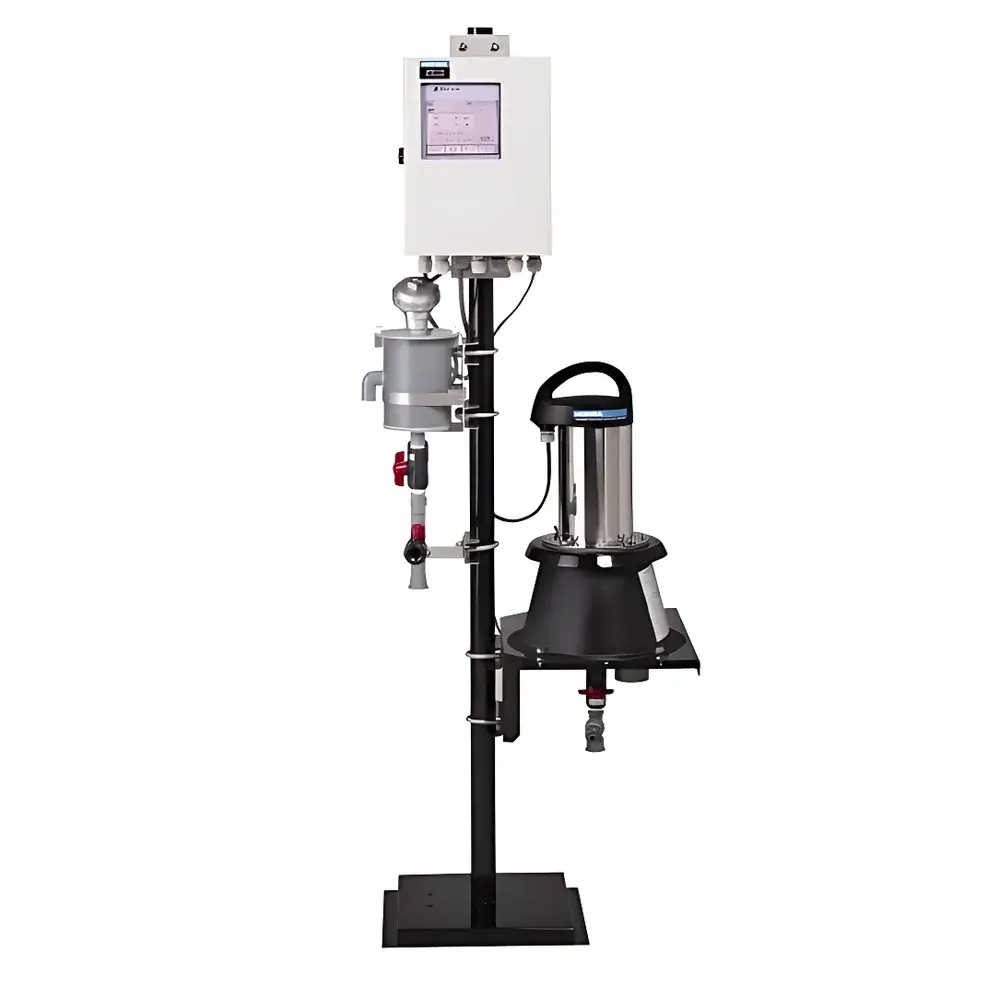
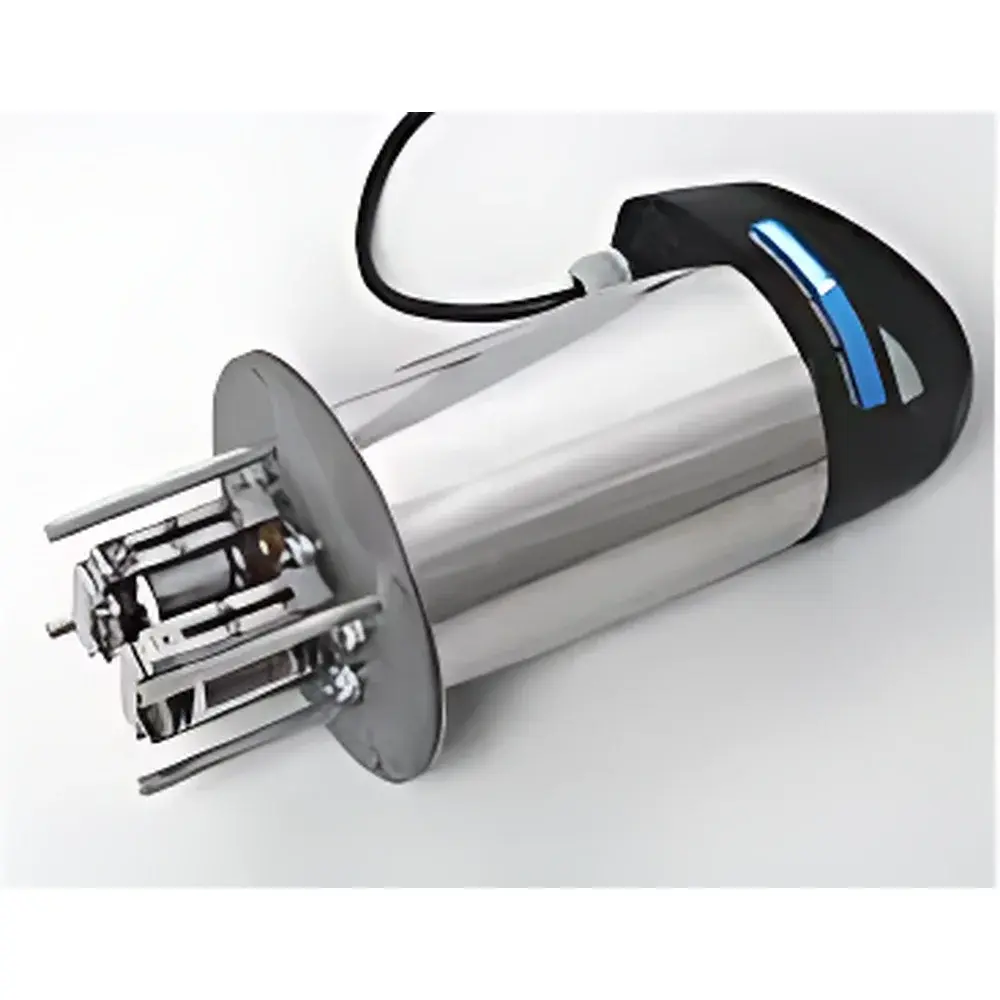
HORIBA OPSA-150 UV Absorption-Based Continuous COD Monitor
| Brand | HORIBA |
|---|---|
| Origin | Japan |
| Model | OPSA-150 |
| Instrument Type | Online Analyzer |
| Measurement Principle | UV-Vis Absorption Spectrophotometry |
| Wavelengths | UV: 254 nm, VIS: 546 nm |
| Measurement Range | 0–10 m⁻¹ SAC (0–0.1 Abs to 0–5.0 Abs equivalent) |
| Repeatability | ±2.0% F.S. |
| Resolution | 0.01 m⁻¹ SAC (0.0001 Abs) |
| Data Logging | Internal storage for 1 year (hourly intervals), CF card export supported |
| Cleaning Method | Continuous wiper-based optical cell cleaning |
| Flow Interruption Detection | Standard flow switch input |
| Display | Touchscreen HMI with guided setup and dual-parameter display (COD + turbidity conversion) |
Overview
The HORIBA OPSA-150 is a fully automated, online chemical oxygen demand (COD) monitor engineered for long-term, unattended operation in municipal wastewater effluent channels, raw water intakes, and industrial process streams. Unlike conventional wet-chemistry or dichromate-based COD analyzers, the OPSA-150 employs a non-invasive, reagent-free measurement principle based on ultraviolet–visible (UV-Vis) absorption spectroscopy. It quantifies organic load by measuring absorbance at two fixed wavelengths—254 nm (characteristic of aromatic and unsaturated organic compounds) and 546 nm (used for turbidity compensation)—and applies proprietary algorithms to correlate spectral attenuation with COD concentration in mg/L O₂ equivalents. The instrument is designed to meet the operational demands of regulatory compliance monitoring under ISO 15839, EPA Method 415.3 (adapted), and JIS K 0102 Annex D for surrogate COD estimation. Its core innovation—the Rotating Optical Path Length Adjustment System—enables dynamic range adaptation without hardware replacement or manual recalibration.
Key Features
- Rotating Optical Path Length Adjustment System: A mechanically actuated, precision-stepper-driven mechanism rotates the optical path length in discrete increments (e.g., 10 mm to 100 mm), enabling simultaneous high-sensitivity detection at low absorbance (0–0.1 Abs) and high-dynamic-range measurement up to 5.0 Abs. This eliminates zero drift caused by fouling or aging of optical surfaces—a common limitation in fixed-pathlength UV sensors.
- Continuous Optical Cell Cleaning: An integrated motorized wiper operates synchronously with measurement cycles, physically removing biofilm, silt, and colloidal deposits from the quartz sensing window without interrupting optical transmission or requiring flow diversion or air purge—ensuring stable baseline integrity over extended deployment periods.
- Touchscreen Human-Machine Interface (HMI): A 7-inch resistive touchscreen provides guided parameter configuration, real-time trend visualization, alarm status, and dual-channel display (absorbance at 254 nm and turbidity-compensated COD value). All menu navigation follows IEC 61508-aligned logic to minimize operator error.
- Embedded Data Management: Onboard flash memory logs absorbance values, calculated COD, turbidity-corrected readings, system diagnostics, and cleaning event timestamps at user-configurable intervals (default: hourly). Full 12-month datasets are exportable via standard industrial-grade CF cards compliant with FAT32 formatting.
- Flow Interruption Monitoring: Integrated flow switch input triggers automatic hold-mode operation and event logging upon sample flow cessation, preventing erroneous extrapolation during pump failure or line blockage—functionality standardized from previous OPSA-120 optional firmware into base configuration.
Sample Compatibility & Compliance
The OPSA-150 is validated for continuous monitoring of untreated and clarified wastewater, surface water, groundwater, and industrial effluents containing phenolic compounds, humic substances, and other UV-absorbing organics. It complies with structural and performance requirements outlined in ISO/IEC 17025 for in-field calibration traceability and supports audit-ready data integrity per FDA 21 CFR Part 11 when paired with HORIBA’s optional secure software package (OPSA-Link v3.2+). All wetted parts—including the flow-through quartz cuvette, PTFE-lined sample chamber, and EPDM gaskets—meet USP Class VI and EU Directive 2002/72/EC for contact with potable water and environmental matrices. Calibration verification is performed using NIST-traceable potassium hydrogen phthalate (KHP) standards or certified reference materials (CRMs) aligned with ISO 8466-1.
Software & Data Management
Data acquisition and remote supervision are enabled via Modbus RTU (RS-485) and optional Ethernet/IP or Profibus DP-V1 interfaces. HORIBA’s OPSA-Link software provides centralized fleet management, multi-instrument trending, alarm threshold configuration, and GLP-compliant electronic signature support. Raw absorbance spectra (254 nm and 546 nm) are stored alongside processed COD values, permitting retrospective algorithm refinement and method validation. Audit trails record all parameter changes, cleaning events, and calibration actions with timestamp, operator ID, and reason-for-change fields—fully satisfying GMP documentation requirements for regulated utilities.
Applications
- Municipal wastewater treatment plant discharge monitoring for compliance with national effluent limits (e.g., China’s GB 18918-2002, EU Urban Wastewater Treatment Directive 91/271/EEC)
- Drinking water source protection—early warning detection of organic contamination at reservoir intakes or river abstraction points
- Industrial pretreatment verification for textile, pharmaceutical, petrochemical, and food processing facilities subject to local sewer-use ordinances
- Real-time phenol tracking in coal gasification or resin manufacturing effluents where traditional COD methods suffer interference
- Research-grade correlation studies between UV absorbance indices (SUVA, UVA₂₅₄) and biochemical oxygen demand (BOD₅) or dissolved organic carbon (DOC)
FAQ
Does the OPSA-150 require chemical reagents or consumables during normal operation?
No. The instrument operates entirely on UV-Vis absorption principles and does not consume oxidants, catalysts, or colorimetric reagents. Only periodic replacement of the wiper blade (recommended annually) and quartz window inspection are required.
How is turbidity compensated in the COD calculation?
The 546 nm channel measures Mie scattering from suspended solids; its signal is subtracted from the 254 nm absorbance using a linear or polynomial correction model pre-validated against gravimetric turbidity standards.
Can the OPSA-150 be integrated into SCADA systems?
Yes. Native Modbus RTU support enables direct integration with most industrial SCADA platforms. Optional protocol converters provide MQTT or OPC UA bridging for cloud-based analytics infrastructure.
What maintenance interval is recommended for field deployment?
Daily visual inspection, quarterly wiper blade replacement, biannual quartz window cleaning with isopropanol, and annual full system verification using CRM standards per ISO/IEC 17025 guidelines.
Is factory calibration traceable to national metrology institutes?
Yes. Each unit ships with a calibration certificate referencing NMI-Japan (NMIJ) traceable absorbance standards measured at 254 nm and 546 nm, with uncertainty budgets reported per GUM (JCGM 100:2008).







