
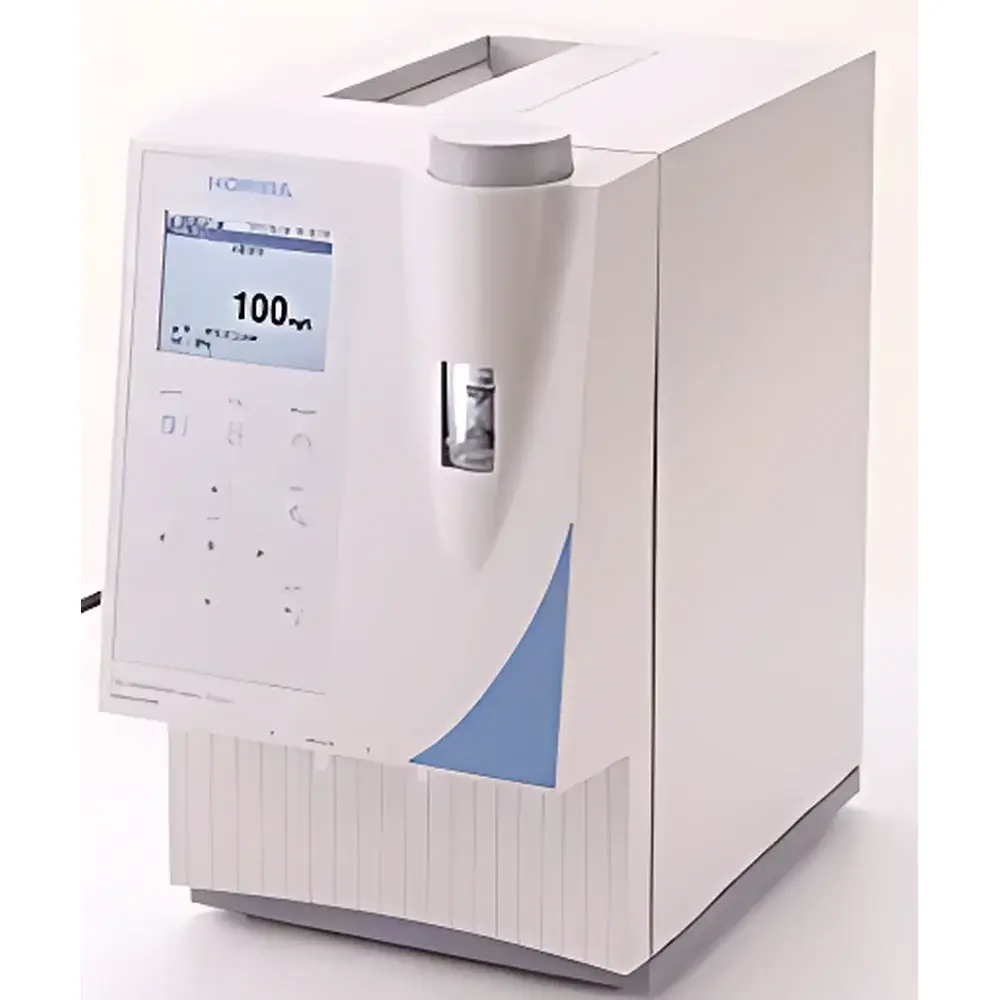
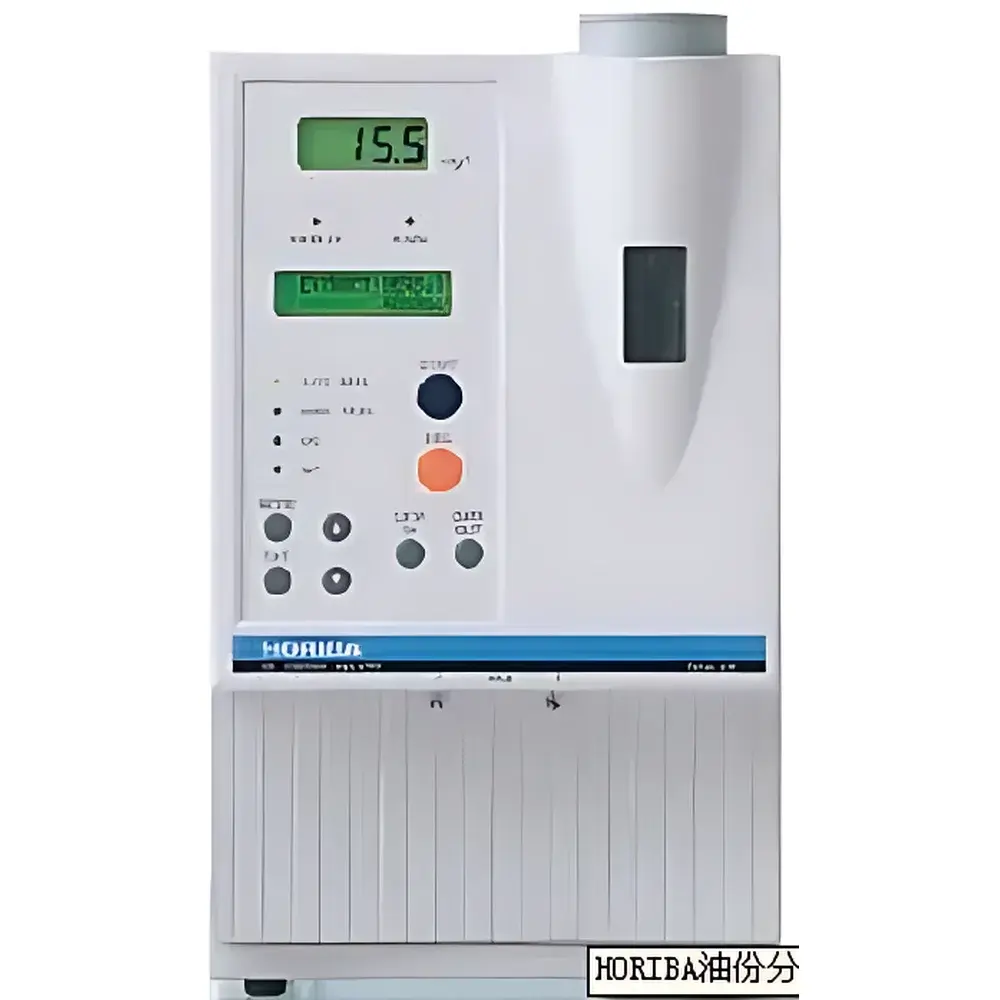
HORIBA OCMA-505 Portable Oil Content Analyzer
| Brand | HORIBA |
|---|---|
| Origin | Japan |
| Model | OCMA-505 / OCMA-555 |
| Instrument Type | Portable |
| Measurement Principle | Non-Dispersive Infrared (NDIR) Spectrophotometry |
| Measurement Range | 0–200 mg/L (dynamic, auto-ranging), 0–1000 mg/kg, 0–1 Abs |
| Accuracy | ±1 mg/L |
| Resolution | 0.1 mg/L (0–99.9 mg/L) |
| Repeatability | ±0.2 mg/L ±1 digit (0–10 mg/L) |
| Extractant | HORIBA H-997 Solvent |
| Optional Accessory | SR-305 Solvent Regenerator |
Overview
The HORIBA OCMA-505 is a portable, field-deployable oil content analyzer engineered for rapid, on-site quantification of hydrocarbon contaminants in aqueous matrices—including freshwater, seawater, wastewater, and industrial effluents. It operates on the principle of non-dispersive infrared (NDIR) spectrophotometry, leveraging the characteristic C–H stretching absorption band near 2940 cm⁻¹ (≈3.4 µm) to selectively detect aliphatic and aromatic hydrocarbons dissolved or dispersed in water. Unlike conventional gravimetric or fluorescence-based methods, the OCMA-505 employs solvent extraction (using proprietary HORIBA H-997 extractant) followed by NDIR measurement, delivering high specificity for total petroleum hydrocarbons (TPH) without interference from chlorophyll, humic substances, or suspended solids. Its fully integrated, self-contained design enables operation without external power supplies or laboratory infrastructure—making it suitable for regulatory compliance monitoring at discharge points, spill response sites, and remote environmental sampling locations.
Key Features
- True dynamic range of 0–200 mg/L with no manual range switching—enables seamless transition from trace-level detection (e.g., background river monitoring) to high-concentration screening (e.g., bilge water or refinery effluent) in a single measurement cycle.
- Digital display with real-time error diagnostics and system status reporting in English—supports intuitive troubleshooting and minimizes operator dependency on technical manuals.
- Proprietary precision syringe-based extraction module ensures exact volumetric delivery of both sample water and H-997 solvent, eliminating pipetting variability and enhancing inter-laboratory reproducibility.
- Robust optical path design with temperature-stabilized infrared source and thermopile detector—maintains signal stability across ambient conditions ranging from 5 °C to 40 °C.
- Compliance-ready architecture: supports audit-trail-capable data logging when paired with optional HORIBA DataStation software; instrument firmware adheres to ISO/IEC 17025-aligned calibration traceability protocols.
Sample Compatibility & Compliance
The OCMA-505 is validated for direct analysis of unfiltered, turbid, or saline aqueous samples—including seawater (up to 35 ppt salinity), municipal wastewater, cooling tower water, and produced water. It conforms to core elements of ASTM D7066-22 (Standard Test Method for Determination of Oil and Grease in Water by Infrared Spectrophotometry) and aligns with EPA Method 1664B (for extractable petroleum hydrocarbons) when used with H-997 solvent and appropriate QC procedures. While not GLP-certified out-of-the-box, its calibration verification routines, documented blank correction methodology, and built-in reference absorbance checks support integration into ISO 14001 environmental management systems and facility-level QA/QC programs. Regulatory users should perform method validation per local jurisdictional requirements (e.g., China’s HJ 637–2018, EU WFD Annex V parameters).
Software & Data Management
The OCMA-505 stores up to 1,000 measurement records internally—including date/time stamp, absorbance value, concentration result, and operator ID (if enabled). Data export is supported via USB interface to HORIBA’s OCMA DataStation PC application, which provides CSV export, trend plotting, statistical summary (mean, SD, CV%), and customizable report templates compliant with internal audit or third-party inspection needs. When connected to a networked lab information management system (LIMS), the instrument can be configured to transmit results via HL7 or ASCII-delimited protocols. Firmware updates are delivered through signed binary packages to ensure integrity and version control—critical for environments subject to FDA 21 CFR Part 11 or EU Annex 11 documentation requirements.
Applications
- Real-time monitoring of oil-in-water concentrations at wastewater treatment plant influent/effluent points to verify compliance with discharge permits (e.g., NPDES limits).
- Rapid assessment of bilge water aboard marine vessels prior to port-state control inspections under MARPOL Annex I.
- Field verification of remediation effectiveness at hydrocarbon-contaminated soil leachate sites or groundwater plumes.
- Quality assurance testing of boiler feedwater and steam condensate in power generation facilities where trace oil ingress compromises turbine efficiency.
- Educational use in environmental science laboratories for teaching solvent extraction principles, IR spectroscopy fundamentals, and regulatory method frameworks.
FAQ
What solvent is required for OCMA-505 operation?
HORIBA H-997 solvent is mandatory—it is specifically formulated for optimal extraction efficiency and spectral clarity in the 2940 cm⁻¹ band. Substitution with generic CCl₄ or HCFC-141b is not recommended and voids calibration validity.
Can the OCMA-505 measure emulsified oil?
Yes—the extraction step using H-997 effectively breaks stable oil-in-water emulsions; however, highly polymer-stabilized emulsions may require pre-acidification or centrifugation per ASTM D7066 guidance.
Is the SR-305 Solvent Regenerator compatible with all OCMA models?
The SR-305 is certified for use exclusively with OCMA-505 and OCMA-555 systems. It regenerates spent H-997 via dual-layer activated carbon and activated alumina columns, extending solvent life by ≥10× and reducing hazardous waste disposal volume.
How often must the instrument be calibrated?
A full calibration using certified oil-in-water standards (e.g., NIST-traceable mineral oil in deionized water) is recommended before each daily use or after every 20 samples—whichever occurs first. Zero-point verification with solvent blanks should be performed prior to each analytical batch.
Does the OCMA-505 meet US EPA approval criteria for regulatory reporting?
While the OCMA-505 is not listed on the EPA’s Compendium of Methods for the Determination of Inorganic Compounds in Environmental Samples (SW-846), its operational parameters and performance specifications satisfy the technical criteria of Method 1664B when validated per laboratory-specific SOPs and documented in a formal method validation report.
Related Products







