
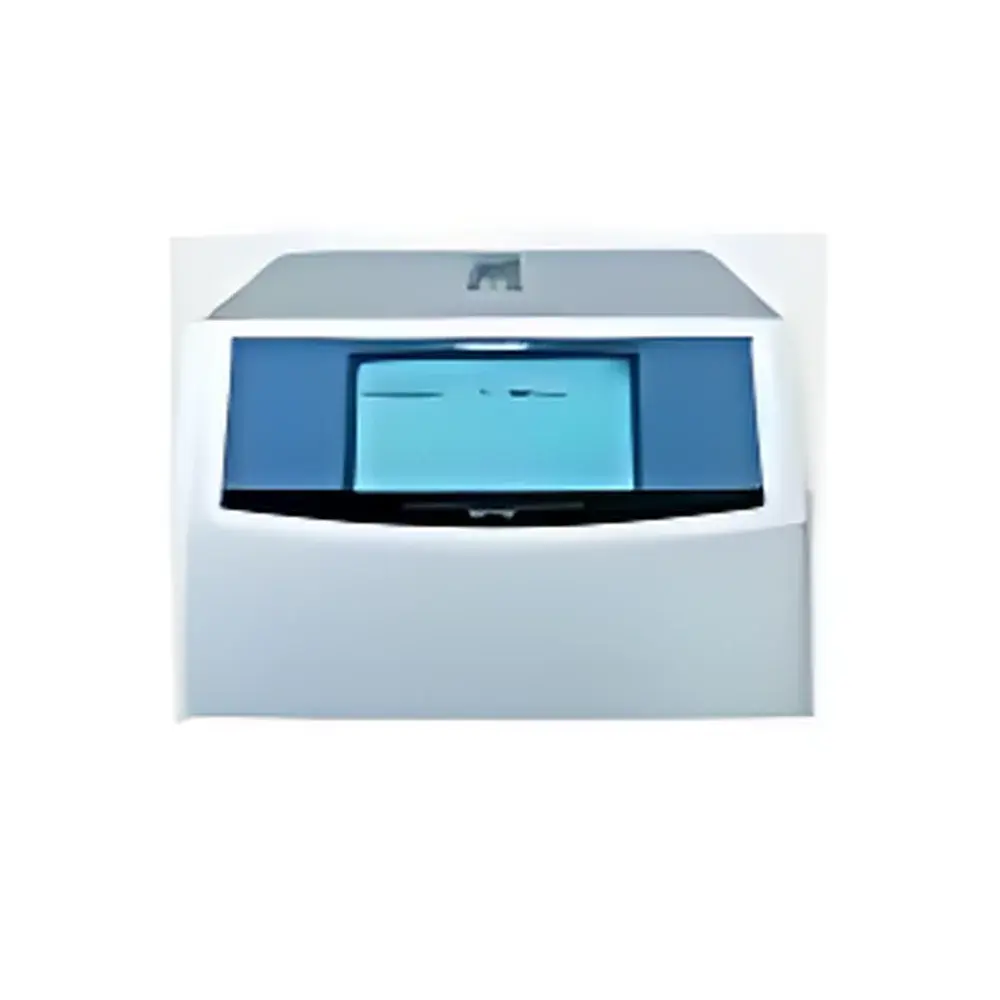
HORIBA FV-250 Portable Total Volatile Organic Compounds (TVOC) Analyzer
| Brand | HORIBA |
|---|---|
| Origin | Japan |
| Model | FV-250 |
| Instrument Type | Portable |
| Detection Principle | Flame Ionization Detection (FID) |
| Measurement Range | 0–10 / 20 / 50 / 100 / 200 / 500 / 1,000 / 2,000 / 5,000 / 10,000 ppmC |
| Resolution | ±1.0% FS |
| Accuracy | ±1.0% FS |
| Response Time (T90) | < 2.0 seconds |
| Drift | ±1.0% FS / 8 hours |
| Linearity | ±1.0% FS |
| Sampling Flow Rate | ~600 mL/min |
| Warm-up Time | ~1 hour |
| Operating Temperature | 5–35 °C |
| Operating Humidity | < 85% RH |
| Power Supply | AC 100 V, 50/60 Hz |
| Power Consumption | 50 VA |
| Dimensions | 260(W) × 260(H) × 510(D) mm |
| Output Signals | DC 0–1 V, RS-232C |
| Data Storage | CompactFlash (CF) card |
| Safety Features | Automatic H₂ shutoff and alarm upon flameout |
Overview
The HORIBA FV-250 is a field-deployable, benchtop-portable total volatile organic compounds (TVOC) analyzer engineered for high-fidelity quantitative analysis in ambient air, industrial hygiene, indoor air quality (IAQ), and emission source screening applications. It employs flame ionization detection (FID), a well-established, universally accepted detection principle standardized in ASTM D6348, ISO 11890-2, and EPA Method 25A. Unlike photoionization detectors (PID), the FID provides near-uniform response across hydrocarbon and most oxygenated VOCs—delivering robust, carbon-mass-based quantification with minimal compound-specific calibration bias. Its design prioritizes analytical stability under variable environmental conditions: the detector maintains thermal equilibrium via precision temperature control, while the hydrogen-air flame is continuously monitored to ensure optimal ionization efficiency. With a T90 response time of less than 2 seconds and automatic range switching across ten decades (0–10,000 ppmC), the FV-250 supports real-time monitoring of dynamic concentration profiles without manual intervention.
Key Features
- Flame Ionization Detection (FID) core: Delivers linear, carbon-proportional signal response with ±1.0% full-scale (FS) accuracy and repeatability—validated per ISO 17025-compliant calibration protocols.
- Auto-ranging & auto-calibration: Dynamically selects optimal measurement span based on incoming signal amplitude; integrated reference gas injection enables periodic zero/span verification without external standards.
- Real-time data visualization: High-resolution capacitive touchscreen displays live concentration values, trend graphs (up to 72-hour history), and diagnostic status—including flame health, flow rate, and detector temperature.
- Low-power, high-stability operation: Consumes only 50 VA; optimized burner geometry and low-flow combustion chamber reduce hydrogen consumption and thermal inertia—enabling stable warm-up in approximately 60 minutes.
- Integrated safety architecture: Monitors flame continuity continuously; triggers audible/visual alarm and automatically closes the hydrogen solenoid valve within milliseconds upon flameout—meeting IEC 61010-1 functional safety requirements.
- Flexible data handling: Internal CompactFlash (CF) card logs timestamped concentration data at user-selectable intervals (1 s to 60 min); RS-232C interface supports bidirectional communication with PCs for remote configuration, firmware updates, and batch export compliant with CSV/Excel formats.
Sample Compatibility & Compliance
The FV-250 is validated for direct analysis of ambient air, duct effluents, and headspace vapors without pre-concentration. It responds quantitatively to C₁–C₁₂ hydrocarbons (e.g., methane, benzene, toluene, xylene), alcohols, ketones, esters, and chlorinated solvents—provided they are combustible and generate stable ions in the hydrogen flame. Non-volatile particulates, inorganic gases (CO, CO₂, NOₓ), and halogenated compounds with high electron affinity (e.g., CFCs) yield attenuated or non-linear responses and are not within its calibrated scope. The instrument complies with JIS B 7951 (Japanese Industrial Standard for FID analyzers), carries PSE certification for electrical safety in Japan, and meets EMC Directive 2014/30/EU. Its data logging architecture supports audit-ready traceability, including operator ID, calibration event timestamps, and system error logs—facilitating GLP and ISO 17025 laboratory accreditation workflows.
Software & Data Management
The FV-250 operates standalone but integrates seamlessly with HORIBA’s optional PC-based FV-Series Data Manager software (v3.x). This application enables advanced post-processing: baseline correction, peak integration for intermittent sampling, custom unit conversion (ppmC → mg/m³ using molecular weight tables), and automated report generation aligned with ISO 16000-22 and EN 13725 reporting templates. All stored CF card files include embedded metadata (instrument serial number, firmware version, sensor calibration date), ensuring data integrity under FDA 21 CFR Part 11 requirements when used with electronic signature-enabled configurations. Raw analog output (0–1 V DC) is suitable for connection to PLCs or SCADA systems for continuous emissions monitoring (CEM) integration.
Applications
- Indoor Air Quality (IAQ) assessment in offices, schools, and healthcare facilities per ASHRAE Standard 62.1 and WHO guidelines.
- Workplace exposure monitoring for OSHA PEL and ACGIH TLV compliance in printing, coating, and semiconductor fabrication environments.
- Leak detection and repair (LDAR) programs in petrochemical and pharmaceutical manufacturing sites.
- Validation of VOC abatement systems (e.g., thermal oxidizers, carbon adsorbers) by measuring inlet/outlet differentials.
- Field screening of contaminated soil vapor and landfill gas migration studies.
- Research-grade kinetic studies requiring sub-second temporal resolution of VOC plume dynamics.
FAQ
What calibration gases are required for routine operation?
Certified methane-in-air or propane-in-air standard gases (traceable to NIST or JCSS) are recommended for span calibration; zero air (hydrocarbon-free, <0.1 ppmC) is required for zero adjustment.
Can the FV-250 measure individual VOC species?
No—it reports total VOC concentration as ppmC (parts-per-million carbon equivalent); speciation requires coupling with gas chromatography (GC-FID), which the FV-250 does not support natively.
Is humidified sample gas acceptable?
Yes, provided relative humidity remains below 85% RH at the inlet; condensation must be avoided via heated sample line or Nafion dryer integration.
How often is maintenance required?
Typical maintenance includes quarterly jet cleaning, annual FID collector electrode polishing, and biannual hydrogen filter replacement—documented in the included Maintenance Logbook per ISO/IEC 17025 clause 6.4.10.
Does the instrument support battery operation?
No—the FV-250 requires stable AC 100 V input; for true field mobility, it must be paired with a pure-sine-wave inverter and deep-cycle battery system (not supplied).
Related Products







