
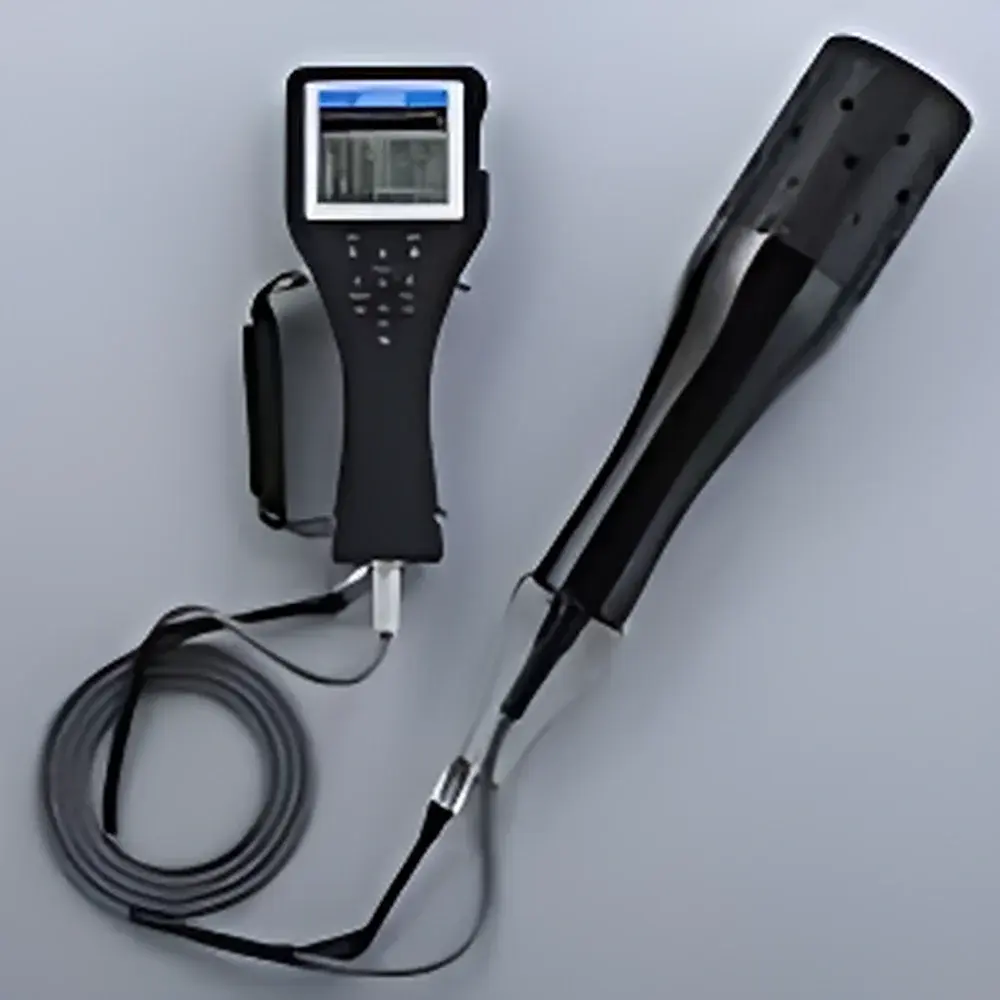
HORIBA U-50 Series Portable Multi-Parameter Water Quality Analyzer
| Brand | HORIBA |
|---|---|
| Origin | Japan |
| Model | U-50 |
| Instrument Type | Portable/Handheld Water Quality Analyzer |
| Measurable Parameters | pH, ORP, Dissolved Oxygen (DO), Electrical Conductivity (EC), Salinity, TDS, Specific Gravity (Seawater), Temperature, Turbidity (NTU), Water Depth (m), GPS Positioning |
| Turbidity Standards | U-53 — US EPA Method |
| Operating Temperature Range | −10 to 55 °C |
| IP Rating | IP68 (JIS Protection Class 8 for probe, IP67 for main unit) |
| Battery Life | Up to 70 hours (alkaline AA × 4, backlight off) |
| Data Storage | 10,000 measurement sets |
| Communication | USB |
| Display | 320 × 240 monochrome LCD with backlight |
| Probe Cable Length | Standard 2 m (optional 10 m or 30 m) |
| Probe Material | PPS, glass, SUS316L, SUS304, FKM, PEEK, titanium, FEP membrane, POM |
| Weight | Probe ≈ 1.8 kg |
Overview
The HORIBA U-50 Series is a field-deployable, multi-parameter water quality analyzer engineered for high-reliability environmental monitoring in diverse aquatic systems—including rivers, lakes, groundwater wells, wastewater treatment outfalls, and coastal marine environments. Built on electrochemical and optical sensing principles, the U-50 integrates calibrated, interchangeable sensor modules into a single ruggedized platform. Its core measurement methodologies include glass electrode potentiometry (pH), platinum redox electrode detection (ORP), Clark-type polarographic amperometry (dissolved oxygen), four-electrode AC conductivity (electrical conductivity, salinity, TDS, seawater specific gravity), LED- or tungsten-based 90° or forward-angle light scattering (turbidity per US EPA or EN ISO 7027), pressure transduction (water depth), and Pt1000-class platinum resistance thermometry (temperature). The inclusion of integrated GPS (12-channel, available on G-series models) enables georeferenced data logging essential for spatially explicit water quality mapping and regulatory compliance reporting.
Key Features
- Rugged, submersible design rated to IP68 (probe) and IP67 (main unit), compliant with JIS protection class 8 and class 7 respectively—suitable for prolonged immersion up to 30 m depth.
- Simultaneous real-time display of up to 11 parameters: pH, pH(mV), ORP, dissolved oxygen (mg/L or % saturation), electrical conductivity, salinity (ppt), TDS (g/L), seawater specific gravity (δt), temperature (°C), turbidity (NTU), and water depth (m).
- Dual turbidity probe options: U-53 (LED-based, forward-scatter, US EPA-compliant) and U-54 (tungsten lamp, 90° scatter, EN ISO 7027-compliant), both offering 0.01 NTU resolution and integrated auto-cleaning brush functionality on select models.
- Enhanced DO sensor response time and simplified maintenance via optimized polarographic membrane and electrolyte system.
- Multi-language interface supporting English, Japanese, Russian, Spanish, and Portuguese—designed for international field teams and multilingual regulatory documentation.
- Automatic temperature compensation across all electrochemical and optical parameters; two-point pH calibration with automatic recognition of pH 4.01 buffer; four-point conductivity calibration capability.
- Extended battery life (up to 70 hours using four AA alkaline cells, backlight disabled) and robust data integrity: 10,000 measurement records stored internally with timestamp, GPS coordinates (G-models), and sensor status flags.
Sample Compatibility & Compliance
The U-50 Series is validated for use in freshwater, brackish water, seawater, and treated or raw wastewater matrices. Sensor materials—including titanium housings, PEEK insulators, FEP membranes, and SUS316L electrodes—are selected for chemical inertness and resistance to biofouling, chloride corrosion, and abrasion in high-turbidity environments. All measurement protocols align with internationally recognized standard methods: pH and ORP measurements conform to ASTM D1293 and ISO 7888; conductivity and derived parameters (salinity, TDS, specific gravity) follow ISO 7888 and ASTM D1125; turbidity measurements comply with either US EPA Method 180.1 (U-53) or EN ISO 7027 (U-54); dissolved oxygen adheres to ISO 5814 and ASTM D888. The instrument’s hardware architecture and firmware support audit-ready operation under GLP and GMP frameworks, with full traceability of calibration events, sensor diagnostics, and user-initiated measurements.
Software & Data Management
Data export is supported via USB interface to Windows-compatible desktop software (HORIBA Multi-Parameter Data Manager), enabling batch download, spectral visualization, statistical analysis (e.g., temporal trend analysis, spatial interpolation), and report generation in PDF or CSV formats. The software maintains immutable metadata—including operator ID, calibration history, GPS waypoints, and environmental conditions—at the dataset level. While the U-50 itself does not implement FDA 21 CFR Part 11 electronic signature controls, its structured data output is fully compatible with validated LIMS and ELN platforms that enforce electronic record integrity, audit trails, and role-based access control. Firmware updates are delivered via signed binary packages to ensure device authenticity and version consistency across distributed field deployments.
Applications
- Regulatory surface water and groundwater monitoring programs mandated by national agencies (e.g., US EPA, Environment Agency UK, JEA, BfG).
- Wastewater treatment plant (WWTP) influent/effluent QA/QC, including compliance verification against discharge permits (e.g., NPDES, EU Urban Wastewater Directive).
- Coastal and estuarine research requiring simultaneous salinity–temperature–turbidity–DO profiling for hypoxia and stratification studies.
- Environmental impact assessments (EIA) and baseline surveys for infrastructure projects (e.g., dam construction, dredging, pipeline laying).
- Academic and NGO-led citizen science initiatives leveraging GPS-tagged, multi-parameter datasets for open-access water quality dashboards.
- Emergency response to spills or algal blooms, where rapid deployment and real-time parameter cross-correlation (e.g., DO drop coinciding with elevated turbidity and nutrient surges) inform mitigation decisions.
FAQ
What turbidity standards does the U-50 support?
The U-53 probe complies with US EPA Method 180.1 (LED-based forward-scatter), while the U-54 probe meets EN ISO 7027 (tungsten lamp, 90° scatter). Both provide 0.01 NTU resolution and optional auto-cleaning brush functionality.
Does the U-50 require routine calibration in the field?
Yes—pH and ORP require two-point calibration using certified buffers; conductivity requires up to four-point calibration for full-range accuracy; turbidity probes require zero and span calibration with formazin or AMCO AEPA-1 standards. The instrument supports automated buffer recognition and stores calibration coefficients with timestamps.
Can the U-50 operate in seawater without sensor degradation?
Yes—the probe housing, electrodes, and optical windows utilize corrosion-resistant materials (titanium, SUS316L, FEP), and the DO sensor includes salinity-compensated algorithms (0–70 ppt) to maintain accuracy across full marine salinity ranges.
Is GPS data synchronized with each measurement?
On U-52G, U-53G, and U-54G models, GPS position (latitude/longitude, altitude, HDOP) is logged at the time of each measurement set, enabling GIS-integrated spatial analysis and regulatory submission of georeferenced water quality data.
How is data integrity ensured during long-term unattended deployment?
Internal storage uses non-volatile memory with cyclic redundancy check (CRC) validation per record; battery voltage, sensor health flags, and ambient temperature are embedded in every data packet to support post-hoc QA/QC and outlier identification.







