
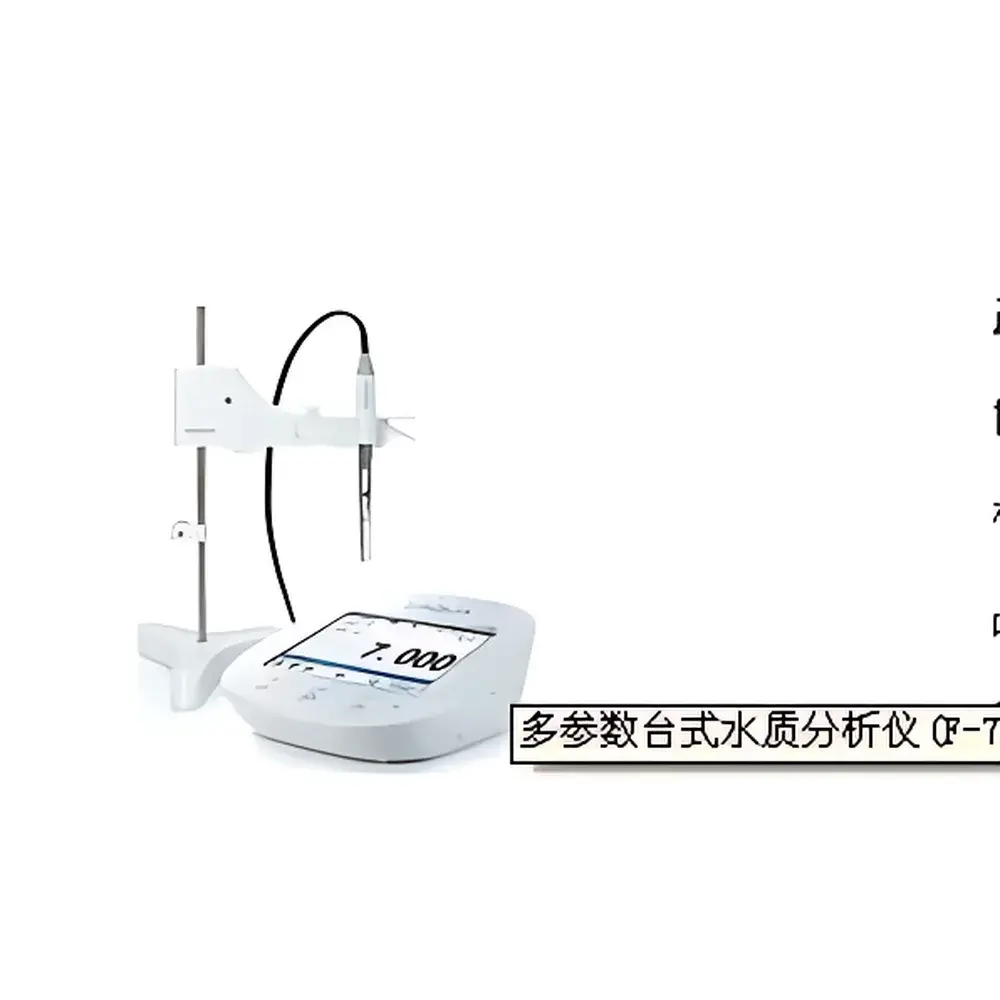
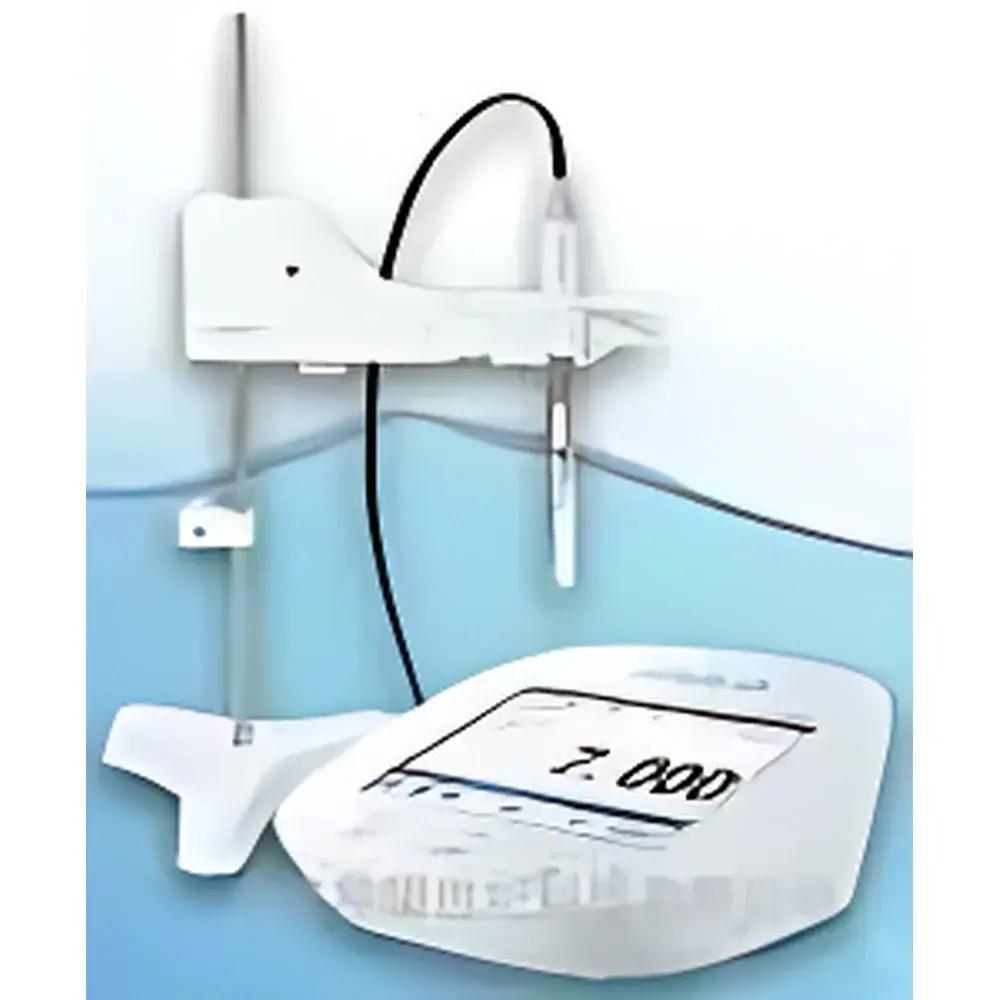
HORIBA DS-71 Desktop Multi-Parameter Conductivity Meter
| Brand | HORIBA |
|---|---|
| Origin | Japan |
| Model | DS-71 |
| Form Factor | Benchtop |
| Conductivity Range | 0.00 mS/m – 199.9 S/m |
| TDS Range | 0.01 mg/L – 100 g/L |
| Resistivity Range | 0 – 1.999 MΩ·m |
| Salinity Range | 0 – 80 ppt |
| Temperature Range | 0.0 – 100.0 °C (extended to −30.0 – 130.0 °C) |
| Accuracy | ±0.5% FS ±1 digit (conductivity/resistivity/salinity/TDS), ±0.1 °C ±1 digit (temperature) |
| Resolution | 0.05% FS (conductivity/resistivity), 0.01 mg/L (TDS), 0.01 ppt (salinity), 0.1 °C (temperature) |
| Data Storage | 999 measurements |
| Compliance | JIS, USP <645>, EP 2.2.38, JP XVI, ChP |
| Communication | USB port for PC connectivity and data export |
| Power Supply | AC adapter (100–240 V, 50/60 Hz), ~0.7 VA |
| Weight | ~500 g |
Overview
The HORIBA DS-71 Desktop Multi-Parameter Conductivity Meter is a precision-engineered benchtop instrument designed for rigorous laboratory and quality control environments requiring traceable, reproducible measurement of aqueous solution conductivity, resistivity, salinity, total dissolved solids (TDS), and temperature. Built upon HORIBA’s proprietary dual-electrode AC excitation method—optimized to minimize polarization effects and electrode fouling—the DS-71 delivers high stability across wide dynamic ranges without manual cell constant adjustment. Its measurement architecture conforms to internationally recognized electrochemical principles defined in ASTM D1125 and ISO 7888, with calibration traceability aligned to NIST-traceable KCl standards. The instrument is explicitly validated for pharmaceutical water monitoring per USP , European Pharmacopoeia 2.2.38, Japanese Pharmacopoeia XVI, and Chinese Pharmacopoeia (ChP) requirements, supporting both purified water (PW) and water for injection (WFI) qualification protocols.
Key Features
- Capacitive touchscreen interface (4.3-inch WVGA) with intuitive, icon-driven navigation—enabling full parameter configuration, real-time diagnostics, and guided troubleshooting without external software.
- Integrated electrode health monitoring and automated self-diagnostics, including conductivity cell integrity verification and temperature sensor validation.
- Comprehensive compliance support: preconfigured check modes for JIS Z 8401, USP , EP 2.2.38, JP XVI, and ChP; automatic pass/fail flagging against pharmacopeial acceptance criteria.
- GLP/GMP-ready operation: timestamped measurements with operator ID entry, audit trail logging (via optional PC software), and configurable auto-hold and endpoint detection for standardized workflows.
- Modular electrode compatibility: supports interchangeable 2- and 4-electrode conductivity cells (K = 0.1, 1.0, 10 cm⁻¹), Pt1000 temperature probes, and optional pH/ION modules (not included with DS-71 base unit).
- Robust benchtop design: compact footprint (160 × 220 × 75 mm), low power consumption (~0.7 VA), and EMI-shielded housing compliant with IEC 61326-1 for electromagnetic compatibility in regulated labs.
Sample Compatibility & Compliance
The DS-71 is optimized for aqueous samples across industrial, environmental, and pharmaceutical applications—including purified water, steam condensate, cooling tower makeup, wastewater effluent, and process brines. It meets the electrical safety requirements of IEC 61010-1 and carries CE marking under the EU Low Voltage and EMC Directives. For regulated environments, the instrument supports 21 CFR Part 11-compliant data management when used with HORIBA’s optional LabSolutions™ software (version 3.2+), enabling electronic signatures, role-based access control, and immutable audit trails. All conductivity measurements are referenced to standardized temperature compensation algorithms (linear, non-linear, or user-defined), with automatic reference to 25 °C per ISO 7888 and USP .
Software & Data Management
Data acquisition and reporting are managed via native USB 2.0 interface, enabling direct connection to Windows-based PCs without drivers. The DS-71 stores up to 999 measurement records internally—including raw values, timestamps, temperature, cell constant, calibration history, and operator notes. Export formats include CSV and Excel-compatible .xls for integration into LIMS or ELN systems. Optional HORIBA LabSolutions™ software provides advanced features: automated report generation (PDF/HTML), statistical process control (SPC) charts, multi-instrument fleet management, and full 21 CFR Part 11 compliance with electronic signature capture, audit log review, and data integrity validation. Firmware updates are delivered via USB flash drive, ensuring long-term regulatory alignment.
Applications
- Pharmaceutical manufacturing: Routine PW/WFI conductivity verification during production, cleaning validation, and environmental monitoring per Annex 1 and WHO TRS 970.
- Power generation: Feedwater and condensate purity assessment in thermal and nuclear plants, meeting ASTM D4582 and IAPWS guidelines.
- Food & beverage QA/QC: Salt concentration profiling in brines, syrups, and dairy processing streams; TDS verification for RO permeate and boiler feedwater.
- Academic and environmental research: Field-deployable lab-grade analysis of surface water, groundwater, and estuarine salinity gradients.
- Chemical process control: In-line QC of electrolyte solutions, plating baths, and semiconductor rinse water (ultrapure grade).
FAQ
Does the DS-71 support automatic temperature compensation (ATC) for conductivity measurements?
Yes—ATC is enabled by default using integrated Pt1000 sensing, with selectable compensation curves (linear, NaCl, natural water, or user-defined). Reference temperature is fixed at 25 °C per pharmacopeial standards.
Can the DS-71 be calibrated with non-KCl standards?
Calibration must be performed using certified KCl solutions (e.g., 0.01 mol/kg, 0.1 mol/kg) traceable to national metrology institutes. Non-KCl standards are not supported for compliance-critical applications.
Is GLP/GMP data export possible without additional software?
Raw data export via USB is supported, but full GLP/GMP compliance—including audit trails, electronic signatures, and data integrity verification—requires HORIBA LabSolutions™ software and proper system validation.
What is the maximum allowable conductivity cell constant range?
The DS-71 supports cells with geometric constants from 0.01 to 10 cm⁻¹, though standard configurations use K = 0.1, 1.0, or 10 cm⁻¹ electrodes—each automatically recognized via embedded chip identification (optional with smart electrodes).
How frequently should the conductivity cell be cleaned and recalibrated?
Cleaning frequency depends on sample matrix; daily rinsing with deionized water is recommended. Recalibration is required before each analytical session or after electrode cleaning, per USP and internal SOPs. A full performance verification (including accuracy and repeatability checks) is advised weekly in GxP environments.
Related Products




