
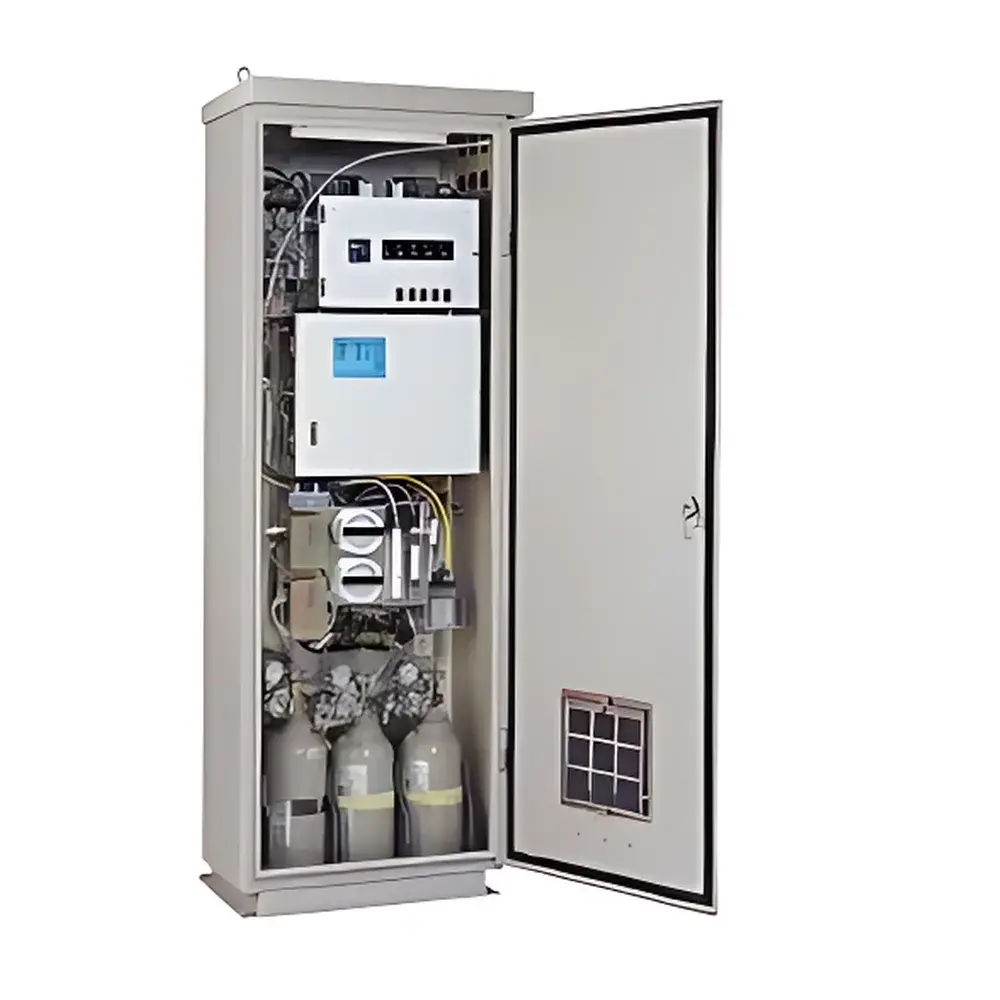
HORIBA ENDA-640ZG Series Online Flue Gas Analyzer
| Brand | HORIBA |
|---|---|
| Origin | Japan |
| Model | ENDA-640ZG Series |
| Instrument Type | Continuous Emission Monitoring System (CEMS) |
| Accuracy | ±1.0 % FS |
| Repeatability | ±0.5 % FS |
| Response Time (SO₂) | 60–240 s |
| Stability | ±2.0 % FS/week |
Overview
The HORIBA ENDA-640ZG Series Online Flue Gas Analyzer is a compact, high-integrity continuous emission monitoring system (CEMS) engineered for regulatory-grade measurement of up to five key flue gas components—NOx, SO2, CO, CO2, and O2—within a single analyzer unit. Designed for compliance with international environmental standards—including EU Directive 2010/75/EU (IED), EPA Methods 6C, 7E, 10, and ISO 12039—the system employs dual physical detection principles: alternating-flow non-dispersive infrared (NDIR) spectroscopy for NOx, SO2, CO, and CO2, and paramagnetic oxygen detection for O2. The alternating-flow NDIR architecture eliminates optical drift by synchronously cycling sample and reference gas streams through the same detection cell at 1 Hz frequency, ensuring zero-point stability without manual alignment or recalibration. This design inherently suppresses baseline drift and mitigates long-term sensitivity degradation—critical for unattended operation in power plants, waste incinerators, and industrial furnaces where maintenance access is constrained.
Key Features
- Single-unit, five-parameter simultaneous analysis: NOx, SO2, CO, CO2, and O2, reducing footprint and integration complexity
- Compact mechanical design: 50% smaller volume than predecessor models; fully front-accessible service architecture enables all routine maintenance—including filter replacement, calibration verification, and sensor inspection—without rear panel disassembly
- Integrated interference compensation: Proprietary interference-filter optics correct cross-sensitivity from H2O vapor and CO2 in NOx and SO2 channels, validated per ISO 14956 and ASTM D6522
- Accelerated SO2 calibration: Dry-gas calibration completed in ≤3 minutes (vs. 15 min for legacy wet-calibration protocols), minimizing downtime during QA/QC procedures
- Paramagnetic O2 detection: No external carrier gas required; ambient air serves as reference medium, eliminating nitrogen supply infrastructure and associated operational costs
- Auto-blowback controller: Reduced footprint (350 × 550 × 180 mm) with wall-mount capability; programmable purge cycles maintain primary probe and filter integrity under high-dust conditions (e.g., sinter plants, cement kilns)
Sample Compatibility & Compliance
The ENDA-640ZG integrates with application-specific sampling systems engineered for harsh industrial environments. For waste-to-energy facilities, optional Cl2 scrubbers and three-stage thermoelectric cooling (primary + dual secondary chillers) minimize aqueous-phase loss of SO2 and NO2, achieving T90 ≤ 90 s (SO2-free matrix) or ≤ 240 s (SO2-present). In coal-fired power stations, NH3 removal modules prevent sulfamic acid formation during SO2 analysis, while high-efficiency NOx converters ensure complete NO2 → NO conversion at >95% efficiency across 0–500°C stack temperatures. All sampling trains comply with EN 15267-3 for CEMS type approval and support GLP/GMP audit trails per FDA 21 CFR Part 11 when paired with HORIBA’s optional data acquisition software.
Software & Data Management
The embedded Linux-based operating system supports real-time display of instantaneous concentrations, O2-corrected values (per EN 14181), and rolling 1-hour dynamic averages. Twelve configurable analog/digital outputs accommodate regulatory reporting requirements, including 4–20 mA signals for DCS integration and RS-485 Modbus RTU for SCADA connectivity. Calibration logs, alarm histories, and diagnostic events are timestamped and stored with write-protected retention for ≥12 months. Optional HORIBA CEMS Manager software provides automated report generation compliant with EU MRV, US EPA subpart F, and China’s HJ 75-2017, including automatic outlier flagging and uncertainty quantification per ISO/IEC 17025.
Applications
The ENDA-640ZG is deployed globally across regulated emission sources requiring Tier 2 or Tier 3 CEMS certification. Primary applications include:
- Thermal power generation (coal, gas, biomass)
- Municipal solid waste and hazardous waste incineration
- Iron and steel production (sintering, blast furnace stoves)
- Glass melting furnaces and sulfuric acid production plants
- Cement clinker kilns and lime calciners
Its modular sampling interface allows seamless adaptation to varying particulate loading (up to 50 g/Nm³), moisture content (up to 30% v/v), and corrosive species (HCl, HF, SO3), validated per IEC 61290-2-1 for industrial instrumentation reliability.
FAQ
What regulatory standards does the ENDA-640ZG meet for CEMS certification?
It satisfies EN 15267-3 (EU), EPA PS-11/PS-4A, and China’s HJ 75-2017 for performance specification testing and quality assurance.
How is zero drift prevented during extended unattended operation?
The alternating-flow NDIR architecture performs synchronous sample/reference measurement every second, eliminating optical misalignment sensitivity and enabling <12-month zero-stability intervals without manual intervention.
Can the system operate without external nitrogen supply?
Yes—O2 measurement uses ambient air as the reference medium via paramagnetic detection, removing dependency on bottled N2 or synthetic air generators.
Is remote diagnostics supported?
Standard Ethernet port enables secure VPN-based remote access for firmware updates, log retrieval, and real-time parameter adjustment under ITAR-compliant encryption protocols.
What is the minimum required maintenance interval for filter replacement?
With auto-blowback enabled, primary probe filters typically require replacement every 6–12 months depending on dust concentration; service history is logged automatically and triggers configurable maintenance alerts.
Related Products







