
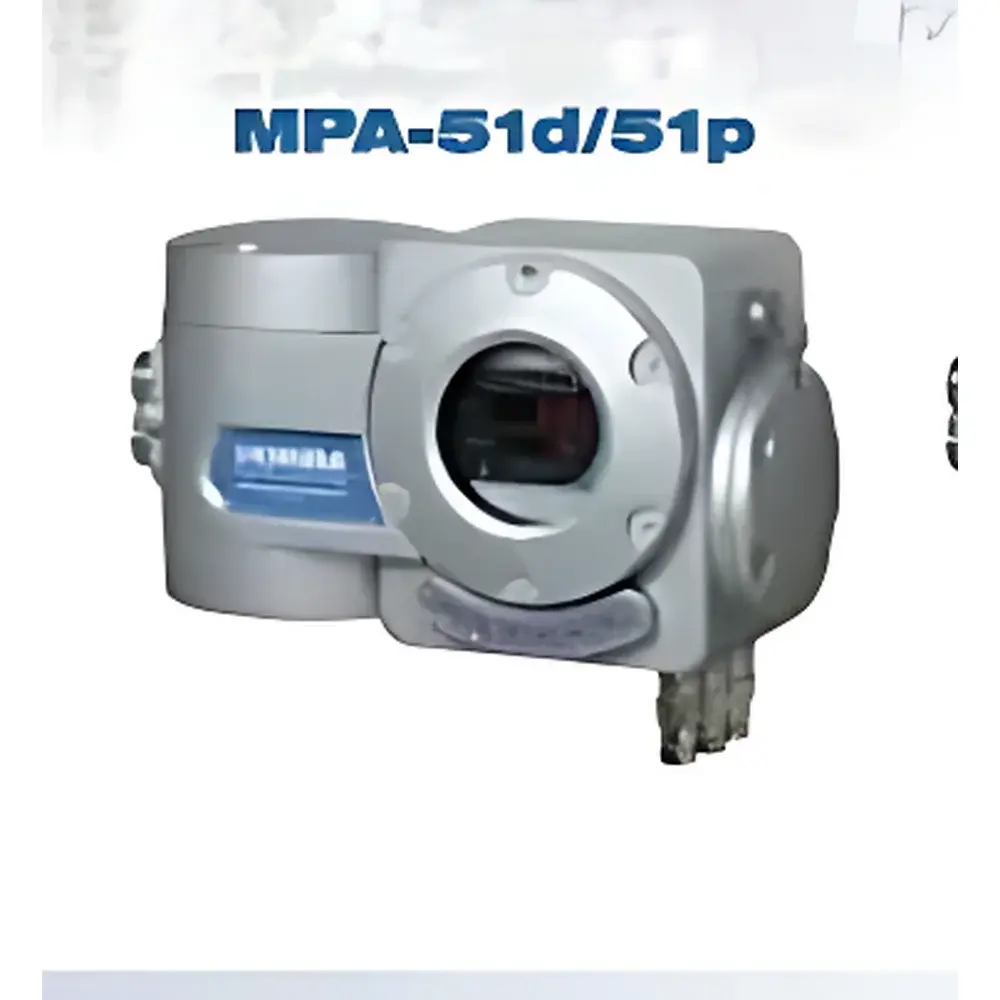
HORIBA MPA51d/51p Intrinsically Safe Magnetic Pressure Oxygen Analyzer
| Brand | HORIBA |
|---|---|
| Origin | Japan |
| Model | MPA51d / MPA51p |
| Explosion Protection | Ex d IIB+H2 T4 (MPA51d) / Ex px d IIC T4X (MPA51p) |
| Measurement Principle | Magnetic Pressure (Oxygen-Specific Paramagnetic Detection) |
| Measurand | O₂ |
| Range Options | 0–5 vol% to 0–100 vol% |
| Accuracy (Std. Range) | ±0.1 vol% O₂ |
| Repeatability | ±0.1 vol% O₂ |
| Zero Drift | ±0.05 vol% O₂/week |
| Span Drift | ±0.05 vol% O₂/week |
| Response Time (T90) | ≤20 s |
| Sample Flow Rate | 300 mL/min (MPA51p), 500 mL/min (MPA51d) |
| Sample Pressure | ≥1.98 kPa (MPA51d), ≥14.7 kPa (MPA51p) |
| Wetted Materials | SUS304, SUS316, FKM, SiO₂, Au, Pt, Borosilicate Glass |
| Compliance | IEC 60079-0, IEC 60079-1 (Ex d), IEC 60079-2 (Ex p), ATEX 2014/34/EU, UKCA |
Overview
The HORIBA MPA51d and MPA51p are certified intrinsically safe, process-grade oxygen analyzers engineered for continuous, high-stability measurement in hazardous areas where flammable gases or explosive atmospheres are present. These instruments employ the magnetic pressure detection principle — a physical method exploiting the strong paramagnetism of molecular oxygen (O₂). In a non-uniform magnetic field, O₂ molecules experience a force proportional to the field gradient and their magnetic susceptibility, resulting in localized pressure differentials across a sealed reference chamber. This differential is measured via a highly stable, non-magnetic diaphragm sensor and converted into a linear electrical output. Unlike electrochemical or zirconia-based sensors, this technique delivers inherent zero stability (no baseline drift in absence of O₂), true linearity across full-scale ranges, and immunity to poisoning or aging effects from CO₂, H₂O, hydrocarbons, or acidic gases. The MPA51d implements flameproof (Ex d) enclosure design per IEC 60079-1 for Zone 1 applications; the MPA51p integrates pressurized (Ex p) main housing with flameproof (Ex d) sensor head (Ex px d), enabling use in higher-risk Zone 0/1 environments classified for IIC gas groups — including hydrogen and acetylene.
Key Features
- Paramagnetic oxygen sensing with no consumables, catalysts, or electrolytes — ensures long-term calibration stability and minimal maintenance.
- Dual-certified explosion protection: MPA51d meets Ex d IIB+H2 T4 for general industrial explosive atmospheres; MPA51p satisfies Ex px d IIC T4X for Zone 0-capable deployment in hydrogen-rich or ethylene-classified facilities.
- Zero-point integrity: Output remains at true zero in nitrogen or argon blank — eliminating zero drift artifacts common in thermal or optical methods.
- Linear analog output (4–20 mA) and digital communication (RS-485 Modbus RTU, optional) support integration into DCS, SCADA, and safety instrumented systems (SIS).
- Robust wetted materials — including 316 stainless steel, gold-plated sensor elements, fused silica capillaries, and FKM elastomers — ensure compatibility with corrosive, high-purity, or ultra-dry sample streams.
- Configurable multi-range capability: Standard factory calibration supports up to four user-selectable spans (e.g., 0–1%, 0–5%, 0–25%, 0–100% O₂), with maximum span ratio of 1:25.
Sample Compatibility & Compliance
The MPA51d/51p is designed for continuous monitoring of oxygen concentration in process gas streams where safety-critical control or environmental compliance is required. It accepts dry, particle-free samples with O₂ concentrations ranging from trace (<100 ppm) to pure oxygen (100 vol%). Sample inlet pressure must exceed 1.98 kPa (MPA51d) or 14.7 kPa (MPA51p); flow rates are optimized at 300 mL/min (MPA51p) or 500 mL/min (MPA51d). Condensable vapors, aerosols, and particulates must be removed upstream via coalescing filters and refrigerated dryers. The analyzer complies fully with IEC 60079 series standards for explosive atmospheres and carries ATEX and UKCA markings for use in EU and UK industrial zones. Its architecture supports audit-ready operation under GLP and GMP frameworks when paired with optional data logging and 21 CFR Part 11–compliant software modules.
Software & Data Management
HORIBA provides the optional “MPA-Link” configuration and diagnostics software, compatible with Windows OS, for remote setup, real-time signal monitoring, calibration verification, and event log export. All configuration changes, zero/span adjustments, and alarm triggers are timestamped and stored locally with user authentication. When integrated with HORIBA’s central monitoring platform (e.g., EnviroLink™), the MPA51d/51p supports automated report generation aligned with ISO 14001 environmental management requirements and EPA Method 3A validation protocols. Firmware updates preserve calibration coefficients and historical trend buffers, ensuring continuity during routine system upgrades.
Applications
- Chemical and petrochemical plants: Inerting control in reactors, distillation columns, and storage tanks to prevent flammability excursions.
- Hydrogen production & fuel cell facilities: Monitoring O₂ ingress in PEM electrolyzer purge streams and hydrogen buffer vessels (IIC-rated MPA51p essential).
- Pharmaceutical manufacturing: Nitrogen blanketing verification in API synthesis reactors and lyophilizer chambers per USP .
- Food packaging & modified atmosphere processing: Real-time O₂ residual analysis in vacuum-sealed or MAP lines.
- Waste-to-energy and biogas upgrading: Combustion air optimization and post-scrubbing O₂ verification prior to flare or engine feed.
- Research laboratories: Reference-grade O₂ quantification in controlled atmosphere gloveboxes and catalytic reaction studies.
FAQ
What makes magnetic pressure detection superior to zirconia or electrochemical O₂ sensors in hazardous areas?
Magnetic pressure technology eliminates reliance on temperature-sensitive ceramics or liquid electrolytes — both prone to drift, poisoning, and limited lifespan in aggressive process environments. Its physics-based linearity and true zero behavior reduce recalibration frequency and improve long-term measurement confidence.
Can the MPA51p be installed in Zone 0 locations?
Yes — its Ex px d IIC T4X certification permits installation in Zone 0 when installed and maintained per IEC 60079-2 and manufacturer-specified purging procedures (minimum protective gas flow and pressure monitoring required).
Is NIST-traceable calibration documentation available?
Yes — each unit ships with a factory calibration certificate referencing NIST-traceable O₂ standards (e.g., NIST SRM 1603), including as-found/as-left data, linearity verification, and temperature compensation profiles.
Does the analyzer support redundant 4–20 mA outputs for safety interlocks?
Standard configuration includes one isolated 4–20 mA output; dual-redundant outputs are available via optional hardware module (MPA-IO-DUAL), compliant with SIL 2 per IEC 61508.
How is moisture managed in the sample stream without affecting accuracy?
Condensation must be excluded upstream. The analyzer itself contains no desiccants or membranes; its paramagnetic core is insensitive to humidity — but liquid water ingress will damage internal seals and optics. Installation requires a coalescing filter + Peltier chiller or permeation dryer meeting ISO 8573-1 Class 2 purity.
Related Products







