
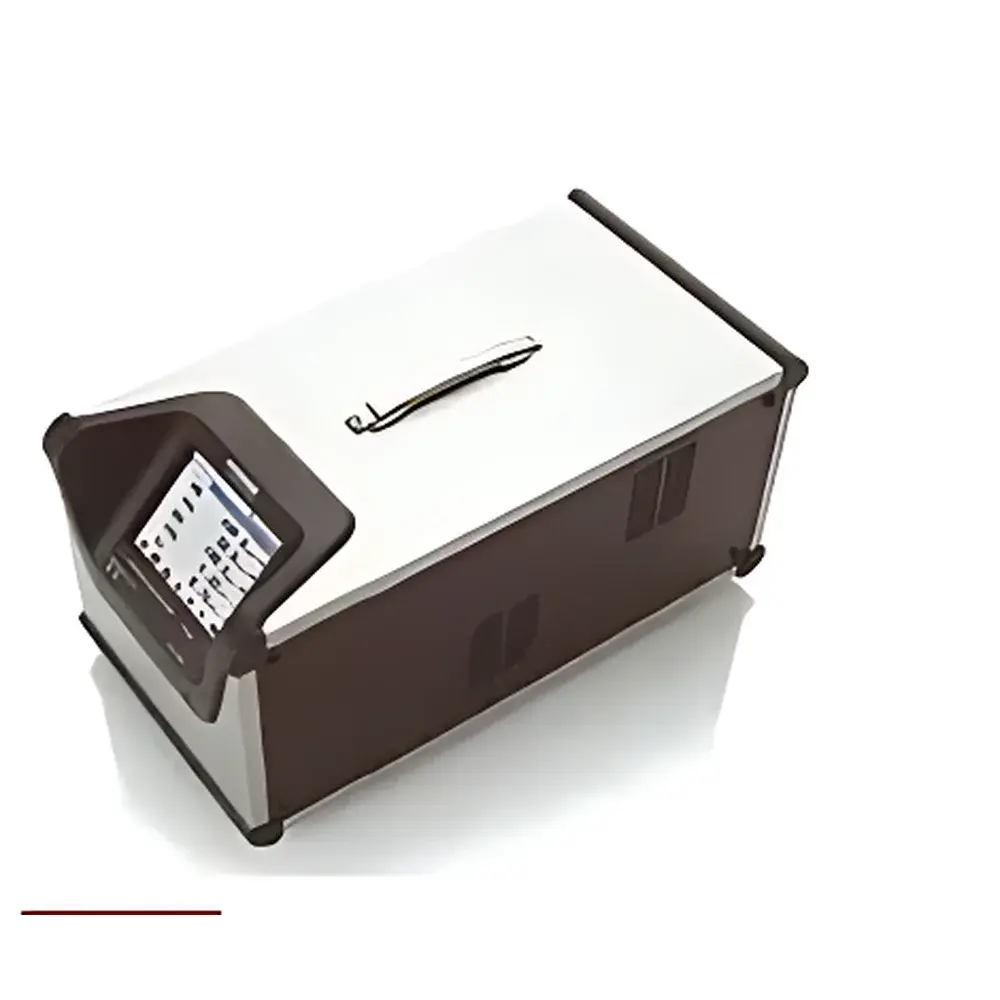
HORIBA PG-350 Portable Multi-Gas Analyzer
| Brand | HORIBA |
|---|---|
| Origin | Japan |
| Model | PG-350 |
| Instrument Type | Portable |
| Detection Targets | NOx, SO₂, CO, CO₂, O₂ (optional CH₄) |
| Range Options | 0–5 / 10 / 25 vol% (CO₂, O₂) |
| Repeatability | ±1.0% F.S. |
| Drift | ±1.0% F.S./day (SO₂: ±2.0% F.S./day) |
| Linearity | ±2.0% F.S. |
| Response Time (T90) | ≤45 s (all gases except SO₂) |
| Sample Flow Rate | ~0.5 L/min |
| Warm-up Time | 30 min |
| Operating Environment | 5–40 °C, ≤85% RH |
| Dimensions | 226 × 265 × 510 mm (W×H×D) |
| Weight | ~14 kg |
| Certifications | UK MCERTS, EU TÜV, US EPA ETV, China CMA, Korea KOLAS, Japan JIS/JCSS |
Overview
The HORIBA PG-350 Portable Multi-Gas Analyzer is an engineered field-deployable instrument designed for high-fidelity, real-time quantification of up to five critical gaseous components—NOx, SO2, CO, CO2, and O2—with optional CH4 measurement capability. Built upon HORIBA’s proven alternating flow modulation (AFM) platform, the PG-350 integrates multiple detection principles within a single compact chassis: pulsed chemiluminescence (CLD) for NOx, non-dispersive infrared (NDIR) with AFM for SO2, CO, and CH4, dual-beam NDIR for CO2, and galvanic electrochemical sensing for O2. This multi-principle architecture ensures minimal cross-sensitivity and robust performance across variable matrix compositions typical of flue gas, combustion exhaust, and ambient air streams. Unlike benchtop analyzers requiring fixed installation and extensive infrastructure, the PG-350 delivers laboratory-grade accuracy (±2.0% F.S. linearity, ±1.0% F.S. repeatability) in a transportable form factor weighing only 14 kg—20% lighter than prior-generation portable equivalents—enabling rapid deployment for stack audits, CEMS validation, catalyst testing, and mobile emission surveys.
Key Features
- Integrated alternating flow modulation (AFM) technology for enhanced signal-to-noise ratio and reduced zero drift in NDIR and CLD channels
- Multi-range selectable full-scale settings per gas (e.g., NOx: 0–25 to 2500 ppm; CO2: 0–10 to 30 vol%) to optimize resolution across diverse emission profiles
- Color TFT-LCD touchscreen with intuitive GUI, real-time trend plotting, step-by-step on-screen operation guidance, and alarm-triggered event logging
- Onboard electronic condensate management system with auto/manual drainage and programmable purge cycles to maintain sample integrity under high-humidity conditions
- Full-system calibration support—including pre-conditioning hardware (heated sampling line, particle filter, permeation dryer)—validated against traceable NIST or JCSS-certified standards
- Dual-output interface: isolated 4–20 mA analog channels (per gas) and Ethernet (TCP/IP) for integration into SCADA, LIMS, or cloud-based data platforms
- Internal SD card storage with user-defined logging intervals (1 s to 60 min), timestamped with GPS-optional metadata for audit-ready traceability
Sample Compatibility & Compliance
The PG-350 is validated for continuous or intermittent analysis of hot, humid, and particulate-laden gas streams typical of industrial combustion sources, including coal-, oil-, and gas-fired boilers, waste incinerators, cement kilns, and stationary engines. Its heated sample pathway (up to 180 °C) and integrated filtration prevent condensation and fouling during direct stack insertion. The analyzer complies with internationally recognized performance verification protocols: UK MCERTS (MCERTS QAL1), EU EN 15267-3 and EN 14181, US EPA Conditional Test Method (CTM) 034 and ETV Protocol for Continuous Emission Monitoring Systems, China JJG 968–2019 (Verification Regulation for Flue Gas Analyzers), and Japan JIS B 7982. All firmware and data handling routines adhere to ALCOA+ principles (Attributable, Legible, Contemporaneous, Original, Accurate, Complete, Consistent, Enduring, Available), supporting GLP/GMP-aligned workflows and FDA 21 CFR Part 11-compliant electronic records when deployed with validated software configurations.
Software & Data Management
Data acquisition and instrument control are managed via HORIBA’s proprietary PG-Link software, compatible with Windows 10/11 and accessible remotely via secure Ethernet connection. The software enables remote configuration of measurement parameters, real-time visualization of all gas channels with overlay trend graphs, automated calibration sequence execution, and generation of ISO/IEC 17025-compliant calibration reports. Raw data files (.csv) stored on the internal SD card include instrument status flags (flow rate, temperature, pressure, sensor health), operator ID, and calibration history—all digitally signed to prevent tampering. Audit trails record every parameter change, calibration event, and alarm condition with user attribution and UTC timestamps, satisfying regulatory requirements for data integrity in environmental compliance reporting.
Applications
- CEMS backup verification and periodic QA/QC auditing per EN 14181 and EPA PS-18
- Field validation of de-NOx and desulfurization catalyst efficiency under dynamic load conditions
- Mobile source emission testing for marine engines, locomotives, and off-road equipment
- Combustion optimization studies in R&D laboratories and pilot-scale burners
- University research on greenhouse gas fluxes, biofuel combustion chemistry, and low-carbon fuel characterization
- Emergency response monitoring for industrial leaks, landfill gas migration, and post-incident air quality assessment
FAQ
What gases does the PG-350 measure as standard?
The PG-350 measures NOx, SO2, CO, CO2, and O2 simultaneously. CH4 is available as an optional sixth channel.
Is the PG-350 certified for regulatory compliance reporting?
Yes—it holds MCERTS, TÜV, ETV, CMA, KOLAS, and JIS/JCSS certifications, enabling its use in legally mandated emissions monitoring where portable validation is permitted.
How is zero and span calibration performed in the field?
Calibration uses certified reference gases traceable to NIST or national metrology institutes. The analyzer supports automatic zero/span sequences with built-in solenoid valve switching and stores all calibration logs on the SD card with digital signatures.
Can the PG-350 operate unattended for extended periods?
Yes—its 30-minute warm-up time, low power consumption (<120 W), and programmable sleep/wake cycles enable overnight or multi-day autonomous operation when paired with external battery or UPS systems.
What maintenance is required between calibrations?
Routine maintenance includes quarterly replacement of particulate filters and annual verification of electrochemical O2 sensor output; NDIR and CLD optical paths require no routine cleaning due to AFM-driven self-compensation design.







