
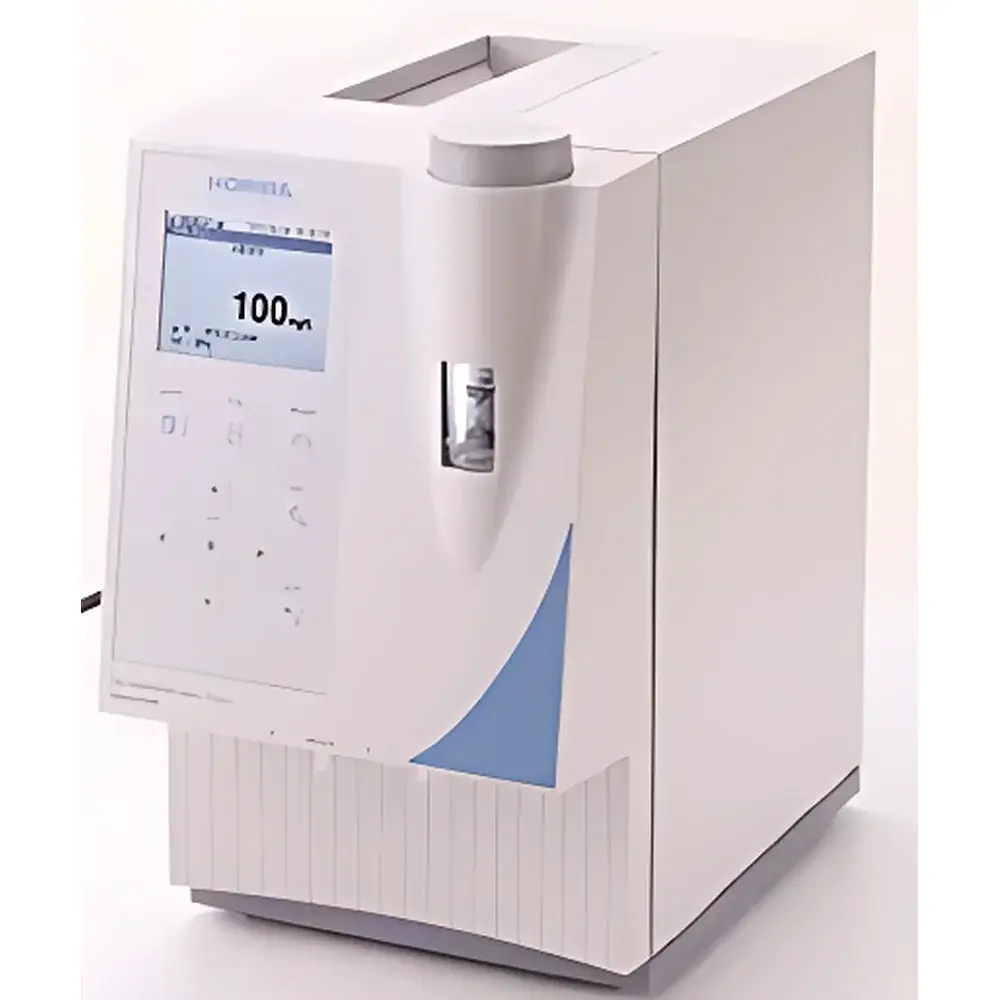
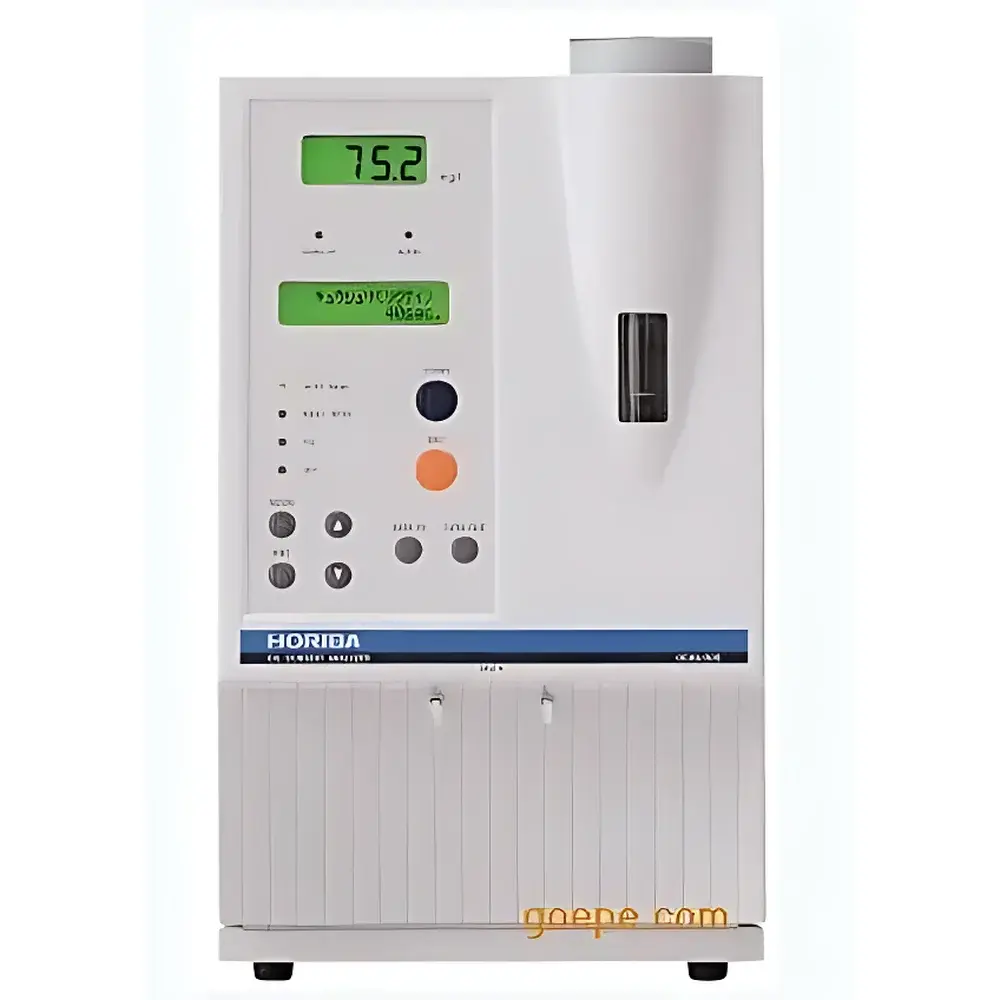
HORIBA OCMA-500 Portable Oil-in-Water Analyzer
| Brand | HORIBA |
|---|---|
| Origin | Japan |
| Model | OCMA-500 / OCMA-505 |
| Instrument Type | Portable |
| Measurement Principle | Solvent Extraction + Non-Dispersive Infrared (NDIR) Absorption |
| Measurement Range | 0–200 mg/L (dynamic, auto-ranging) |
| Detection Limit | 0.1 mg/L |
| Accuracy | ±0.1 mg/L (at low range), ±4 mg/L (at 100–200 mg/L) |
| Resolution | 0.1 mg/L |
| Sampling Frequency | 1 measurement per minute |
| Extractant | S-316 (OCMA-500) or H-997 (OCMA-505) |
| Repeatability | ±0.2 mg/L ±1 digit (0–10 mg/L), ±2 mg/L ±1 digit (10–100 mg/L), ±4 mg/L ±1 digit (100–200 mg/L) |
| Optional Accessory | Solvent Regenerator SR-305 |
Overview
The HORIBA OCMA-500 is a portable, fully automated oil-in-water analyzer engineered for rapid, field-deployable quantification of hydrocarbon contaminants in aqueous matrices—including freshwater, seawater, industrial effluent, and wastewater treatment streams. It employs a two-stage analytical workflow: first, selective solvent extraction of extractable petroleum hydrocarbons (EPH) from the water sample using standardized reagents (S-316 for OCMA-500; H-997 for OCMA-505); second, quantitative analysis of the extracted phase via non-dispersive infrared (NDIR) absorption spectroscopy at characteristic C–H stretching wavelengths (~2960–2850 cm⁻¹). Unlike fluorescence-based methods, NDIR provides superior specificity for total petroleum hydrocarbons (TPH) and minimizes interference from naturally occurring organics or turbidity. The instrument’s integrated micro-piston syringe system ensures precise, reproducible volumetric delivery of both sample and solvent—eliminating manual pipetting errors and enabling GLP-compliant traceability.
Key Features
- True single-button operation: Automatic sample aspiration, solvent extraction, phase separation, NDIR measurement, and waste discharge—completed within 60 seconds.
- Dynamic 0–200 mg/L measurement range with no manual range switching required—enabling seamless transition from trace-level monitoring (e.g., drinking water intake) to high-concentration industrial discharge verification.
- Digital display with real-time status feedback, error diagnostics, and multilingual interface (English standard; configurable for technical support documentation).
- Integrated solvent management: Pre-calibrated extraction cartridges and sealed solvent reservoirs minimize operator exposure and ensure consistent extractant purity.
- Rugged, battery-operated portable design (IP54-rated enclosure) suitable for on-site use in wastewater plants, coastal monitoring stations, offshore platforms, and emergency spill response scenarios.
- Compliance-ready architecture: Audit trail logging (time-stamped measurements, operator ID, solvent batch), calibration history storage, and optional 21 CFR Part 11–compatible software modules available via HORIBA LabSolutions OCMA Suite.
Sample Compatibility & Compliance
The OCMA-500 is validated for direct analysis of raw, filtered, or centrifuged water samples containing free-phase or emulsified hydrocarbons—including mineral oils, diesel, gasoline, lubricants, and crude oil derivatives. It meets the methodological requirements of ASTM D7066-22 (Standard Test Method for Determination of Oil and Grease and Selected Petroleum Hydrocarbons in Water by Solvent Extraction and Infrared Spectrophotometry), ISO 9377-2:2000 (Water quality — Determination of hydrocarbon oil index — Part 2: Infrared spectrometric method), and EPA Method 1664B (n-Hexane Extractable Material). All internal wetted components are chemically resistant (PTFE, borosilicate glass, stainless steel 316), ensuring long-term stability when handling aggressive solvents and saline matrices. The SR-305 Solvent Regenerator (optional) extends S-316/H-997 usability by >80% through dual-bed activated carbon/activated alumina purification—reducing consumable costs and hazardous waste generation in accordance with ISO 14001 environmental management protocols.
Software & Data Management
Data acquisition and reporting are managed via HORIBA’s LabSolutions OCMA desktop application (Windows 10/11 compatible), which supports CSV export, PDF report generation (with embedded chromatogram-style IR absorbance plots), and customizable calibration curve templates (linear, quadratic, or multi-point). Raw spectral data (absorbance vs. wavenumber) and metadata (sample ID, date/time, operator, solvent lot, temperature) are stored in encrypted SQLite databases compliant with ALCOA+ principles (Attributable, Legible, Contemporaneous, Original, Accurate, Complete, Consistent, Enduring, Available). For networked deployment, optional Ethernet/Wi-Fi connectivity enables remote firmware updates and centralized instrument fleet monitoring across municipal utility districts or multi-site industrial facilities.
Applications
- Regulatory compliance monitoring at wastewater treatment plant (WWTP) outfalls per national discharge permits (e.g., EU Urban Wastewater Treatment Directive, US Clean Water Act NPDES).
- Leak detection and source tracking in petrochemical process water loops, cooling towers, and bilge water systems.
- Environmental impact assessments (EIA) for port operations, offshore drilling, and aquaculture zones—particularly where marine oil fingerprinting is not required but rapid TPH screening is mandated.
- Emergency response triage during oil spills: real-time decision support for containment prioritization and remediation effectiveness verification.
- QA/QC in drinking water distribution networks where hydrocarbon intrusion from aging infrastructure or cross-connection events must be ruled out below 0.1 mg/L action thresholds.
FAQ
What extraction solvent is used in the OCMA-500, and is it interchangeable with OCMA-505?
The OCMA-500 uses chlorinated fluorocarbon-free S-316 (1,1,2-trichloro-1,2,2-trifluoroethane substitute), while the OCMA-505 employs H-997 (a proprietary cyclohexane-based blend). These solvents are not cross-compatible due to differences in IR absorption baselines and extraction efficiency profiles.
Does the instrument require daily calibration verification?
A single-point calibration check using certified 10 mg/L mineral oil standard (NIST-traceable) is recommended before each analytical session. Full multi-point calibration is required after solvent cartridge replacement or every 30 days—whichever occurs first.
Can the OCMA-500 measure dissolved hydrocarbons (e.g., BTEX)?
No. The method targets extractable petroleum hydrocarbons (EPH) only. Dissolved aromatic compounds such as benzene, toluene, ethylbenzene, and xylenes (BTEX) require GC-MS or purge-and-trap techniques per EPA Method 8260D.
Is the SR-305 Solvent Regenerator compatible with both OCMA models?
Yes—SR-305 accepts both S-316 and H-997 spent solvents and restores ≥95% of initial IR transparency after regeneration, verified via built-in reference cell absorbance validation.
How is measurement uncertainty reported in regulatory submissions?
Uncertainty budgets follow EURACHEM/CITAC Guide CG4, incorporating repeatability, calibration standard uncertainty, solvent blank variability, and temperature drift correction—fully documented in the exported audit log file.
Related Products







