
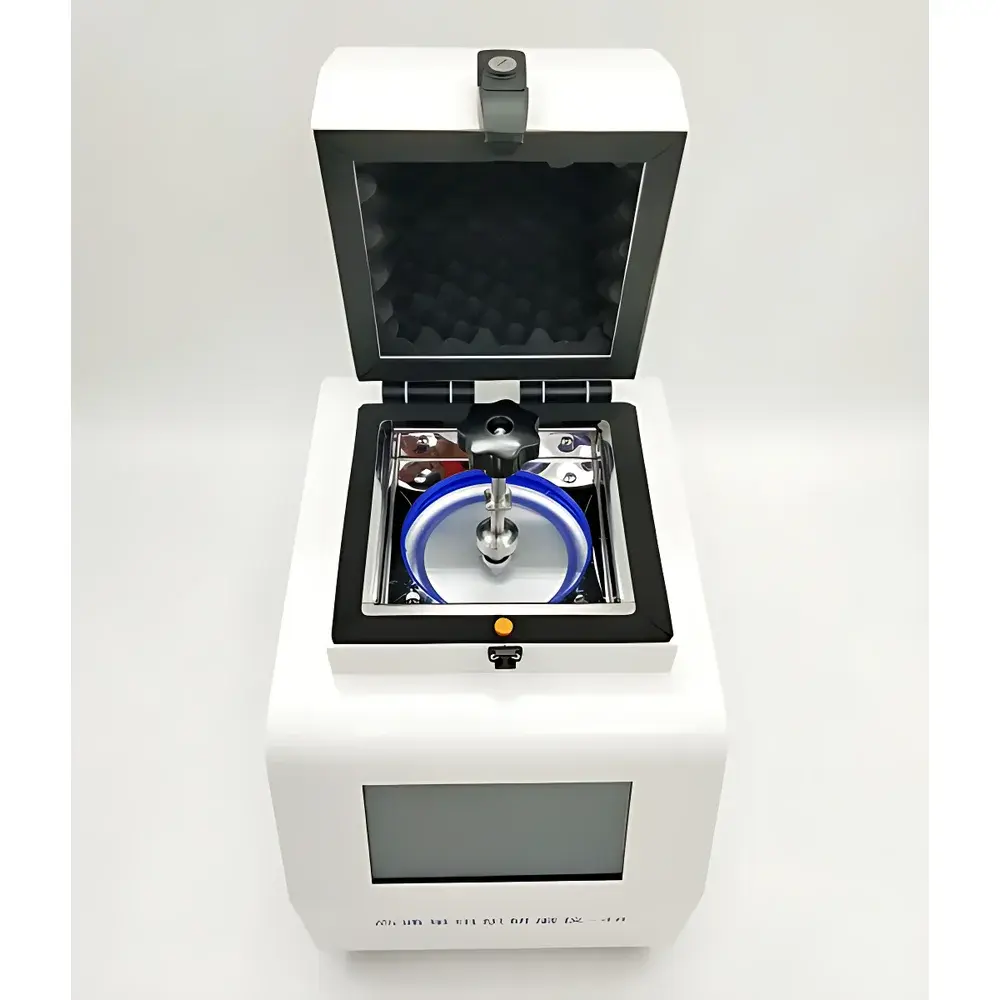
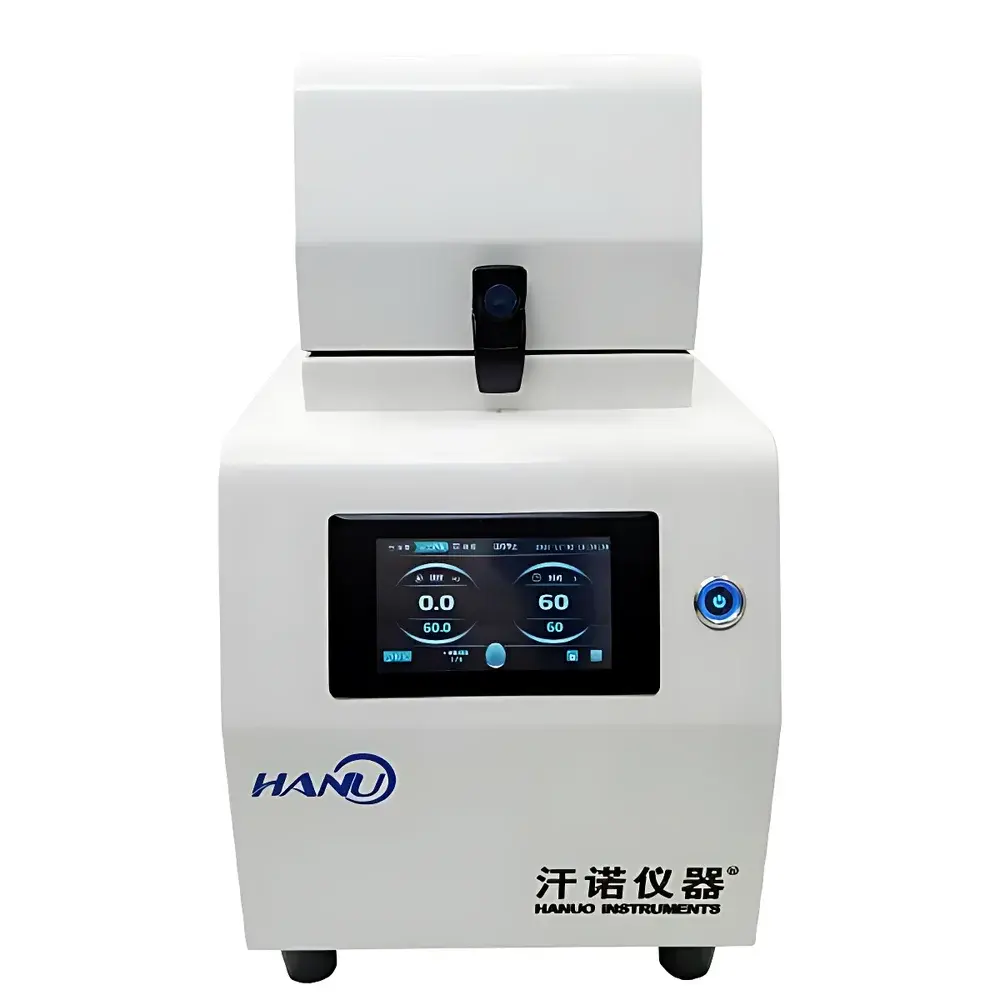
Hanuo Daxluot-48 High-Throughput Tissue Grinder & Homogenizer
| Brand | Hanuo |
|---|---|
| Origin | Shanghai, China |
| Model | Daxluot-48 |
| Throughput | Up to 4 × 96 samples per run |
| Processing Time | ≤3 min (full 48-sample batch) |
| Frequency Range | 0–70 Hz |
| Processing Capacity | 48 × (0.2–0.5 mL), 48 × 2 mL, 12 × 5 mL, 8 × (7–15) mL, 2 × 25 mL, 2 × 50 mL |
| Final Particle Size | ~5 µm |
| Grinding Modes | Dry, Wet, Cryogenic |
| Noise Level | <55 dB(A) |
| Display | LCD interface |
| Auto-centering & Safety Lock | Yes |
| Adapter Materials | PTFE or Alloy Steel |
| Grinding Media Diameter | 0.1–30 mm |
| Grinding Media Materials | Stainless steel, Chrome steel, Zirconia, Tungsten carbide, Quartz sand |
| Acceleration/Deceleration Time | ≤2 s |
| Dimensions (W×D×H) | 400 × 280 × 530 mm |
| Weight | 30 kg |
Overview
The Hanuo Daxluot-48 is a high-throughput, vertically oscillating tissue grinder engineered for reproducible mechanical lysis of biological samples under controlled thermal and kinetic conditions. It operates on the principle of high-frequency impact grinding—where reciprocating vertical vibration transfers kinetic energy from grinding beads to sample matrices within sealed tubes, enabling efficient cell disruption, homogenization, and particle size reduction. Unlike horizontal orbital or rotary systems, its vertical motion eliminates inter-row variability and ensures uniform energy distribution across all positions in the adapter plate—a critical requirement for comparative omics workflows requiring batch-to-batch consistency. Designed for laboratories performing large-scale nucleic acid extraction, protein isolation, metabolite profiling, or microbiome sample preparation, the Daxluot-48 supports parallel processing of up to 48 samples (expandable to 4 × 96 via modular staging), with full compatibility for cryogenic grinding using liquid nitrogen–precooled adapters.
Key Features
- Vertical oscillation architecture ensures zero inter-batch positional bias—critical for statistical validity in multi-sample studies.
- Precise programmable control: frequency (0–70 Hz), duration (0 s to 9999 s), and ramp profiles enable method standardization across users and shifts.
- Cryogenic-ready design: adapters can be immersed in liquid nitrogen for 1–2 minutes prior to loading; no re-cooling required during operation—reducing LN₂ consumption by up to 40% versus continuous-cooling systems.
- Auto-centering safety lock mechanism secures grinding tubes with tactile feedback and mechanical interlock, preventing tube ejection during high-frequency operation.
- Modular adapter system accommodates diverse tube formats—from 0.2 mL PCR strips to 50 mL conical tubes—with customizable configurations for specialized applications (e.g., bone, fibrous plant tissue, or biofilm pellets).
- Low-noise enclosure (<55 dB[A]) meets ISO 15710 acoustic requirements for shared laboratory environments without dedicated sound-dampened rooms.
- LCD interface with real-time parameter display and non-volatile memory retains up to 20 user-defined protocols, supporting audit-ready documentation practices.
Sample Compatibility & Compliance
The Daxluot-48 processes a broad spectrum of biological matrices—including plant tissues (seeds, stems, roots, leaves), animal organs (liver, lung, muscle, bone), microbial cells (Gram-positive bacteria, yeast, spores), and fibrous or lipid-rich samples resistant to sonication or enzymatic lysis. Its ability to integrate cryogenic grinding aligns with ASTM E1447-22 (Standard Practice for Cryogenic Grinding of Biological Samples) and supports compliance with GLP/GMP sample preparation workflows where temperature-sensitive analytes (e.g., labile phosphoproteins or short-chain fatty acids) must be preserved. All wetted components—adapters, tube holders, and grinding media—are chemically inert and autoclavable (PTFE, zirconia, stainless steel), meeting USP Class VI biocompatibility standards for diagnostic and preclinical research use.
Software & Data Management
While the Daxluot-48 operates via standalone LCD interface, its protocol structure is fully compatible with laboratory information management systems (LIMS) through manual log export or optional RS-232/USB data logging modules (sold separately). Each protocol stores timestamped execution metadata—including actual frequency deviation (±0.3 Hz), total runtime, and thermal history if paired with external cryo-monitoring sensors—supporting 21 CFR Part 11–aligned electronic records when integrated into validated environments. The absence of cloud connectivity ensures data sovereignty, while the deterministic mechanical architecture guarantees method transferability between instruments without recalibration.
Applications
- Routine genomic DNA/RNA extraction from plant seeds or animal tissues prior to NGS library prep.
- High-yield protein solubilization from recalcitrant samples such as fungal cell walls or adipose tissue.
- Pre-analytical homogenization for LC-MS-based metabolomics, minimizing enzymatic degradation during sample workup.
- Microbiome sample processing where bead-beating efficiency directly impacts alpha-diversity recovery metrics.
- Pharmaceutical QC of herbal formulations requiring uniform particle size distribution before HPLC analysis.
- Forensic tissue digestion for STR profiling under chain-of-custody–compliant protocols.
FAQ
What is the maximum recommended sample volume per tube in cryogenic mode?
For optimal bead-to-sample ratio and thermal stability, we recommend ≤80% fill volume—e.g., 1.6 mL in a 2 mL tube or 40 mL in a 50 mL tube—when using liquid nitrogen–precooled adapters.
Can the Daxluot-48 be validated for GMP-compliant production environments?
Yes—its mechanical repeatability (CV <2.1% for Ct values in qPCR post-grinding), absence of software dependencies, and traceable parameter logging support IQ/OQ/PQ protocols when combined with third-party calibration services.
Is oxidation of sensitive analytes minimized during dry grinding?
Dry grinding generates localized heat; for redox-labile compounds (e.g., glutathione, nitric oxide metabolites), we recommend cryogenic mode or inclusion of antioxidant buffers in wet-grind protocols.
How often should grinding beads be replaced?
Bead wear is application-dependent; chromium steel beads show measurable mass loss after ~200 cycles with bone or silica-rich plant tissue—zirconia offers >500-cycle longevity under identical conditions.
Does the instrument comply with IEC 61000-4 electromagnetic immunity standards?
Yes—the Daxluot-48 meets IEC 61000-4-2 (ESD), -4-3 (radiated RF), and -4-4 (electrical fast transients) requirements for Class A laboratory equipment, verified per EN 61326-1:2013.



