
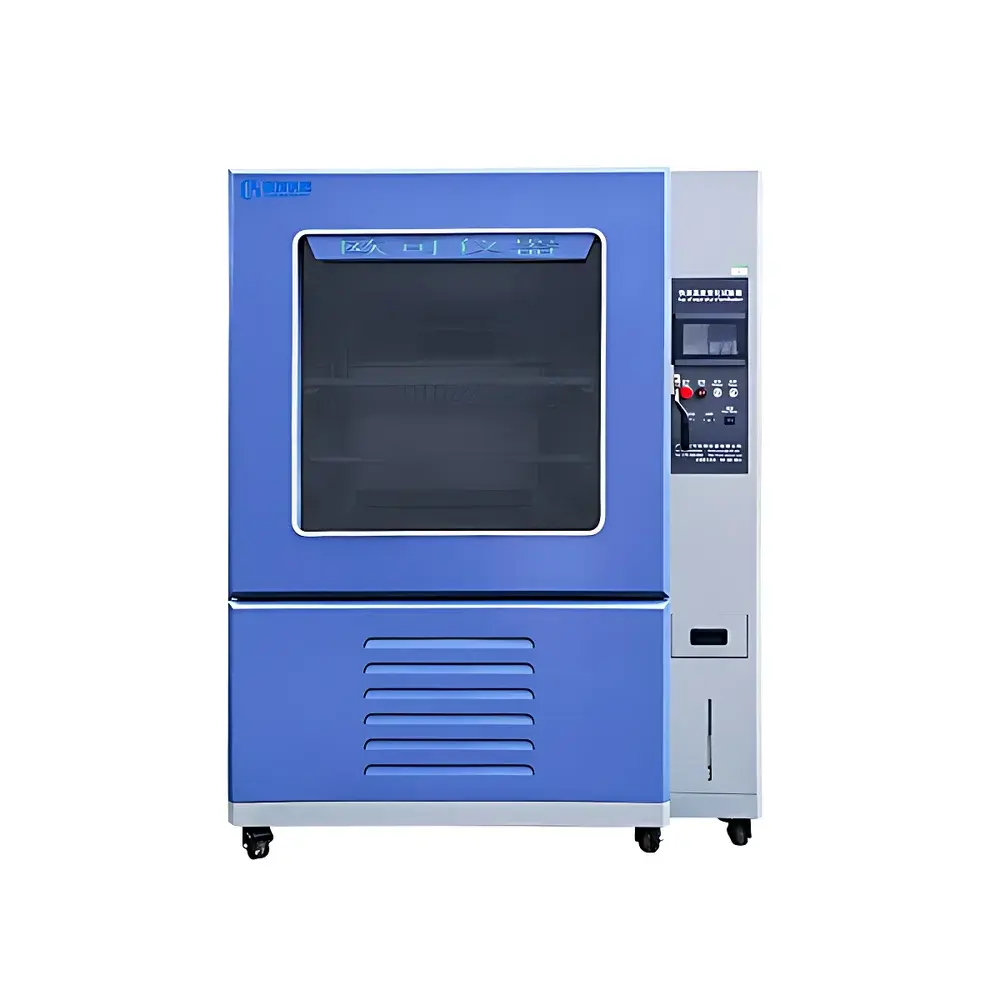
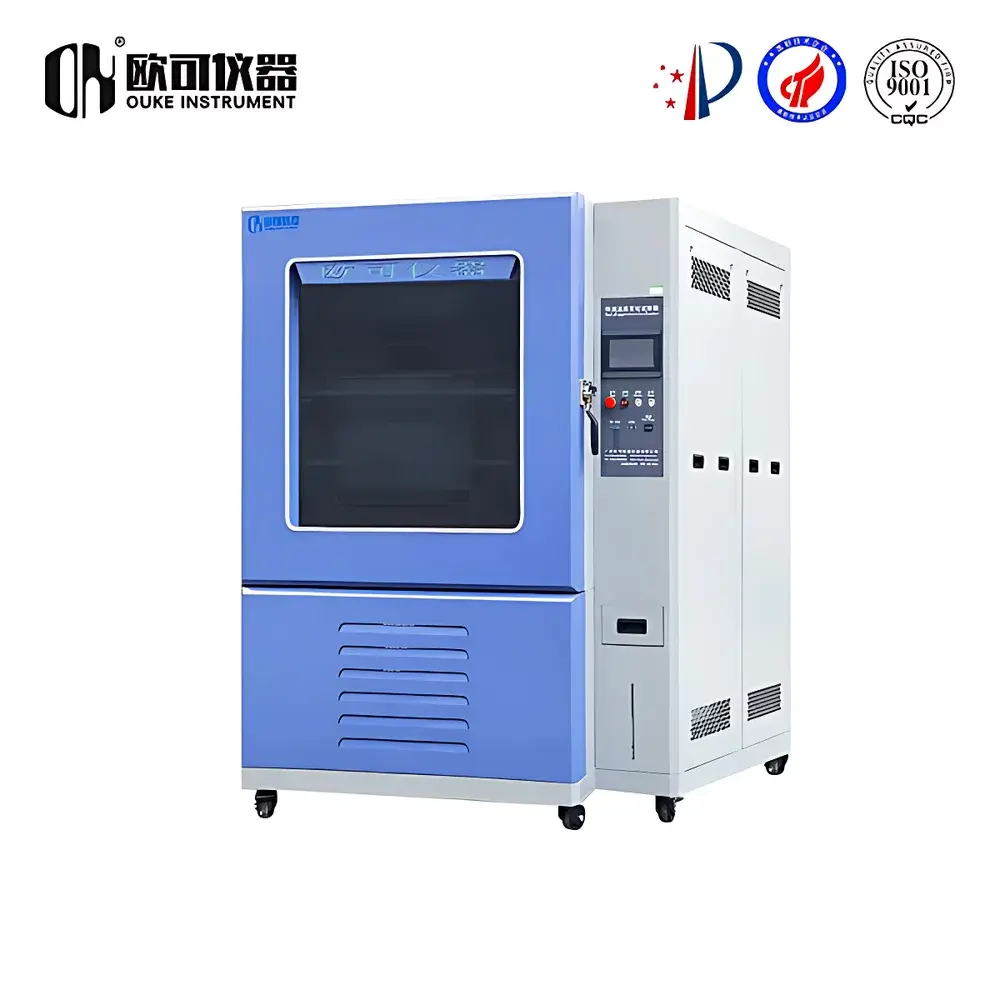
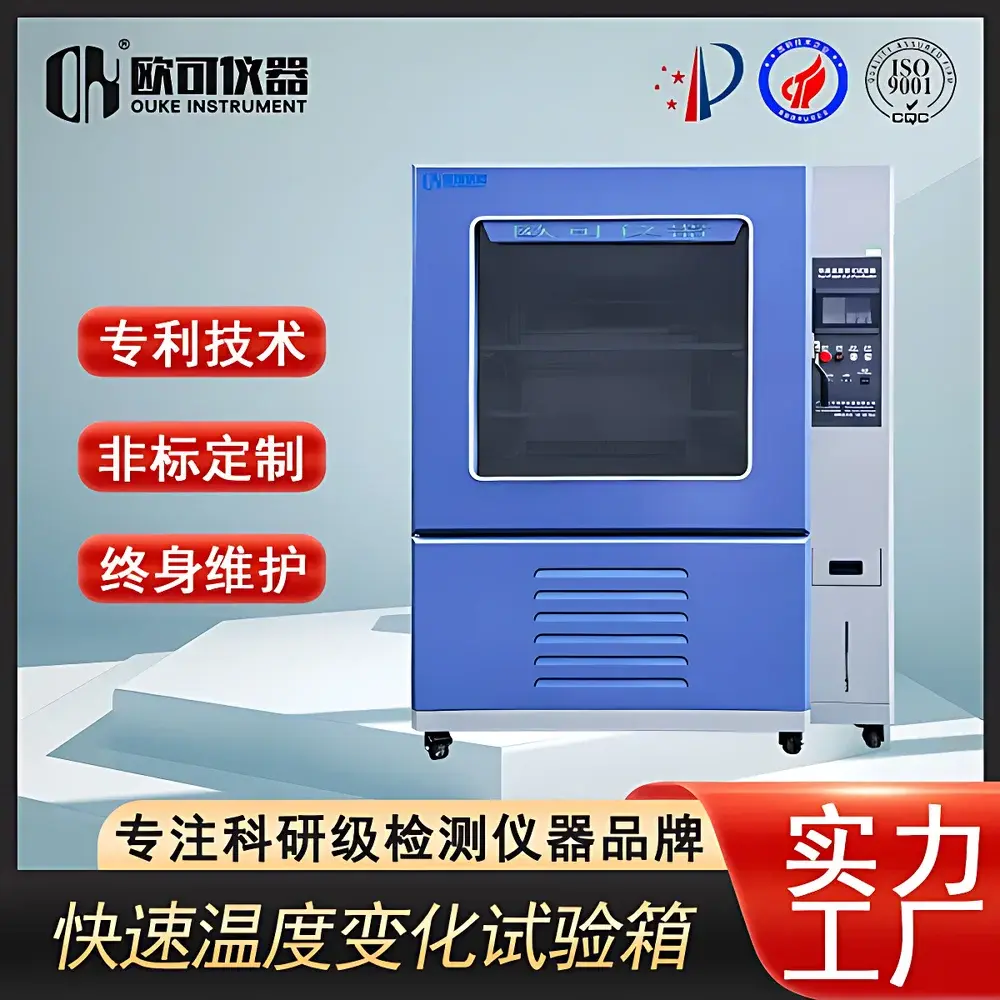
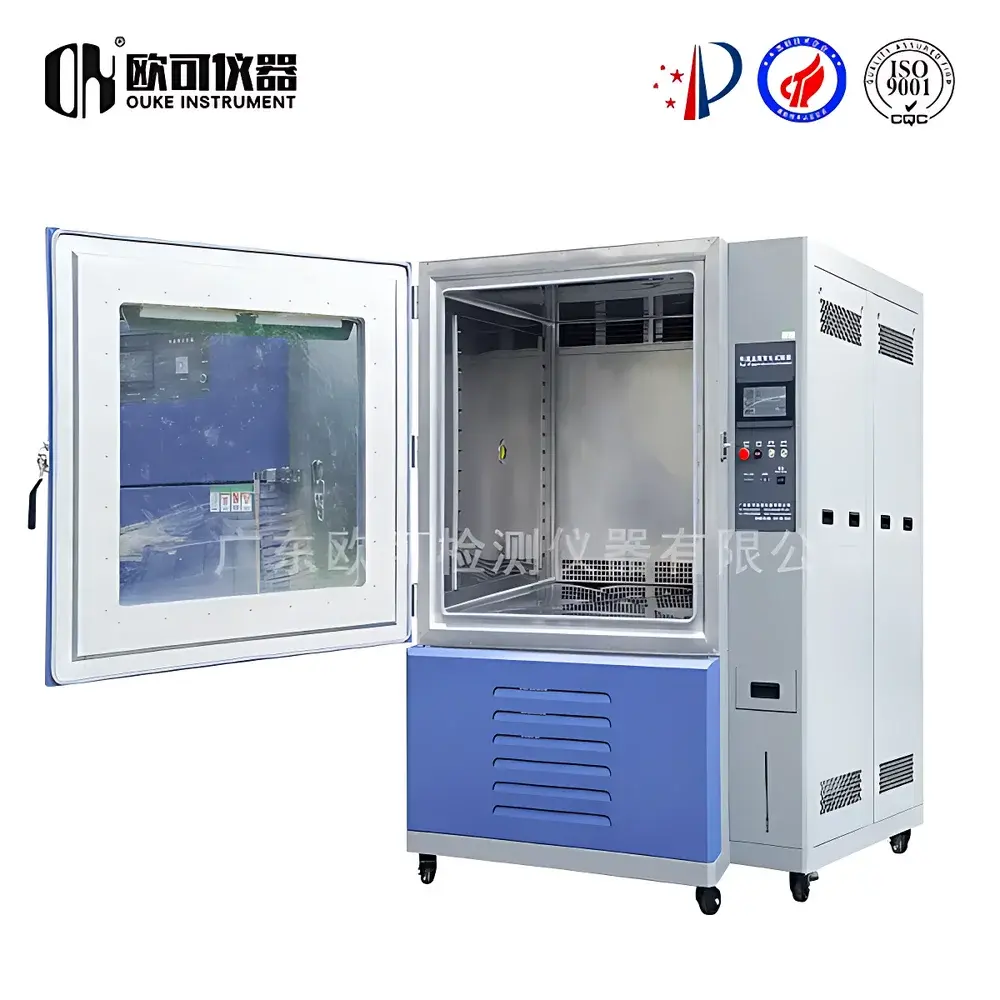
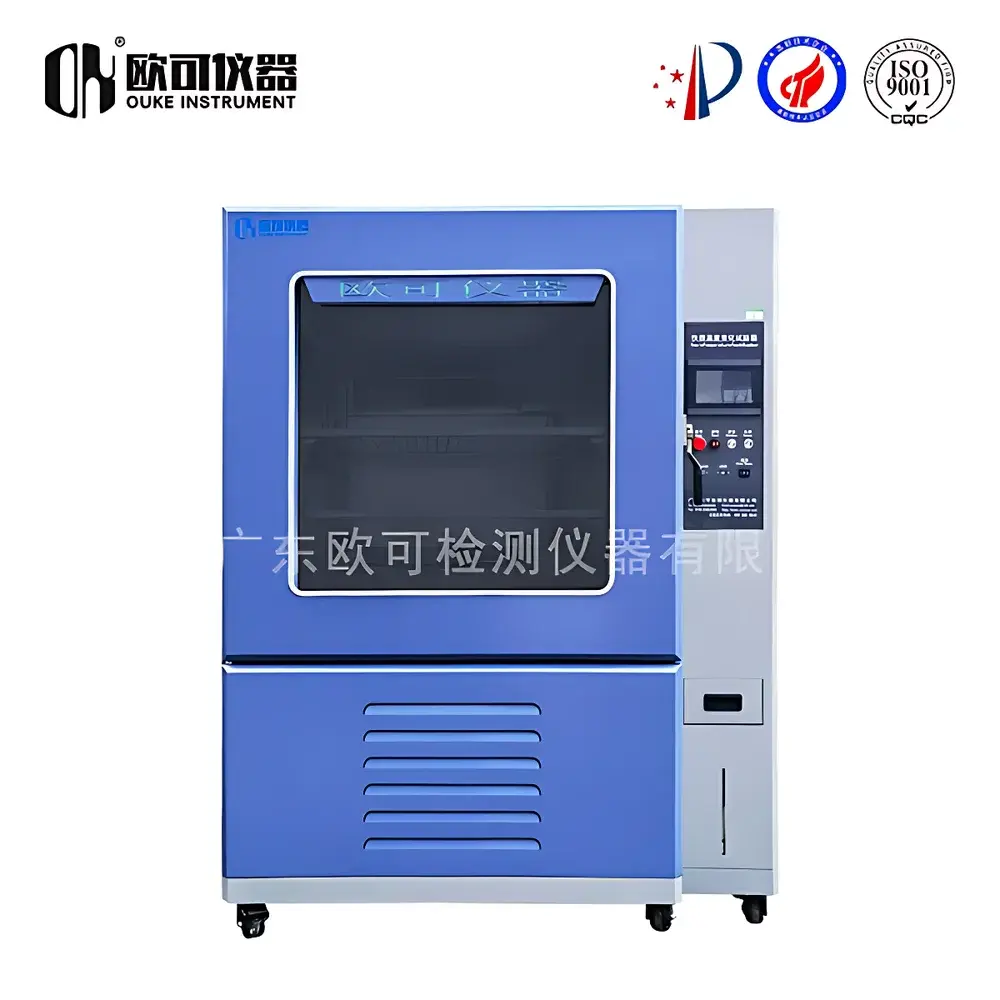
OK KS-TH-225 Fast Temperature Transition Environmental Test Chamber
| Brand | OK Instruments |
|---|---|
| Origin | Guangdong, China |
| Manufacturer Type | Direct Manufacturer |
| Product Origin | Domestic (China) |
| Model | KS-TH-225 |
| Temperature Range | −70 °C to +150 °C |
| Ramp Rate | Up to 25 °C/min (standard configuration) |
| Chamber Type | Single-zone integrated design |
| Compliance | GB/T 2423.22 (IEC 60068-2-14), MIL-STD-810H Method 503.7, JESD22-A104, ISO 16750-4, GJB 150A-2009 |
Overview
The OK KS-TH-225 Fast Temperature Transition Environmental Test Chamber is an engineered solution for accelerated thermal reliability validation under dynamically changing ambient conditions. Unlike conventional steady-state temperature chambers, this system implements high-fidelity, programmable thermal ramping within a single test volume—leveraging optimized refrigeration capacity, high-power resistive heating elements, and a precision-balanced air circulation architecture based on multi-blade centrifugal impellers and laminar-flow ducting. It operates on the principle of controlled convective heat transfer, where rapid thermal transients are achieved through synchronized modulation of compressor discharge pressure, expansion valve timing, and heater duty cycle—all governed by a dual-loop PID controller with real-time thermal inertia compensation. Designed for compliance-driven industries including automotive electronics, avionics, defense systems, and power electronics, the KS-TH-225 supports both accelerated temperature cycling (ATC) and fast transition profiling per IEC 60068-2-14 Test Nc and ISO 16750-4 Annex B.
Key Features
- Single-zone integrated chamber architecture eliminates mechanical sample movement—ensuring zero vibration transmission during thermal transitions, critical for large-format assemblies, optical subassemblies, and mechanically sensitive PCBs.
- Programmable ramp rates up to 25 °C/min across full operating range (−70 °C to +150 °C), validated per IEC 60068-3-5 Annex A using calibrated Class 1 platinum resistance thermometers (PRTs) at nine spatial locations.
- Thermal uniformity ≤ ±1.5 °C and stability ≤ ±0.5 °C at steady state (measured at 16-point sensor grid), maintained under full load (up to 50 kg mass, 200 W internal heat dissipation).
- Industrial-grade PLC-based control system with 10.1″ capacitive touchscreen HMI, supporting up to 99 programmable profiles with 999 segments each—including dwell, ramp, and hold functions with slope-defined rate limits.
- Standard Ethernet (TCP/IP) and USB 2.0 interfaces enable integration into centralized lab data management platforms; optional RS-485 Modbus RTU for SCADA-level supervision.
- Refrigeration system employs cascade two-stage compressors with R404A/R23 mixed-refrigerant circuitry, coupled with copper-aluminum microchannel condensers for enhanced transient response and reduced oil carryover.
Sample Compatibility & Compliance
The KS-TH-225 accommodates test specimens up to 600 × 600 × 600 mm (W×D×H) and 50 kg gross weight. Its internal stainless-steel 304 chamber and non-outgassing insulation meet cleanroom-compatible material requirements per ISO 14644-1 Class 8. The system conforms to electromagnetic compatibility standards IEC 61000-6-2 (immunity) and IEC 61000-6-4 (emissions). Full traceability is supported via embedded audit trail functionality compliant with FDA 21 CFR Part 11 Annex 11 principles—user actions, parameter changes, and alarm events are time-stamped, digitally signed, and stored in encrypted binary logs. Calibration certificates (NIST-traceable) and IQ/OQ documentation packages are available upon request for GLP/GMP-regulated environments.
Software & Data Management
The included OK-EnviroSuite™ v4.2 software provides local and remote operation via Windows-based desktop application or web browser (HTML5). Real-time plotting displays up to 16 channels—including chamber setpoint, actual temperature, compressor suction/discharge pressures, and user-defined analog inputs (e.g., DUT voltage/current). Automated report generation exports PDF/CSV files with embedded metadata: test ID, operator, start/end timestamps, pass/fail status per step, and deviation alerts exceeding configurable thresholds (±0.8 °C for ramp accuracy, ±1.0 °C for uniformity). Data archives support long-term retention (≥10 years) with SHA-256 hash verification for integrity assurance.
Applications
- Automotive: Validation of ADAS ECUs, battery management systems (BMS), and infotainment modules per ISO 16750-4 thermal shock profiles and SAE J2380 durability cycles.
- Aerospace: Thermal qualification of flight-critical sensors and avionics enclosures per DO-160G Section 4 (Temperature Variation) and MIL-STD-810H Method 503.7.
- Semiconductor & PCB: Accelerated failure analysis of solder joint integrity, underfill delamination, and CTE mismatch-induced warpage using JEDEC JESD22-A104-compliant temperature cycling.
- Energy Storage: Cycle-life assessment of lithium-ion pouch and prismatic cells under dynamic thermal loading, aligned with UL 2580 and GB/T 31467.3 protocols.
- Defense Electronics: Environmental screening per GJB 150A-2009 Sections 3 and 5 for radar subsystems, EO/IR payloads, and secure comms hardware.
FAQ
What distinguishes fast temperature transition testing from standard temperature cycling?
Fast transition emphasizes rate-controlled ramping (≥5 °C/min) to induce thermo-mechanical stress gradients—revealing interfacial weaknesses not detectable under slow ramping (≤3 °C/min) used in basic qualification.
Can the KS-TH-225 perform true thermal shock testing per MIL-STD-810H Method 503.7?
It executes rapid transition profiles aligned with Method 503.7’s “ramp-and-dwell” variant but does not replicate the sub-10-second transfer of two-box shock systems; it is optimized for ATC rather than instantaneous shock.
Is the system suitable for testing high-power devices generating >100 W internally?
Yes—its rated thermal load capacity includes 200 W continuous dissipation; optional auxiliary cooling ducts and external heat exchanger interfaces are available for >300 W applications.
Does OK Instruments provide installation qualification (IQ) and operational qualification (OQ) services?
Yes—factory-authorized field engineers deliver full GxP-compliant IQ/OQ documentation, including sensor mapping, ramp rate verification, and alarm response validation per ASTM E2500.
How is calibration maintained over extended service life?
The system supports automated self-diagnostic routines and integrates with OK’s CloudCal™ platform for remote calibration scheduling, certificate renewal alerts, and drift trend analysis using historical PRT datasets.
Related Products



