
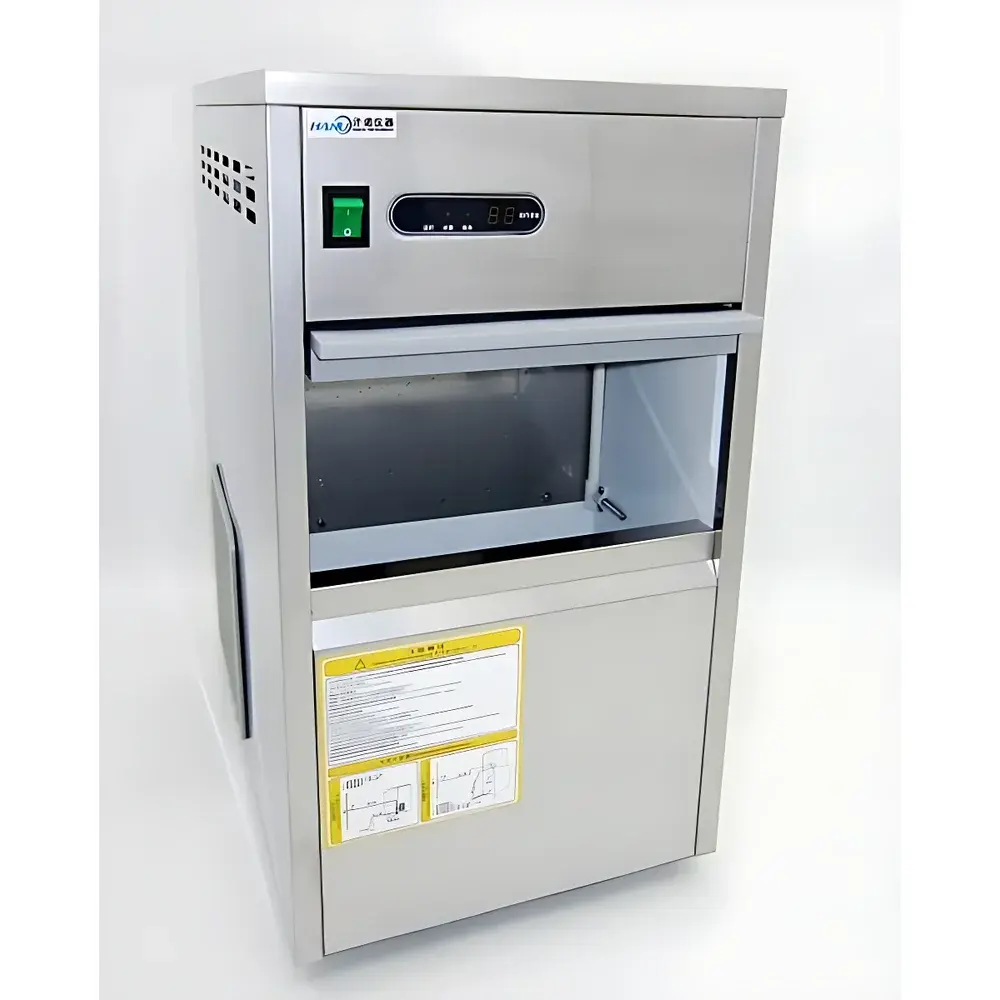
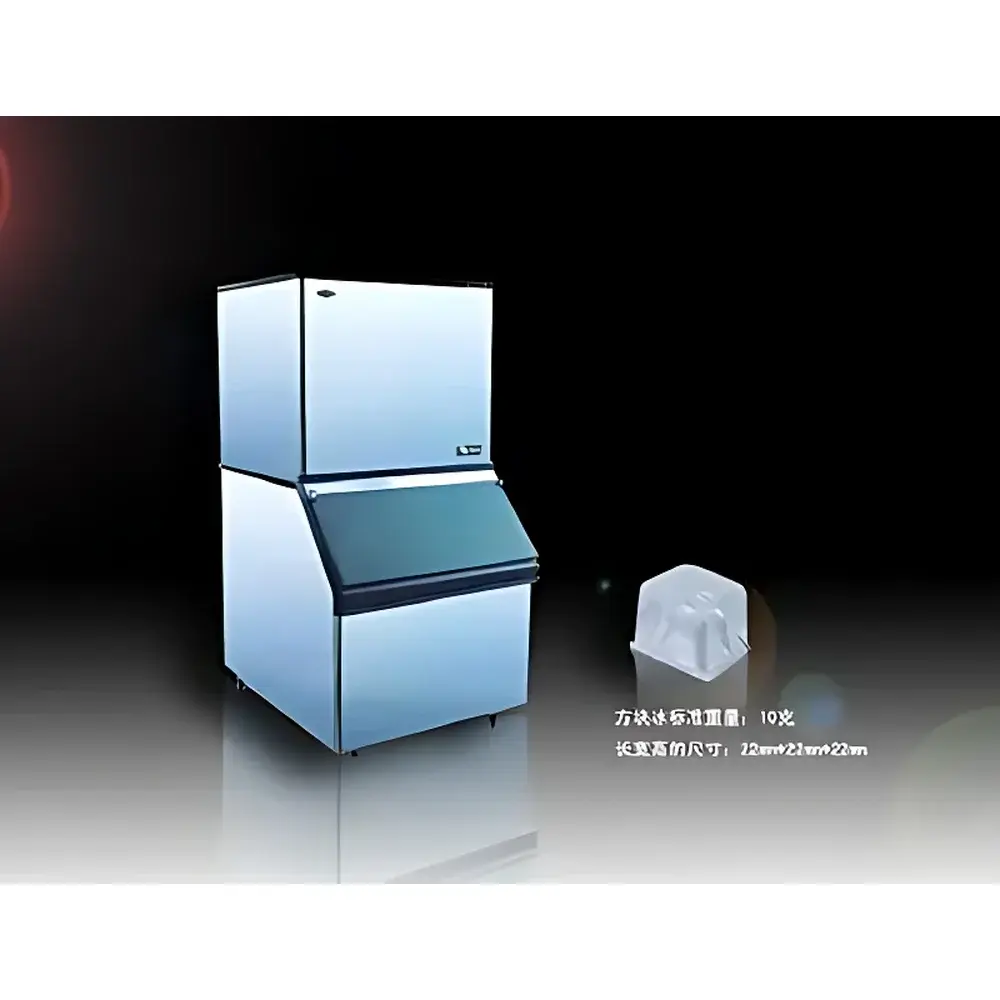
Hanuo FM-60 Laboratory Flake Ice Machine
| Brand | Hanuo |
|---|---|
| Origin | Shanghai, China |
| Model | FM-60 |
| Ice Production Capacity | 60 kg/24 h |
| Storage Capacity | 25 kg |
| Water Consumption | 2 L/kg ice |
| Cooling Method | Air-cooled |
| Refrigerant | R134a |
| Power Supply | 220 V / 420 W |
| Dimensions (W×D×H) | 400 × 510 × 845 mm |
| Ice Form | Irregular, fine flake ice |
| Ice Making Principle | Twin-screw extrusion compression |
| Housing Material | Full stainless steel (AISI 304) |
| Water Inlet | Automatic municipal water supply |
| Display & Control | Microprocessor-based digital interface with status indicators (operation, full bin, low water, fault) |
Overview
The Hanuo FM-60 Laboratory Flake Ice Machine is a compact, air-cooled refrigeration system engineered for consistent, on-demand production of irregular, low-density flake ice—optimized for temperature-sensitive biological, pharmaceutical, and analytical applications. Unlike cubed or nugget ice machines, the FM-60 employs a twin-screw extrusion compression mechanism: water is frozen onto a vertically oriented evaporator drum, then mechanically scraped and compressed by dual counter-rotating stainless-steel screws to produce thin, malleable flakes (typically 1–3 mm in thickness and sub-10 mm in lateral dimension). This morphology ensures rapid thermal transfer, minimal sample surface contact pressure, and uniform cooling without mechanical damage—critical when chilling centrifuge rotors, electrophoresis gels, tissue specimens, or reagent bottles during preparation. The unit operates at ambient temperatures up to 32 °C and maintains stable ice output under continuous laboratory duty cycles, complying with IEC 61000-6-3 (EMC) and IEC 60335-1 (safety) standards for Class II laboratory appliances.
Key Features
- Microprocessor-controlled operation with real-time LED status indicators for run mode, full ice bin, low water level, and system fault diagnostics—enabling proactive maintenance and minimizing downtime.
- Full AISI 304 stainless-steel construction—including evaporator drum, screw assembly, ice chute, and exterior housing—for corrosion resistance, cleanability, and compliance with ISO 14644-1 Class 7 (ISO Class 10,000) cleanroom-compatible surface requirements.
- Air-cooled condensing system eliminates need for external water drainage or chiller hookups—ideal for labs with limited infrastructure or mobile setups (e.g., field-deployable biosafety units).
- Automatic municipal water intake with integrated float valve and dry-run protection prevents pump damage during intermittent supply conditions.
- Low-energy design: 420 W nominal power draw supports continuous 24-hour operation within standard laboratory circuit specifications (220 V ±10%, 50 Hz).
- Noise emission ≤58 dB(A) at 1 m—meets WHO and EU Directive 2000/14/EC limits for non-industrial indoor environments.
Sample Compatibility & Compliance
The FM-60 generates microbiologically inert flake ice suitable for direct contact with primary samples in GLP- and GMP-aligned workflows. Its ice output meets ASTM D4179-21 criteria for “flake ice used in biological specimen transport” and conforms to USP recommendations for cold-chain integrity in diagnostic sample handling. All wetted surfaces are passivated per ASTM A967 and validated for extractables testing (USP ). The unit includes optional audit-trail logging (via RS-485 interface) compatible with 21 CFR Part 11-compliant data management systems when paired with validated third-party software. CE marking confirms conformity with EU Machinery Directive 2006/42/EC and Low Voltage Directive 2014/35/EU.
Software & Data Management
While the FM-60 operates as a standalone appliance, its embedded controller supports optional serial communication (RS-485 Modbus RTU) for integration into centralized lab infrastructure monitoring platforms (e.g., LabVantage, Thermo Fisher SampleManager). Logged parameters—including cumulative runtime, ice cycle count, fault codes, and ambient temperature trends—can be exported as CSV for QA documentation. Firmware updates are performed via secure USB interface; version history and calibration timestamps are retained for internal audit purposes. No cloud connectivity or proprietary SaaS platform is required—ensuring data sovereignty and alignment with institutional IT security policies.
Applications
- Cooling centrifugation tubes and rotor buckets during high-speed spin protocols (e.g., ultracentrifugation at 100,000 × g).
- Maintaining hypothermic conditions for freshly excised tissue biopsies prior to cryosectioning or RNA extraction.
- Stabilizing enzyme activity during ELISA plate incubation steps requiring precise 4 °C ambient control.
- Pre-chilling HPLC autosampler trays and GC inlet liners to minimize thermal degradation of thermolabile analytes.
- Supporting cold-chain validation studies per ISO/IEC 17025:2017 Clause 5.8.2 for temperature-controlled sample storage verification.
FAQ
What is the typical ice density and melting rate of FM-60 flake ice under standard lab conditions (22 °C, 50% RH)?
Flake ice from the FM-60 exhibits a bulk density of ~350–420 kg/m³ and melts at an average rate of 8–12% per hour when loosely packed in insulated containers.
Can the FM-60 be installed in a fume hood or laminar flow cabinet?
No—it requires ≥150 mm clearance on all sides for airflow and must be placed outside containment enclosures due to heat rejection and condensate venting requirements.
Is R134a refrigerant compliant with current EU F-Gas Regulation (EU) No 517/2014?
Yes—R134a is permitted for equipment with charge <10 kg (FM-60 uses 0.42 kg), though facilities planning long-term deployment should verify local phase-down timelines per Annex I.
Does the unit include a water filtration module?
No—external 5-micron sediment + activated carbon pre-filtration is strongly recommended to prevent scale buildup and extend evaporator service life beyond 12,000 operating hours.
What maintenance intervals are specified for GLP-regulated environments?
Daily visual inspection of ice quality and bin level; quarterly descaling using citric acid solution (pH 2.5–3.0); annual compressor oil and refrigerant pressure verification by certified technician.



