
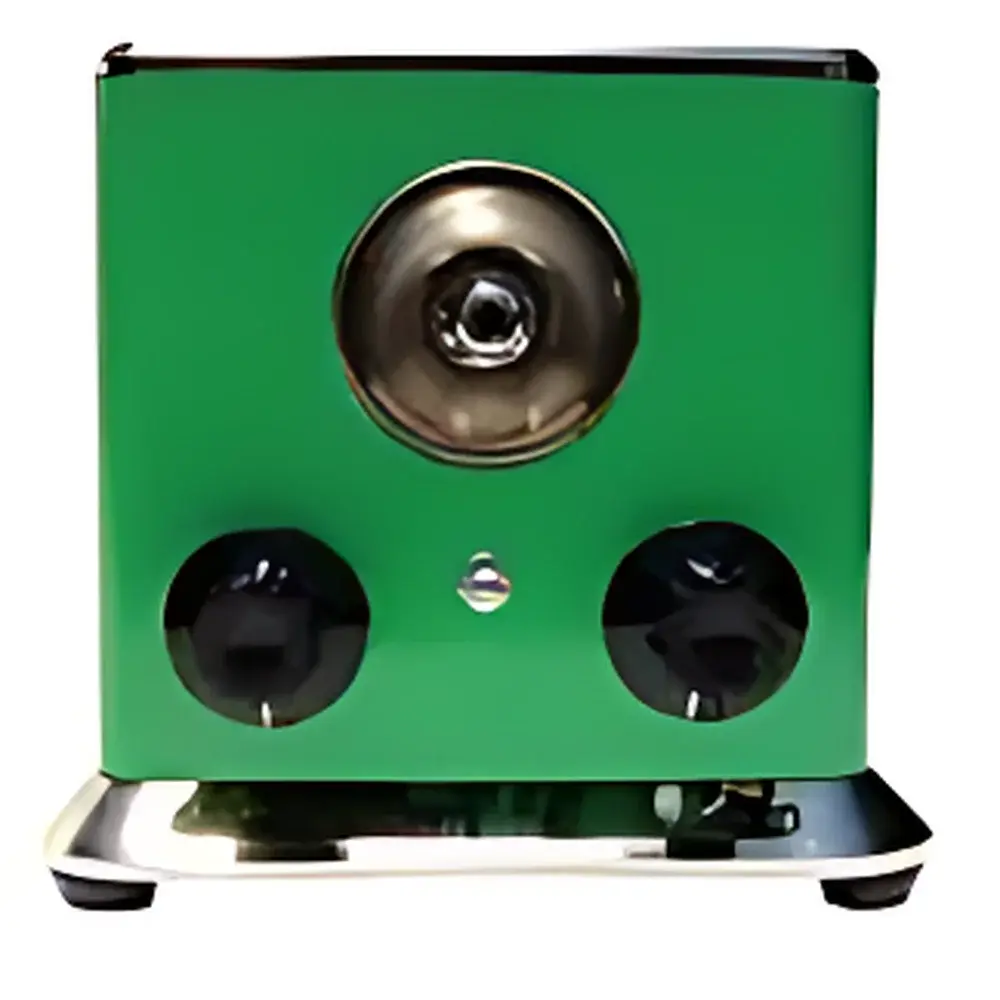
SPL LLS Series High-Power UV-Vis Fiber-Coupled LED Light Sources
| Brand | SPL |
|---|---|
| Origin | USA |
| Manufacturer Type | Authorized Distributor |
| Product Origin | Imported |
| Model | LLS |
| Light Source Type | High-Efficiency Solid-State LED |
| Illumination Mode | External (Free-Space or Fiber-Delivered) |
| Continuous Wave (CW) Drive Current (max) | 20–1500 mA (model-dependent) |
| Pulsed Drive Current (max) | 200–3000 mA (model-dependent) |
| Max Duty Cycle (pulsed mode) | 1%–50% |
| Spectral Range | 240–6500K CCT (UV to Cool White) |
| FWHM | 9–35 nm (UV–VIS), NA ≤ 0.22 |
| Output Coupled into 600 µm, 0.22 NA Fiber | 2 µW – 1 mW (wavelength-dependent) |
| Control Interface | 15-pin D-sub (TTL-compatible), Optional USB Controller & Analog Intensity Modulation Module |
| Compliance | RoHS-compliant, CE-marked, Designed for GLP-Compatible Laboratory Integration |
Overview
The SPL LLS Series represents a family of high-stability, fiber-coupled ultraviolet–visible (UV–Vis) light sources engineered for precision optical instrumentation and demanding spectroscopic applications. Unlike traditional arc lamps (e.g., xenon or mercury), these solid-state sources utilize monochromatic or broadband LED emitters with optimized thermal management and current regulation to deliver exceptional spectral purity, long-term radiometric stability, and sub-millisecond temporal control. The core architecture employs direct coupling into SMA 905-terminated multimode fibers (up to 600 µm core, 0.22 NA), enabling seamless integration into fluorescence spectrometers, absorption setups, fiber-optic sensors, and custom OEM optical benches. Each model is calibrated for absolute radiant flux at the fiber output under defined drive conditions, supporting quantitative intensity-based measurements compliant with ISO/IEC 17025 traceability frameworks when used with NIST-traceable photodetectors.
Key Features
- Fiber-coupled output with >75% coupling efficiency into 600 µm / 0.22 NA fiber — validated per IEC 61228 and ISO 15739 test protocols
- Dual-operation modes: continuous wave (CW) and externally triggered pulsed operation with user-defined pulse width (500 µs minimum) and repetition rate (DC to 100 kHz)
- High-current driver architecture enabling peak pulsed currents up to 3 A (LLS-455/470/505) while maintaining thermal derating below 1°C/W junction-to-case rise
- Front-panel analog controls: rotary switch for mode selection (ON/OFF/EXT TRIG), precision potentiometer for real-time current adjustment (0–100% of max rated current)
- 15-pin D-sub interface supporting TTL-level external triggering, analog intensity modulation (0–5 V), and status monitoring (READY, FAULT, OVERTEMP)
- Optional USB controller (SPL-UC1) with SCPI-compliant command set for LabVIEW, Python, MATLAB, and .NET environments — supports full audit trail logging per FDA 21 CFR Part 11 requirements
- Modular emitter options: discrete UV LEDs (240–365 nm), narrowband visible LEDs (405–627 nm), and phosphor-converted white LEDs (3000K–6500K CCT) with CRI >80
Sample Compatibility & Compliance
The LLS Series is designed for non-contact illumination of optically transparent, semi-transparent, or scattering samples in cuvettes, flow cells, microplates, and fiber-coupled probe geometries. Its low-heat, non-ionizing emission profile eliminates photothermal degradation risks common with arc lamps—critical for live-cell fluorescence imaging, photostability testing (per ISO 105-B02), and accelerated aging studies. All units comply with IEC 61000-6-3 (EMI emissions) and IEC 61000-6-2 (immunity), carry CE marking under the EU Low Voltage Directive (2014/35/EU) and RoHS 2011/65/EU. For regulated QC/QA labs, firmware-enabled logging (via optional USB controller) satisfies ALCOA+ data integrity principles and supports 21 CFR Part 11 electronic signature workflows when paired with validated software platforms.
Software & Data Management
When equipped with the SPL-UC1 USB controller, the LLS Series integrates natively with SPL’s LightControl Suite — a Windows-based application providing real-time current/pulse parameter visualization, automated calibration curve generation (intensity vs. drive current), and export of time-stamped irradiance logs in CSV and HDF5 formats. API support includes Python bindings (spl-lls-sdk) with full documentation for integration into custom instrument control architectures (e.g., PyVISA, EPICS IOC). All firmware updates are digitally signed and delivered via secure HTTPS; configuration backups preserve user-defined presets across firmware revisions. Audit trails record operator ID, timestamp, parameter changes, and system events — essential for GLP/GMP laboratory audits.
Applications
- Steady-state and time-resolved fluorescence spectroscopy (e.g., lifetime decay analysis using TCSPC systems)
- UV-Vis absorbance quantification in microvolume and flow-through configurations (ASTM E275, USP <857>)
- Photocatalysis reaction monitoring under controlled spectral irradiance (ISO 11885, ISO 22197-2)
- OEM integration into portable Raman spectrometers, handheld NIR analyzers, and lab-on-fiber biosensors
- Calibration reference source for spectroradiometers and CCD/CMOS array detectors (NIST-traceable spectral irradiance standards available upon request)
- Dark-field and epi-illumination in inverted microscopy systems requiring stable, cool, flicker-free excitation
FAQ
What is the typical spectral stability over 8 hours of continuous operation?
Radiometric output drift is ≤±1.5% (RMS) for all models when operated within specified ambient temperature (15–30°C) and airflow conditions, verified per IES LM-80-15 Annex B.
Can multiple LLS units be synchronized for multi-wavelength excitation experiments?
Yes — the 15-pin interface supports master-slave TTL synchronization with jitter <10 ns; timing alignment is maintained across up to 8 channels using SPL’s SyncHub distribution module.
Is fiber damage threshold specified for high-power visible models (e.g., LLS-455)?
Maximum safe average power density at the fiber output face is 12 W/mm² for standard SMA 905 connectors; fused silica termination and AR-coated collimators are recommended for >500 mW outputs.
Do you provide NIST-traceable calibration certificates?
Yes — optional factory calibration includes spectral irradiance (W/nm) and total radiant flux (µW) measurements at the fiber output, certified per ISO/IEC 17025 by an A2LA-accredited calibration laboratory.
Are custom wavelengths or mechanical form factors available for OEM projects?
SPL offers co-engineering support for wavelength-tuned emitters (±2 nm tolerance), hermetic TO-can packaging, and board-level integration kits with embedded drivers and thermal sensors — lead time: 12–16 weeks.





