
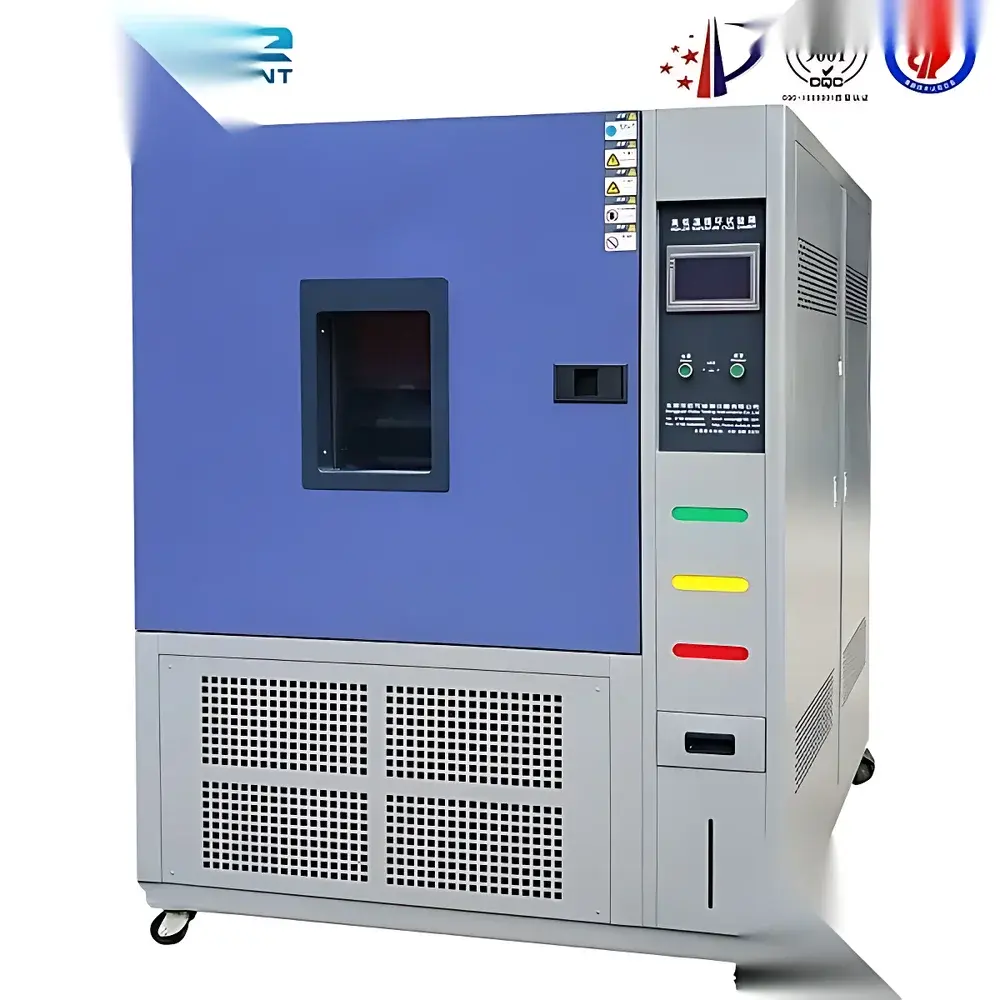
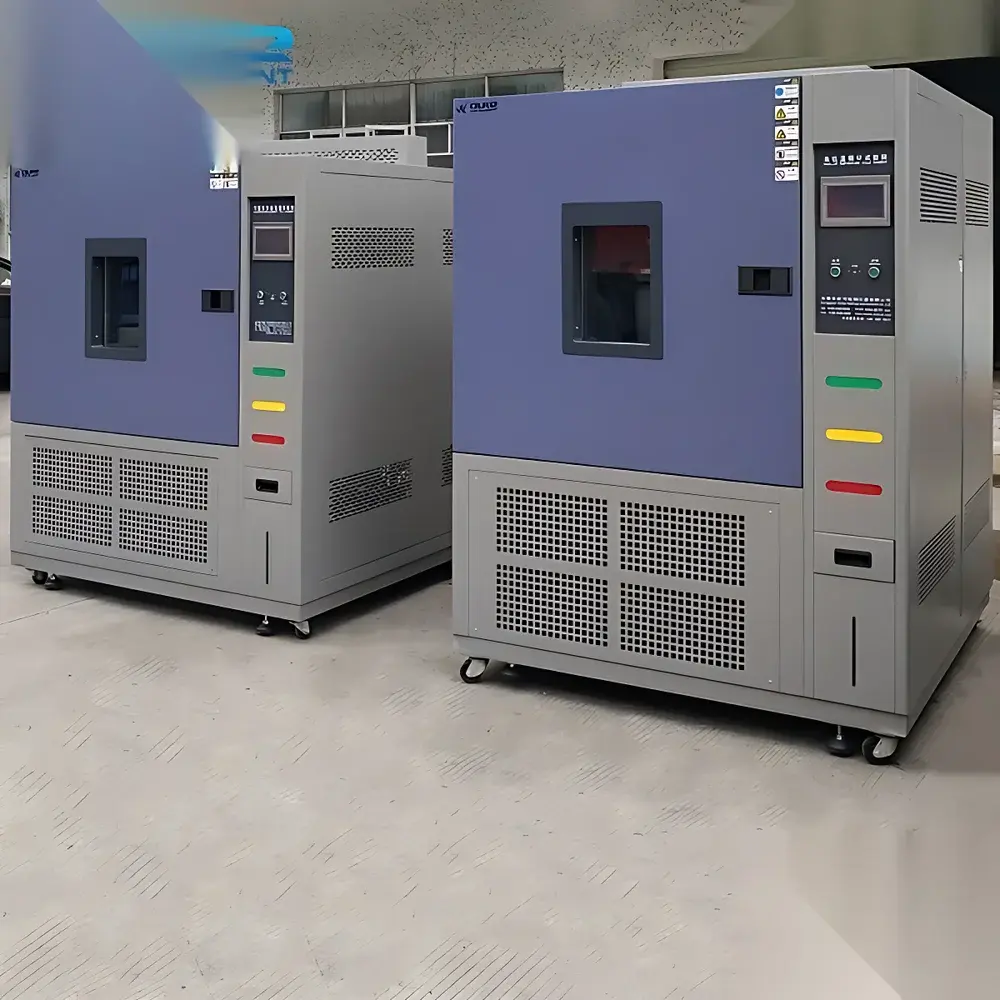
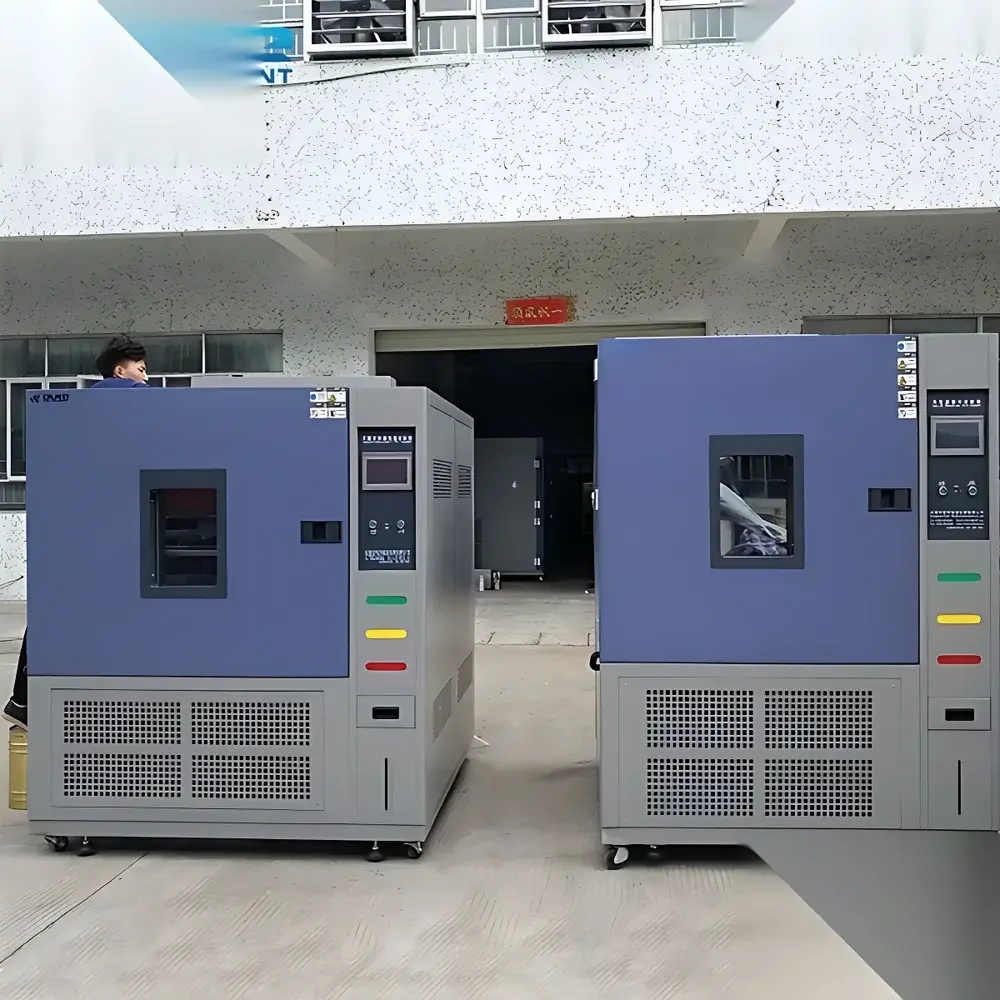
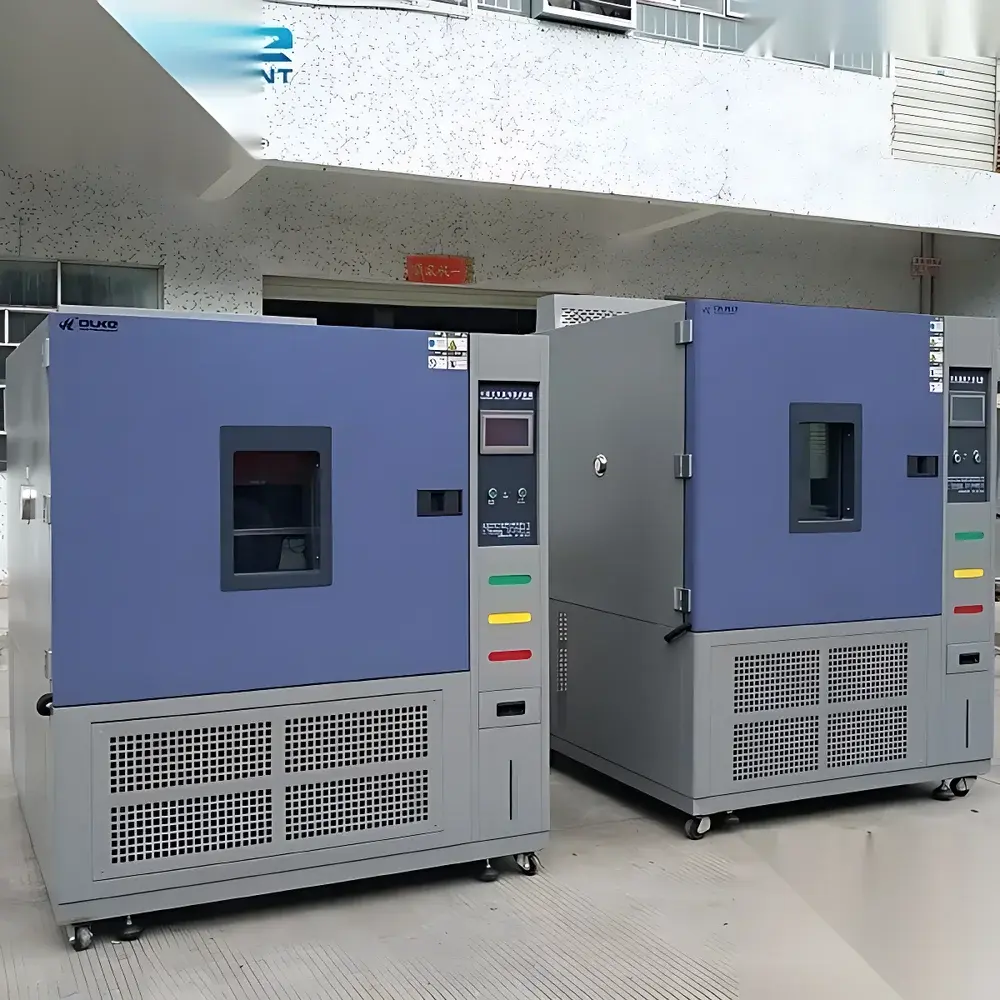
Professional Temperature and Humidity Controlled Environmental Test Chamber – OK-TH Series by OEM Manufacturer
| Key | Capacity Range: 80–1000 L |
|---|---|
| Temperature Range | −70 °C to +150 °C (configurable models) |
| Humidity Range | 5–98 %RH (standard: 20–98 %RH) |
| Temp. Uniformity | ±0.5 °C |
| RH Uniformity | ±2.5 %RH |
| Temp. Stability | ±2 °C |
| RH Stability | +2–3 %RH |
| Resolution | 0.1 °C / 0.1 %RH |
| Ramp Rate | +4.0 °C/min (heat-up), −1.0 °C/min (cool-down) |
| Refrigeration | Hermetic dual-stage compressor with R404A/R23 eco-refrigerant |
| Controller | Touchscreen LCD with bilingual (EN/CN) interface |
| Construction | SUS304 stainless steel interior & exterior |
| Compliance | MIL-STD-810G, IEC 60068-2-1 (Cold), -2-2 (Dry Heat), -2-30 (Damp Heat Cycle), GB/T 2423.1–2423.4, GJB 150.3–150.4 |
Overview
The OK-TH Series Temperature and Humidity Controlled Environmental Test Chambers are engineered for precision environmental simulation in R&D laboratories, quality assurance departments, and manufacturing validation facilities. These chambers operate on the principle of forced-air convection combined with dual-stage refrigeration and steam-based humidification to deliver tightly regulated thermal and hygroscopic conditions across a wide operational envelope. Designed in accordance with international environmental testing standards—including IEC 60068-2, MIL-STD-810G, and GB/T 2423—the OK-TH platform supports both steady-state and cyclic test profiles required for reliability assessment of electronic components, automotive modules, aerospace materials, pharmaceutical packaging, and polymer-based consumer goods. Each unit features a fully welded SUS304 stainless steel chamber structure, minimizing corrosion risk and ensuring long-term dimensional stability under repeated thermal cycling.
Key Features
- Modular capacity range from 80 L to 1000 L (OK-TH-80 through OK-TH-1000), enabling scalable deployment based on sample volume and footprint constraints.
- Four configurable temperature ranges: 0 °C to +150 °C; −20 °C to +150 °C; −40 °C to +150 °C; and −70 °C to +150 °C—achieved via cascaded refrigeration architecture using R404A (high-stage) and R23 (low-stage) refrigerants.
- Humidity control from 5 %RH to 98 %RH (optional extended range), implemented via PID-regulated steam generator and precision dew-point sensing, ensuring reproducible moisture delivery without condensation artifacts.
- High-fidelity climate uniformity: ±0.5 °C temperature deviation and ±2.5 %RH humidity deviation across the working volume, verified per IEC 60068-3-5.
- Real-time resolution of 0.1 °C and 0.1 %RH, with closed-loop feedback maintaining stability within ±2 °C and +2–3 %RH during dynamic operation.
- Intuitive 7-inch color touchscreen controller supporting English/Chinese language switching, programmable multi-segment profiles, alarm logging, and USB data export.
- Standard equipment includes two adjustable SUS304 shelves, one 50 mm diameter cable port, four casters with locking brakes, and four leveling feet for vibration-isolated placement.
Sample Compatibility & Compliance
The OK-TH series accommodates diverse sample geometries through customizable internal dimensions and optional accessories—including larger cable ports, additional shelves, and internal lighting. Its chamber design complies with mechanical and electrical safety requirements per IEC 61000-6-2/6-4 and meets electromagnetic compatibility (EMC) Class B limits. All units undergo factory calibration traceable to NIST-certified reference instruments and support user-initiated verification per ISO/IEC 17025. The system satisfies regulatory expectations for environmental stress screening in GLP-compliant labs and supports audit-ready documentation when integrated with external data acquisition systems adhering to FDA 21 CFR Part 11 requirements.
Software & Data Management
While the embedded controller provides local profile execution and real-time monitoring, optional PC-based software enables remote supervision, automated report generation (PDF/CSV), and integration into enterprise-level LIMS or MES platforms. Data logs include timestamped temperature/humidity readings, alarm events, setpoint deviations, and compressor runtime—structured to facilitate root-cause analysis during failure investigations. Audit trails record all operator actions (e.g., parameter changes, program starts/stops), supporting compliance with ISO 9001:2015 Clause 7.1.5 and IATF 16949 Section 7.1.5.2.
Applications
- Accelerated aging of lithium-ion battery cells under combined thermal-hygric stress.
- Validation of adhesive bond strength retention in automotive trim assemblies at elevated humidity.
- Stability testing of sterile medical device packaging per ISO 11607-1.
- Qualification of printed circuit board assemblies (PCBAs) per IPC-J-STD-004 and JEDEC JESD22-A104.
- Material coefficient of thermal expansion (CTE) characterization via dimensional metrology under controlled RH gradients.
- Environmental stress screening (ESS) of avionics modules prior to HALT/HASS campaigns.
FAQ
What temperature and humidity accuracy can be expected over extended test durations?
Accuracy is maintained within ±0.5 °C and ±2.5 %RH across the full working volume when operated within specified ambient conditions (15–30 °C, ≤80 %RH) and loaded per manufacturer-recommended mass limits.
Is third-party calibration certification available?
Yes—NIST-traceable calibration certificates (including as-found/as-left data) are provided upon request, with optional annual recalibration services aligned to ISO/IEC 17025 accredited laboratories.
Can the chamber be integrated into an existing building management system (BMS)?
RS-485 Modbus RTU and optional Ethernet/IP interfaces enable seamless integration with industrial SCADA and BMS platforms for centralized facility monitoring.
Are custom internal configurations supported?
Yes—custom shelf layouts, reinforced floor plates, specialized sensor mounting brackets, and non-standard cable port placements are available under OEM engineering support.
What maintenance intervals are recommended for optimal performance?
Compressor oil analysis every 2,000 operating hours; condenser coil cleaning quarterly; humidity sensor verification semiannually; and full preventive maintenance (including refrigerant leak check and PID tuning) annually.



