
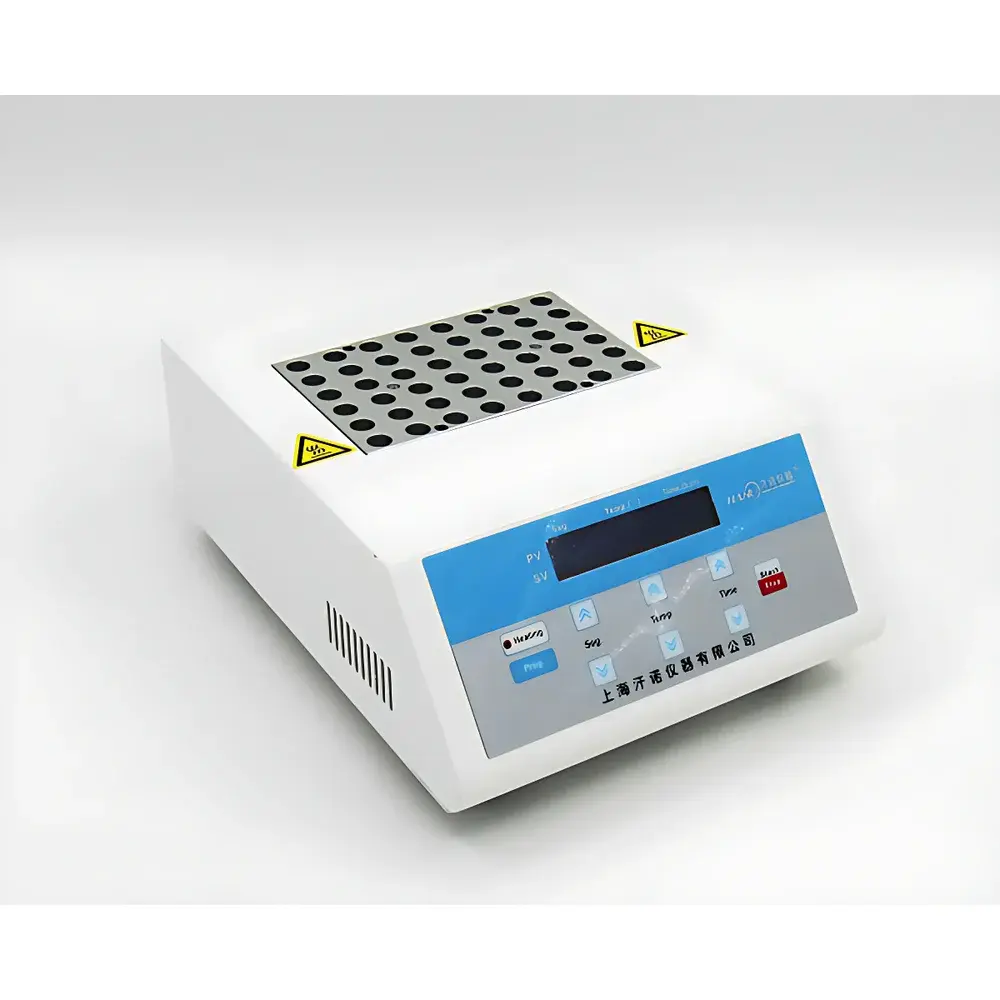
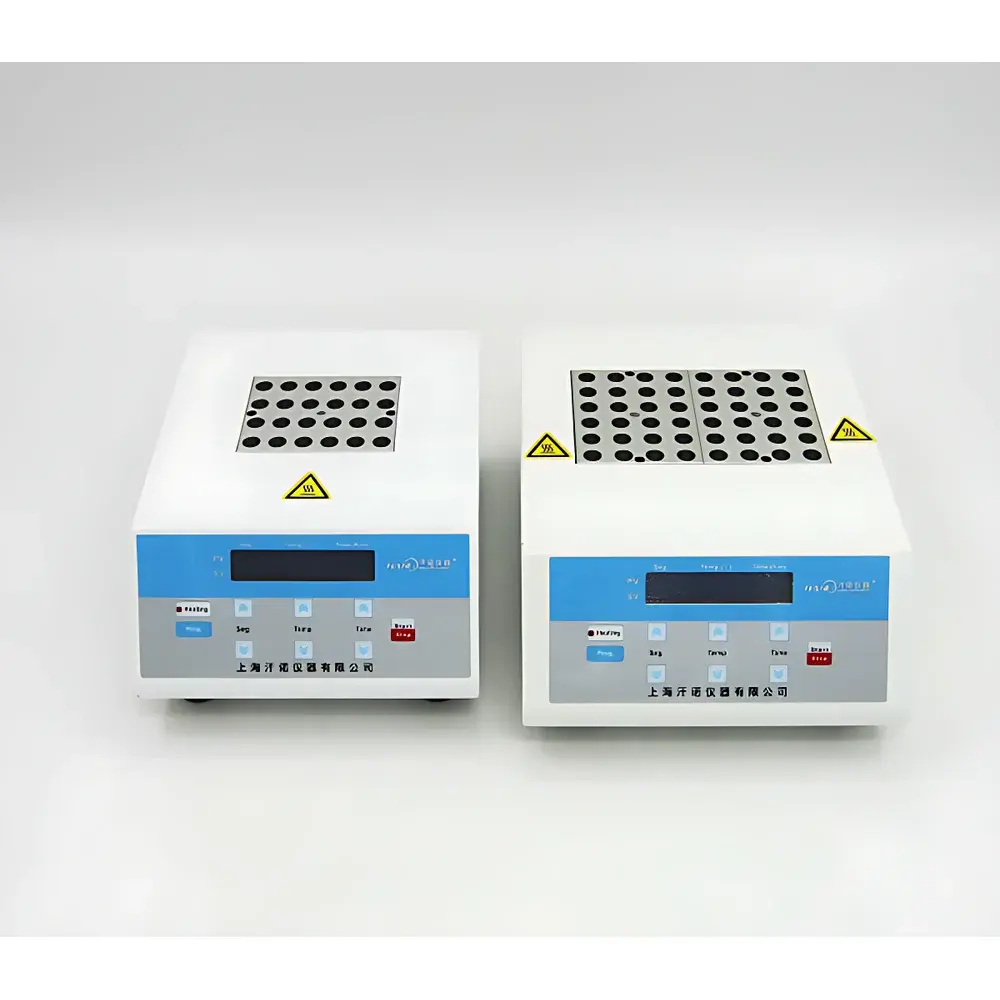
Hanuo HNDKT200-2 Precision Metal Block Heater
| Brand | Hanuo |
|---|---|
| Model | HNDKT200-2 |
| Temperature Range | Ambient +5 to 150 °C |
| Temperature Accuracy | ±0.5 °C |
| Display Resolution | 0.1 °C |
| Block Uniformity | ≤±0.5 °C |
| Temperature Uniformity at 40 °C | ±0.3 °C |
| Heating Time (20 °C → 100 °C) | ≤12 min |
| Power Rating | 400 W |
| Programmable Stages | 5-segment ramp/soak profile |
| Input Protection | 250 V, 3 A, Ø5×20 mm fuse |
| Control Interface | Touch-sensitive keypad with LCD display |
| Safety Features | Over-temperature cutoff, self-diagnostic alarm, calibration offset adjustment |
Overview
The Hanuo HNDKT200-2 Precision Metal Block Heater is an electronically controlled dry-block thermal platform engineered for consistent, contact-based heating of tubes, vials, and microplates in molecular biology, clinical diagnostics, and quality control laboratories. Unlike water baths—prone to evaporation, contamination, and inconsistent thermal transfer—the HNDKT200-2 utilizes a solid aluminum heating block with embedded resistive heating film to deliver rapid, uniform, and contamination-free temperature control. Its operating principle relies on direct conductive heat transfer from the precisely machined metal block to sample containers, eliminating condensation, cross-contamination risks, and maintenance associated with liquid media. Designed for applications requiring stable setpoint maintenance over extended durations—including DNA denaturation, enzyme inactivation, serum coagulation, and reagent pre-warming—the instrument complies with fundamental thermal stability requirements outlined in ISO/IEC 17025-accredited laboratory practices and supports GLP-aligned workflow documentation when integrated with validated software protocols.
Key Features
- High-resolution LCD display showing real-time block temperature and countdown timer with dual independent time/temperature setting capability
- Five-stage programmable temperature ramp-and-soak profile for complex thermal protocols (e.g., stepwise denaturation or multi-step incubation)
- Self-diagnostic system with audible alarm and error code display for fault detection (e.g., sensor disconnect, overheating, power anomaly)
- User-accessible temperature offset calibration function to correct minor drift against traceable reference standards
- Quick-swap modular block design—compatible with standardized tube diameters (6–40 mm), 0.2/0.5/1.5/2.0 mL formats, 96-well PCR plates, and custom configurations
- Dual safety architecture: hardware-based thermal cutoff (independent of main controller) plus firmware-enforced upper limit lockout
- Energy-efficient 400 W heating system achieving ≤12-minute warm-up from 20 °C to 100 °C with minimal acoustic noise (<35 dB(A)) and zero fluid handling
Sample Compatibility & Compliance
The HNDKT200-2 accommodates a wide range of standard laboratory consumables via interchangeable aluminum blocks, including but not limited to: 0.2 mL PCR strips (96-position), 1.5 mL centrifuge tubes (24-position), 15–50 mL conical tubes (4–6 position), and flat-bottom 96-well microtiter plates. All blocks are CNC-machined from aerospace-grade 6061-T6 aluminum, anodized for chemical resistance and ease of decontamination (autoclavable up to 121 °C for non-electronic components). The device meets CE marking requirements for electromagnetic compatibility (EN 61326-1) and low-voltage safety (EN 61010-1). While not intrinsically certified for hazardous locations, its solid-state design and absence of moving parts or volatile fluids make it suitable for ISO Class 5–8 cleanroom environments when operated within specified ambient conditions (15–30 °C, <80% RH non-condensing).
Software & Data Management
The HNDKT200-2 operates as a standalone instrument with no proprietary software dependency; however, its time-stamped temperature logs (accessible via front-panel history recall) support manual audit trails required under FDA 21 CFR Part 11 Annex 11 when paired with laboratory information management systems (LIMS) or electronic lab notebooks (ELN). For regulated environments, users may implement external data acquisition using calibrated thermocouple probes connected to validated DAQ hardware (e.g., Keysight 34972A) synchronized with timestamped protocol execution. Firmware supports user-defined calibration offsets traceable to NIST-traceable references, and all configuration changes—including program edits and offset adjustments—are retained through power cycles without battery backup.
Applications
- DNA/RNA thermal denaturation prior to electrophoresis or hybridization assays
- Controlled serum clotting for coagulation studies (e.g., PT/INR validation)
- Enzyme inactivation post-reaction (e.g., restriction digest termination)
- Reagent and buffer equilibration at precise temperatures (e.g., 37 °C for cell culture media)
- Sample thawing and stabilization before LC-MS or GC analysis
- Pre-heating of MALDI matrix solutions and crystallization substrates
- Accelerated stability testing of pharmaceutical formulations under ICH Q1A(R3) thermal stress conditions
FAQ
What is the maximum recommended operating temperature for continuous use?
The HNDKT200-2 is rated for sustained operation up to 150 °C; however, prolonged exposure above 130 °C may reduce long-term block surface integrity and accelerate thermal aging of O-rings in optional lid assemblies.
Can the unit be used with organic solvents in open tubes?
Direct solvent exposure is not advised—aluminum blocks are susceptible to corrosion by chlorinated or acidic solvents; use appropriate containment (e.g., capped tubes, sealed PCR plates) and verify compatibility with solvent vapors per EN 61000-6-3 emission limits.
Is firmware upgrade capability available?
No field-upgradable firmware is provided; the embedded controller uses fixed-function logic optimized for thermal stability and safety compliance.
Does the device support external temperature probe input for chamber monitoring?
No—temperature sensing is exclusively via internal PT1000-class RTD embedded in the block center; external probe integration requires third-party DAQ solutions.
What maintenance is required for optimal performance?
Routine cleaning with 70% ethanol and lint-free wipes; annual verification of temperature accuracy using a calibrated reference thermometer (e.g., Fluke 1523) per ISO/IEC 17025 Clause 6.5.2.



