
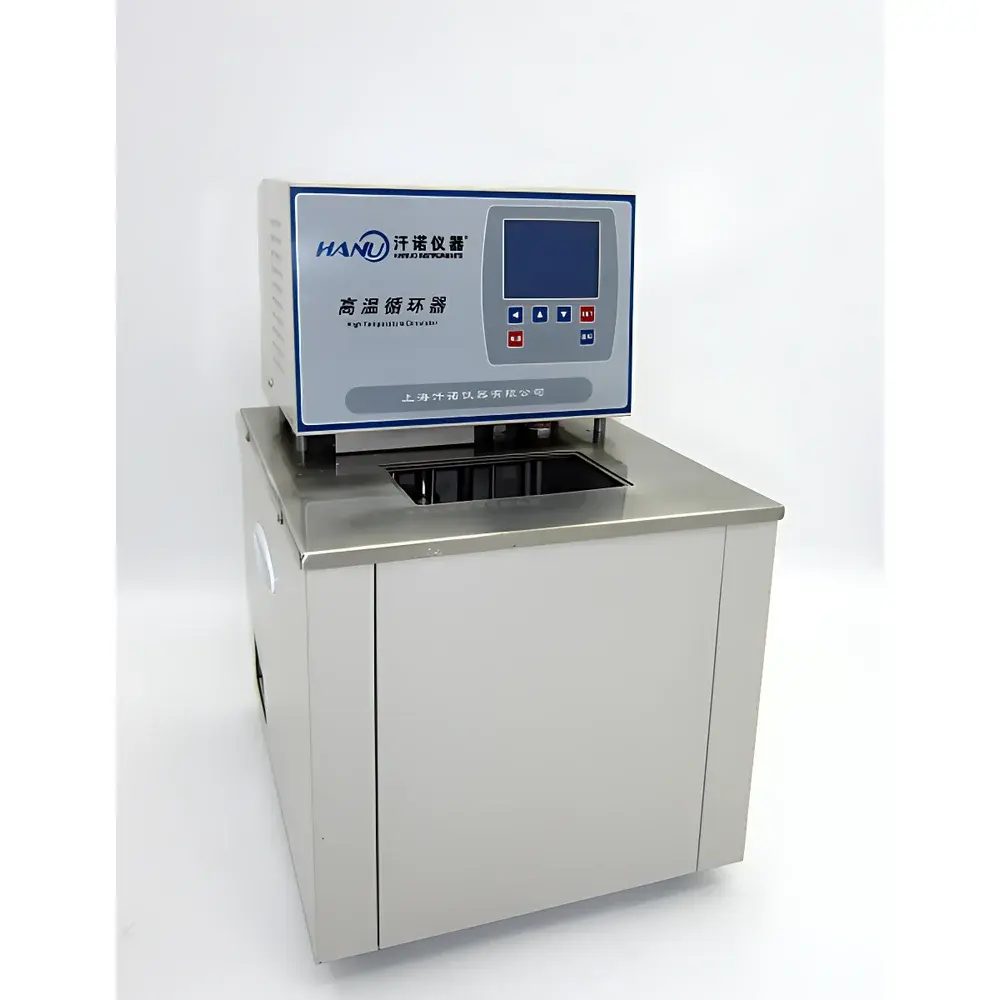
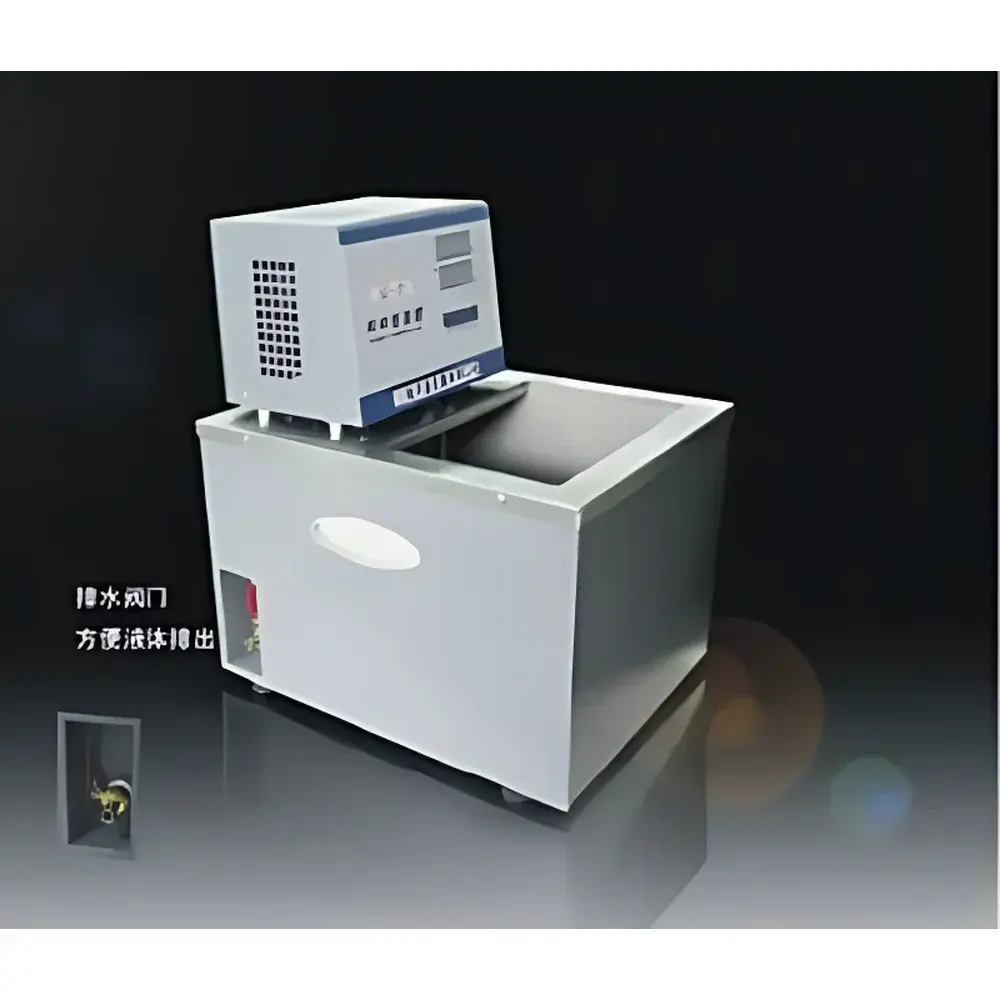
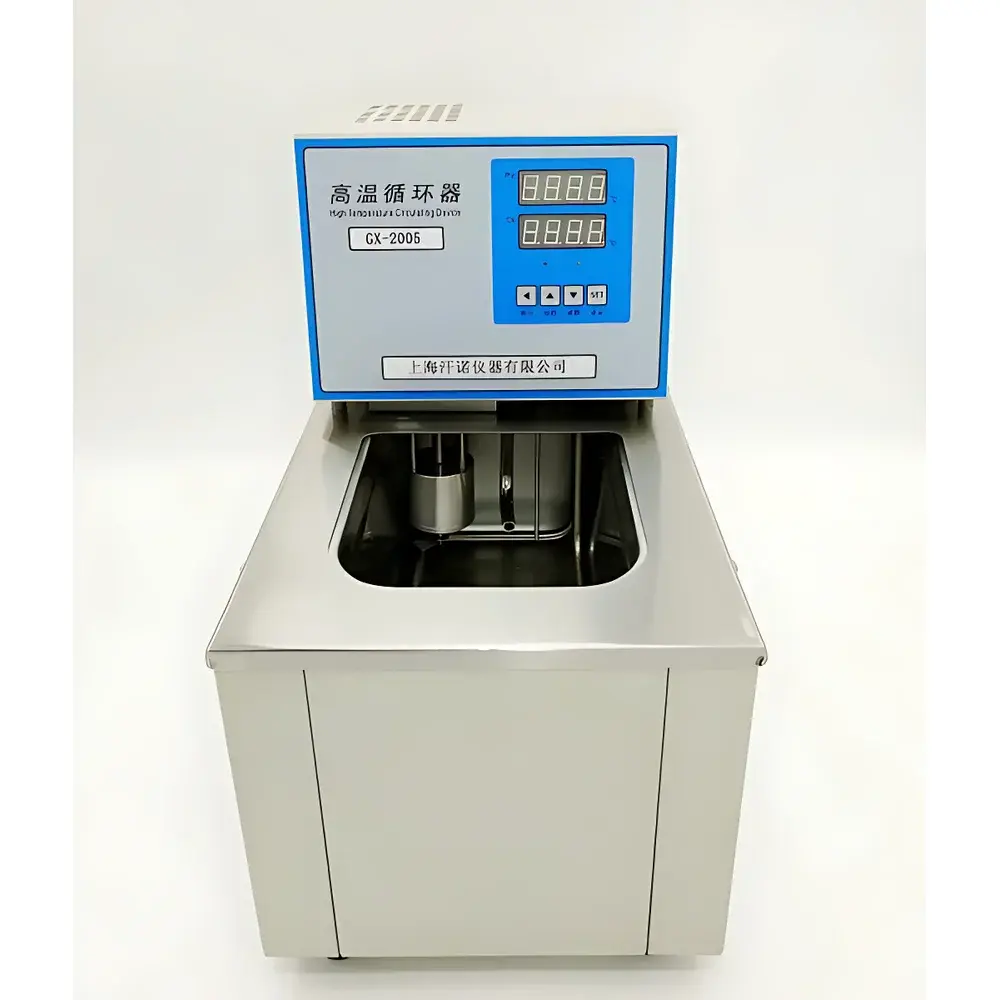
Hanuo GX-2015 High-Temperature Circulating Oil Bath
| Brand | Hanuo |
|---|---|
| Origin | Shanghai, China |
| Series | GX |
| Temperature Range | Ambient to 300 °C |
| Temperature Stability | ±0.2 °C |
| Bath Dimensions (W×D×H) | 280 × 250 × 200 mm |
| Bath Depth | 200 mm |
| Circulation Flow Rate | 15 L/min |
| Bath Capacity | 15 L |
| Construction | Stainless Steel 304 Work Chamber |
| Control System | PID with Dual LED Display (Setpoint & Actual) |
| Dual-Mode Operation | Water or Heat Transfer Oil |
Overview
The Hanuo GX-2015 High-Temperature Circulating Oil Bath is a precision-engineered thermal management system designed for demanding laboratory and pilot-scale applications requiring stable, uniform, and controllable heating above ambient conditions—up to 300 °C. Unlike standard water baths, this unit employs a sealed, corrosion-resistant stainless steel 304 bath chamber and high-temperature-compatible circulation pump, enabling safe and reliable operation with both water (below 100 °C) and synthetic heat transfer oils (e.g., silicone or aromatic hydrocarbon-based fluids). Its core thermodynamic architecture follows the principle of forced convection: a high-flow circulation pump (15 L/min) continuously delivers thermostatically regulated fluid through external process loops—such as jacketed reactors, condenser coils, or distillation columns—ensuring rapid thermal equilibration and minimal spatial temperature gradients (<±0.2 °C stability under steady-state load). The system is not a standalone heater but an integrated thermal source engineered for closed-loop process control in chemical synthesis, materials testing, and semiconductor thermal conditioning.
Key Features
- Stainless steel 304 bath chamber and internal plumbing—resistant to oxidation, acid vapor exposure, and thermal cycling up to 300 °C
- High-capacity circulation pump delivering 15 L/min flow rate at low backpressure, optimized for efficient heat exchange across extended external tubing lengths (up to 10 m recommended)
- PID temperature controller with dual independent LED displays: one for real-time bath sensor reading, the other for user-defined setpoint—both visible simultaneously without menu navigation
- Tactile membrane keypad interface with dedicated keys for ramp/soak programming, auto-tune activation, and safety lockout
- Over-temperature cut-off and dry-run protection circuitry compliant with IEC 61010-1 safety standards for laboratory equipment
- Modular design supporting optional integration of an auxiliary chiller unit via standardized quick-connect ports—enabling active cooling down to 15 °C when connected to municipal water or external refrigerated coolant
Sample Compatibility & Compliance
The GX-2015 accommodates a wide range of external thermal loads—including glass-jacketed reactors (1–20 L), reflux condensers, thin-film evaporators, and wafer-level thermal test fixtures—provided inlet/outlet port compatibility (G1/2″ BSP female) and fluid chemical compatibility are verified. All wetted components meet ASTM A240 Type 304 specification. The unit complies with CE marking requirements (EMC Directive 2014/30/EU and LVD Directive 2014/35/EU) and conforms to ISO/IEC 17025-relevant environmental conditioning practices when used within accredited laboratories. While not intrinsically rated for hazardous area use, it may be deployed in Class 1, Division 2 environments when installed per NEC Article 500 guidelines and paired with explosion-proof external pumps or sensors where required.
Software & Data Management
The GX-2015 operates as a stand-alone instrument with no embedded data logging or PC connectivity by default. However, its analog 0–10 V output (proportional to measured temperature) and digital RS485 Modbus RTU interface (optional accessory) enable integration into centralized SCADA or LIMS platforms. When configured with third-party DAQ systems, users can record time-stamped temperature profiles, generate calibration logs traceable to NIST-certified references, and implement audit trails aligned with GLP and FDA 21 CFR Part 11 requirements—provided the host software supports electronic signatures and change control protocols. Firmware updates are performed locally via USB port using manufacturer-provided configuration tools; no cloud dependency or remote access functionality is included.
Applications
- Temperature-controlled catalytic hydrogenation and Grignard reactions in jacketed glass reactors
- High-boiling-point solvent distillation (e.g., DMF, DMSO, ethylene glycol) with precise reflux management
- Thermal aging studies of polymer composites and battery electrolytes per ASTM D3045 and IEC 60086-4
- Pre-heating and thermal stabilization of optical components and photolithography masks in semiconductor R&D
- Calibration of high-temperature RTDs, thermocouples (Types K, S, B), and infrared pyrometers against fixed-point cells
- Supporting accelerated stability testing (ICH Q1A) for pharmaceutical intermediates requiring prolonged exposure at 80–250 °C
FAQ
What heat transfer fluids are compatible with the GX-2015?
Silicone oils (e.g., Dow Corning 200 Fluid series), polyalphaolefins (PAOs), and aromatic hydrocarbon blends rated for continuous service at ≥300 °C are suitable. Water is permissible only below 95 °C and must be deionized to prevent scaling.
Can the GX-2015 maintain temperature during exothermic reactions?
Yes—when paired with the optional chiller module, the system provides active heat removal capability. Without chilling, it functions as a heating-only source and relies on external cooling (e.g., condenser water) to manage exotherms.
Is the bath volume adjustable or segmented?
No—the 15 L capacity is fixed and non-modular. Partial filling is permitted but reduces thermal mass and may affect stability; minimum recommended fill level is 10 L.
Does the unit include calibration documentation?
A factory calibration certificate (traceable to national standards) is provided with each shipment. Users are responsible for periodic verification per ISO/IEC 17025 or internal SOPs.
What maintenance intervals are recommended?
Inspect pump seals and fluid condition every 500 operating hours; replace heat transfer oil per manufacturer’s viscosity and acid number specifications (typically every 12–24 months under continuous use).



